On Kildare Street in Dublin, the National Museum of Ireland’s Archaeology branch traces the island’s past through objects from prehistoric times to the medieval period. Its displays bring together Viking finds, Egyptian artefacts and Irish gold, with the Treasury’s Ardagh Chalice and Tara Brooch among the highlights. The Iron Age bog bodies offer a striking look at ancient burial and ritual practices. Entry is free, so you can explore at your own pace and focus on the periods that interest you most.
The archaeology collection
The Kildare Street museum follows Irish archaeology from prehistoric times through the Viking and medieval periods. The objects range from tools and weapons to jewellery and ritual pieces, giving the galleries a broad sweep across daily life and skilled craft. Finds from the Bronze and Iron Ages sit alongside material from early Christian Ireland and the Viking era.
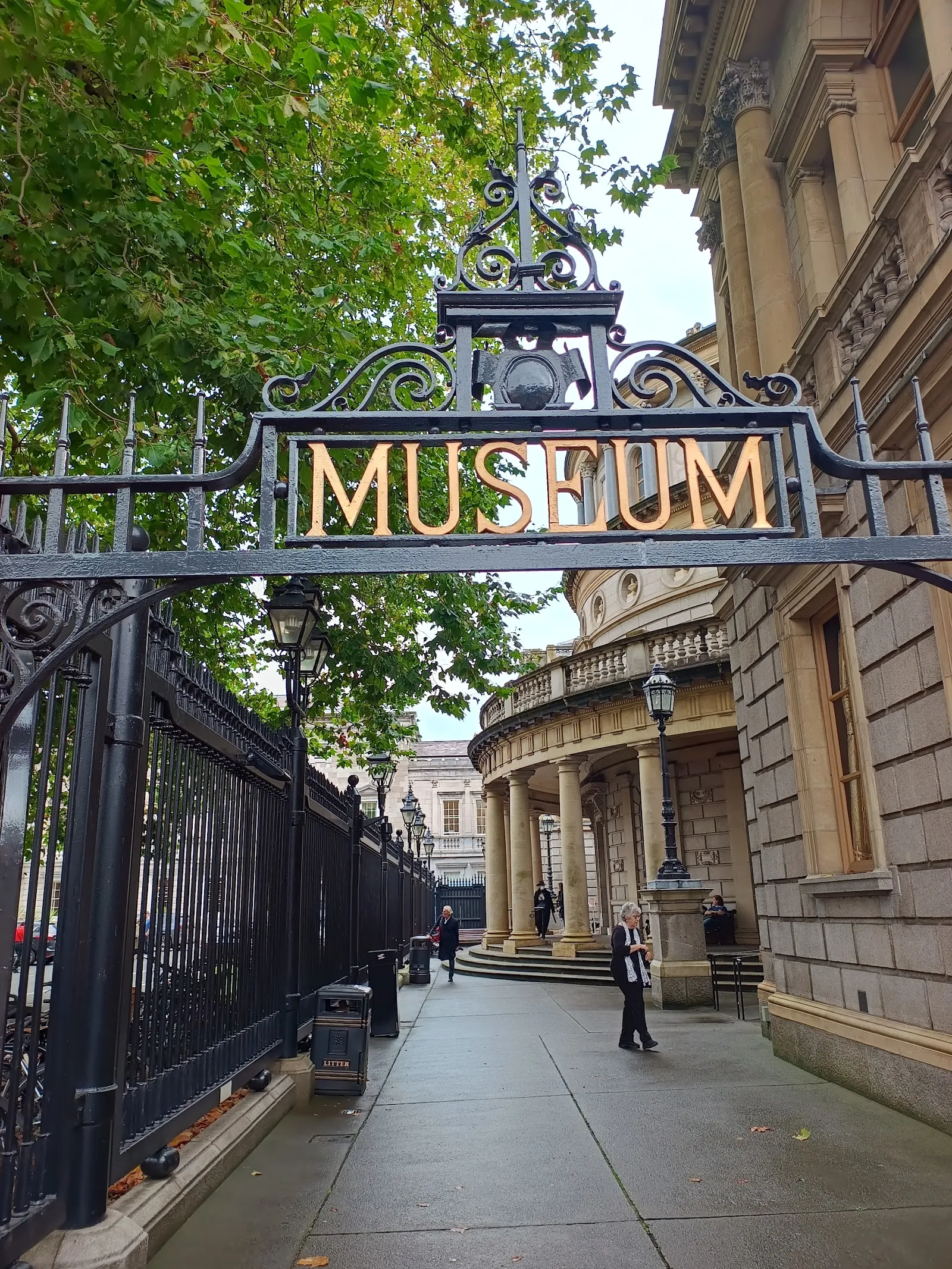
The building opened in 1890 and is arranged around a grand rotunda. Look up as you move through the galleries: the interior has marble columns, ornamental ironwork and mosaic floors. Its formal architecture is part of the visit, as well as a setting for the archaeological displays.
Gold and the Treasury
The Treasury gathers some of Ireland’s best-known early metalwork. The Tara Brooch and the Ardagh Chalice are key pieces, both associated with the eighth century. Their fine decoration rewards a closer look at how gold and other metals were worked into objects of high status and ceremonial use.
The wider collection includes prehistoric gold jewellery, as well as finds such as the Broighter Hoard and the Loughnashade bronze war trumpet. Many objects were uncovered during nineteenth-century work on farmland. Together, they show the range of Irish metalworking across several periods, from Bronze Age pieces to medieval treasures.
Bog bodies and Viking finds
The Kingship and Sacrifice display brings together human remains preserved in Ireland’s peat bogs. The bodies date to the Iron Age, and the exhibition considers their possible connection to ritual and kingship. Their preservation makes the remains an unusual source of evidence about the past; the subject matter can be unsettling, so this section may not suit every visitor.
Viking-era galleries add another view of life in Ireland, with objects including tools, weapons and everyday items. There are also Egyptian artefacts and mummies in the museum, extending the collection beyond Ireland. With many galleries to explore, you can concentrate on one period or make a longer visit across the building.
Preguntas frecuentes
Is the National Museum of Ireland free to enter?
Yes. Admission to the Kildare Street museum is free.
How long should I allow for a visit?
Allow about 90 minutes to 2 hours to explore the galleries. You may want longer if you plan to read the displays in detail.
What are the main things to see?
Highlights include the Ardagh Chalice and Tara Brooch in the Treasury, the Iron Age bog bodies, Viking objects and prehistoric gold.
Where is the museum?
It is at 35A Kildare Street, Dublin 2.