Ha’penny Bridge is a pedestrian crossing over the River Liffey in central Dublin, linking the Temple Bar area with the north side of the city. Opened in 1816, it was built to replace ferry services and is known for its curved cast-iron structure and views along the river. Its official name is Liffey Bridge; the familiar nickname comes from the halfpenny toll once charged to cross. Stop to examine the ironwork and take in the river, but keep moving when the bridge is crowded.
A bridge built to replace ferries
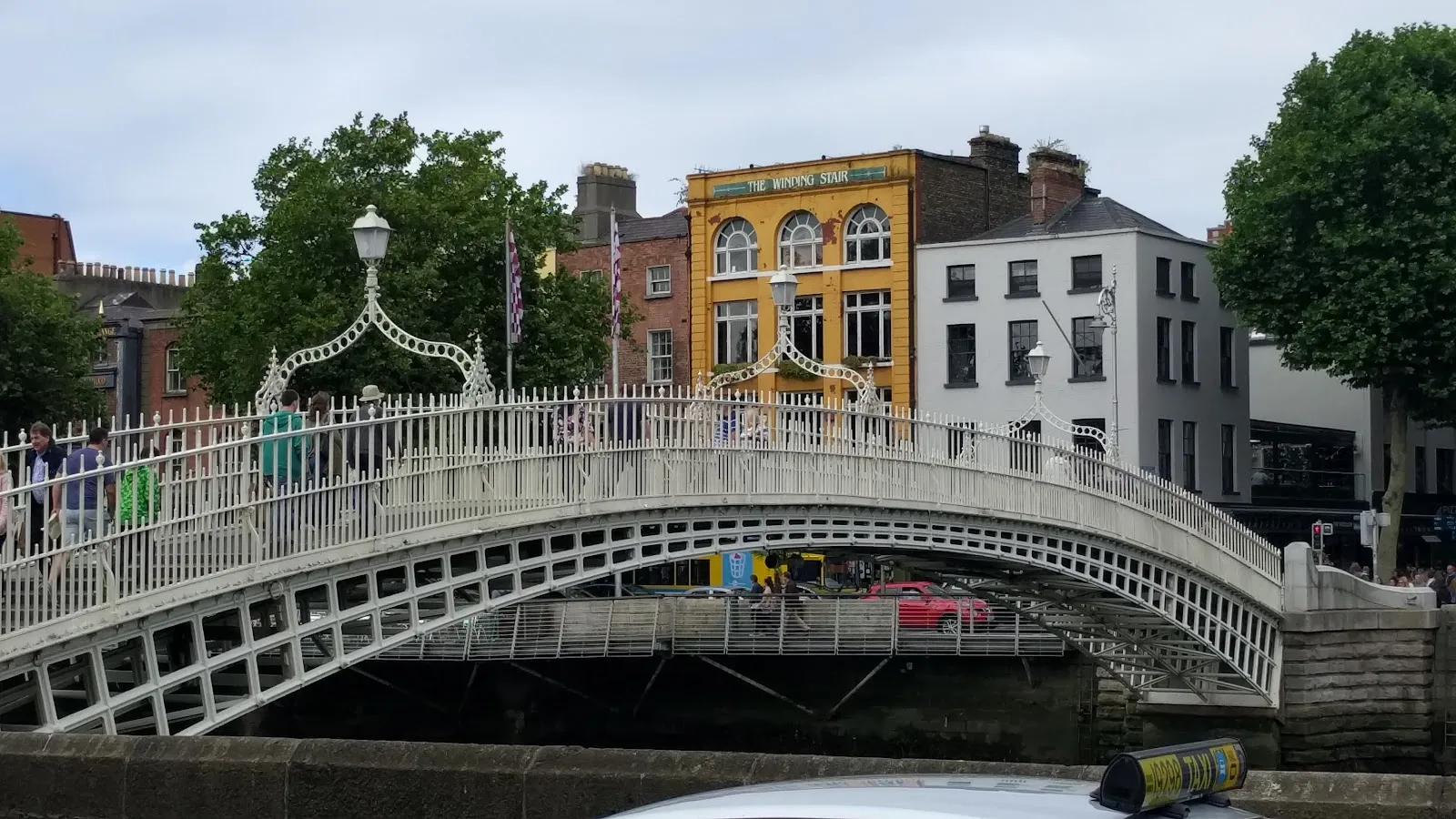
Before the bridge opened, people crossed the River Liffey by ferry. The ferries were operated by William Walsh, who was told to repair them or build a bridge. He chose to build one, and the new crossing opened in 1816.
The bridge was first called Wellington Bridge, after the Duke of Wellington, and is officially known as Liffey Bridge. Its popular name comes from the halfpenny toll charged to pedestrians. That charge ended in 1919, but the nickname stayed. Crossing is now free.
Cast iron over the Liffey
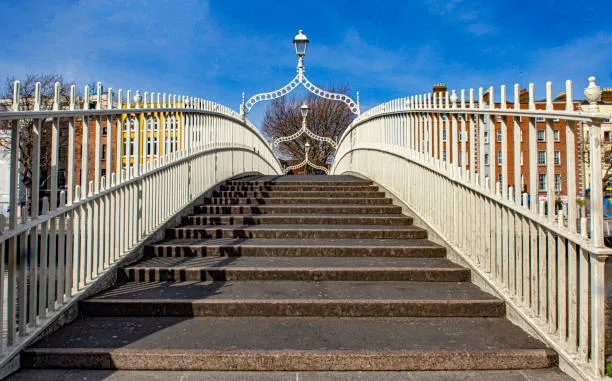
The bridge’s cast-iron construction and arched form make it distinct among Dublin’s river crossings. Its decorative ironwork is worth a closer look as you walk across; the structure also gives clear views along the Liffey in both directions.
It was the first pedestrian bridge across the river in Dublin. The crossing connects the Temple Bar area on one side with the north side of the city, making it a useful route as well as a historic landmark.
Making the crossing
The bridge is used by pedestrians and can become busy, particularly with people stopping for photographs. If you want a closer look at the iron details, step aside where possible rather than pausing in the main flow. Stairs at either end mean you should take care when going down.
Sunset is a good time to see the river in changing light. The bridge is also illuminated at night, and the view from the crossing changes between daylight and evening. A guided walk can add context about the bridge’s history and its place on the Liffey.
Preguntas frecuentes
Is it free to cross Ha’penny Bridge?
Yes. The halfpenny toll that gave the bridge its name was discontinued in 1919.
How long do you need at Ha’penny Bridge?
Allow about 15 minutes to cross, look at the ironwork and take photographs.
What is the best time to visit Ha’penny Bridge?
Sunset is a good time for river views in warm light. The bridge is also illuminated at night.
What is the official name of Ha’penny Bridge?
Its official name is Liffey Bridge. It was first called Wellington Bridge when it opened in 1816.