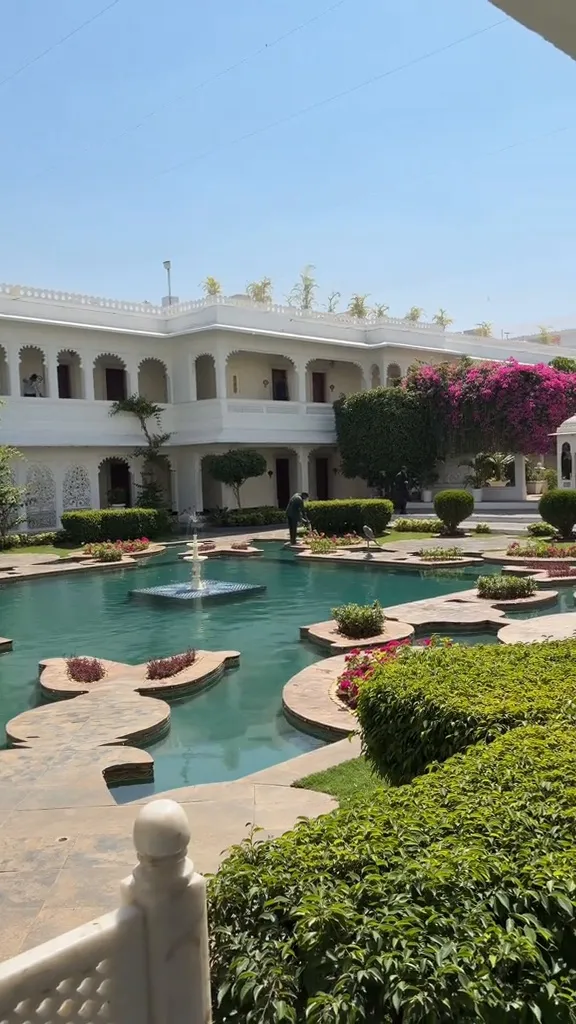
City Palace stands on the eastern bank of Lake Pichola in Udaipur's Old City. It is the largest palace complex in Rajasthan, begun in 1559 by Maharana Udai Singh II and extended by later rulers over about four centuries. Eleven palaces, courtyards, terraces and hanging gardens sit behind a long facade above the water. Part of the complex is now the City Palace Museum, which holds royal portraits, weapons, musical instruments and a silver gallery. Balconies and terraces look over the lake and the city, and the Mor Chowk peacock mosaics are among the best-known sights.
Built over four centuries from 1559
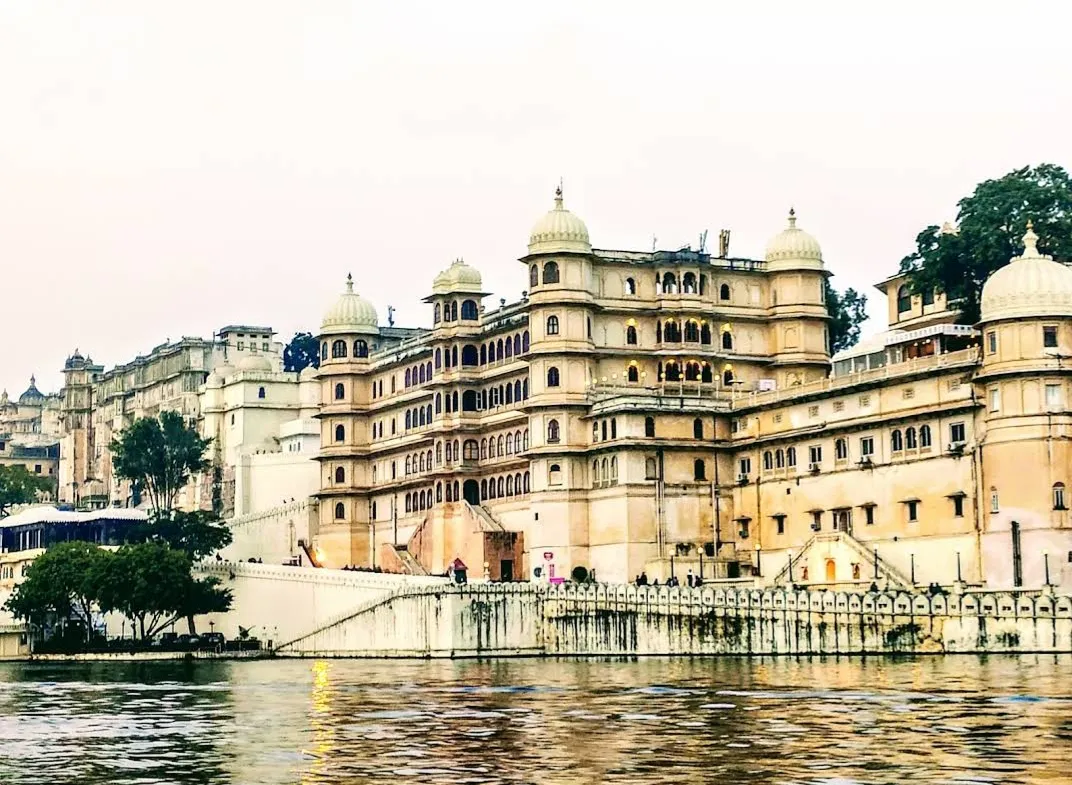
Maharana Udai Singh II laid the foundation of City Palace in 1559, as the seat from which the Maharanas of Mewar lived and ran the state. Later rulers kept building. The complex took roughly four centuries to reach its present form and was raised by about twenty-two generations of the Sisodia Rajput line. It now holds eleven palaces, along with courtyards, pavilions, terraces, corridors and hanging gardens.
The long construction shows in the styles. Rajasthani and Mughal design dominate, with traces of medieval, European and Chinese influence. Even so, the complex keeps a surprisingly even look, because each addition followed the character of the one before.
The palace was the main administrative building of the Mewar rulers. It stands on a hill, which gave it a wide view over the city and the lake.
The facade and the way in
The main entrance is the triple-arched Tripolia gate, which has eight marble porticos. Fortified walls enclose the complex. The facade facing Lake Pichola is about 244 metres long and 30 metres high, and it is built of granite and marble. Balconies, cupolas and towers rise along it.
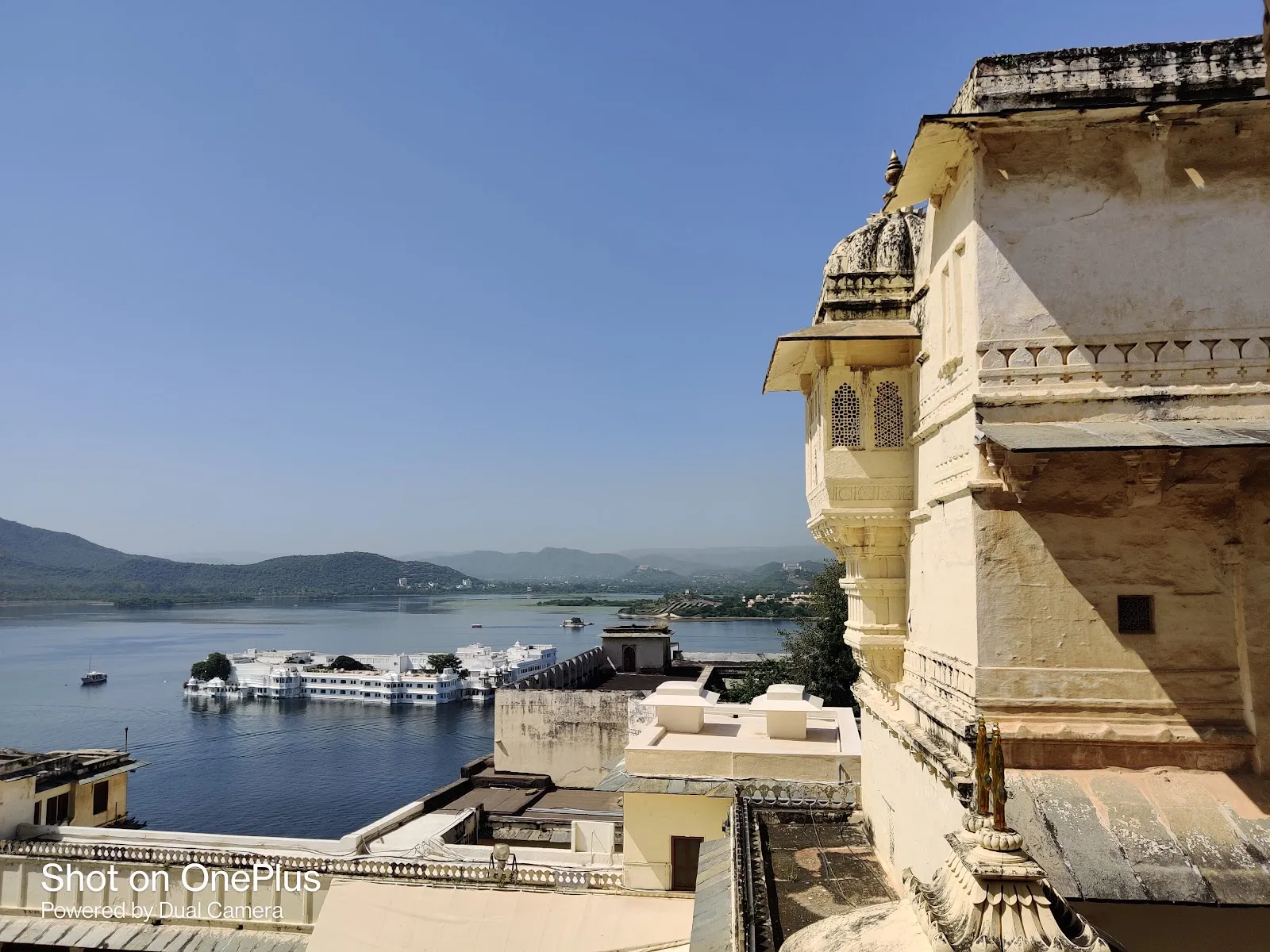
From these balconies you can see Jag Mandir and Jal Mahal on the water, and the Old City below. At sunset the marble and the lake take on a golden tone, and that is the hour many photographers choose.
Inside the City Palace Museum
Much of the complex is now the City Palace Museum, which opened to the public in 1969. The royal family still lives in a small part of the palace, and the rest is open to visitors. The museum includes small palaces such as the Zenana Mahal, which was for the royal women, and the Mardana Mahal, for the men of the family.
The collection covers royal photographs and portraits, paintings and miniatures, weapons, silverware, wall murals and a gallery of royal musical instruments. One gallery is described as the world's first silver gallery. Paintings of the Battle of Haldighati show Maharana Pratap of Mewar. Interiors are decorated with mirrors, glass inlay and tiles.
Mor Chowk, the Peacock Courtyard, is known for its mosaics of peacocks, made from about 5,000 pieces of glass. Other named parts of the complex are Badi Mahal, Amar Vilas, Suraj Gokhda, Dilkhush Mahal and Sheesh Mahal.
Boat rides and the evening
A boat ride on Lake Pichola pairs well with a visit. One ride includes a stop at Jag Mandir island, with time to walk around, and a ride after dark gives a view of the palace lit up beside the water.
Inside the complex, the Mewar Light and Sound Show tells the history and lineage of the dynasty with projected visuals. The Sunset View Terrace and the Badi Chowk are close to the museum.
The road to the palace has shops selling embroidered bags, carpets, Rajasthani clothing, wooden toys and leather goods, and the Jagdish Temple stands on the same street.
Planning the visit
The complex is large. A quick walk through the main sections takes about two hours, and a thorough visit with the museum can run to three or four. Time is easiest to manage when you arrive early, before the crowds build.
The entrance, restroom and parking lot are wheelchair accessible. Parking is paid. Prices change over time, so confirm the cost of complex entry, the museum, the boat ride and camera use at the ticket desk or on the official museum website.
Preguntas frecuentes
How long do you need at City Palace in Udaipur?
Allow 2 to 4 hours. A focused visit to the main sections takes about two hours, and the museum and courtyards can fill three or four.
Who built City Palace in Udaipur?
Maharana Udai Singh II began it in 1559. Later Mewar rulers added to it over about four centuries, which is why the complex has eleven palaces.
What is the best time to visit City Palace?
Go early in the morning, before the crowds build. The cooler months, December to February, are the most pleasant for sightseeing.
Is there an entry fee?
Yes. Tickets for the complex and the museum are separate, and boat rides and cameras cost extra. Prices change, so check at the ticket desk or on the official website.
Is City Palace wheelchair accessible?
The entrance, restroom and parking lot are wheelchair accessible. The palace is on a hill, and a small train runs inside the campus.
Is there an evening show at City Palace?
Yes, the Mewar Light and Sound Show tells the story of the dynasty with projected visuals. Check the schedule and tickets before you go.