Chota Imambara is a Shia complex in Lucknow's Husainabad area, built in 1838 by Nawab Muhammad Ali Shah as a congregation hall and his mausoleum. He and his mother are buried here. The monument is known as the Palace of Lights for its Belgian chandeliers, glass lamps and gilded interiors, and its golden domes and calligraphy stand above a reflecting pool. Visits suit the early evening, when the lights are on. Plan time for the main hall, the tombs and the Satkhanda, an unfinished watchtower just outside the complex.
Built as a hall and a tomb
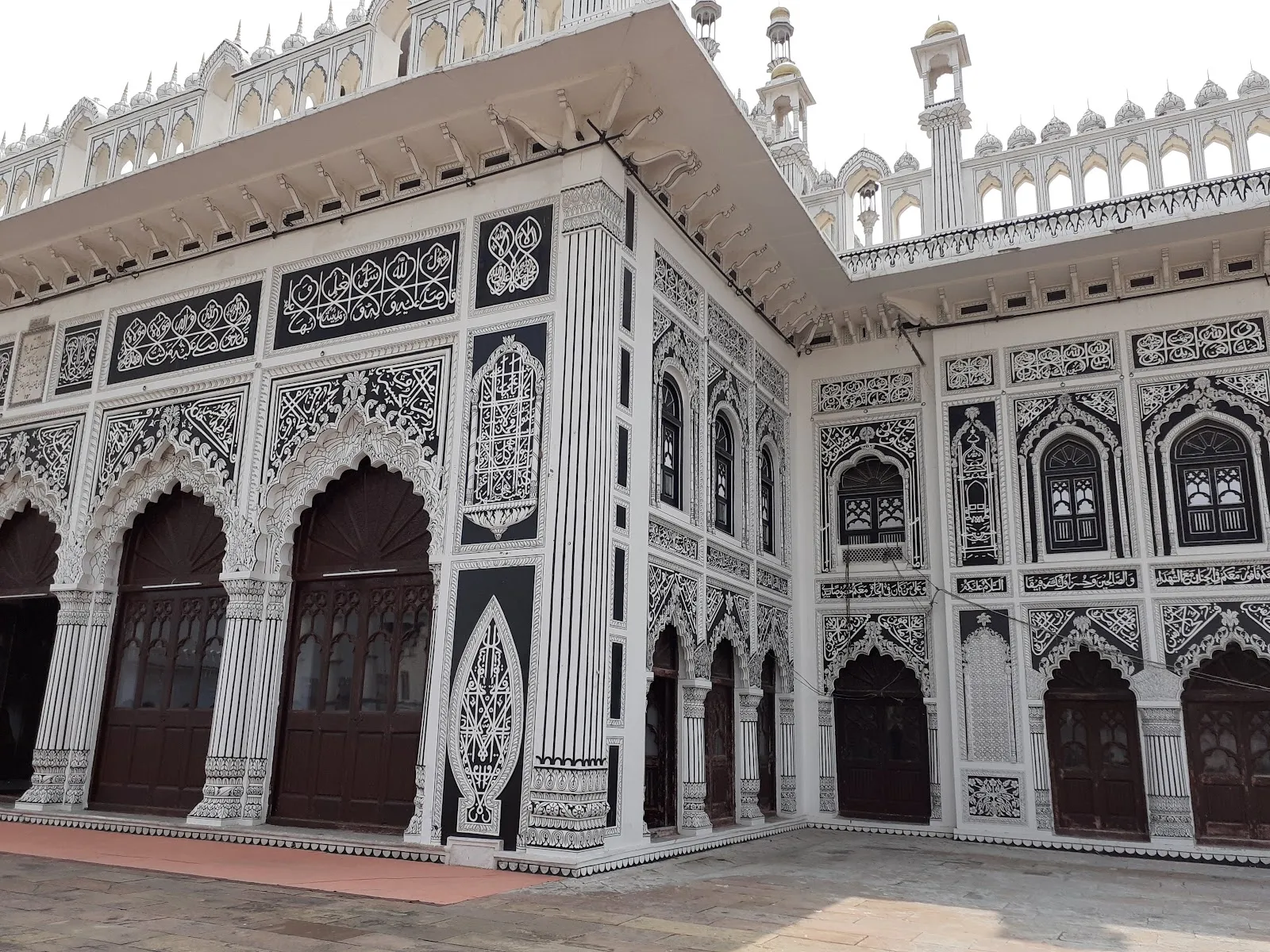
Nawab Muhammad Ali Shah built Chota Imambara in 1838. It served as a congregation hall for Shia worship and as his mausoleum. He is buried here alongside his mother. The king's tomb lies to the west and his mother's to the east.
The monument is also called the Imambara of Hussainabad, after the area where it stands in Lucknow. Its name in local use, the Palace of Lights, refers to the chandeliers and the lighting that makes the building glow after dark.
The courtyard and the front pool
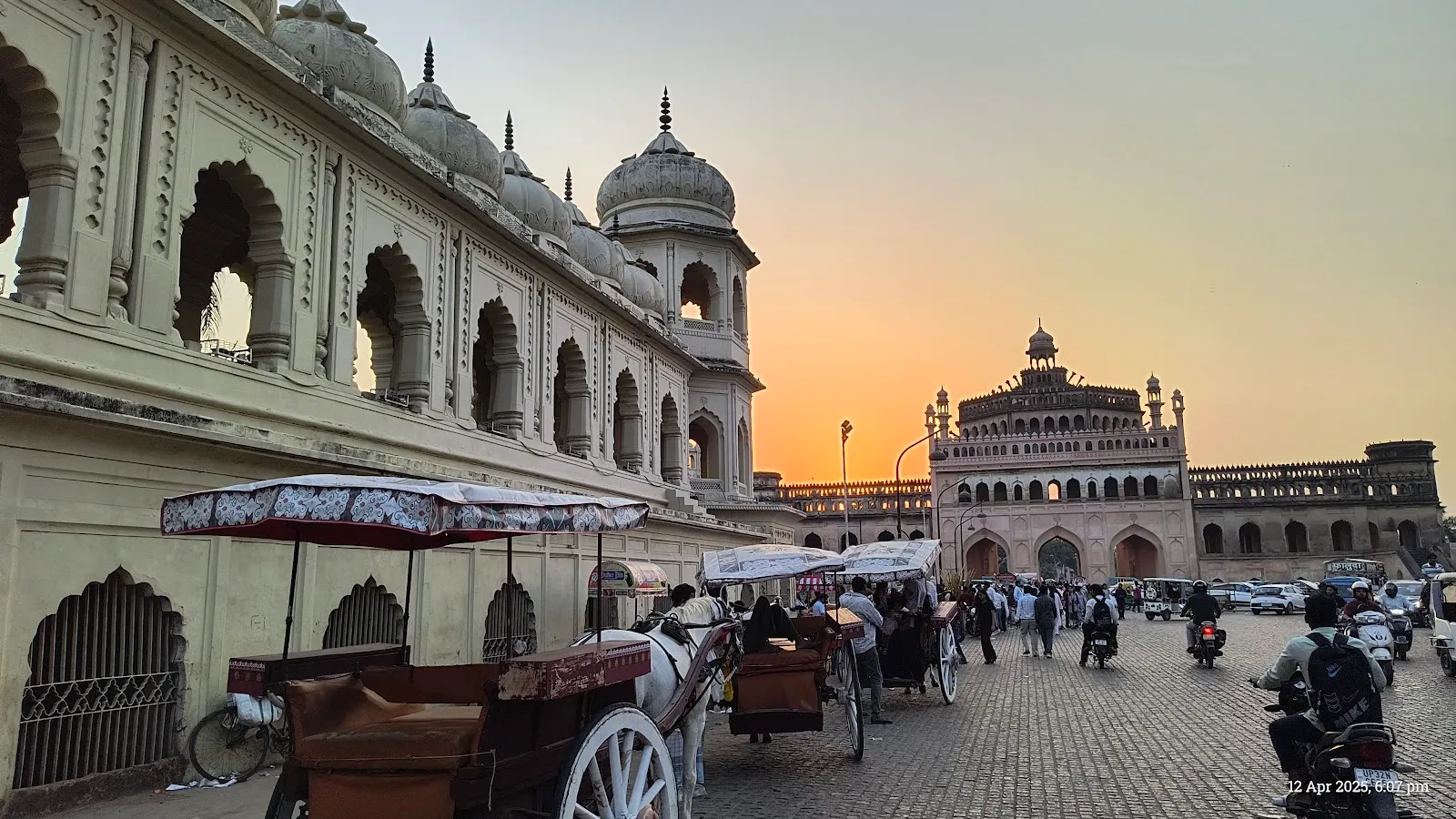
The complex is laid out around a courtyard with a raised water tank at its centre. An ornate iron bridge crosses the tank. The white façade, the domes and the calligraphy are reflected in the pool, which is the best place to start a photo walk.
At the entrance, look up for the fish-shaped wind vane. Near the monument, a small mosque is also part of the complex.
Inside the main hall
The main hall is decorated with gilding and mirrors. Its glass lamps and Belgian crystal chandeliers are the centrepiece, and a silver throne stands among them. Silver tazias, the replicas used in Muharram processions, add to the religious character of the room.
The chandeliers are lit during Muharram and other major religious observances. Visitors on other days see the same hall, though the full effect of the light is strongest at those times and after dark.
Satkhanda next door
Just outside the complex stands the Satkhanda, a four-storey tower built as an observatory. It was meant to have seven storeys but was never finished. It is a short look from the main monument and makes a useful stop before or after the tombs.
The nearby Bara Imambara and Rumi Gate are often visited on the same day, and a combined ticket can cover several of these sites.
How to plan the visit
Dress modestly, and carry a head covering to enter the main hall. Keep your voice low inside the complex, since it is a place of worship. The entrance and the parking area are wheelchair accessible.
Visiting in the evening gives the best view of the lit façade and chandeliers. Tickets are best booked in advance, and a combined ticket covers four or five sites in the area. Allow time to walk slowly through the courtyard and the hall rather than rushing through.
Preguntas frecuentes
Do I need to cover my head?
Yes, a head covering is needed to enter the main hall. Dress modestly and carry a covering with you.
Is it worth visiting in the evening?
Yes. The monument is lit in the evening, which brings out the architecture and the chandeliers, so many visitors plan their trip for dusk.
Can I visit during Muharram?
Yes. The chandeliers are lit during Muharram and other major religious observances, which gives the interior its fullest display.
Is the site wheelchair accessible?
The entrance and the parking lot are wheelchair accessible.