
Toorji Ka Jhalra is a stepwell in Jodhpur's old city, within walking distance of the Ghanta Ghar clock tower. Its symmetrical stone steps run down to a pool of green water, and the rose-red sandstone carving is the reason most visitors stop. Entry is free and the site is open around the clock, so you can see it in morning light or after dark. Take time on the steps, then sit at one of the cafes along the edge and look back at the well from above.
Who built it and why
Toorji Ka Jhalra was built in the 1740s by Maharani Toorji, the consort of Maharaja Abhay Singh of Marwar. Its purpose was practical: to give the people of Jodhpur reliable access to water through the hot desert summers.
The stepwell continued a royal tradition in which queens paid for public waterworks. The region's rainfall is low. The monsoon season brings less than a foot (32 cm) of rain on average, so every drop had to be collected and kept. Steps running down the sides allowed people to reach the water at any level, and the steep descent reduced evaporation from the surface.
Because the steps follow the rising and falling water table, people could draw water throughout the year, not only after the rains.
From decay to restoration
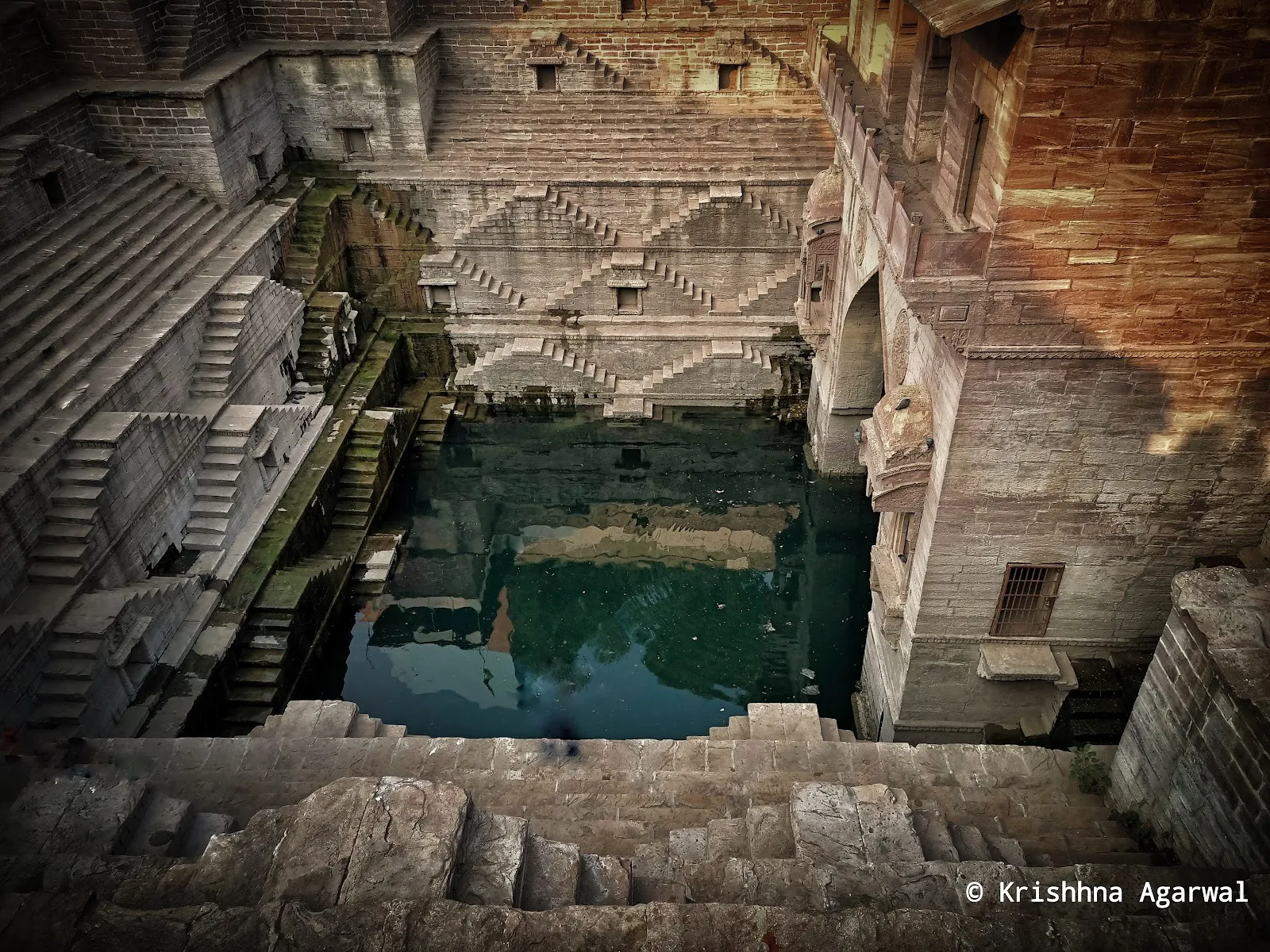
For decades the well was buried under debris and stagnant water covered its zig-zag steps. Restoration work in the 2010s drained and cleaned the structure, uncovering the carved stonework once more.
Today the stepwell is a public space again. It is no longer a source of drinking water, but local children are sometimes seen swimming in it. Water quality has drawn complaints in the past, so treat the water as something to admire rather than a place to swim.
What to look at on the steps
The carvings include dancing elephants, lions, deities and cow-shaped waterspouts. Arched niches and symmetrical patterns repeat down the walls, so the best views come from standing at a landing and looking across to the opposite side.
Photographers come for the shadows and light on the walls and for the reflections in the water. The well descends more than 200 feet, and the layered levels give different angles at each landing. Some visitors also report spotting tortoises in the pool.
The stepwell has a festival link as well. Women gathered on its banks each year for Gangaur, a festival tied to married life, and the site is connected to the custom of a ceremonial bath on the eve of the festival.
Visiting and the area around it
The entrance is wheelchair accessible. The descent is by stone steps, and some are slippery, so take the descent slowly.
Vehicles can drive into a narrow lane close to the stepwell. Parking is limited near Sardar Market, and the access roads are narrow, so a short walk from a larger lot is often easier. The site sits near Ghanta Ghar and is a few minutes' walk from the market.
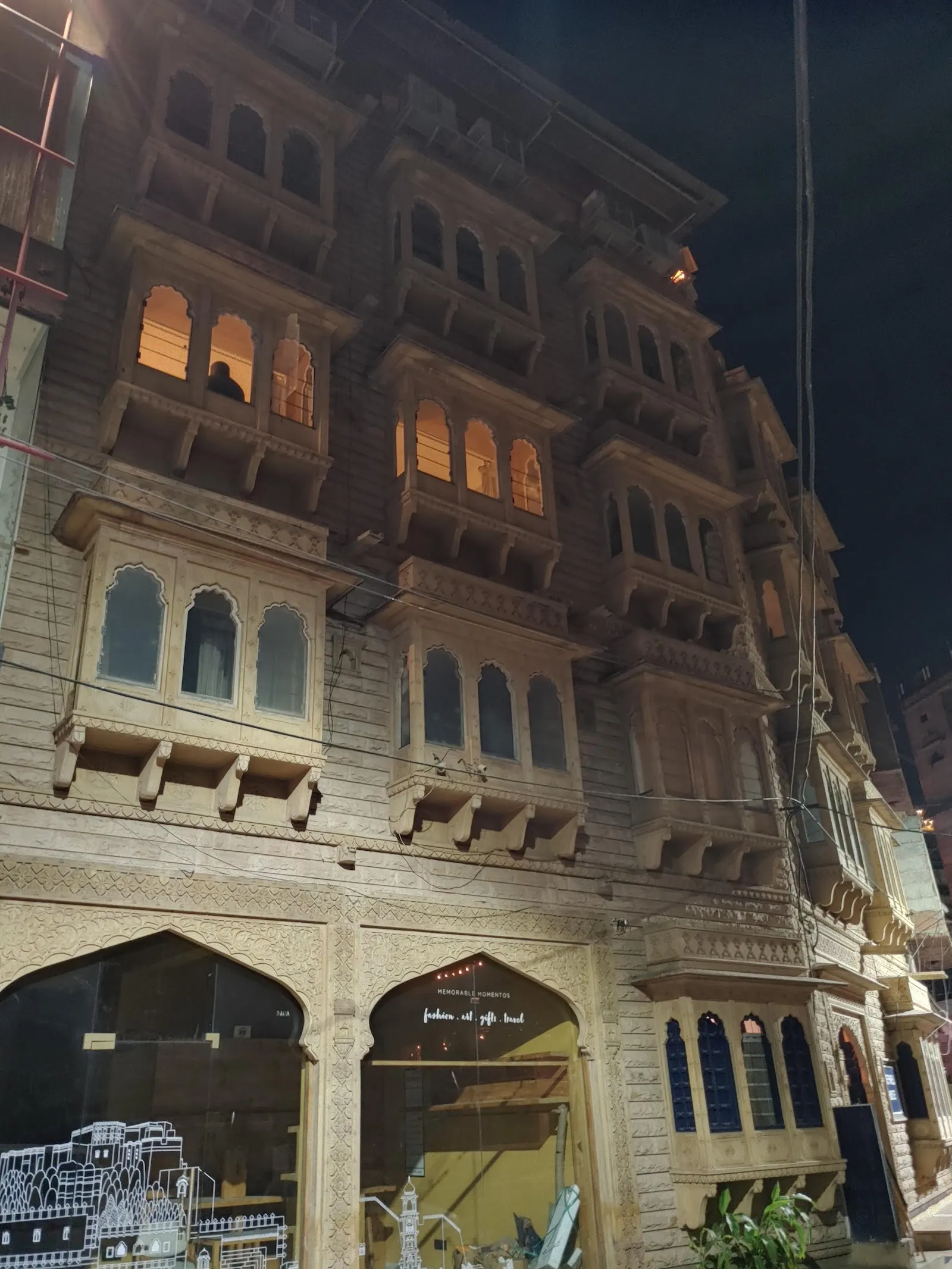
The cafes around the well add to the visit. One cafe has pictures of the well on its walls that explain its history, and the rooftops nearby offer views of Mehrangarh Fort.
Dress modestly and keep your voice low, as this is a place that has long been used for festivals and family rituals. Carry your litter out, since litter has been a problem at the site.
Preguntas frecuentes
Is there an entry fee?
No. Entry to Toorji Ka Jhalra is free.
How long do you need?
A short look at the steps and carvings takes 15 to 30 minutes. Allow more time if you want to sit at a cafe nearby.
Is it wheelchair accessible?
The entrance is wheelchair accessible. The descent to the water is by stone steps, and some are slippery, so take care on the way down.
Can you drive to the stepwell?
Vehicles can reach a narrow lane close to the stepwell. Parking is limited near Sardar Market, and the access roads are narrow, so a short walk from a paid lot can be easier.


