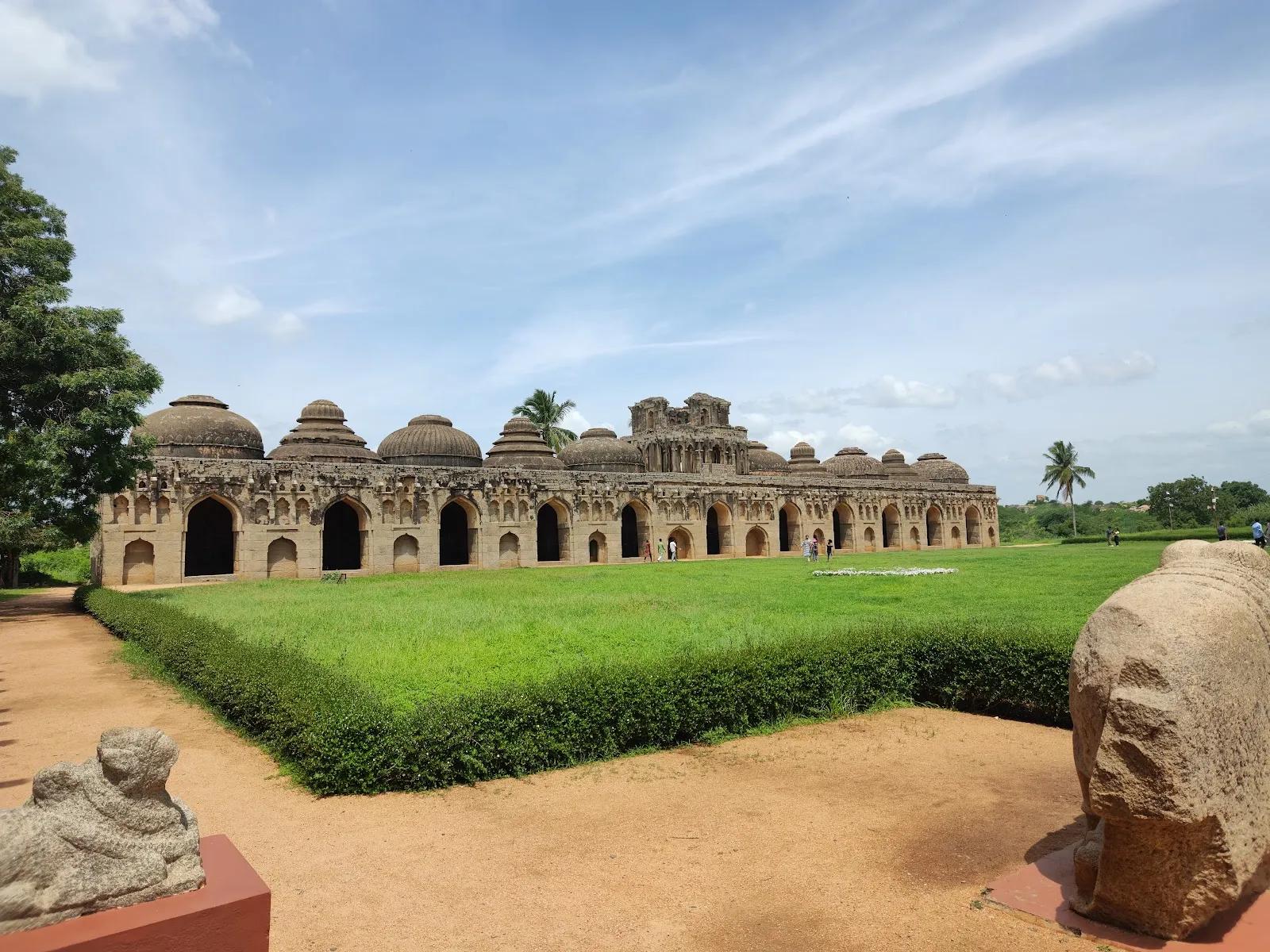
Virupaksha Temple is a working Shiva shrine on the bank of the Tungabhadra River, in the middle of Hampi's ruins. Its gopuram, the gateway tower, rises about 50 metres and can be seen from most of the town. Inside, the Ranga Mandapa has ceiling murals, and the 100-pillared hall is covered in stone carvings. Worshippers still come for morning and evening prayers, so the temple feels lived in, not like a museum. Hemakuta Hill, a short walk away, is the place for sunrise and sunset views.
Origins and the Vijayanagara period
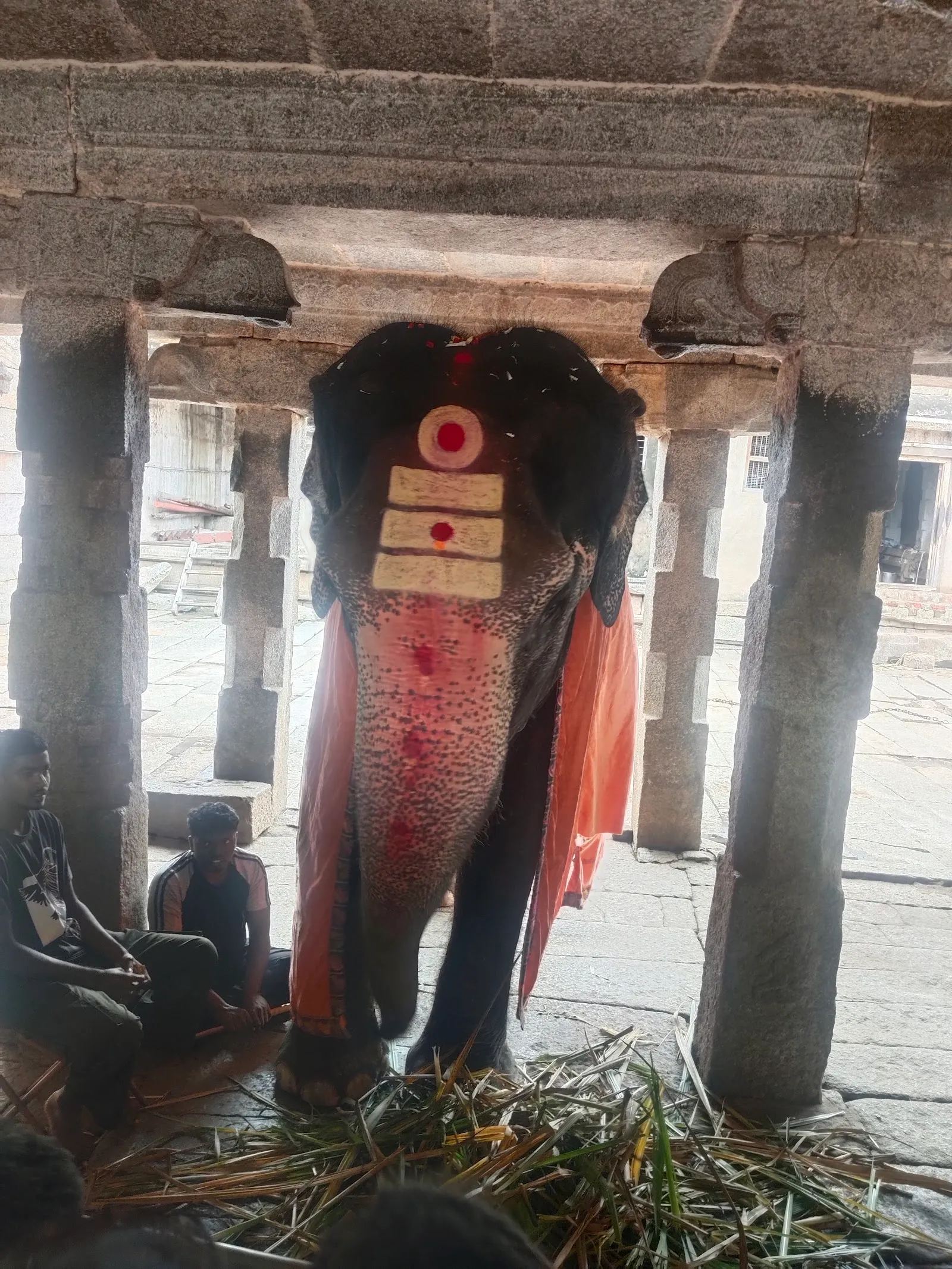
The temple is dedicated to Virupaksha, a form of Shiva, and is linked with Pampa, the local goddess associated with the Tungabhadra River. Shrines have stood on this spot since around the 7th century, and archaeologists have found evidence of early shrines here from that period.
Under the Vijayanagara rulers the temple grew into a large complex with a main shrine, a pillared hall, three antechambers, courtyards, gateways and smaller shrines. One account credits King Krishnadevaraya with adding towers and structures. The main gopuram was built later, in the 15th century. The site is part of the Group of Monuments at Hampi, a UNESCO World Heritage Site.
Inside the temple
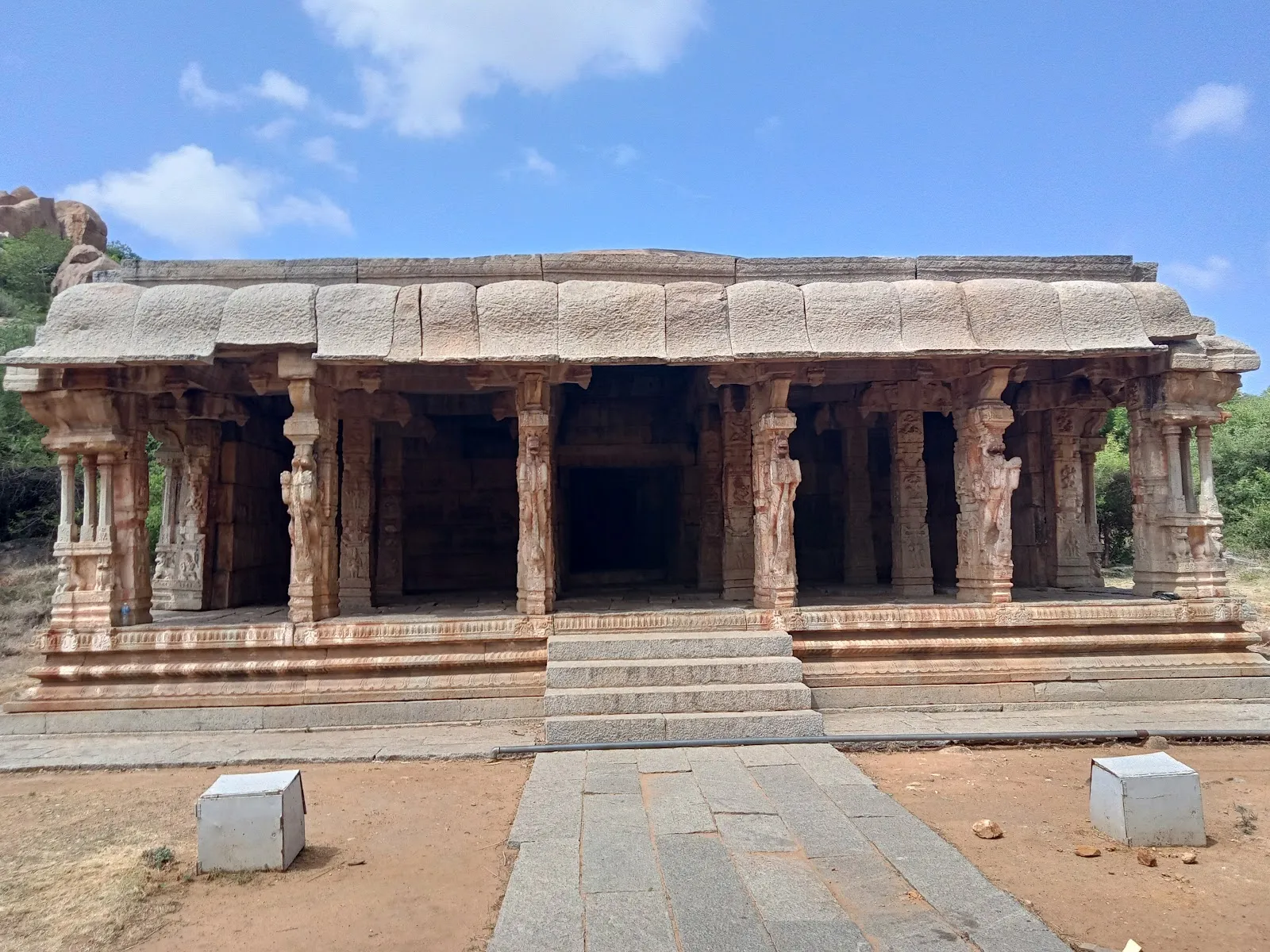
Passing through the gopuram brings you into the courtyards, where the carved pillars are the first thing to notice. The Ranga Mandapa holds ceiling murals with bright colours still visible. Beyond it, the hall of 100 pillars is covered in stone carvings, with scenes from Hindu mythology and animal figures on the columns. Take your time with the pillars, since many panels tell stories that a guide can explain.
The inner sanctum, where the main shrine of Virupaksha stands, is off limits for cameras. The temple's best-known effect is the pinhole camera effect in a dark room inside the complex. Light enters through a small opening and throws the shadow of the gopuram onto a wall, upside down. It is a simple optical effect, but it is one of the most striking things inside the temple.
Hemakuta Hill and the river
Hemakuta Hill sits close to the temple. The climb is rocky and takes some effort. The reward is a wide view over the Tungabhadra River, the temple's gopuram and the scattered ancient shrines of Hampi. One excerpt puts the sunrise point about a 30-minute walk from the temple.
At sunset the light turns gold over the river and the rice paddies, and the scene is a good place to end the day.
Planning the visit
In front of the temple is Hampi Bazaar, a street that stretches for over a kilometre. It is the place for embroidered shawls, fibre handicrafts and stone carvings. The Hampi Utsav in November draws a crowd. The annual chariot festival in February fills the street leading to the temple with thousands of devotees.
The temple has a paid parking lot. The entrance and restrooms are wheelchair accessible.
Preguntas frecuentes
Do I need to take off my shoes?
Yes. Leave your footwear at the counter by the entrance for a small fee of Rs 2 to 4 per pair.
Can I take photos inside?
Yes, in the courtyards, for a small fee. Photography is not allowed in the inner sanctum.
Is the temple still used for worship?
Yes. Prayers are held in the morning and evening, and devotees visit throughout the day.
Is the temple wheelchair accessible?
The entrance, the restroom and the parking lot are wheelchair accessible.
How long do you need?
Plan about 1 to 2 hours for the temple. Add time for the climb to Hemakuta Hill, which is close by.