India Gate is a 42-metre stone war memorial on Kartavya Path in New Delhi, designed by Sir Edwin Lutyens and completed in 1931. It commemorates Indian soldiers who died in the First World War, with names inscribed on the arch and the Amar Jawan Jyoti flame beneath it. Walk around the monument, pause at the memorial, then take in the lawns and fountains. The arch is illuminated after dark, and the surrounding grounds draw families, food vendors and evening strollers.
A memorial on Kartavya Path
India Gate stands at the eastern end of the ceremonial axis of New Delhi, on Kartavya Path. Designed by Sir Edwin Lutyens, the sandstone arch was built between 1921 and 1931. Its form recalls triumphal arches such as the Arc de Triomphe in Paris, though its purpose is to remember soldiers who died in war.
Originally called the All India War Memorial, it commemorates soldiers of the British Indian Army who died in the First World War and the Third Anglo-Afghan War. The First World War dead served across several regions, including France, Mesopotamia and East Africa. Names are carved into the memorial. Accounts differ on the total number of soldiers commemorated, so the exact figure is best left aside when describing the monument.
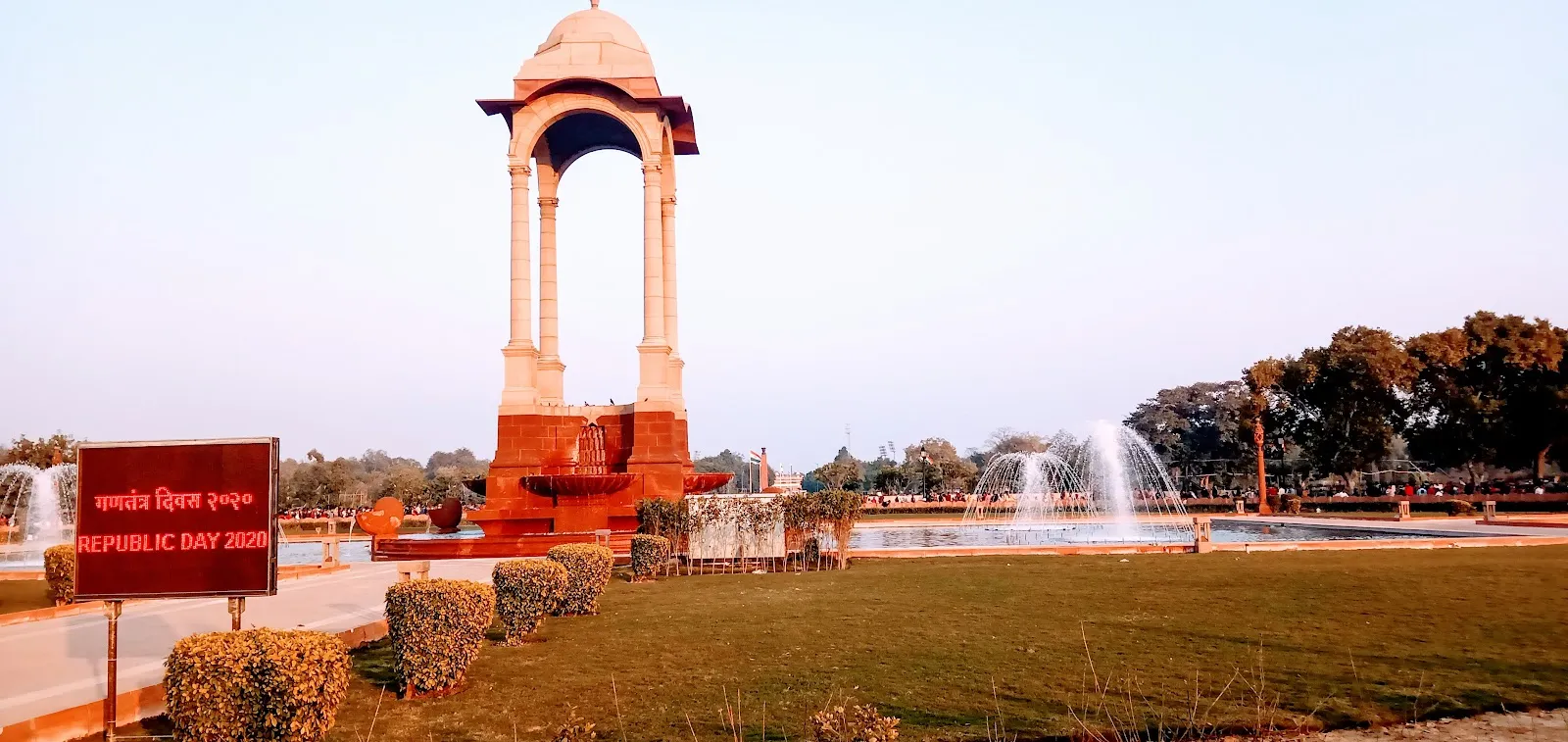
The foundation stone was laid by the Duke of Connaught in 1921. Lord Irwin unveiled the completed memorial in 1931. India Gate is also associated with the Republic Day parade, held each year on January 26.
The arch and the memorial flame
Take time to look closely at the scale of the arch and the inscriptions on its stonework. The structure rises about 42 metres above its base, making it visible across the open space around it. Its broad arch and formal design are particularly striking when the monument is lit at night.
Beneath the arch is the Amar Jawan Jyoti, a flame established in memory of Indian soldiers who died in the 1971 Indo-Pakistani War. It adds a later layer of remembrance to a monument built for earlier conflicts. Pause here respectfully, and give space to people paying their respects.
The lawns and evening atmosphere
The open grounds around India Gate are part of the visit. Families gather on the lawns, children play, and vendors sell snacks, ice cream and toys. Fountains and landscaped areas add to the setting, while the illuminated arch draws people after sunset. The mood can shift from quiet reflection at the memorial to a lively public gathering nearby.
An early visit or a late-evening walk can make time outdoors more comfortable, though the area can still be busy. If you want photographs, take a moment to appreciate the memorial as well as the view through the arch. India Gate is a place of remembrance, so keep your conduct considerate around the flame and inscriptions.
Preguntas frecuentes
Is India Gate free to visit?
The supplied visitor information lists admission as free.
What does India Gate commemorate?
It is a war memorial for Indian soldiers who died in the First World War and the Third Anglo-Afghan War. The Amar Jawan Jyoti beneath the arch honours soldiers who died in the 1971 Indo-Pakistani War.
Who designed India Gate?
Sir Edwin Lutyens designed the memorial. Construction ran from 1921 to 1931.
When is a good time to visit India Gate?
Early morning and late evening are suggested for more comfortable weather and more manageable crowds. The monument is illuminated after dark.