Vajdahunyad Castle stands in Budapest’s City Park, beside a lake and open green space. Built for the 1896 Millennium Exhibition, it brings together Romanesque, Gothic, Renaissance and Baroque forms inspired by buildings from historic Hungary. Walk through the courtyards to see the changing façades and find the statue of Anonymus, a hooded figure in the inner courtyard. The grounds are free to enter, so you can enjoy the architecture and park without going into the museum.
A castle built for the Millennium Exhibition
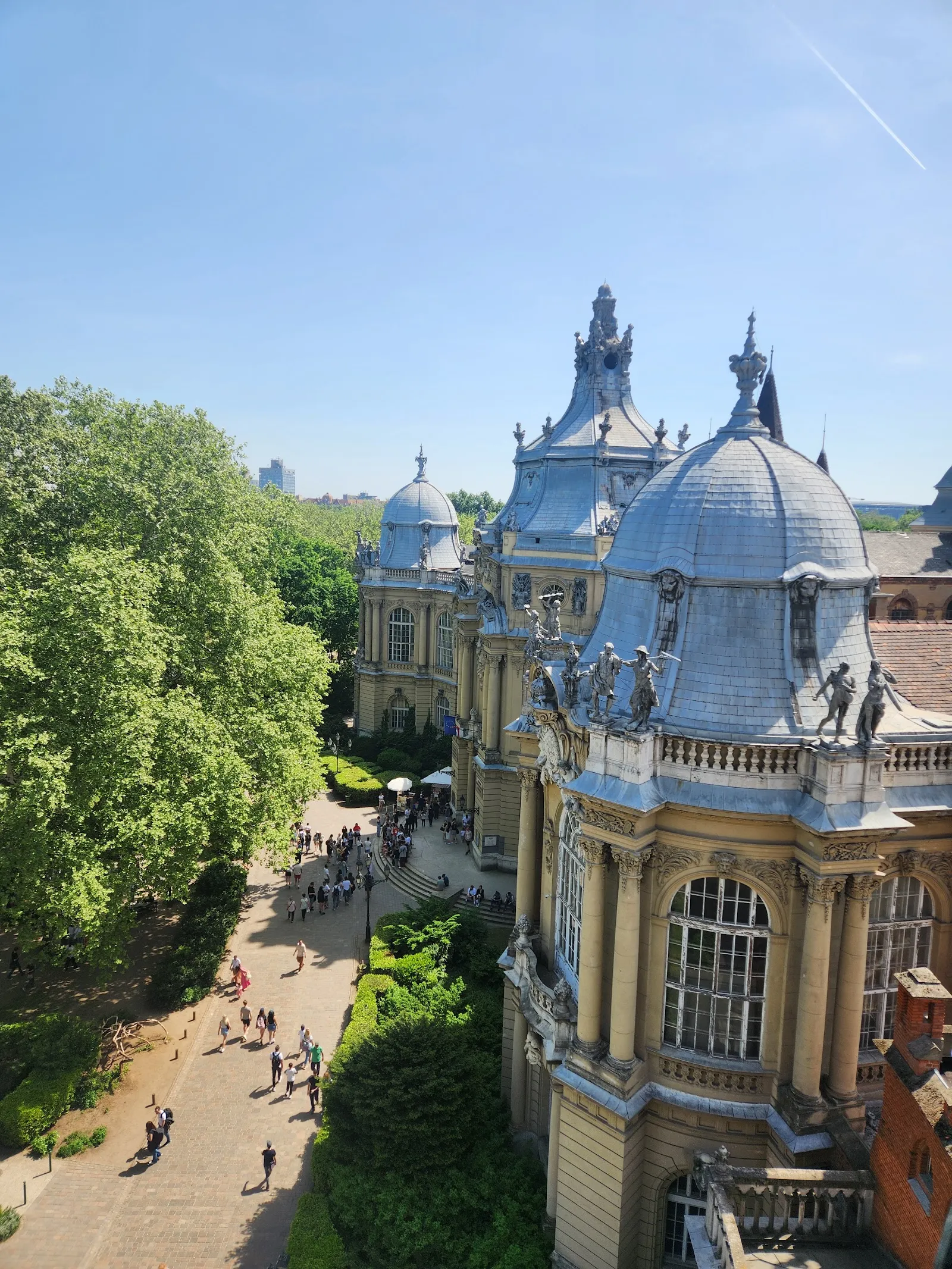
Vajdahunyad Castle was first built for Budapest’s 1896 Millennium Exhibition, which marked a thousand years of Hungarian history. The original complex used temporary materials, but its popularity led to a permanent reconstruction in stone and brick between 1904 and 1908. Architect Ignác Alpár designed the ensemble around examples of historic Hungarian architecture.
The complex draws on 21 buildings from across the historic Hungarian realm. Its purpose was commemorative, not defensive: the towers and walls form an architectural composition rather than a working fortification. The castle’s later association with Hungary’s lost territories gives the site a further layer of historical meaning.
Look for the changes in style
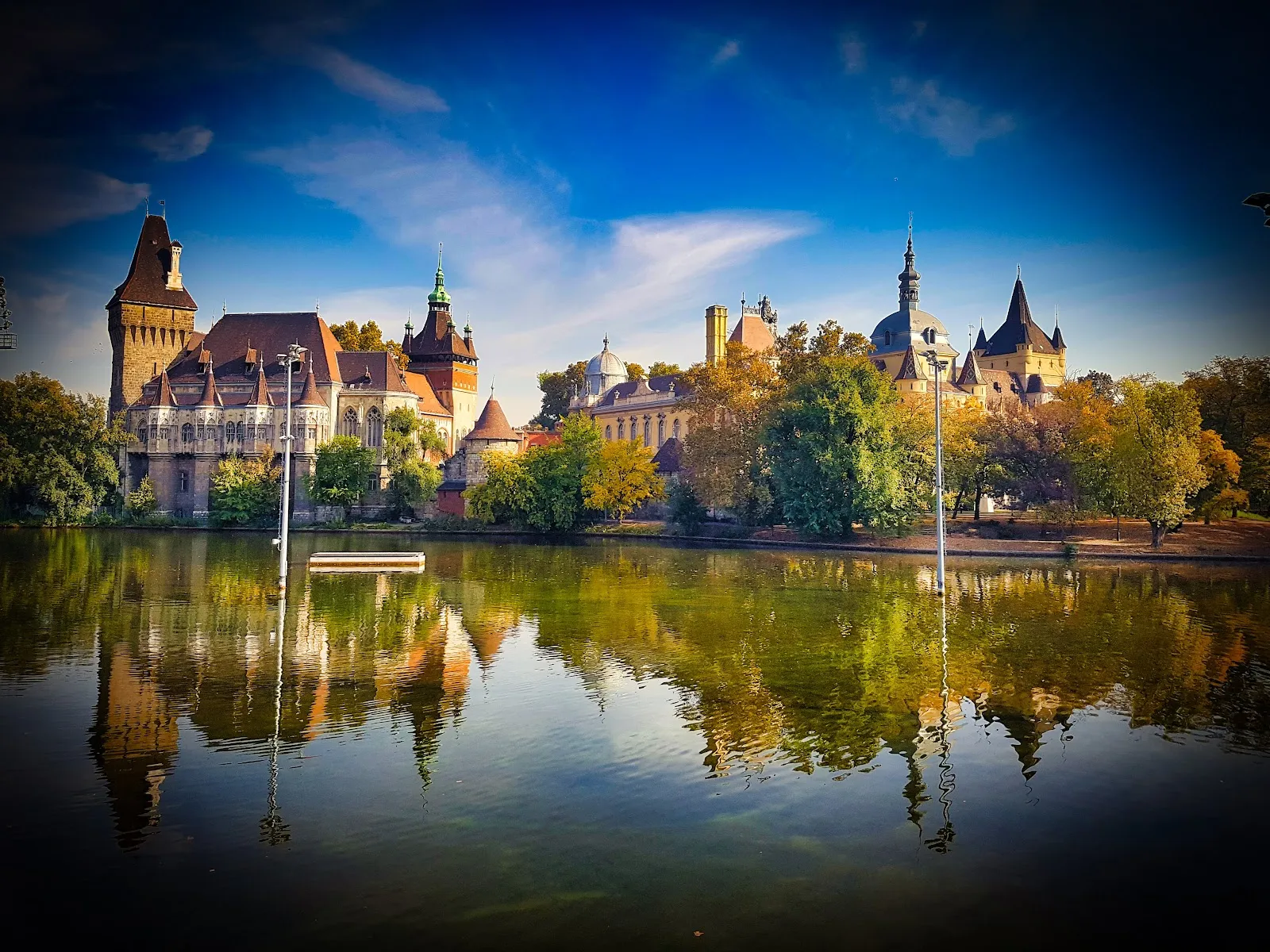
As you walk around the complex, notice how the architecture shifts from one section to another. The Romanesque part takes inspiration from the 13th-century church of Ják. Its carved entrance and cloister arches contrast with the taller Gothic forms elsewhere in the castle.
The Gothic section has towers, a drawbridge and narrow, pointed windows, drawing on Corvin Castle in Transylvania. Renaissance and Baroque elements add more formal façades, decorated rooflines and classical statues. Together, these details make the castle a useful place to compare architectural styles at close range.
The Anonymus statue and the museum
In the inner courtyard, a bronze figure in a monk’s hood represents Anonymus, the unnamed 12th-century chronicler associated with the Gesta Hungarorum, an early written history of the Magyars. The sculpture was made by Miklós Ligeti in 1903. Its identity and setting connect the castle’s architectural survey with the writing of Hungarian history.
The castle houses the Hungarian Agricultural Museum. The exterior courtyards can be explored free of charge, while museum visits are a separate part of the visit. Check the museum’s official website for current visitor details before planning to go inside.
Preguntas frecuentes
Is it free to visit Vajdahunyad Castle?
The castle grounds are free to enter. The Hungarian Agricultural Museum is inside the complex; check its official website for current visitor information.
When was Vajdahunyad Castle built?
It was first made for the 1896 Millennium Exhibition. After the temporary version proved popular, it was rebuilt in stone and brick between 1904 and 1908.
What architectural styles can you see at Vajdahunyad Castle?
The complex combines Romanesque, Gothic, Renaissance and Baroque elements inspired by historic Hungarian buildings.
Where is the Anonymus statue?
The bronze statue is in the castle’s inner courtyard. It depicts the hooded, unnamed chronicler associated with the Gesta Hungarorum.