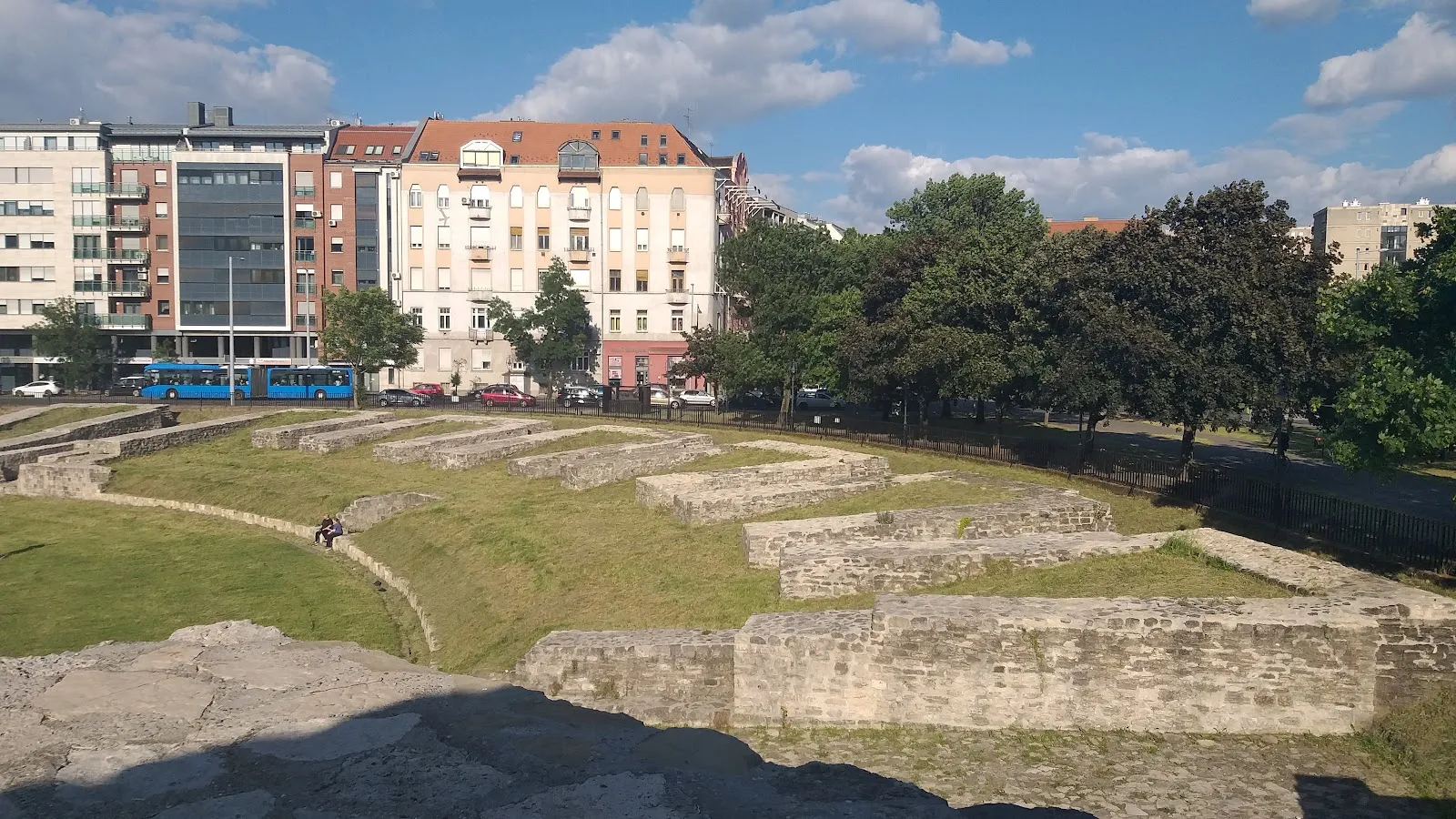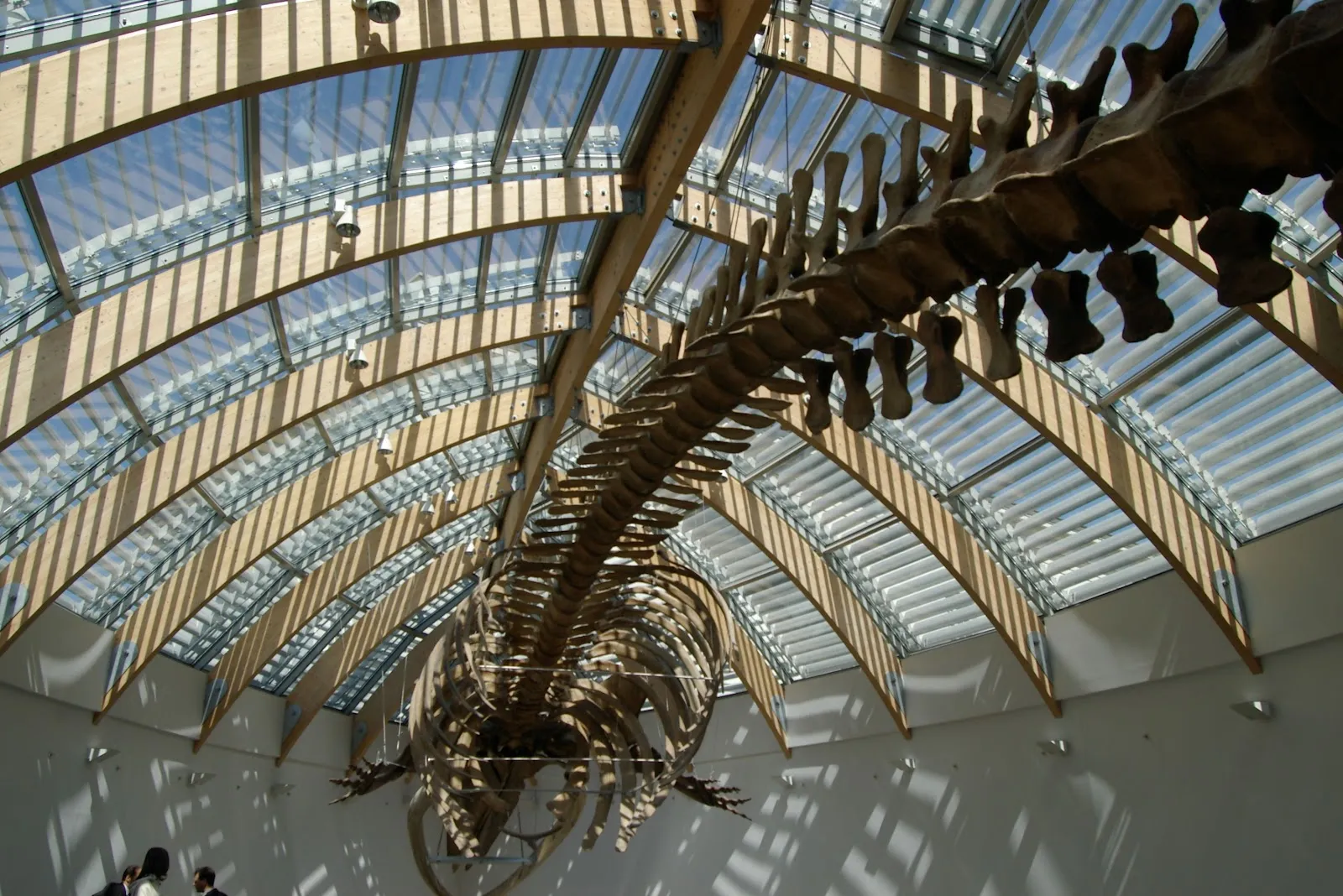
The Hungarian Natural History Museum is at Ludovika tér 2-6 in Budapest, in the former Ludovika Military Academy. Its collections explore the natural world, with a focus on the Carpathian Basin and exhibits on geology, animals and plants. Look for the fin whale skeleton near the entrance, then explore fossils, minerals, insects and coral reef displays across three floors. Dinosaur reconstructions and interactive activities give families plenty to explore, though some displays may be unavailable. English appears alongside Hungarian on some exhibits, not all.
A former military academy turned museum
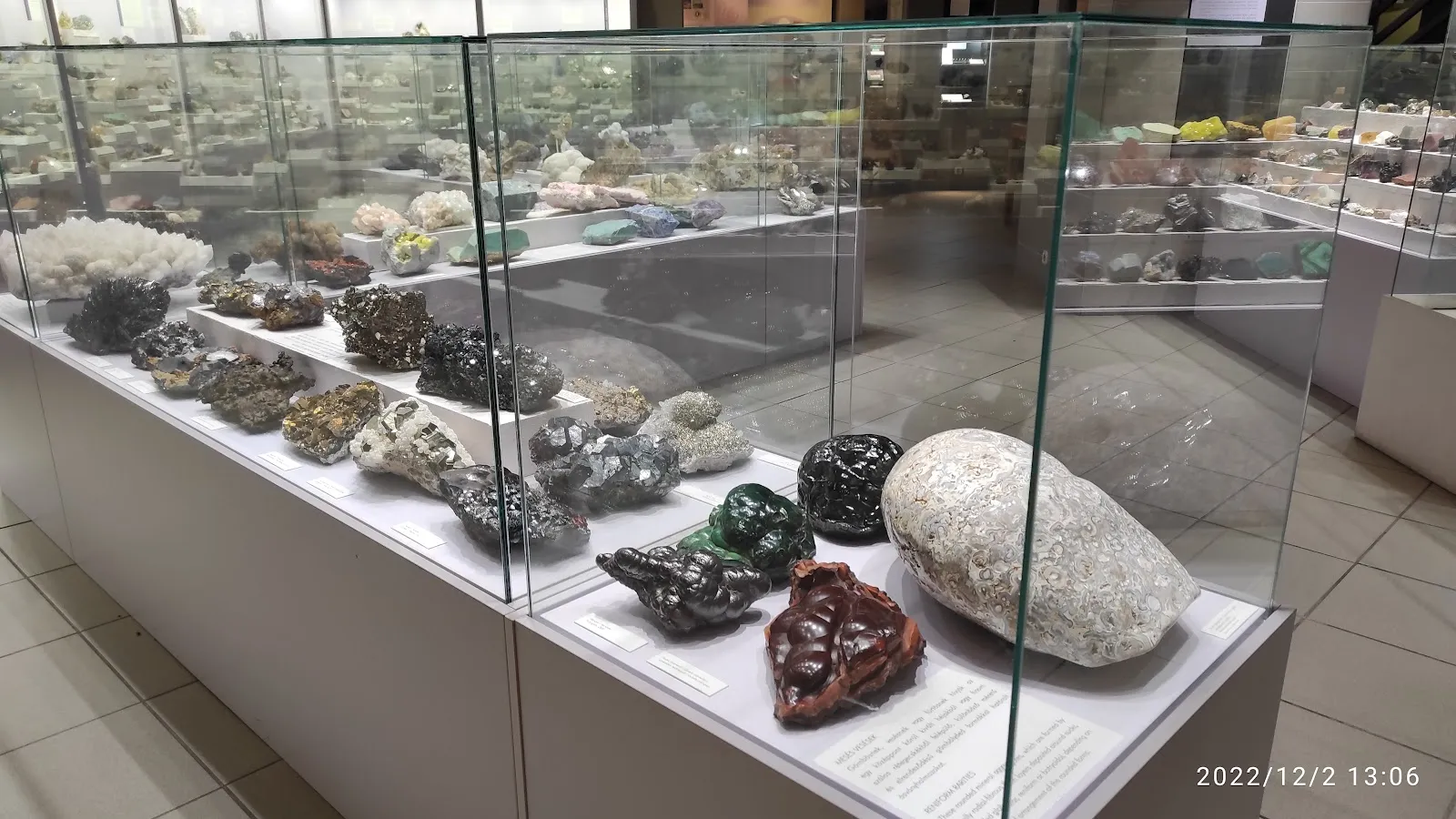
The Hungarian Natural History Museum is housed in the former Ludovika Military Academy. Its history as a museum began in 1802 with a mineral collection at the Hungarian National Museum. Over time, the collection grew and the institution developed into a separate museum.
Today, its holdings cover natural history, including geology, zoology, botany, anthropology and paleontology. The museum’s focus includes Hungary and the Carpathian Basin, while other displays introduce the natural diversity of the wider world.
What to look for inside
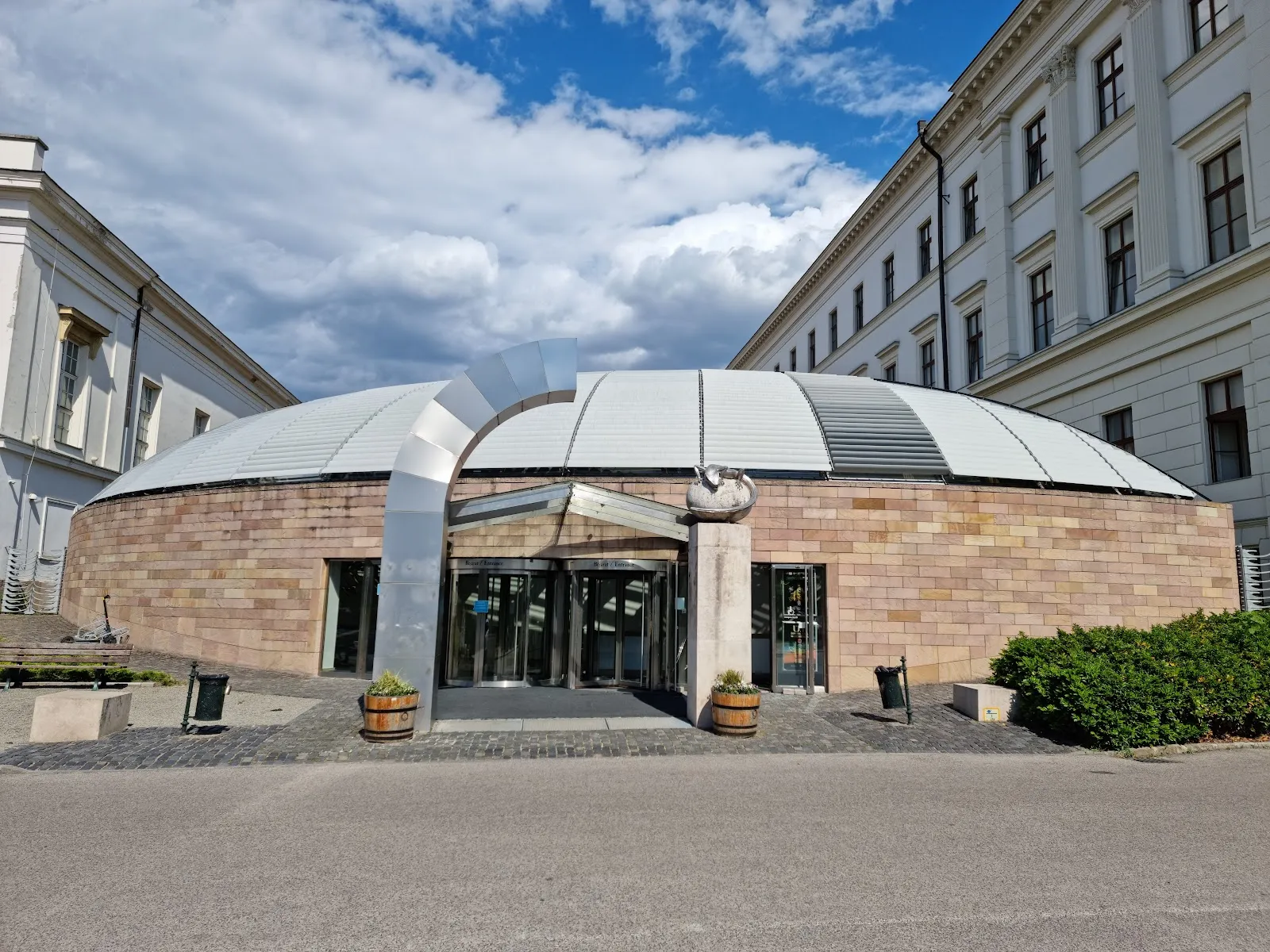
The exhibitions extend across three floors. A large fin whale skeleton greets visitors near the entrance, and the collections include rocks, minerals, gems, insects, fossils and displays on coral reefs. The paleontology section includes dinosaur reconstructions, among them a T-Rex replica; the number and availability of dinosaur displays can vary with the exhibitions on view.
Interactive activities add a hands-on element, particularly for children. Some display text is in both Hungarian and English, though English is not available throughout. Stamp stations around the museum give younger visitors another way to engage with the galleries as they go.
A visit with children
The museum’s mix of fossils, animals, minerals and interactive activities makes it a useful indoor stop for families interested in science and nature. Children under six can enter free, and visitors under 26 can attend free on the first Sunday of each month. Check current admission details before setting out, as the available information does not specify other eligibility conditions.
Allow around an hour and a half to two hours to walk through the displays at a steady pace. Some interactive screens or exhibits may not be working or available, so plan the visit around the collections that interest you rather than relying on every activity being open.
Preguntas frecuentes
How long should I spend at the Hungarian Natural History Museum?
Allow about 1.5 to 2 hours to explore the displays across three floors.
Is there free admission?
Children under six can enter free. Visitors under 26 can attend free on the first Sunday of each month.
Are the exhibits in English?
Some displays include English alongside Hungarian, but English text is not available for every exhibit.
What can I see at the museum?
Collections include fossils, dinosaur reconstructions, minerals, insects and coral reef displays. A large fin whale skeleton stands near the entrance.