Fisherman’s Bastion is a Neo-Romanesque terrace on Castle Hill in Budapest, beside Matthias Church. Its seven stone towers and arched walkways frame views across the Danube to Pest, including the Hungarian Parliament. Built between 1895 and 1902 as a decorative lookout, it takes its name from the fishermen’s guild that defended this stretch of the medieval city walls. Walk the terraces for changing views, or look through the arches for a framed Parliament photo. The lower viewpoints are free; access to some upper sections costs extra.
A lookout built for the city views
Fisherman’s Bastion stands on Castle Hill on the Buda side of the Danube, beside Matthias Church. Though its towers and stone walls suggest an older fortress, the structure was built between 1895 and 1902. Architect Frigyes Schulek designed it as a decorative viewing terrace, not as a defensive stronghold. Its pale stone, stairways and open galleries give visitors room to move between viewpoints.
The name recalls the fishermen’s guild, which was responsible for defending this section of Buda’s medieval walls. The site is also associated with a medieval fish market. The bastion’s appearance connects it visually with the neighbouring church and the surrounding Castle District, while its terraces look outward over the river and the city beyond.
Seven towers and their meaning
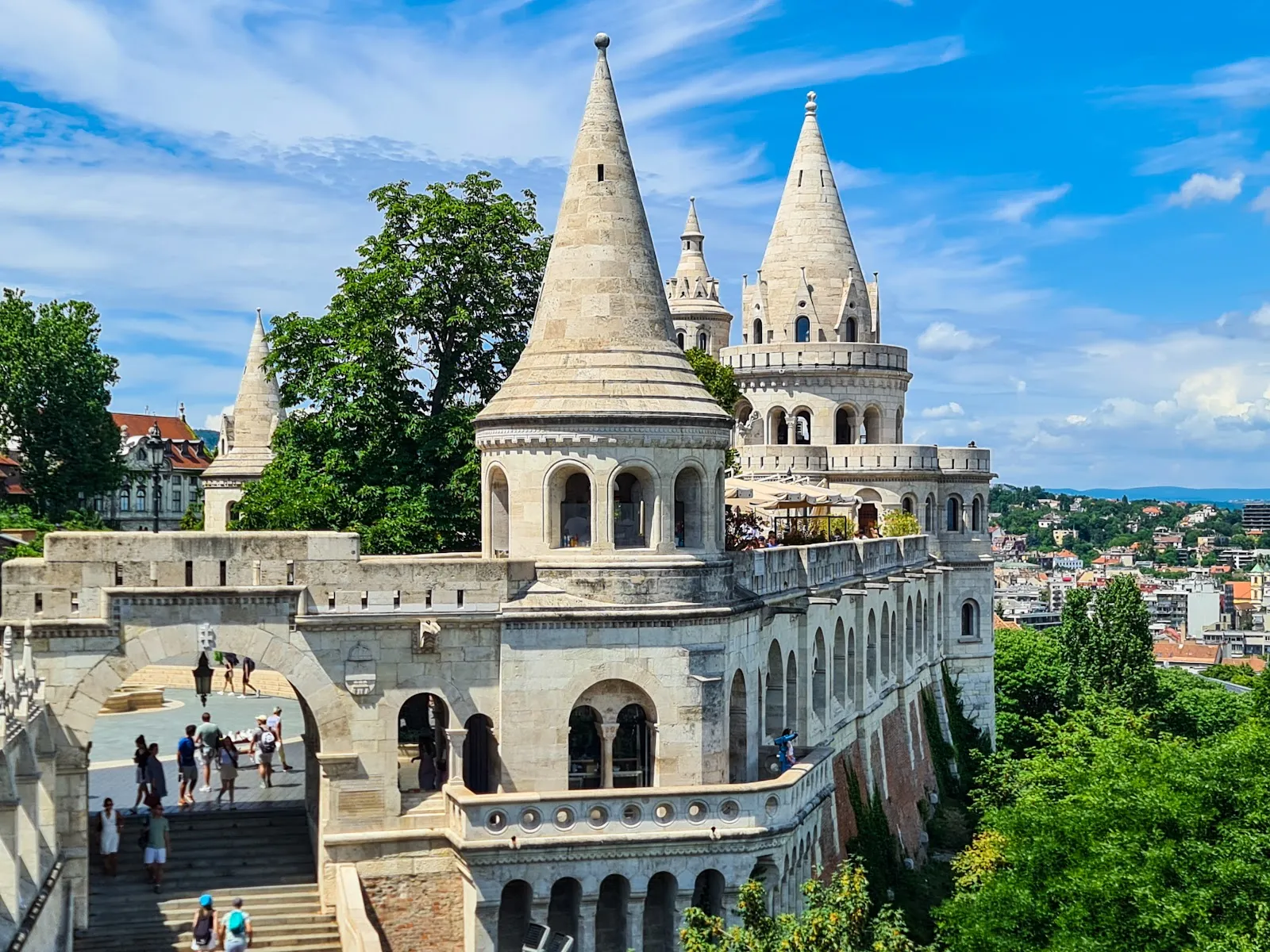
The seven towers represent the Magyar tribes associated with the settlement of the Carpathian Basin and the founding of Hungary. Their pointed roofs and repeating arches give the terrace its distinctive outline against the Budapest skyline. Take time to notice how the design changes as you walk: broad openings, narrow passages and stairways create different views of the river and Pest.
The bastion is part of Budapest’s Castle District, an area that brings together landmarks from different periods. The nearby Matthias Church is an important companion stop, and the statue of Stephen I of Hungary is also close by. These sights make it easy to include the terrace in a walk around Castle Hill rather than treating it as a separate destination.
Choosing a viewpoint
The most recognisable view looks east across the Danube towards the Hungarian Parliament. The river, bridges and Pest skyline fill the panorama, and the arches offer natural frames for photographs. Walk between the terraces to find different angles; a view from one section may include more of the river, while another brings the Parliament into clearer focus.
The lower viewing areas provide city views without a ticket. Some upper sections have paid access, so check the arrangements on site if you want to go higher. The area is open around the clock, though access to upper levels can be subject to separate hours. Early visits leave more room to pause at the viewpoints, while sunset brings changing light over the river and buildings.
Preguntas frecuentes
Is Fisherman’s Bastion free to visit?
The lower terraces are free to enter. Some upper sections require a paid ticket.
What do the seven towers represent?
They represent the seven Magyar tribes associated with the settlement of the Carpathian Basin and the founding of Hungary.
What can you see from Fisherman’s Bastion?
The terraces overlook the Danube, Pest and the Hungarian Parliament. The arches provide framed views of the city.
Is Fisherman’s Bastion near Matthias Church?
Yes. The church stands beside the bastion, making it easy to visit both on the same Castle Hill walk.