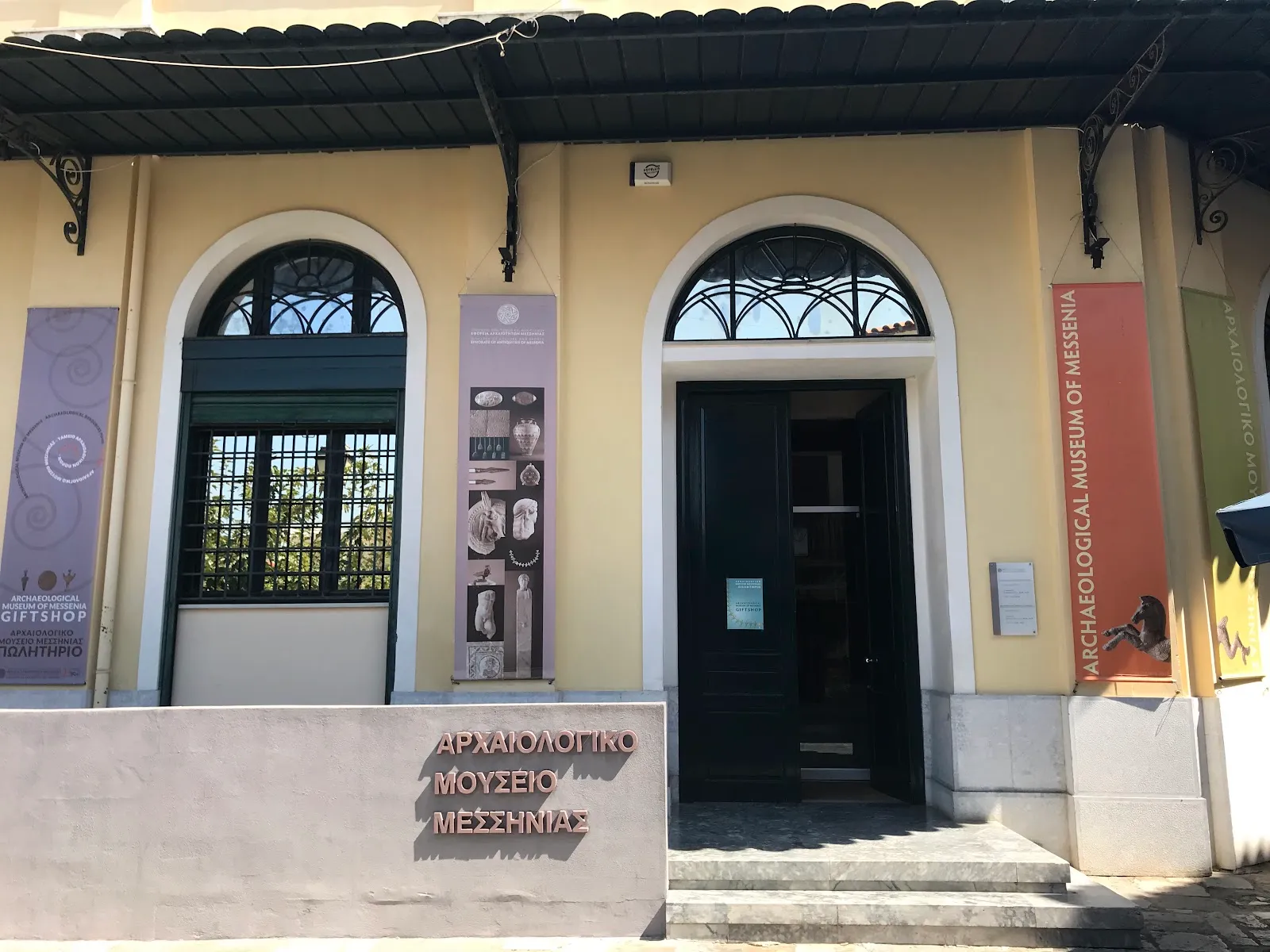
At the foot of Acrocorinth, Ancient Corinth brings together the Temple of Apollo, remains of the Roman Forum and a museum of finds from the site. The city grew wealthy through its position on the Isthmus of Corinth, the narrow land link between central Greece and the Peloponnese. Walk among columns, fountains and other ancient structures, then look closely at the museum’s statues, mosaics and sarcophagi. Some areas are hard to identify, so a guidebook can help you make sense of the ruins.
A city shaped by its position
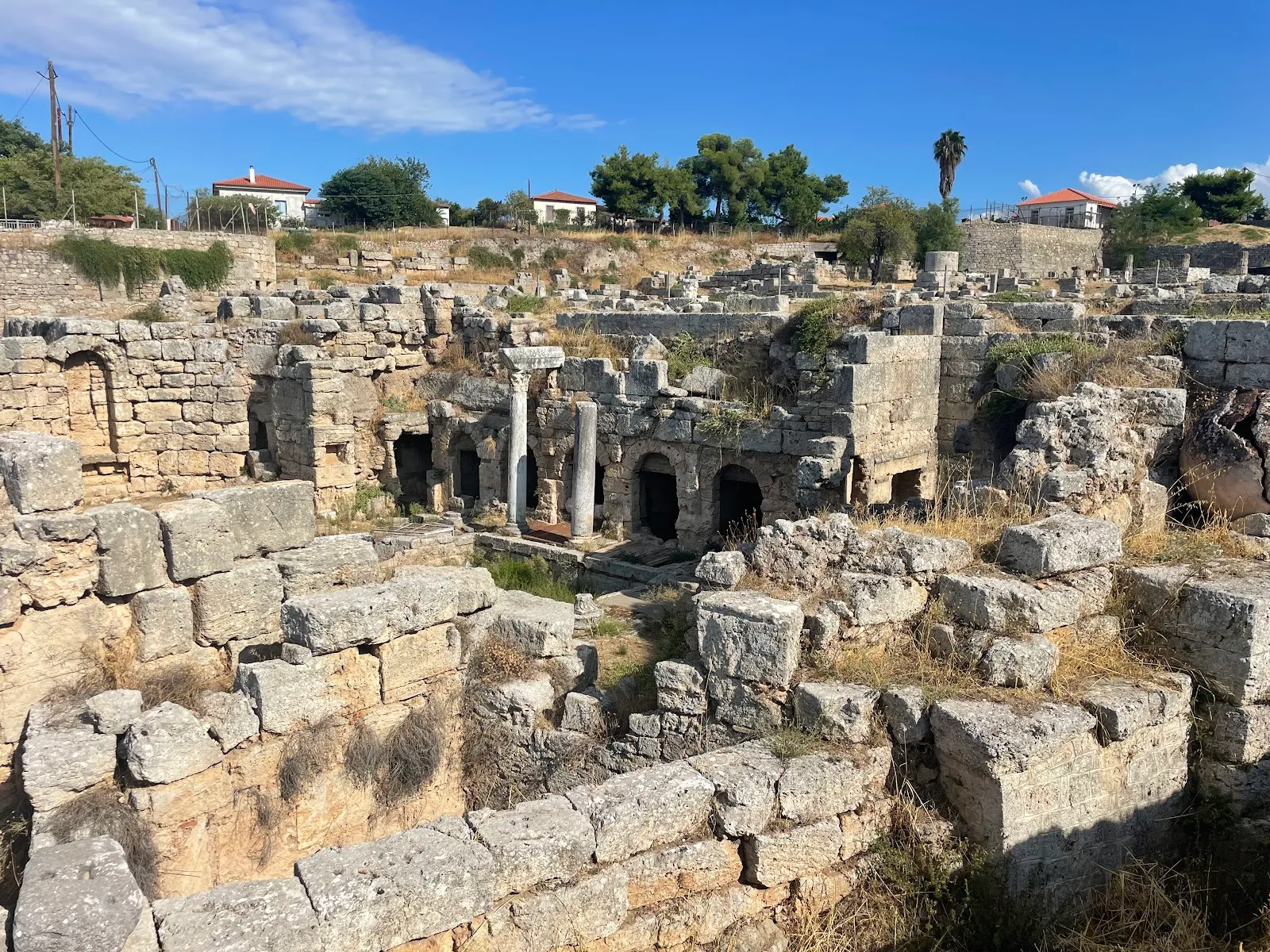
Ancient Corinth stood on the Isthmus of Corinth, the narrow land route connecting the Peloponnese with the rest of mainland Greece. Its location placed it on a major east-west trade route and gave it influence in the Classical and Hellenistic periods. The city’s history reaches back to the Neolithic Period; by the fifth century BC, it had a population of about 90,000.
Corinth’s position also mattered in the rivalries between Greek city-states. It was an important power during the Peloponnesian War, when Athens and Sparta competed for allies. In 146 BC, Roman forces destroyed the city. Corinth was later rebuilt as a Roman provincial capital, and many of the remains visible today date to that period.
The Temple of Apollo and the ruins
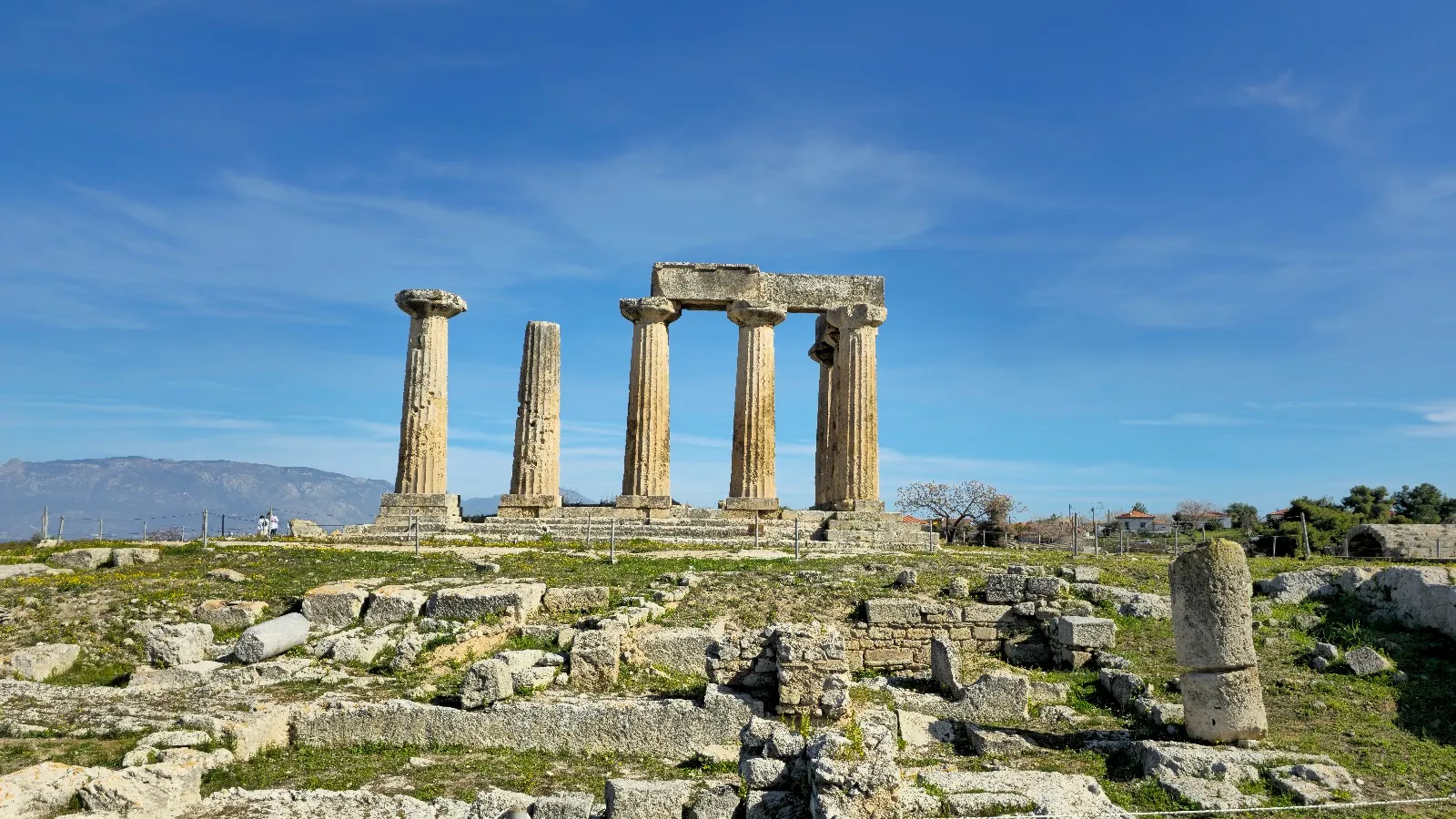
The Temple of Apollo is the site’s most prominent ancient monument. Its surviving stone columns rise above the remains of the city, with Acrocorinth and the surrounding mountains as a backdrop. Look at the carved, fluted columns and their bases, then pause to see how the temple sits within the larger archaeological site.
The remains extend beyond the temple. The Roman Forum, fountains, porticoes, baths and latrines give a sense of a city built for public life as well as worship. Marketplaces and Roman streets are also part of the scattered ruins. The buildings are spread across the site, so allow time to walk between them rather than treating the temple as the only stop.
Inside the archaeological museum
The Archaeological Museum of Ancient Corinth displays finds excavated in the area. Its collections include statues, mosaics, sarcophagi and other objects that help put the buildings outside in context. The museum’s organised displays make it a useful companion to a walk around the ruins: see the objects first to get a feel for what has been uncovered, or visit afterward to connect the finds with the structures you have seen.
Some remains outdoors are difficult to identify, and vegetation can obscure parts of the site. A book on the history of Corinth can help you follow the ruins, and the Erastus inscription is worth looking out for because it may not be clearly marked. Check the ticket information before setting out; advance booking is recommended, and visitors under 25 can ask about free entry with ID.
Preguntas frecuentes
What should I see at Ancient Corinth?
Start with the Temple of Apollo, then explore the Roman Forum, fountains, porticoes, baths and other remains. The on-site museum has finds including statues, mosaics and sarcophagi.
How long do you need at Ancient Corinth?
Allow about 2 to 3 hours to walk around the ruins and visit the museum.
Is there an entry fee for Ancient Corinth?
The supplied information notes free entry for visitors under 25. Bring ID and ask at the entrance; it does not specify the standard ticket price.
Is it useful to bring a guidebook?
Yes. Some structures have limited signage, and the Erastus inscription may not be clearly marked.