Acrocorinth, the fortified acropolis above Ancient Corinth in the Peloponnese, rewards the uphill walk with broad views over the surrounding hills and valley. Its walls, gates and towers enclose traces of successive Corinthian, Roman, Byzantine, Venetian and Ottoman periods. Paths cross uneven, sometimes slippery ground, so wear sturdy shoes and bring water. You can explore for about two to three hours, but the climb is demanding; after the second gate, there are still views if you choose not to continue to the top.
A fortress above Ancient Corinth
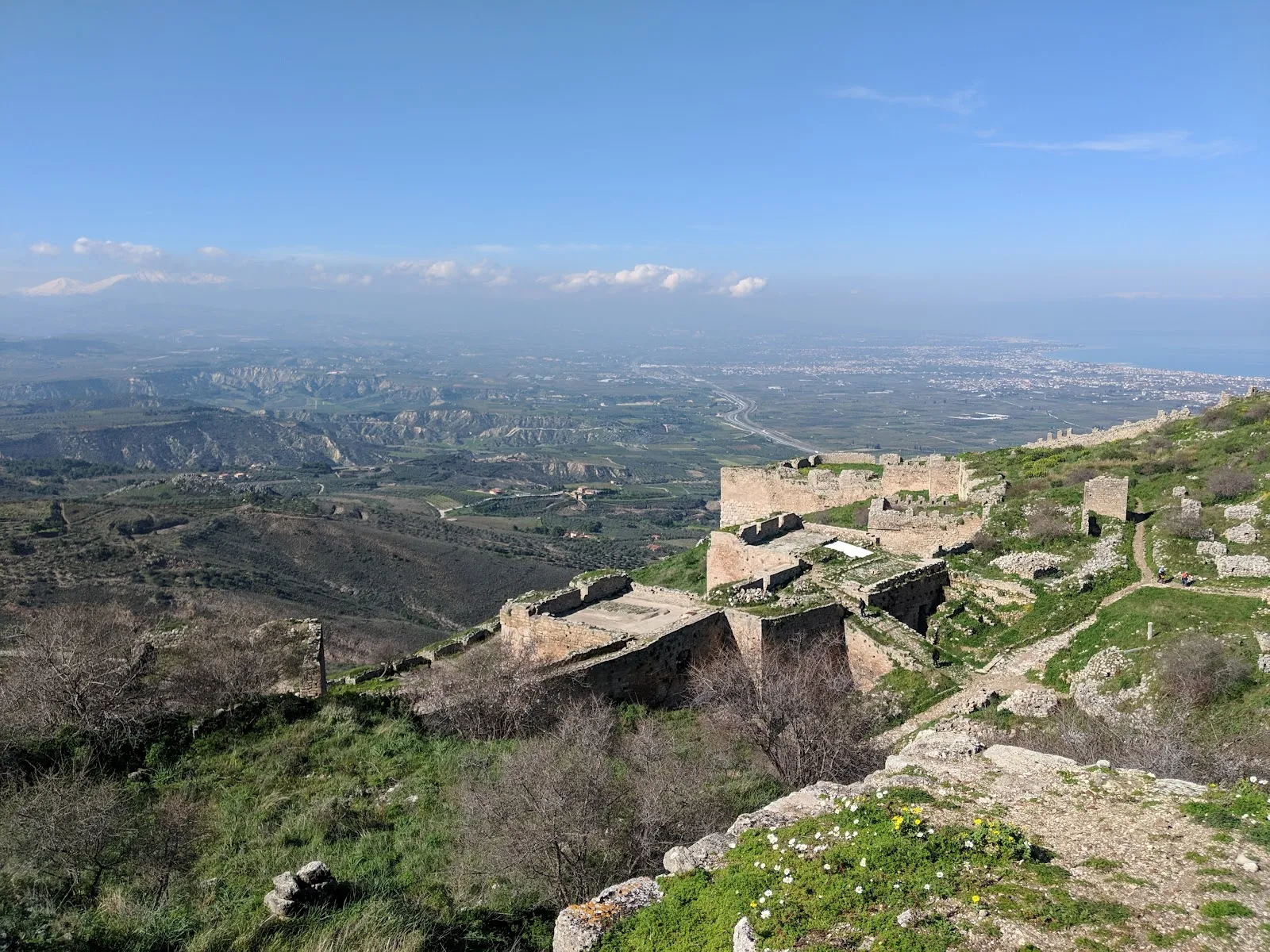
Acrocorinth means the acropolis of Corinth. The fortress occupies a high hill above the ancient city, where its position helped defenders watch the approaches and resist attack. Its history stretches back to the Archaic period, and the site later became one of three fortresses fortified by the Macedonians to secure their rule in Greece.
Control changed over the centuries. The Macedonian garrison was later driven out by the Achaean League. Rome captured Corinth in 146 BC and destroyed the city; a new city was established in 44 BC. As the Eastern Roman, or Byzantine, Empire rose, Corinth was fortified again. Franks, Venetians and Ottomans also held the fortress, leaving the remains of successive occupations within its walls.
Gates, walls and traces of earlier periods
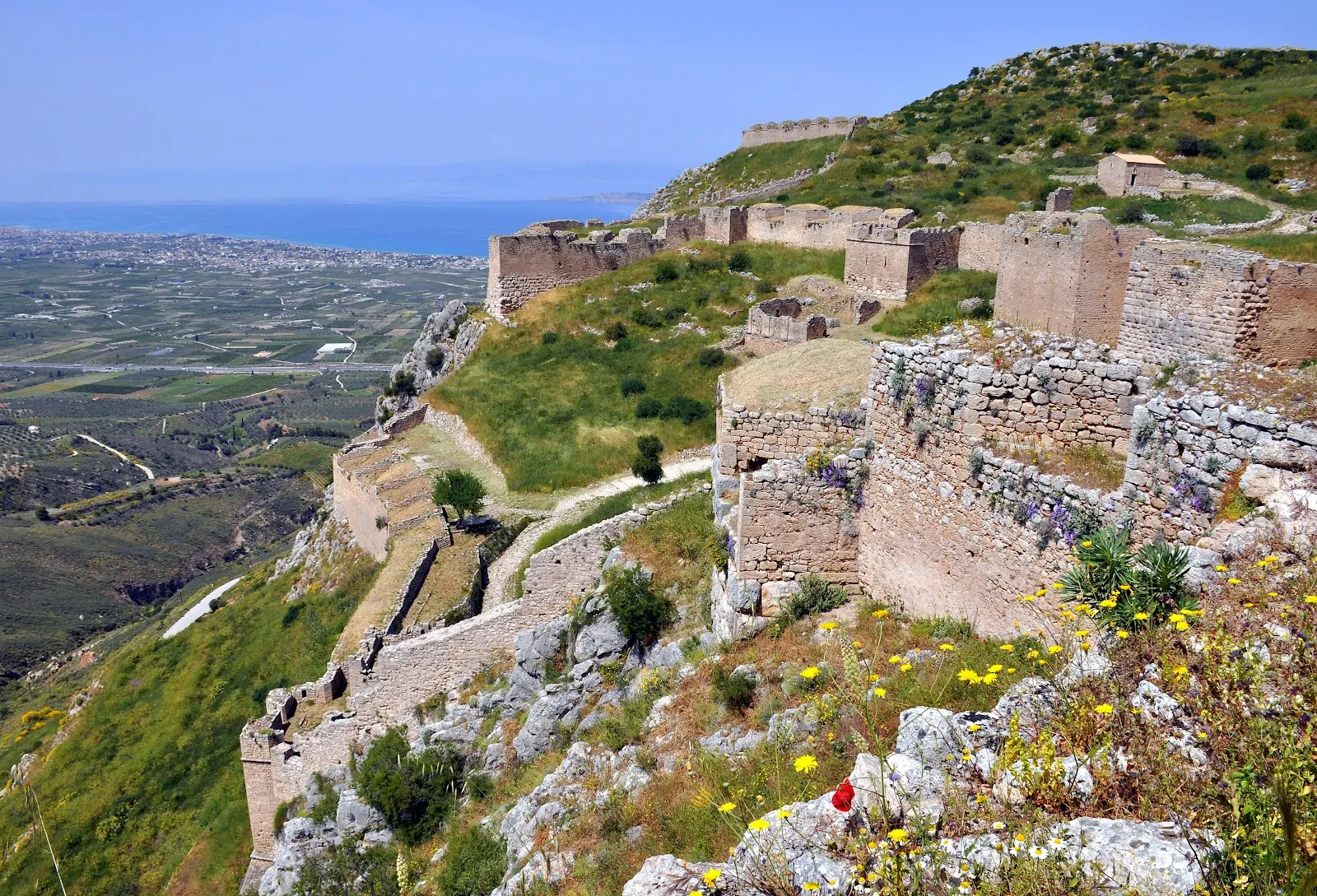
The fortress’s long walls enclose a large area, with gates and towers along the route. Inside, the ground is uneven and paths pass through open landscape and historic remains. The site includes traces associated with Corinthian, Roman, Byzantine, Venetian and Ottoman periods, as well as remains of a church and a mosque.
The hilltop setting is part of the visit: from the fortress, you can look out over the valley and the hills around Corinth. The climb and the distance between points mean you can set your own pace. You do not have to reach the highest point to see the landscape; there are views after the second gate too.
Planning the walk
From the entrance, expect a climb on rocky, unpaved paths. Some sections are steep and can be slippery, so sturdy walking shoes are useful. Bring water, especially if you plan to walk around the wider site. A full visit takes roughly two to three hours, while a shorter walk can still take you through part of the fortress.
Pay attention to the closing time: the entrance gate closes promptly, so leave enough time to return. Maps may be faded or unclear along some paths. Once past the third gate, take a moment to check the route as you explore. The visit is free to enter, and parking is available at the site.
Preguntas frecuentes
Is there an entrance fee for Acrocorinth?
No, entry is free.
How long should I allow for Acrocorinth?
Allow about two to three hours to explore the site.
Is the walk up to Acrocorinth difficult?
The paths are rocky and unpaved, with steep, sometimes slippery sections. Sturdy shoes and water are recommended, and you can stop after the second gate if you do not want to continue uphill.
What can you see at Acrocorinth?
The fortress has historic walls, gates and towers, with remains from Corinthian, Roman, Byzantine, Venetian and Ottoman periods. The hilltop also gives views over the surrounding valley and hills.