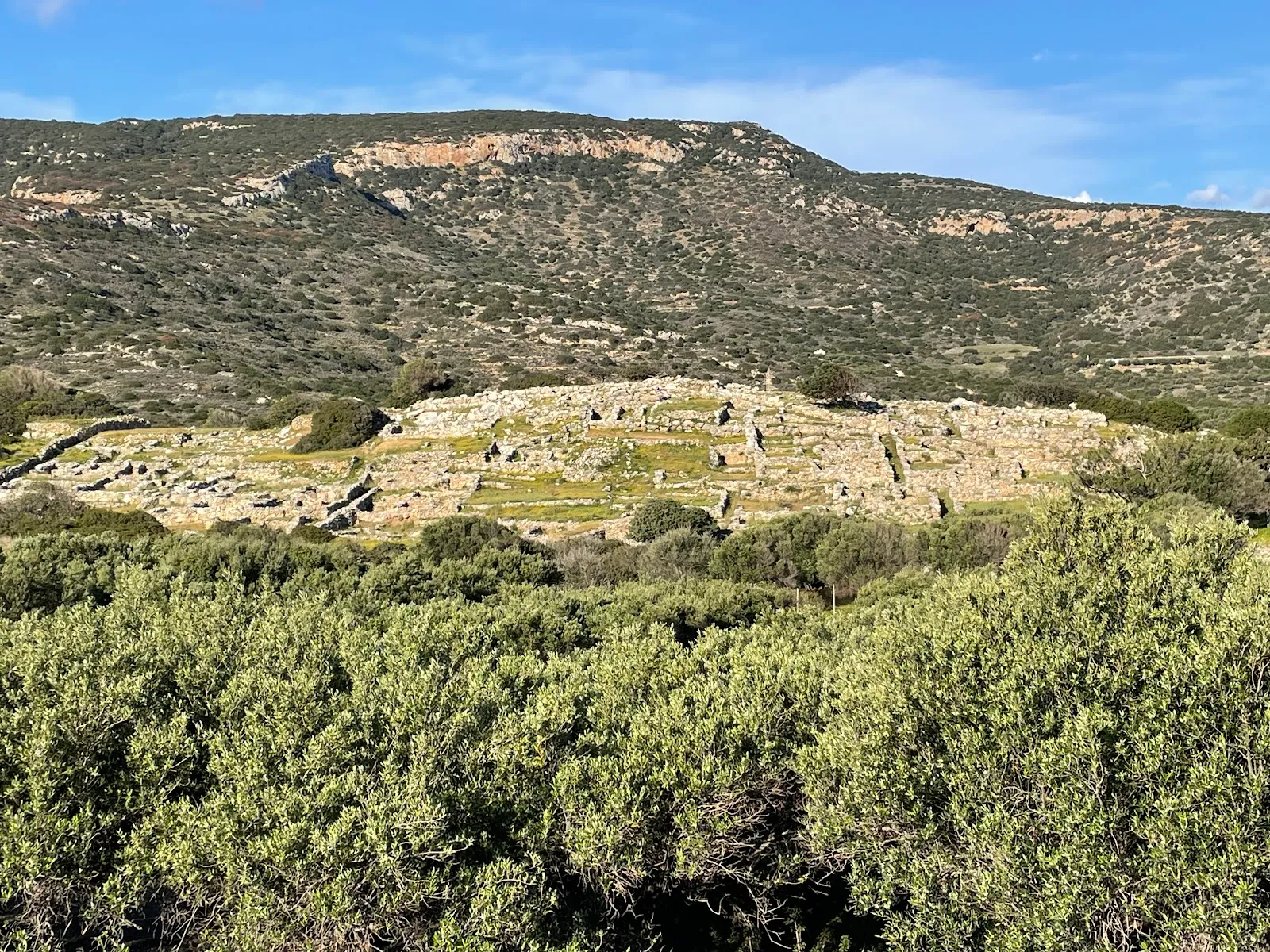
Gournia is a well-preserved Minoan town on a hillside near the Gulf of Mirabello in eastern Crete. Its streets lead past the remains of houses, workshops and shrines to the palace, giving you a close look at how a settlement worked beyond its ruling class. Gournia was a manufacturing and transportation hub with its own seaport. You can walk through the ruins without barriers, and the site’s position near the sea adds to the visit. Allow about an hour to explore.
A Minoan town near the sea
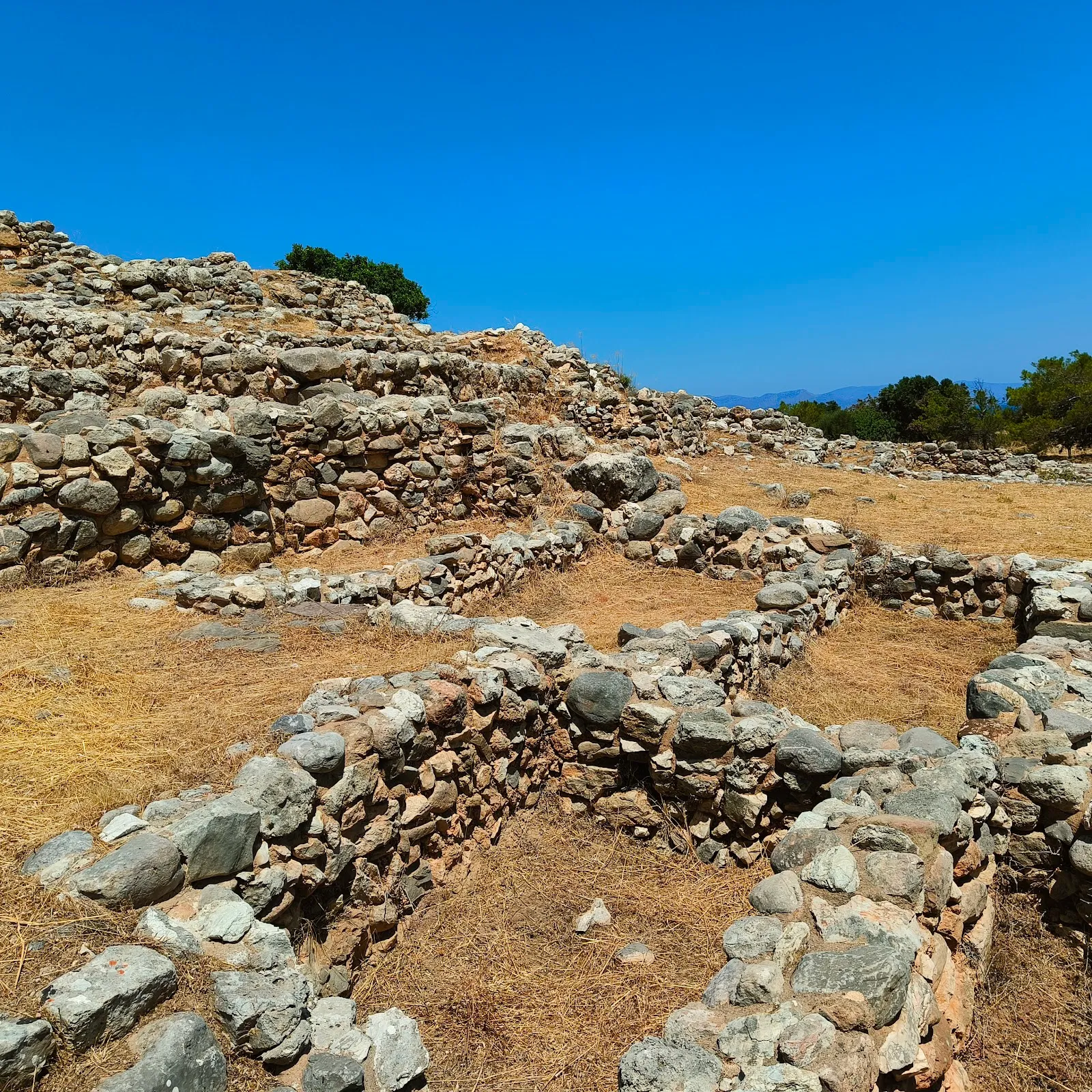
Gournia lies on a low hillside near the Gulf of Mirabello, in eastern Crete. The settlement grew around cobbled streets, with houses, workshops and a palace gathered across the slope. Its remains give a sense of a town rather than a single monumental building.
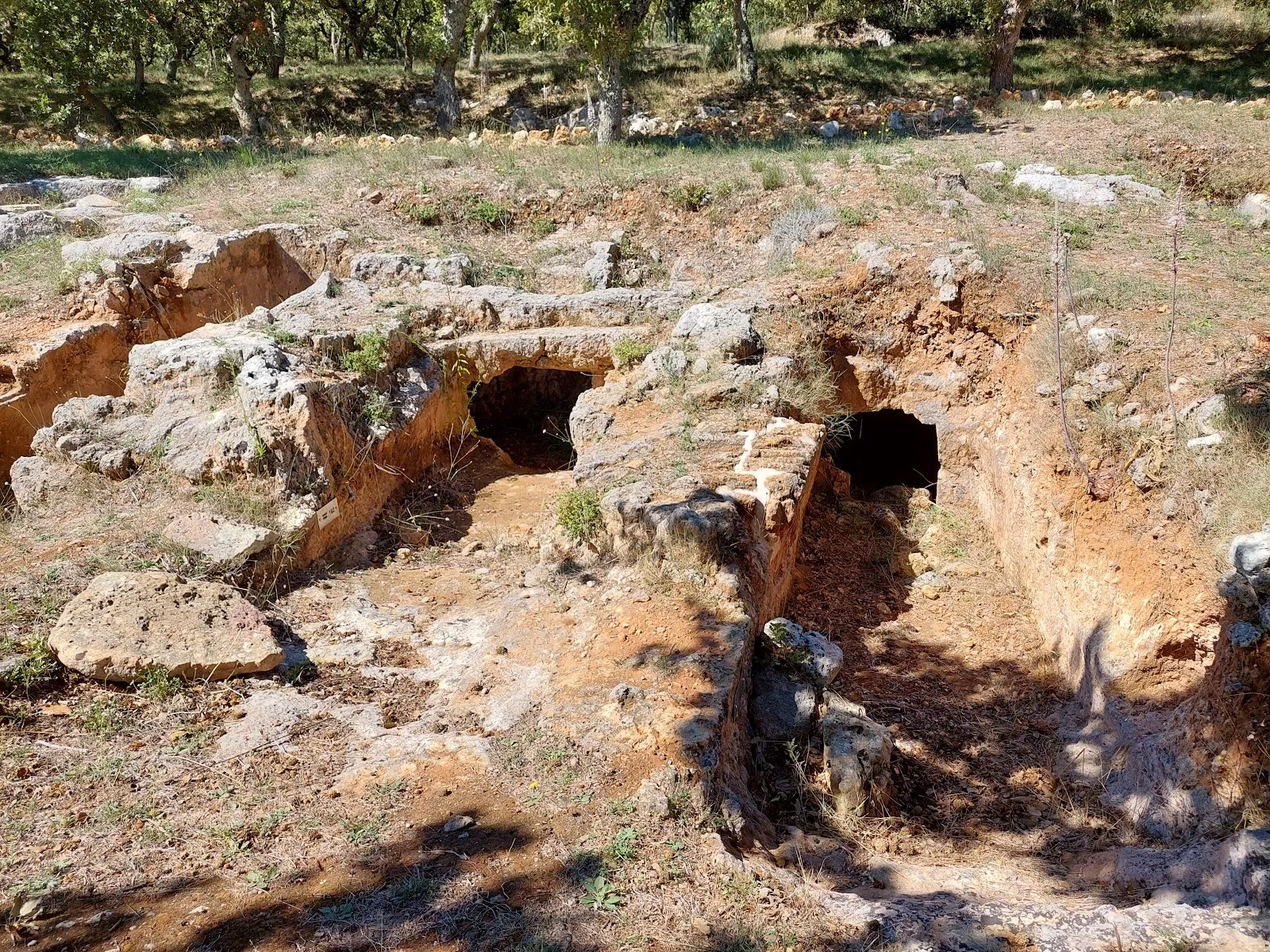
The site is known for the condition of its surviving town layout. The visible remains include walls, stairs and building foundations, with the palace at the centre of the settlement. Gournia was destroyed around 1450 BC, along with other Minoan city-states.
Workshops, streets and the palace
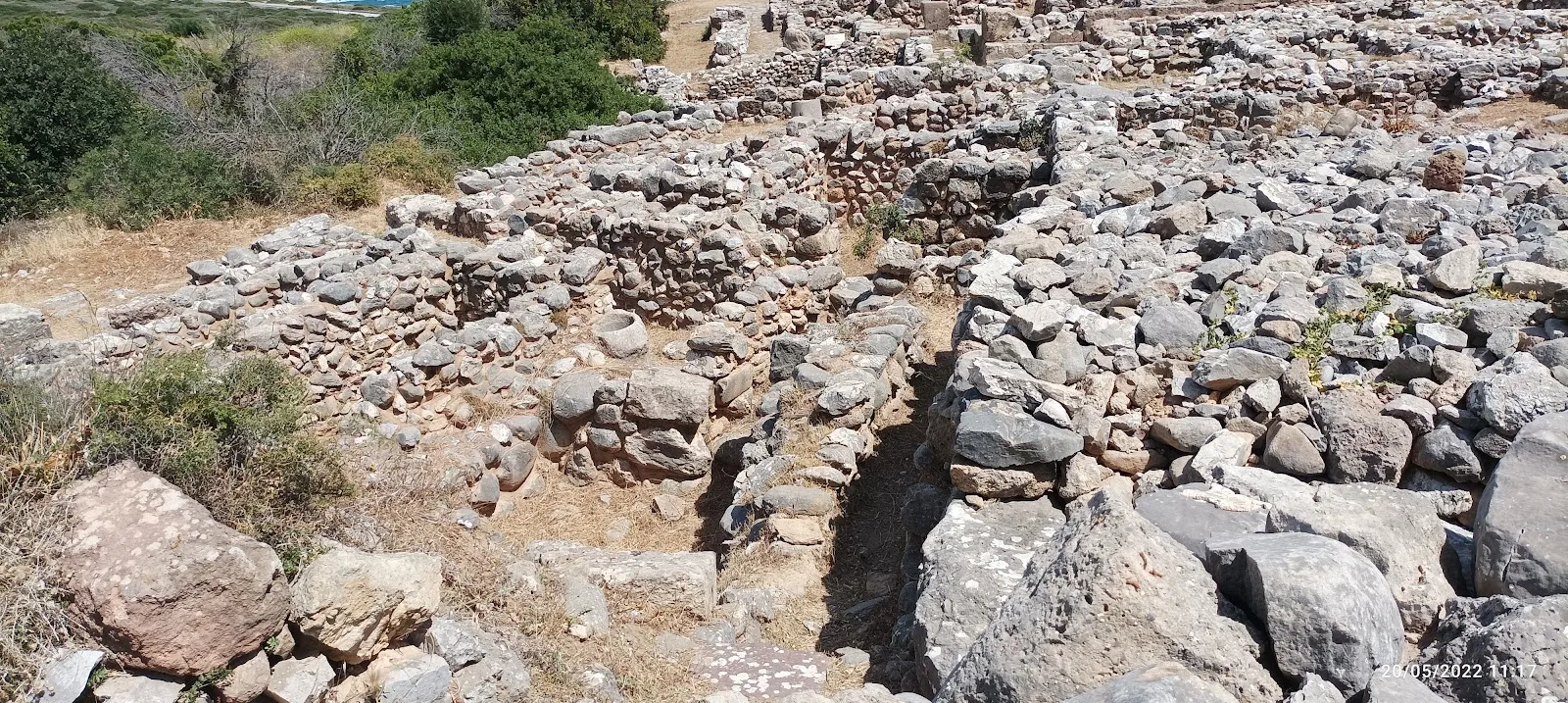
Gournia’s importance is not limited to its palace. The town was a manufacturing and transportation hub and had its own seaport. Workshops and houses sit among the streets, offering a view of everyday urban life alongside the seat of power.
You can move around the ruins without barriers and inspect the remains at close range. There are only a few information boards, so a guidebook or some reading before your visit can help explain what you are seeing. Set aside about an hour to follow the streets and explore the buildings.
Preguntas frecuentes
How long should you spend at Gournia?
Allow about an hour to walk through the town and look at its remains.
What can you see at the archaeological site?
The ruins include streets, houses, workshops, shrines, walls and a palace.
Is there information at the site?
There are a few information boards, but coverage is limited. Bringing a guidebook or reading about Gournia beforehand can help.
Is parking available at Gournia?
Free parking is available by the gravel entrance track.