The Panathenaic Stadium, on Leoforos Vasileos Konstantinou in central Athens, is built entirely from white marble. It occupies the site of an ancient venue for the Panathenaic Games and was restored for the first modern Olympic Games in 1896. Inside, walk around the track, climb the steep stands for views across the arena and city, then visit the small Olympic display, which includes torches and posters. An audio tour helps explain the stadium’s history as you explore.
From the Panathenaic Games to 1896
The stadium stands on the site of an ancient arena built for the Panathenaic Games, athletic contests held in honour of Athena. The original venue dates to the 4th century BC. Its long history includes a major rebuilding in marble during the Roman period, associated with Herodes Atticus, and later centuries of disuse.
In the 19th century, excavations brought the remains back into view. Georgios Averoff funded the stadium’s restoration for the first modern Olympic Games, held in Athens in 1896. The work used white Pentelic marble, the same source of stone used for the Acropolis. The stadium’s present form links the ancient site with the revival of the Games, while its marble seating makes that connection visible throughout the arena.
The arena and its marble stands
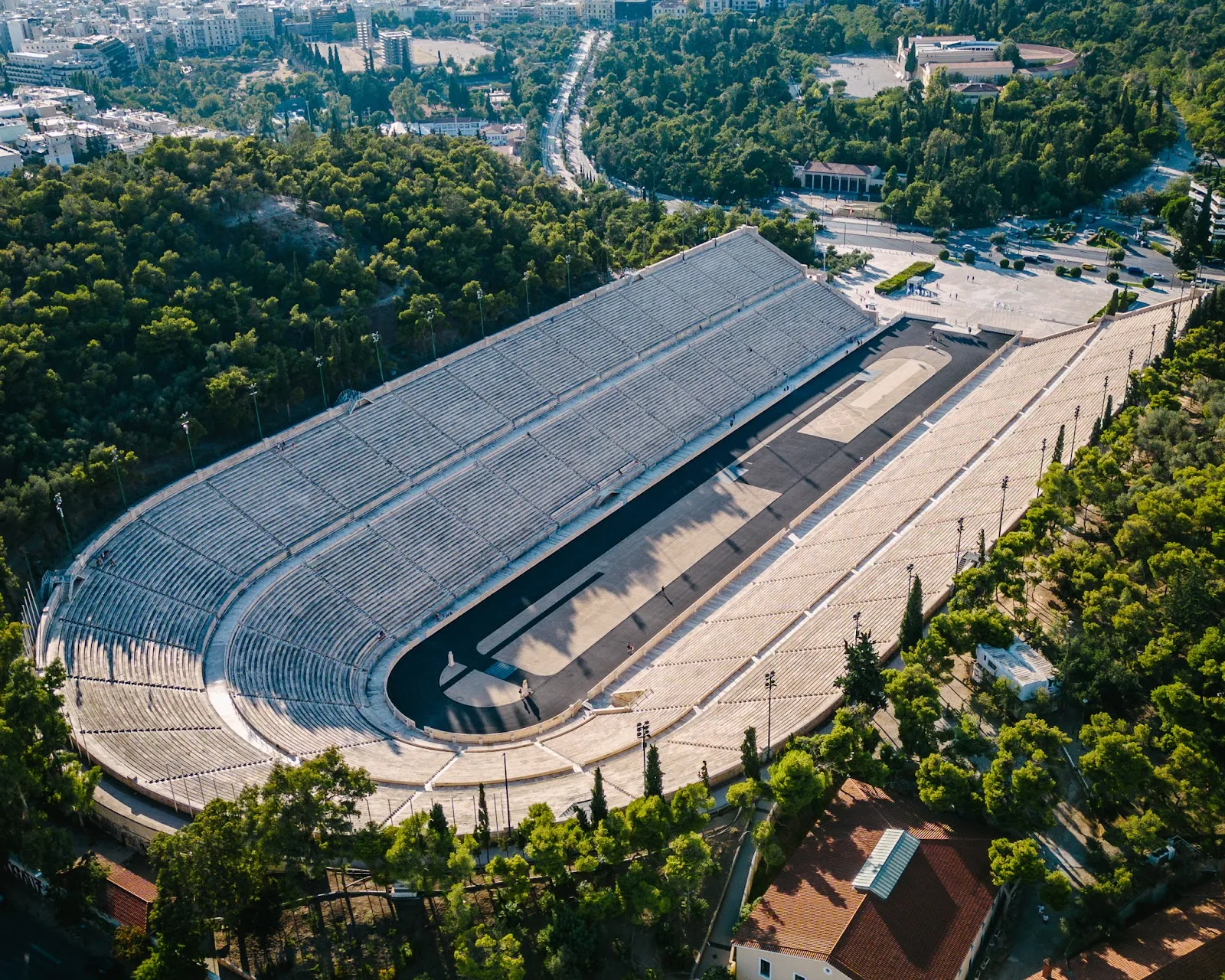
The stadium has a horseshoe-shaped layout, with tiers of pale stone rising around the running track. From the lower level, look across the full sweep of the stands; climbing higher gives a broader view of the arena and the surrounding city. The steps are steep, so take your time on the way up and down.
The track and stands make the site easy to explore at your own pace. An audio tour guides you between points of interest, and there are places around the structure to stop for photographs. The bright stone can reflect strong sunlight, particularly in hot weather, so an early or late visit is more comfortable than the middle of the day.
Olympic displays and the stadium today
A compact exhibit inside the stadium focuses on the modern Olympic Games. Olympic torches and posters are among its displays. It is a small collection, so allow a short stop rather than expecting a large museum. The stadium ticket includes access to the exhibit, according to the supplied visitor information.
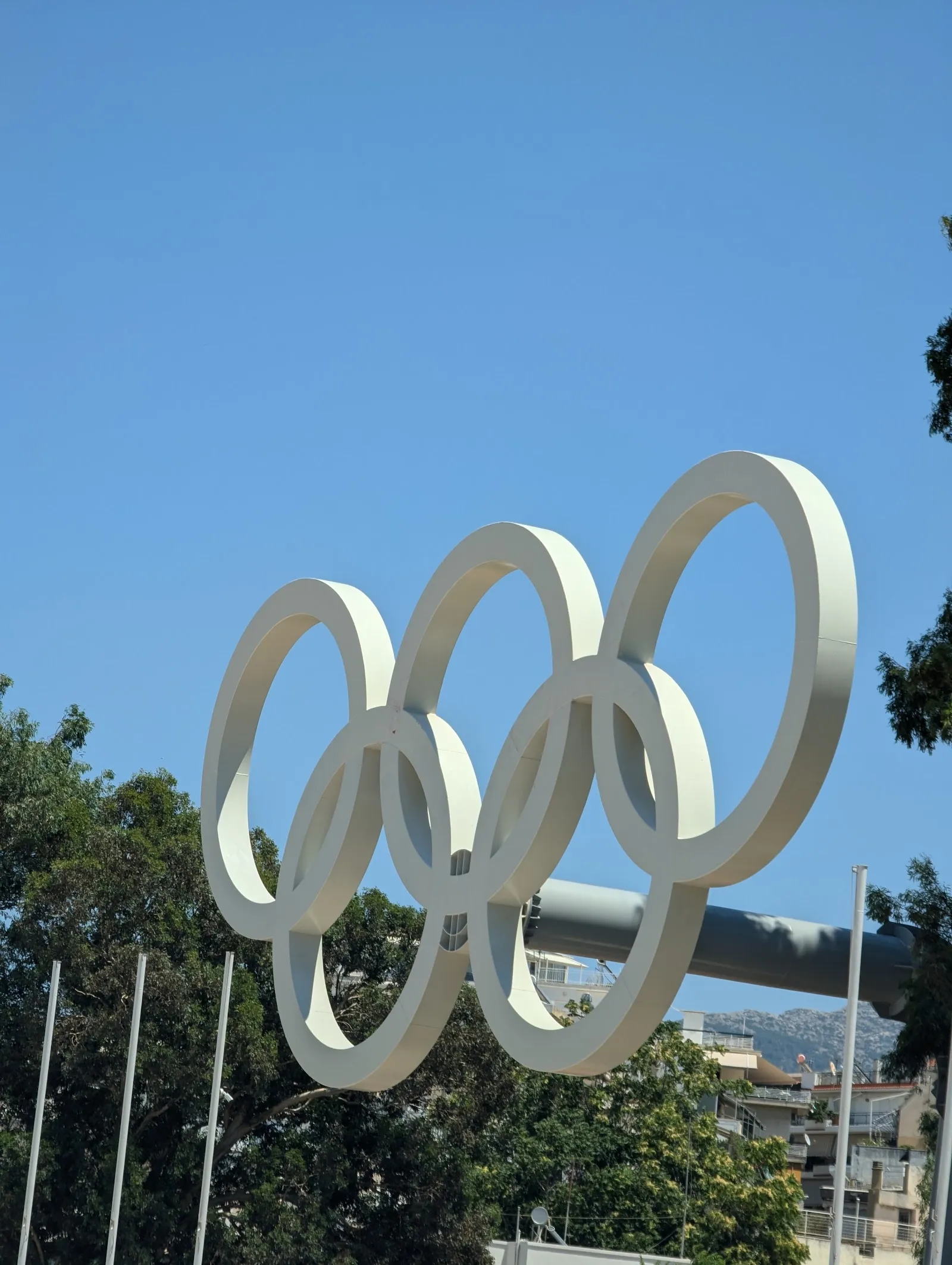
The stadium remains connected to Olympic ceremonies and sport. It has hosted the first modern Games and the 2004 Athens Olympics, and it is the finishing point for the Athens Marathon. The Olympic flame handover ceremony also takes place here when Greece passes the flame to a host nation. Check for event-related closures before making the stadium the fixed point of your day.
Preguntas frecuentes
How long do you need at the Panathenaic Stadium?
Plan on 30 to 90 minutes. The longer end allows time for the audio tour, the exhibit, photos and climbing the stands.
Can you walk or run on the track?
Visitors can walk around the track, and the supplied information says the ticket includes the right to run there. Access can be affected by renovation work or events, so check conditions before your visit.
What is inside the stadium exhibit?
The small Olympic display includes torches and posters related to the modern Games. Admission to it is included with the stadium ticket.
When is the best time to visit?
Go early or late to avoid the strongest heat from sunlight reflecting off the marble. Bring water and sun protection.