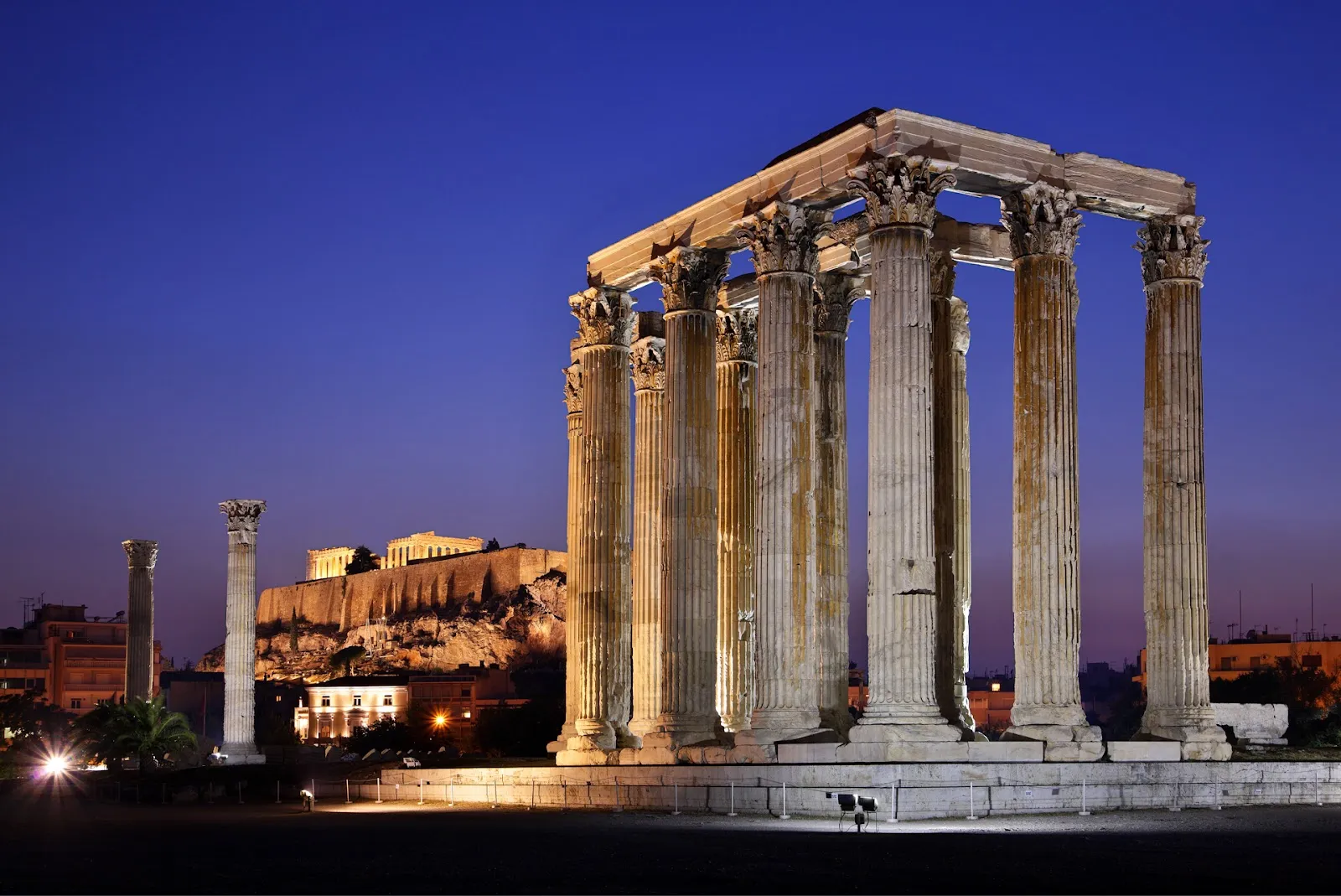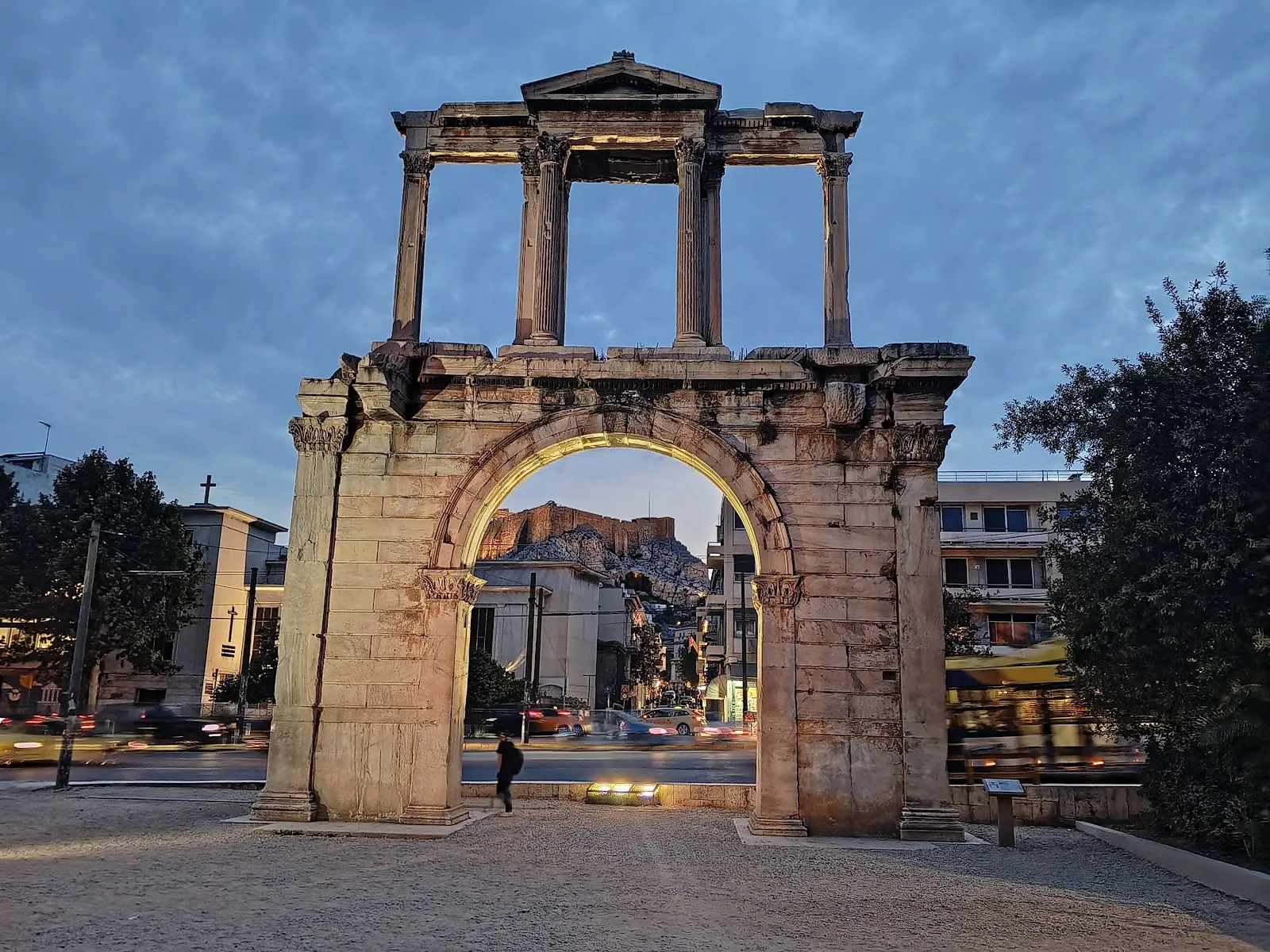
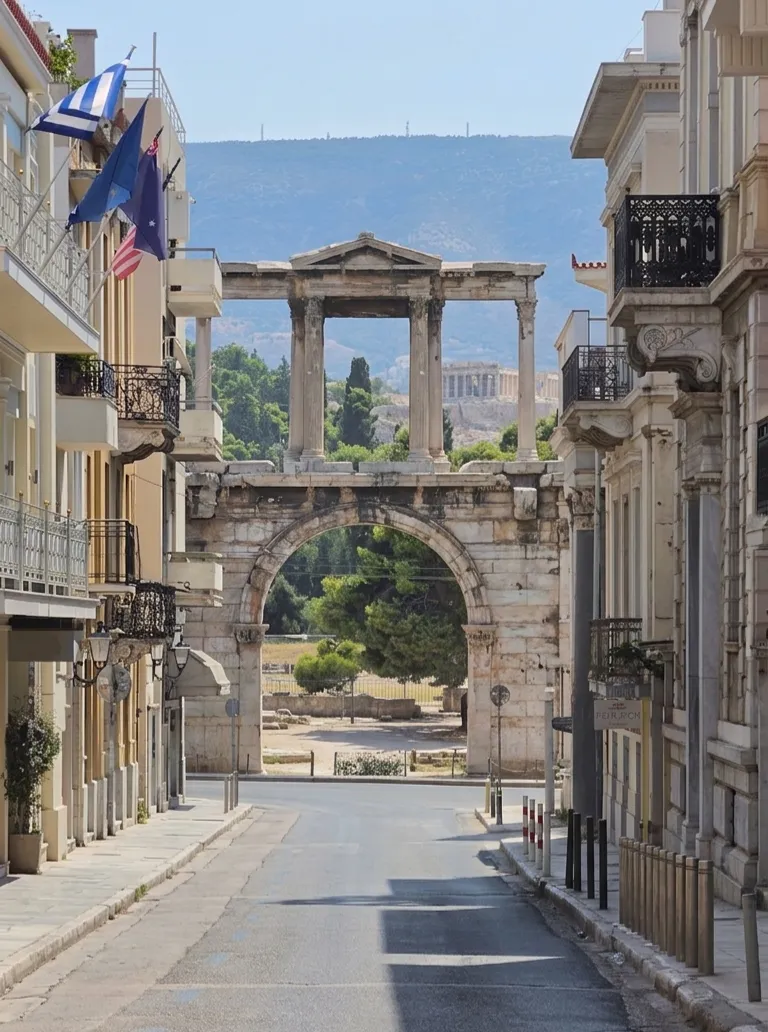
The Arch of Hadrian stands on Vasilissis Amalias Avenue beside the Temple of Olympian Zeus, where ancient Athens meets the city expanded under Roman emperor Hadrian. Built in 132 AD from marble, the 18-metre arch was designed as a gateway between the older city associated with Theseus and Hadrian’s new quarter. Read the inscriptions on both sides, then look for angles that frame the Acropolis. It is an easy, free stop on foot, though the busy avenue shapes the setting.
A gateway between two parts of Athens
The Arch of Hadrian was erected in 132 AD in honour of the Roman emperor, whose building projects reshaped Athens. The marble monument stands on Vasilissis Amalias Avenue, close to the Temple of Olympian Zeus. It once spanned a road linking the city centre with the complex on the eastern side of Athens that included the temple.
Its inscriptions present the arch as a dividing line. One side associates Athens with Theseus, the mythical founder of the city; the other identifies it with Hadrian. The wording makes the monument more than a ceremonial entrance: it records the idea of an older city and a new Roman-era one.
Look closely, then find a photo angle
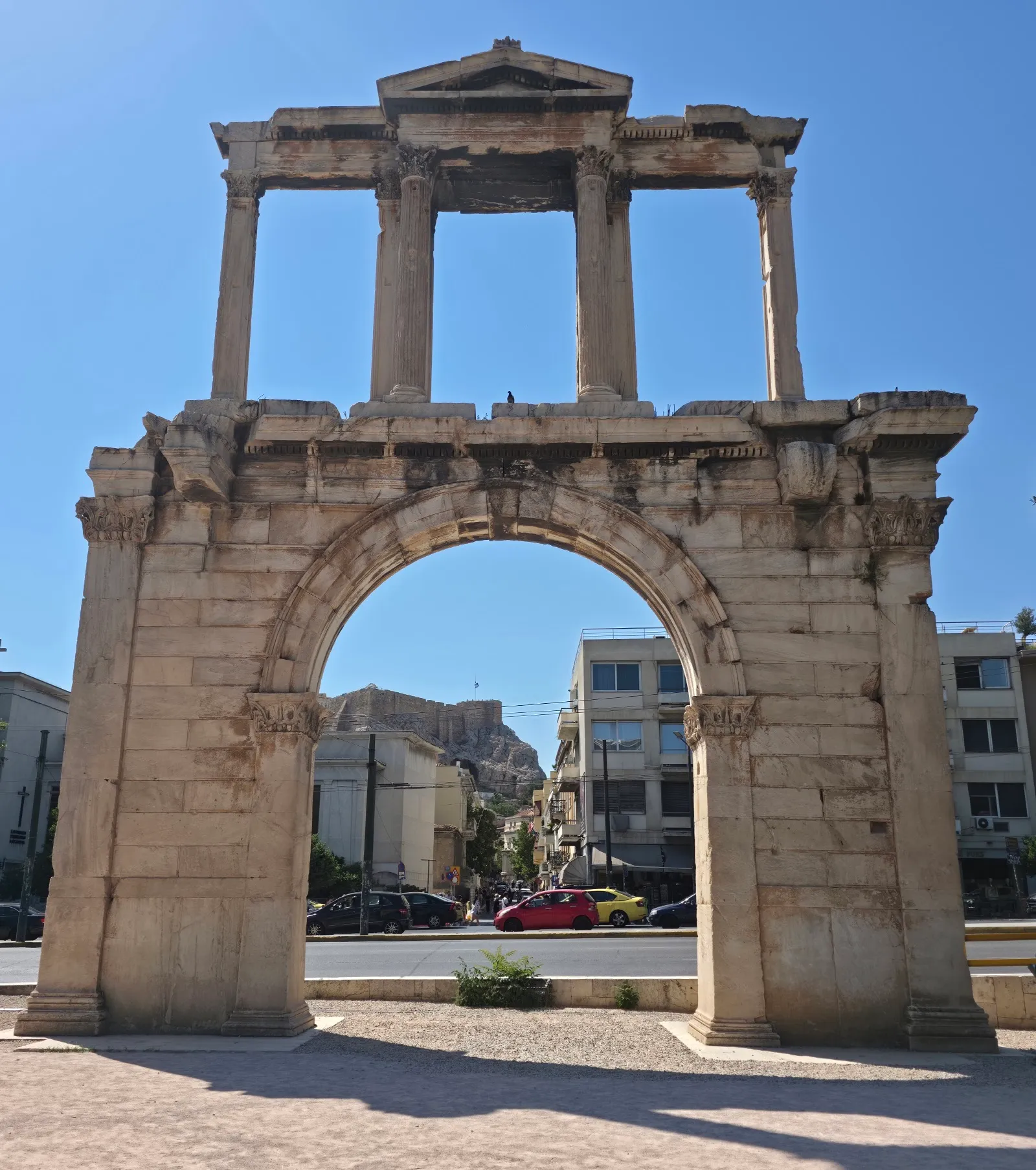
The arch is about 18 metres tall, and its position beside a busy modern avenue puts ancient stonework directly into the city’s everyday setting. Take time to walk around it and read the inscriptions on both sides. The nearby Temple of Olympian Zeus makes a natural next stop, while the Acropolis can appear in photographs from selected angles.
The monument is accessible around the clock and does not require a ticket for this stop. Morning and late afternoon are suggested for calmer traffic and photography; after dusk, the arch is lit. If you want to explore beyond the gateway, continue to the temple or head towards Plaka.
Preguntas frecuentes
Is the Arch of Hadrian free to visit?
Yes. The arch can be viewed without buying a ticket.
How long should I spend at the Arch of Hadrian?
Allow about 15 to 30 minutes to walk around, read the inscriptions and take photos.
What do the inscriptions mean?
They distinguish the Athens associated with Theseus from the city identified with Hadrian.
When is a good time to visit?
Morning or late afternoon can mean less rush-hour traffic for photos. The arch is illuminated after dusk.