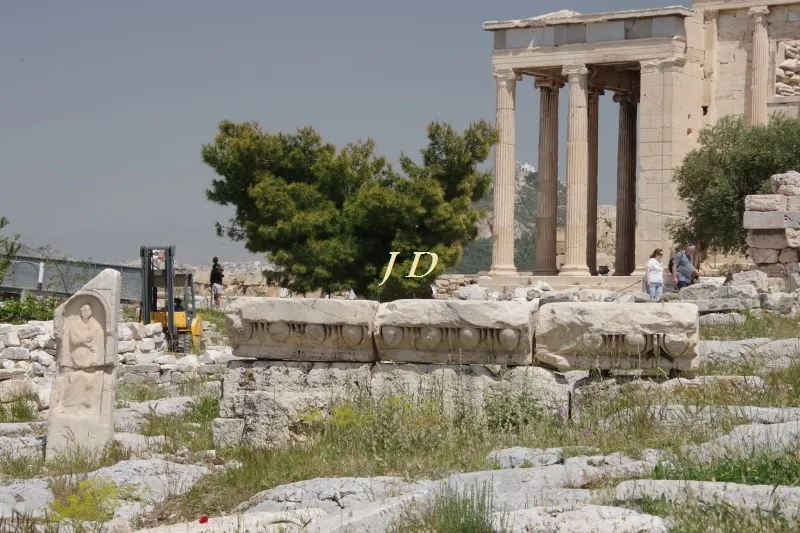
The Acropolis is an ancient hilltop citadel above central Athens, best known for the Parthenon and its broad city views. The complex also includes the Propylaea gateway, the Erechtheion and the Temple of Athena Nike, with ancient theatres on its slopes. Allow time to walk between the monuments and look out over Athens from the rocky plateau. The ascent is manageable at your own pace, but smooth marble paths and steps can be slippery. For more context on the remains, pair the visit with the nearby Acropolis Museum.
A citadel above Athens
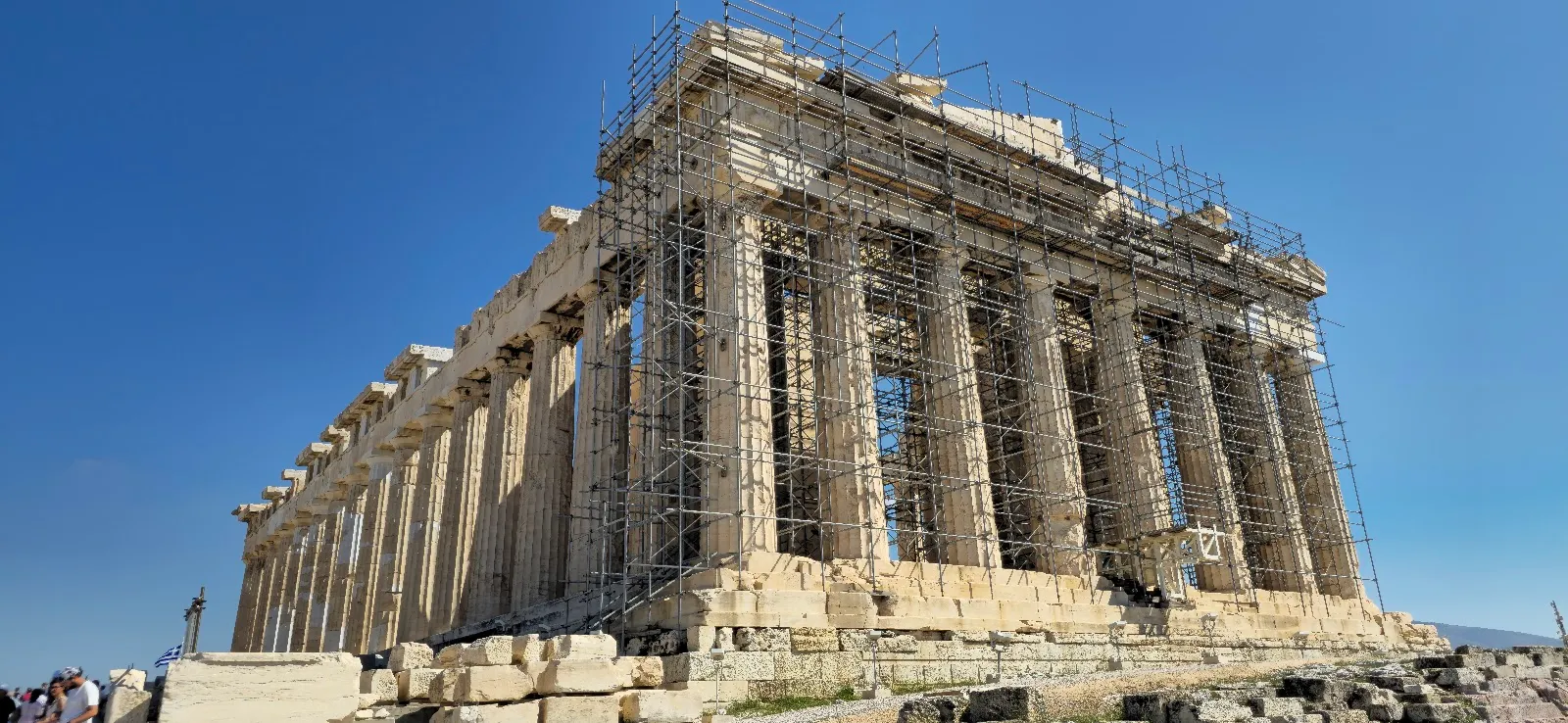
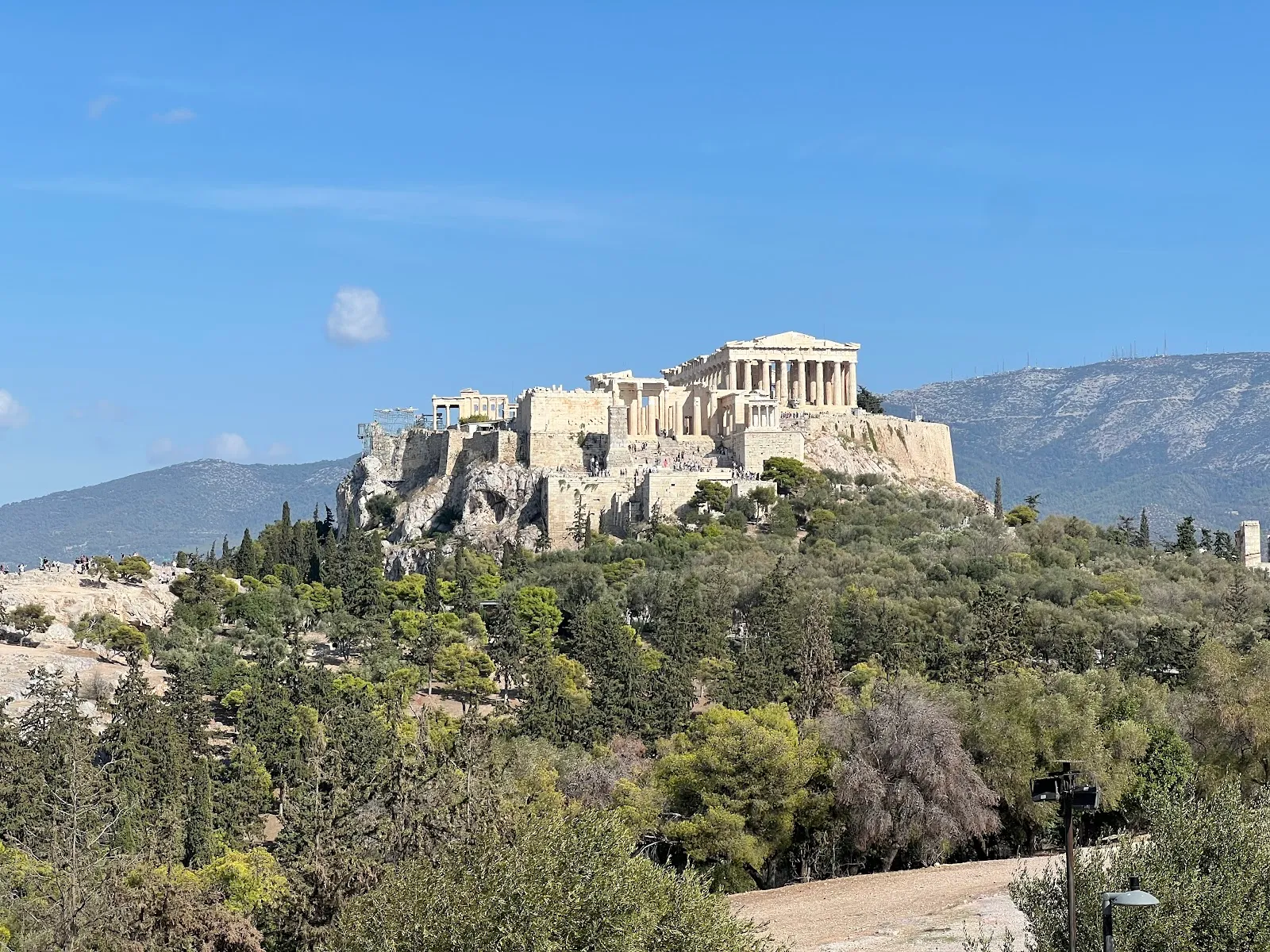
The Acropolis rises above the city on a rocky outcrop. Its name means “upper city,” and the hill has served different purposes over time, including as a place of refuge and a religious centre. The monuments that draw most visitors today belong to an ancient complex of temples, gateways and other buildings.
Much of the site’s best-known architecture dates to the fifth century BCE, when Athens built major monuments on the hill. The Parthenon, dedicated to Athena, is the most recognisable. The complex also includes the Erechtheion, the Temple of Athena Nike and the Propylaea, the monumental entrance gateway. Their surviving stonework gives the hill its distinct profile above modern Athens.
What to look for on the hill
Start with the Parthenon, then give the other buildings time of their own. The Erechtheion is known for its Porch of the Maidens, whose sculpted female figures are called Caryatids. The Temple of Athena Nike stands near the entrance, while the Propylaea marks the route into the complex.
The ancient theatres on the slopes are part of the wider Acropolis experience. The Theatre of Dionysus and the Odeon of Herodes Atticus sit below the hilltop monuments. As you move around the site, pause to look back across Athens: the elevated position gives the visit both an architectural and a city-wide perspective.
Planning your visit
The paths and steps include smooth marble, which can be slippery underfoot. Choose shoes with secure grip and take the climb steadily. The exposed route has limited shade, so carrying water is useful, particularly on a hot day. Early morning or late afternoon can mean less heat and fewer people than the busiest part of the day.
Advance booking is recommended. Entry slots can sell out, and online tickets may help you avoid waiting at the ticket office. Once on the hill, allow a couple of hours if you want to explore the monuments without rushing. The nearby Acropolis Museum adds archaeological context and can help make sense of what you have seen among the ruins.
Preguntas frecuentes
How long should you spend at the Acropolis?
Allow about two to three hours to walk around the hilltop monuments and take in the views. A visit to the nearby Acropolis Museum needs additional time.
Is the walk up to the Acropolis difficult?
The climb is manageable at your own pace, but the marble paths and steps can be slippery. Wear shoes with good grip and bring water.
When is the best time to visit the Acropolis?
Early morning or late afternoon can help you avoid the strongest heat and busiest periods.
Should you book Acropolis tickets in advance?
Yes. Advance booking is recommended because entry slots can sell out, and buying online may help you avoid ticket-office queues.