Cathédrale Sainte-Croix d'Orléans is the Gothic cathedral that dominates the city skyline, on the Place Sainte-Croix in the historic centre. Its towers and pinnacles rise above the old town, and the interior is calm and open, with a main nave you can enter free of charge. The stained glass windows show scenes from the life of Joan of Arc, whose prayers are linked to the building during the Orléans campaign. Give time to the carved exterior and the statues and wooden sculptures inside, then walk the old streets nearby.
From the 1568 damage to the 1829 completion
The Gothic cathedral was begun in 1287 but remained unfinished. Protestant forces largely destroyed it in 1568, during the Wars of Religion.
After the Edict of Nantes, Henri IV decided in 1599 to rebuild it, and work began in 1601. Royal backing carried the project through the reigns of Henri IV to Charles X. The greatest Classical architects of the period were asked to work in the Gothic style, even on the façades, which gives the building its mixed character.
The cathedral was completed in 1829 and inaugurated on 8 May that year, to mark the 400th anniversary of the liberation of Orléans. The novelist Marcel Proust once called it the ugliest church in France, though most people find it impressive.
Outside: pinnacles, gargoyles and towers
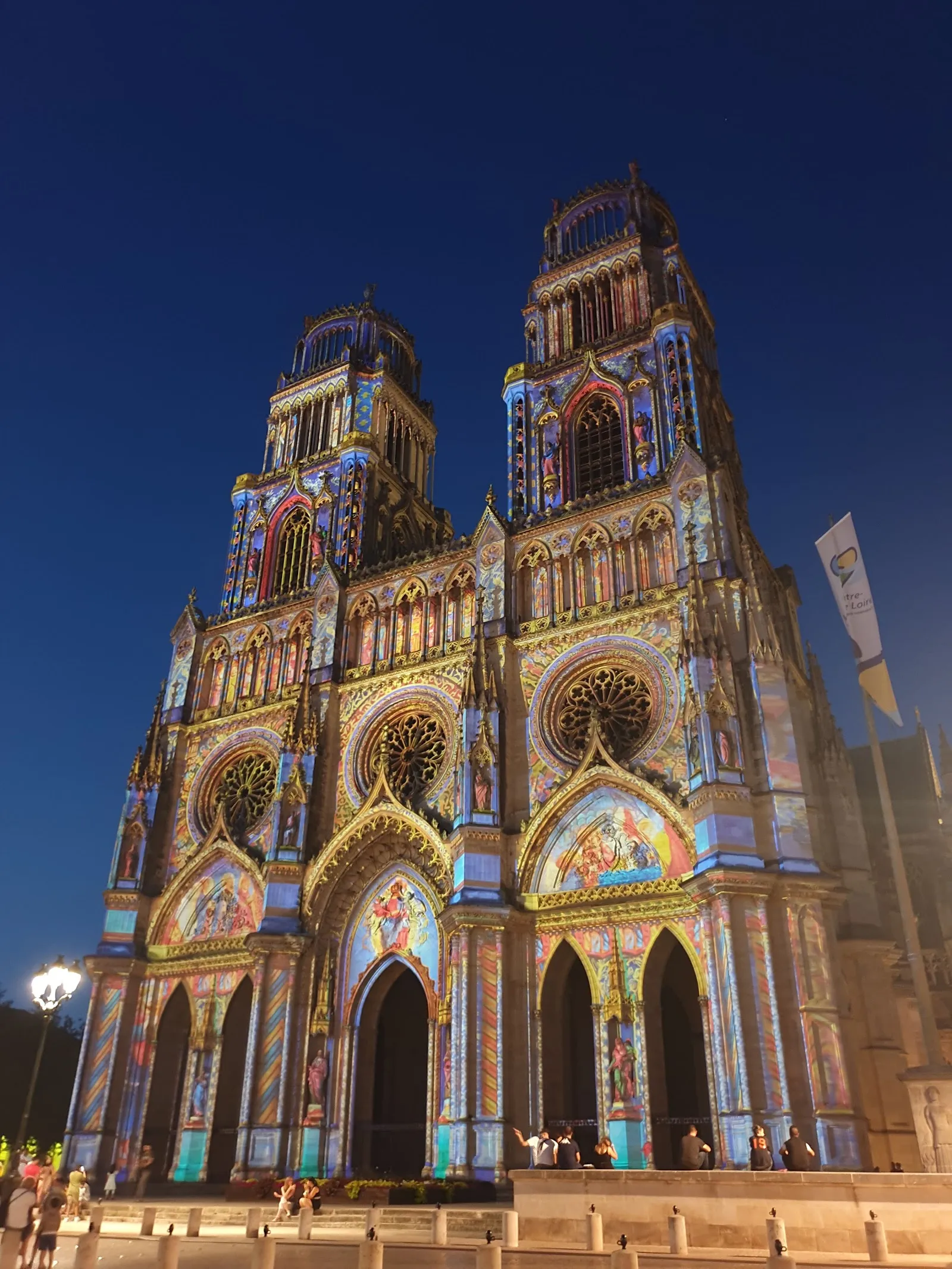
The exterior mixes Gothic and neo-Gothic work. Pinnacles and gargoyles crowd the upper walls, and 18th-century towers rise above the older stonework like wedding cakes. The façade has three large round windows and two square towers, and it is richly carved.
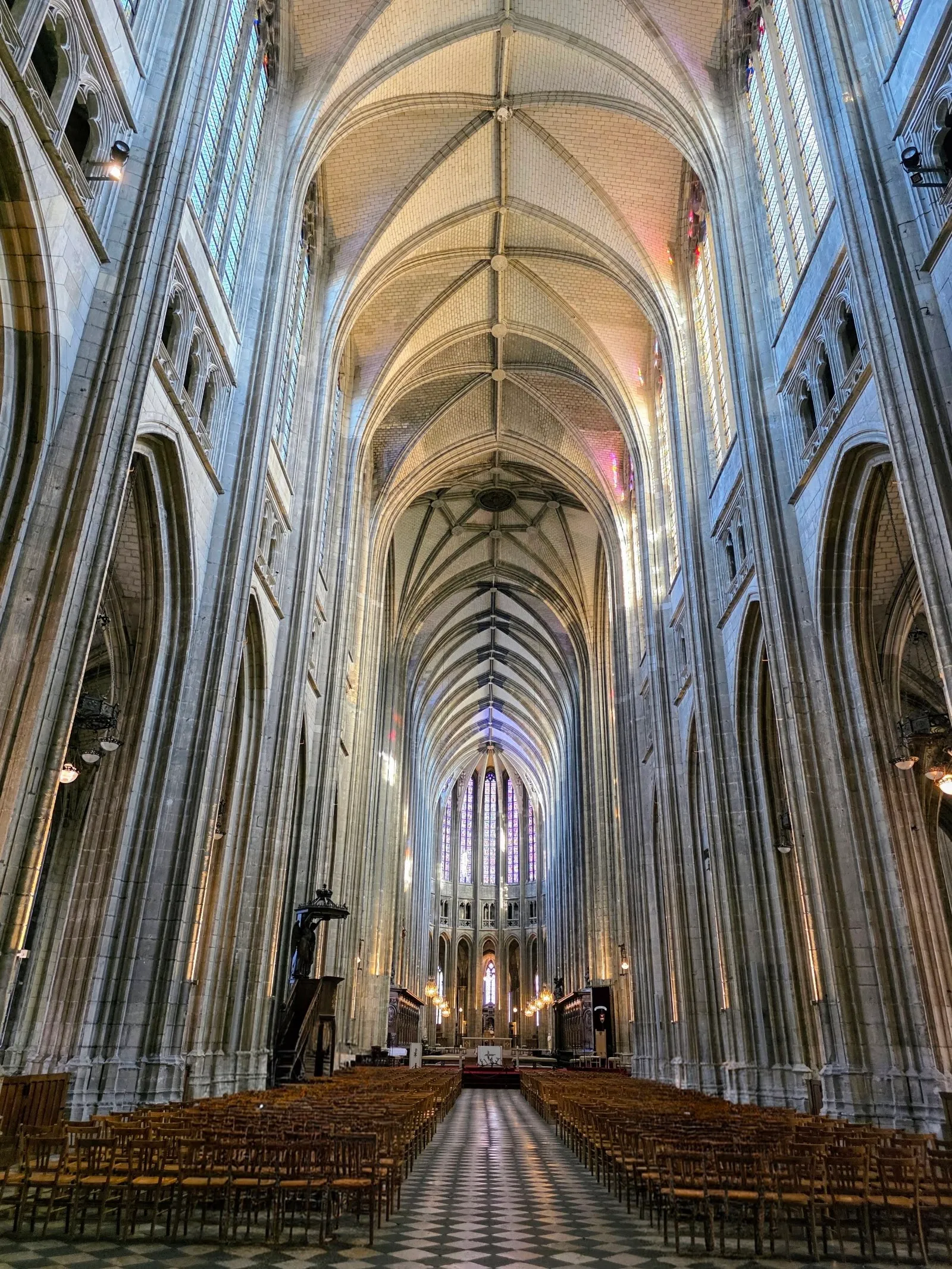
The church is 130 metres long. Its choir was inspired by Amiens Cathedral and has nine radiating chapels, and its scale is clearest when you stand inside the choir.
Full-scale layout drawings, called épures, are etched into several points of the interior floor. They are a record of the intense work of the rebuilding.
Inside the nave
The main nave is free to enter, and the building is calm enough to walk its length slowly. The stained glass windows tell scenes from Joan of Arc's life, and a Joan of Arc battle flag is displayed at the door. Statues and wooden sculptures of saints line the interior, and the inside was renovated in recent years.
A piece of the cross is said to be kept inside. The small shop sells rosaries, small crosses, postcards and wristbands.
Around the cathedral
The view from rue Jeanne d'Arc takes in the whole façade, which makes it a good spot for photographs. At Christmas, shows are projected onto the façade at night. Climbing one of the towers gives panoramic views over the city.
The historic centre has half-timbered houses, Renaissance façades and the Hôtel Groslot, a Renaissance building. The banks of the Loire, a UNESCO-listed river, are a pleasant walk or bike ride away and make a good break after the cathedral.
The cathedral is a working church. Keep voices low and dress with care when you go inside, especially during services.
Access and parking
The entrance and the parking lot are wheelchair accessible, and there is a restroom on site. Parking is paid and takes place in the underground car park beside the cathedral, where the parking ticket is needed to reach your car again.
Preguntas frecuentes
Is there an entry fee?
The main nave can be entered free of charge during opening hours. Some areas, such as the crypt or the treasury, may charge a fee.
Can you climb the tower?
Yes. Climbing one of the towers gives panoramic views over Orléans.
Is the cathedral wheelchair accessible?
Yes. The entrance and the parking lot are wheelchair accessible.
Can you attend Mass there?
Yes. It is an active church, and Mass is held there.