Sainte-Cécile Cathedral stands in the center of Albi, a red brick city in southern France, and is the seat of the Catholic archbishop of Albi. Work began in 1282 and took about 200 years. Often described as the largest brick cathedral in the world, it has a fortress-like outside and a painted interior, with frescoes, sculpture and a large Last Judgment scene. The main area is free to enter, while the choir and treasury cost extra.
Work from 1282 and a message of power
Work on the cathedral began in 1282, under Bernard III of Castanet, the new bishop of Albi. It took about 200 years to finish. The building went up after the Albigensian Crusade and the Church's military and clerical repression of the Cathars, and its size and fortress-like walls were meant to show the authority of the Catholic Church over the region.
The cathedral is still the seat of the Catholic archbishop of Albi. The old episcopal city around it, with the cathedral, the former bishops' palace and older streets, has been a UNESCO World Heritage site since 2010.
The outside: brick and a fortress shape
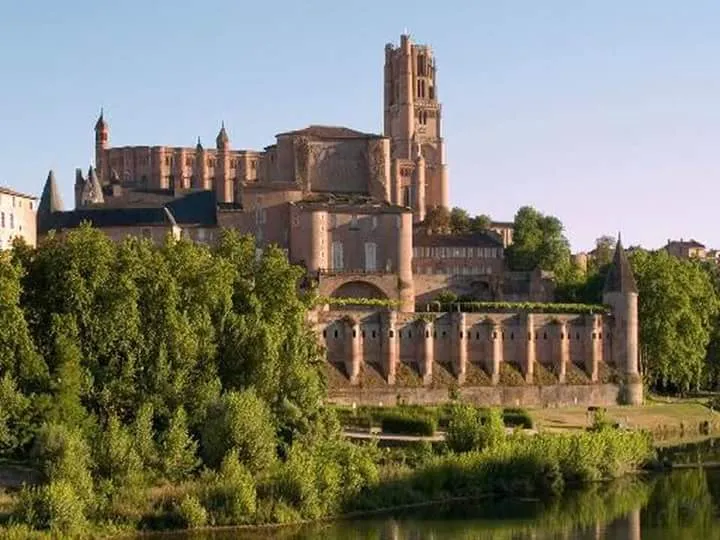
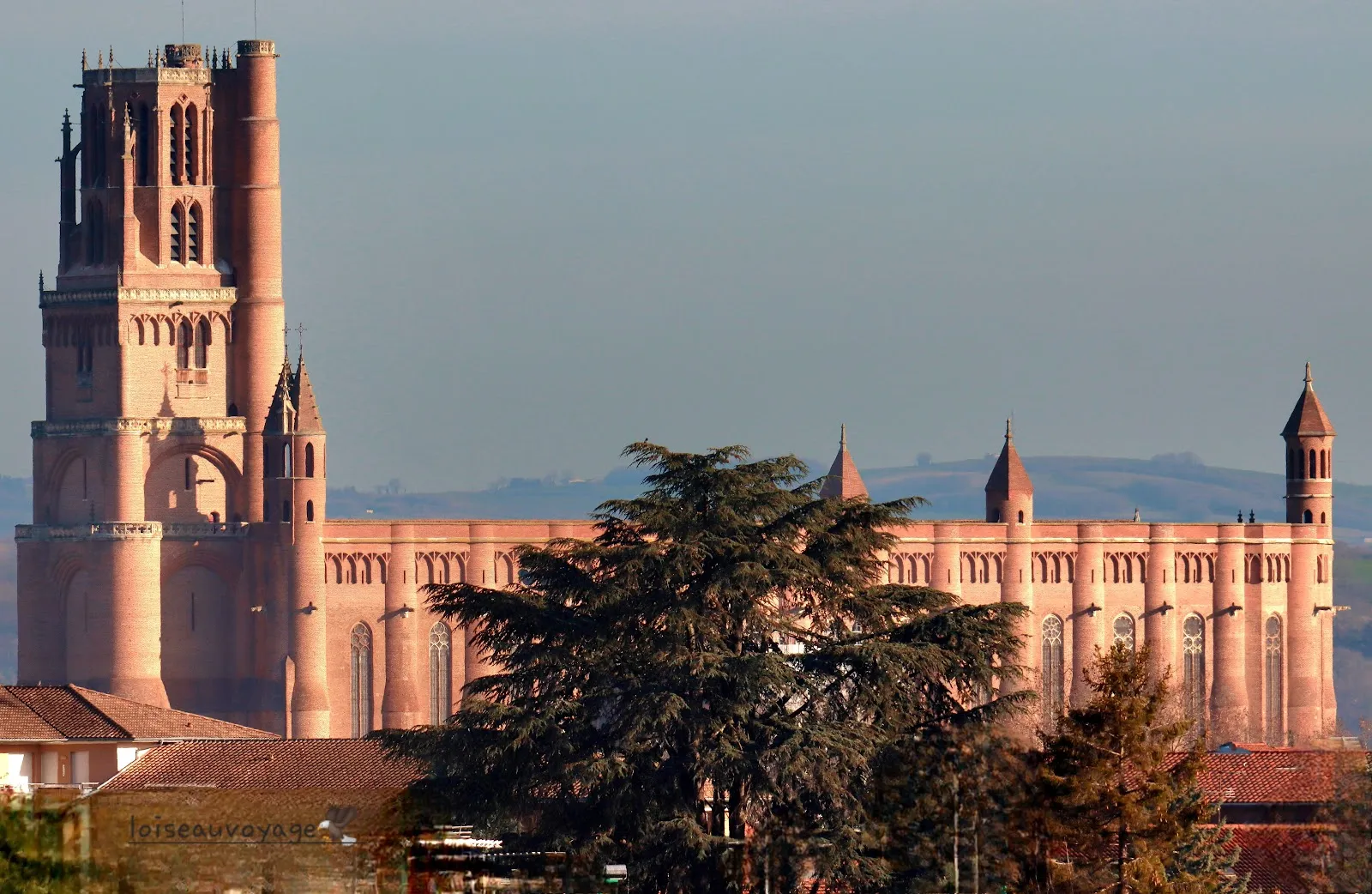
The cathedral is built almost entirely of brick, in the southern Gothic style also called Toulouse or Languedoc Gothic. Its walls and tower make it look more like a castle than a church. It is about 114 meters long and 35 meters wide, and its bell tower rises 78 meters.
The entrance on the south side has some of the most elaborate carving on the outside. The brick takes on warm, sepia tones, which stand out against the sky over the Tarn.
Inside the cathedral
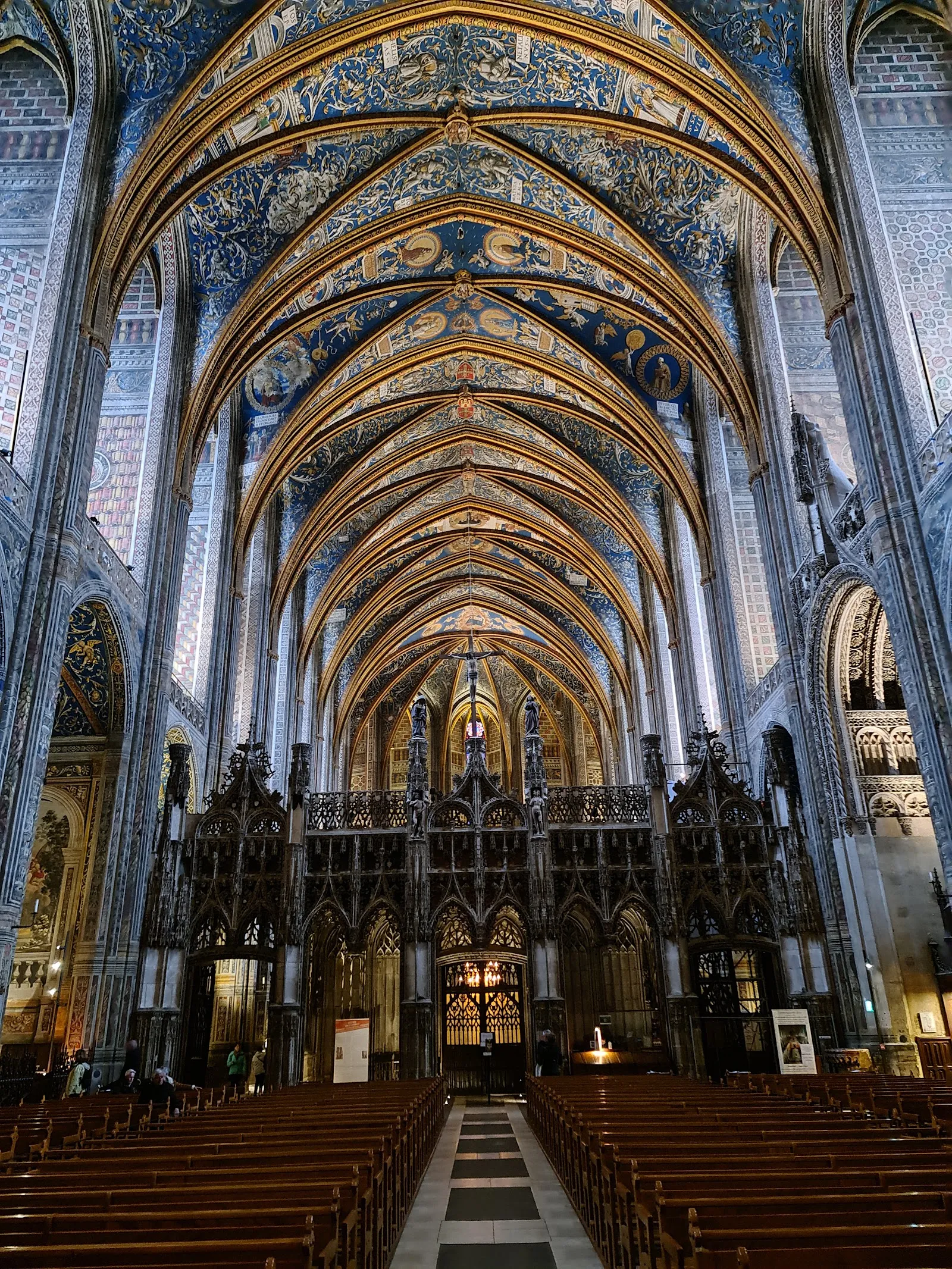
The contrast with the plain exterior is the main feature of a visit. Painted walls, sculpture and a richly decorated ceiling cover most of the interior, with blues and golds in the choir. The painting in the vault is one of the largest examples of Italian Renaissance painting in France. At the back of the church, a large Last Judgment fresco covers a surface of about 300 square meters.
The choir screen is one of the most ornate features, and the choir stalls are worth a look. One of France's largest organs is also inside the church. The side chapels add more detail to the walls.
How a visit works
The main part of the church is free to enter. The choir and the treasury are the paid sections, and the treasury holds notable objects. An audio guide is available on site and explains much of the building's history. It takes about 40 minutes, so allow time for it.
The cathedral is a place of worship. Keep your voice low, follow the signs, and do not interrupt services. Tickets can be bought in advance, and the site recommends doing so. The entrance is wheelchair accessible, and there is an accessible parking area. A restroom is on site.
Around the cathedral
The cathedral stands next to the Palais de la Berbie, the former bishops' palace that now houses the Toulouse-Lautrec Museum. A short walk away, the Saint-Salvi collegiate church is named after the city's first bishop and has a cloister reached through a courtyard lined with restaurants.
The Pont-Vieux crosses the Tarn near the old town, and it is considered one of the oldest bridges in France. The streets between these monuments are lined with brick buildings and make a good walk before or after your visit.
Preguntas frecuentes
Is there an entry fee?
The main area of the cathedral is free to enter. The choir and the treasury are paid sections. Check the cathedral's website for current prices.
How long do you need?
The audio guide takes about 40 minutes. Allow one to two hours if you also visit the choir and treasury.
Do I need to book tickets in advance?
The site recommends getting tickets in advance.
Is the cathedral wheelchair accessible?
Yes, the entrance is wheelchair accessible, and there is an accessible parking area.
Is it the largest brick cathedral in the world?
It is often described as the largest brick cathedral in the world. It is about 114 meters long and 35 meters wide.