Château d'Angers is the fortress above the river Maine in the centre of Angers, recognisable by its 17 striped towers of dark schist and pale stone. Louis IX built the present walls in the 13th century. Inside are the Apocalypse Tapestry, made between 1377 and 1382, gardens laid out in the old moat, a 15th-century chapel and a walk along the ramparts with views over the city and the river. Allow at least two hours, longer if you listen to the full audio guide.
A fortress above the Maine
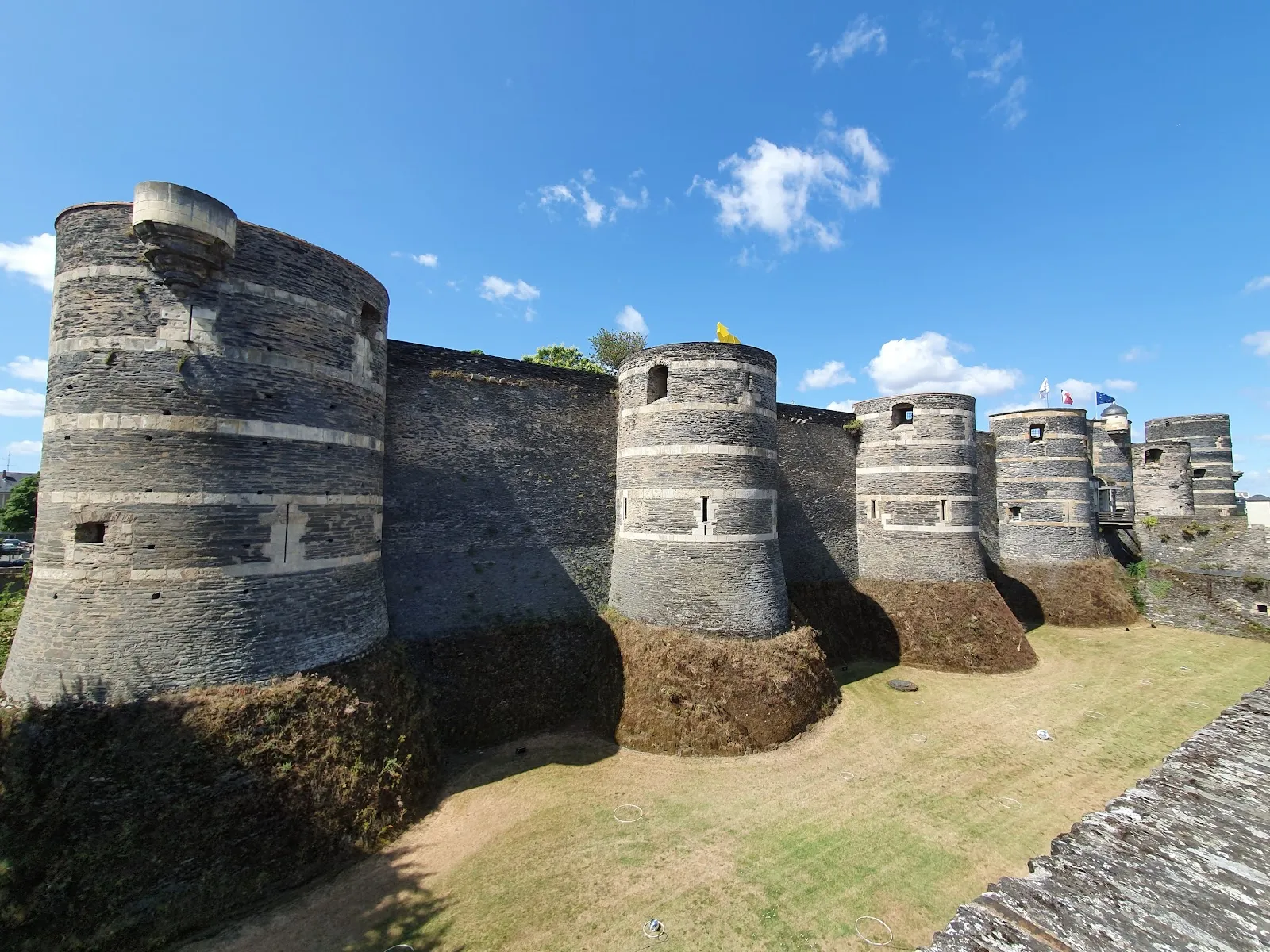
The château sits on a rocky promontory over the river Maine and is the emblem of Angers. Its outline is easy to recognise: 17 round defensive towers set into thick curtain walls, banded in dark schist and pale stone. The outer wall is about three metres deep, and a drawbridge guards the entrance.
The present fortress was built under Louis IX in the 13th century, between 1228 and 1238. The site was fortified earlier, and the château is sometimes called the castle of the Dukes of Anjou, after the family whose residence it became. Its position next to the river made it a strong point on the border of the kingdom in the 13th century.
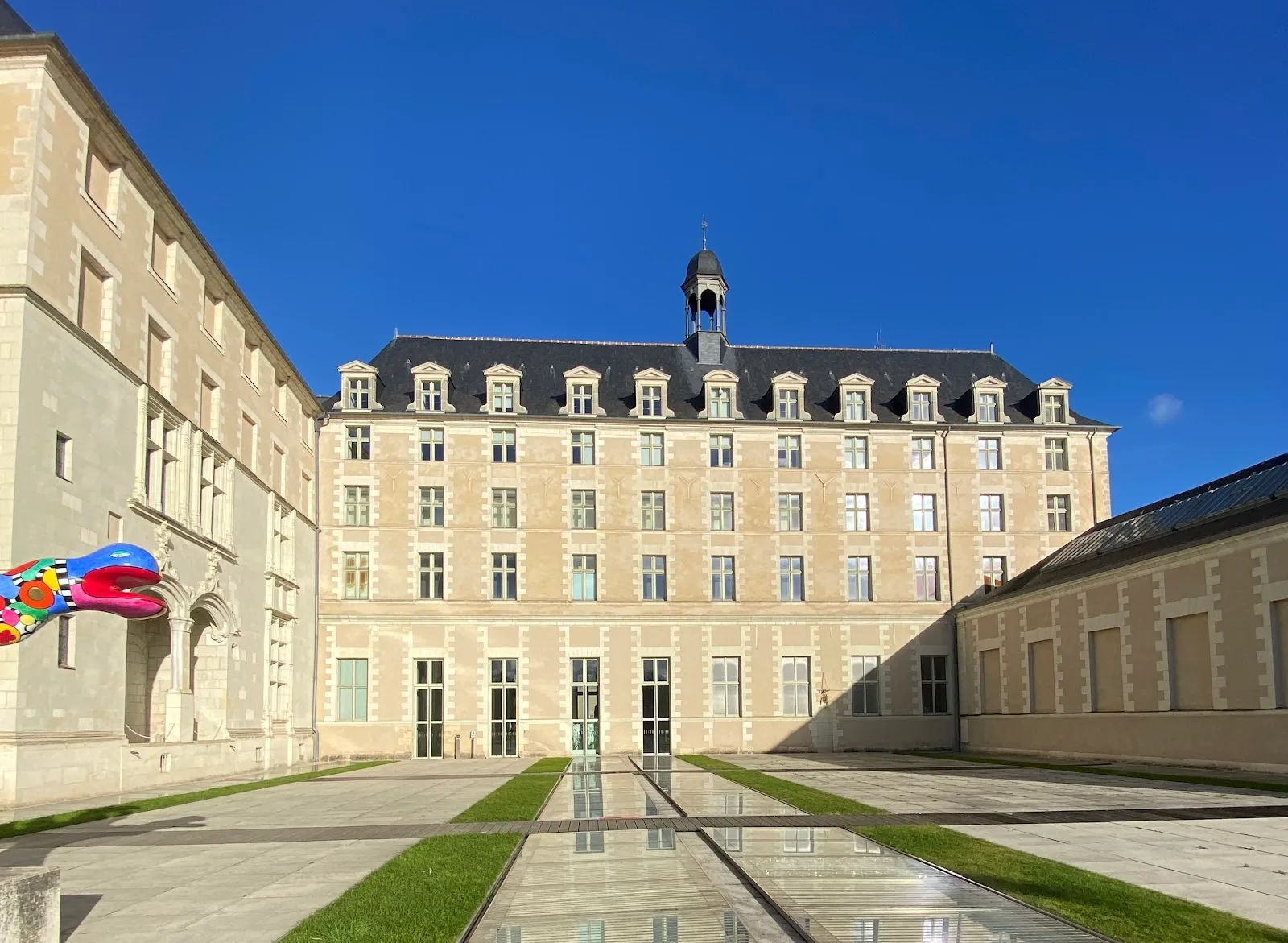
The walls are austere from outside. Once through the gate, the courtyard is calm and green, with buildings in pale tufa stone between the lawns and flower beds.
The Apocalypse Tapestry
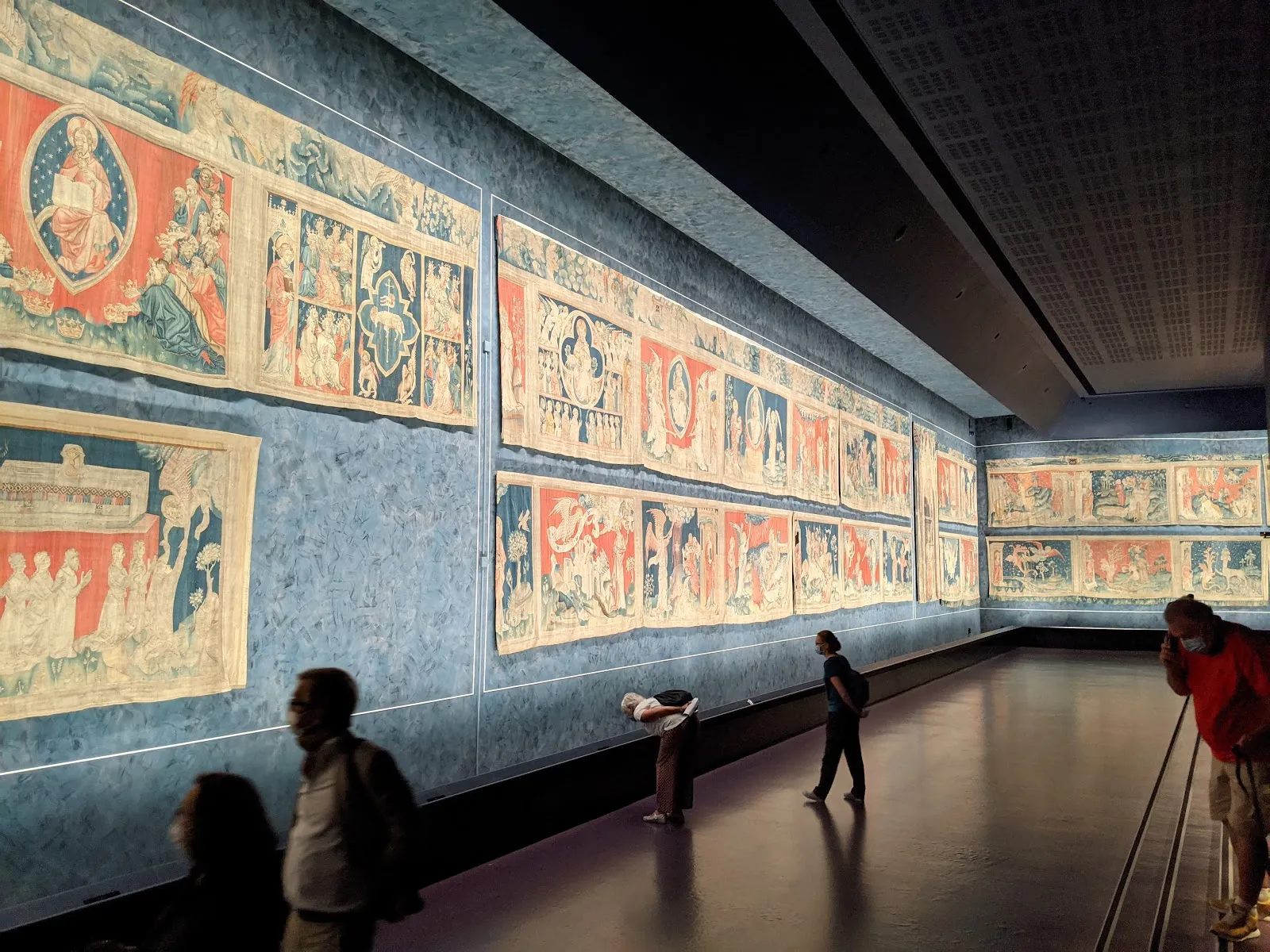
The tapestry is the centrepiece of the visit. Louis I, Duke of Anjou, commissioned it, and it was woven between 1377 and 1382. It illustrates the Book of Revelation by Saint John in colourful scenes. Originally it ran to 90 scenes and about 140 metres, and it is counted among the largest and oldest medieval tapestries in the world. It is on display all year.
The imagery is strange and dramatic, and the story is easier to follow with help. The audio guide goes through each panel in turn, so allow plenty of time. Visitors who listen to all of it spend noticeably longer here than they expect.
The gallery is presented with care, and a bookshop and gift shop on site sell items related to the collection and the château.
Gardens, chapel and royal lodgings
The ditch that once held water around the walls is now laid out as gardens. They include a rose garden and a hydrangea garden, and from the ramparts you can see them spread below the towers. Inside the walls there are also herb and flower gardens and a small vineyard.
The grounds contain a chapel built in the 15th century in white tufa stone, with fine, delicate detail that contrasts with the heavy defensive walls. The royal lodgings, the logis royal, show the Flamboyant style of the late Middle Ages.
Exhibitions inside the château trace its history, with models showing the stages of its construction and change. The interiors are not furnished, so the rooms are mostly given over to these displays.
Walking the ramparts
A walkway runs along the top of the walls, the chemin de ronde, and it is wide enough for comfortable walking. From it you see the Maine, the old town and the surrounding countryside. Climbing one of the towers gives a more open view still.
The ramparts are also the best place to look down on the moat gardens, so take the walk early in the visit to get your bearings. Outside the walls, the Promenade du Bout du Monde passes the drawbridge and is a popular viewpoint over the river and the château.
Practical details for the visit
The château is in the centre of Angers, about a ten-minute walk from the railway station. There is paid parking near the château, and the entrance and parking are wheelchair accessible. Facilities include toilets, a bookshop, a café and a restaurant.
The château is good for children, who can explore the towers, drawbridge and walls. Ticket discounts exist, and the website lists more of them than the sign at the ticket desk. One traveller on a rail pass received a reduction on showing a recent TGV ticket, so check the conditions before you buy.
Preguntas frecuentes
What is the main thing to see at Château d'Angers?
The Apocalypse Tapestry, woven between 1377 and 1382 for Louis I, Duke of Anjou. It illustrates the Book of Revelation and is among the largest and oldest medieval tapestries in the world.
How long do you need at Château d'Angers?
Plan on at least two hours. If you walk the ramparts, see the gardens and listen to the whole audio guide for the tapestry, allow more.
Should I book tickets in advance?
Booking ahead is recommended. The château website also lists discount options, including some that are not shown at the ticket desk.
Is Château d'Angers wheelchair accessible?
The entrance and the parking lot are wheelchair accessible, and the château has areas set up for wheelchair users.
Is there somewhere to eat or drink at the château?
Yes. There is a café and a restaurant on site, as well as a bookshop and toilets.
Is there a good viewpoint over the château?
The Promenade du Bout du Monde passes the drawbridge and is a well-used viewpoint. From inside, the ramparts and the towers give views of the river and the city.