
Warwick Castle stands on a sandstone bluff above a bend in the River Avon, in the town of Warwick. William the Conqueror founded it in 1068, and the earls of Warwick lived here for centuries. Today you can climb the towers and ramparts, walk through the Great Hall and state rooms, and enter the Castle Dungeon. The grounds cover 64 acres, with gardens landscaped by Capability Brown. Live programmes run through the day, including a birds of prey show and the firing of a working trebuchet. Plan on a full day, especially with children.
From a Norman fort to the Beauchamp towers
William the Conqueror founded Warwick Castle in 1068 as a wooden motte and bailey castle, on the site of an earlier Saxon burgh. It was later rebuilt in stone. The site sits on a sandstone bluff above a bend in the River Avon, and the river has worn away the rock on the east side into a cliff.
The east front, which faces the town, took shape in the 14th century under Earl Thomas Beauchamp and his son, also called Thomas. They built the barbican and the twin towers. Caesar's Tower, begun in 1356, rises 147 feet. Guy's Tower, from 1380, is 128 feet. Both have machicolations in the French style, and Caesar's Tower has a double parapet.
Later owners added their own work. Richard III began two artillery towers. The Grevilles renovated the castle in the early 17th century, and further repairs followed a fire in 1871. The castle was the ancestral home of the earls of Warwick and was lived in continuously from the Middle Ages until recent times.
Inside the castle and across the grounds
The Great Hall and the state rooms hold furnishings and artefacts from the medieval and Renaissance periods. Two waxwork displays fill other parts of the interior. One shows a late Victorian house party, the Royal Weekend Party. The other, The Kingmaker, shows the household of Warwick the Kingmaker preparing for war in 1471. There is also a chapel.
The Castle Dungeon dates to 1345. It is a walkthrough of about 50 minutes with live actors and special effects, and it can be frightening for young children. It is a separate attraction with an extra charge.
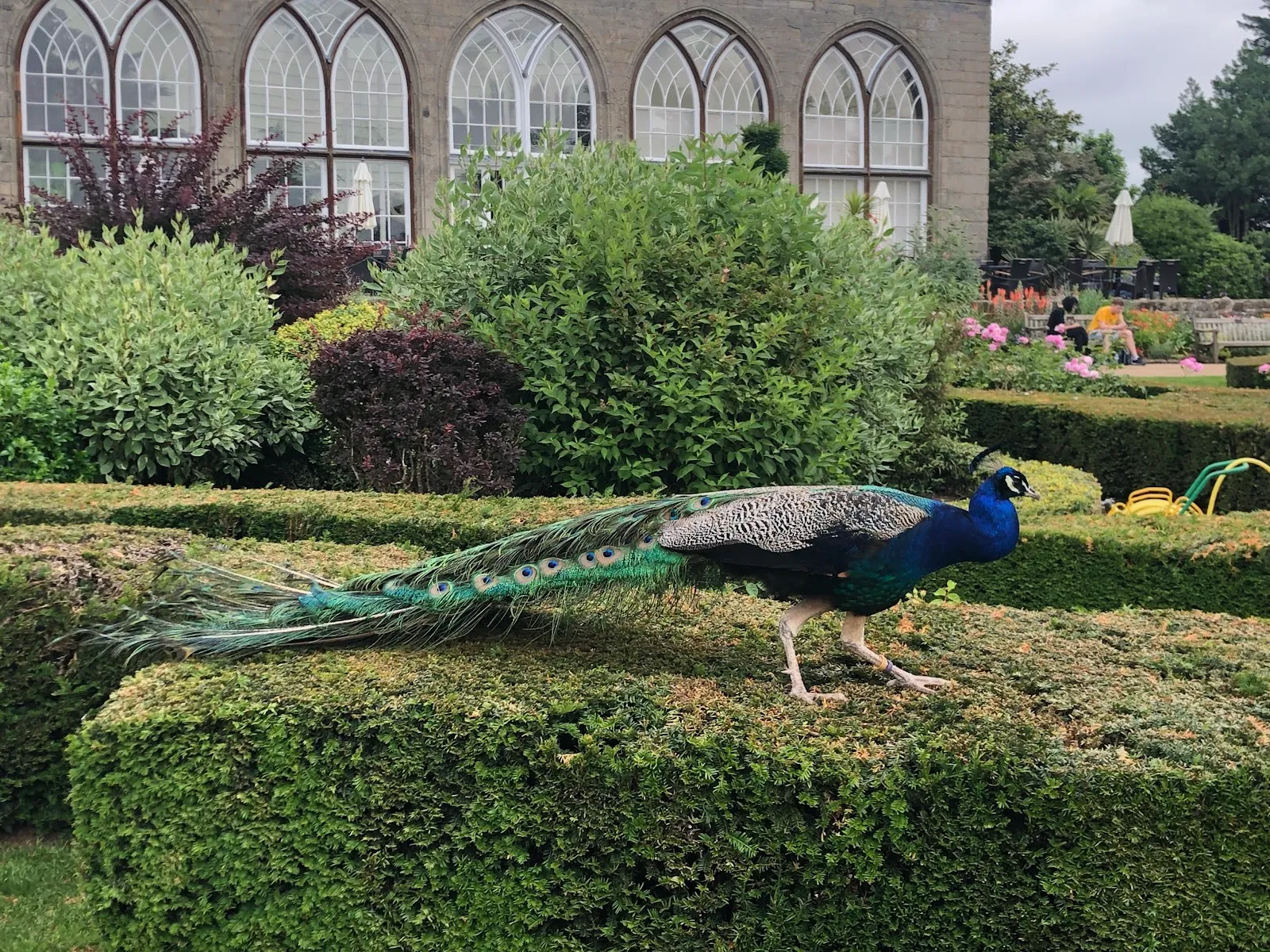
Outside, the grounds cover 64 acres and include gardens landscaped by Capability Brown. You can see the Peacock topiary garden, a Victorian rose garden, a glasshouse, a Victorian mill and engine house, and a maze based on Horrible Histories. Peacocks walk freely through the gardens. For one of the best views of the castle itself, climb the turrets and ramparts around the state rooms and the central courtyard.
Shows and events through the day
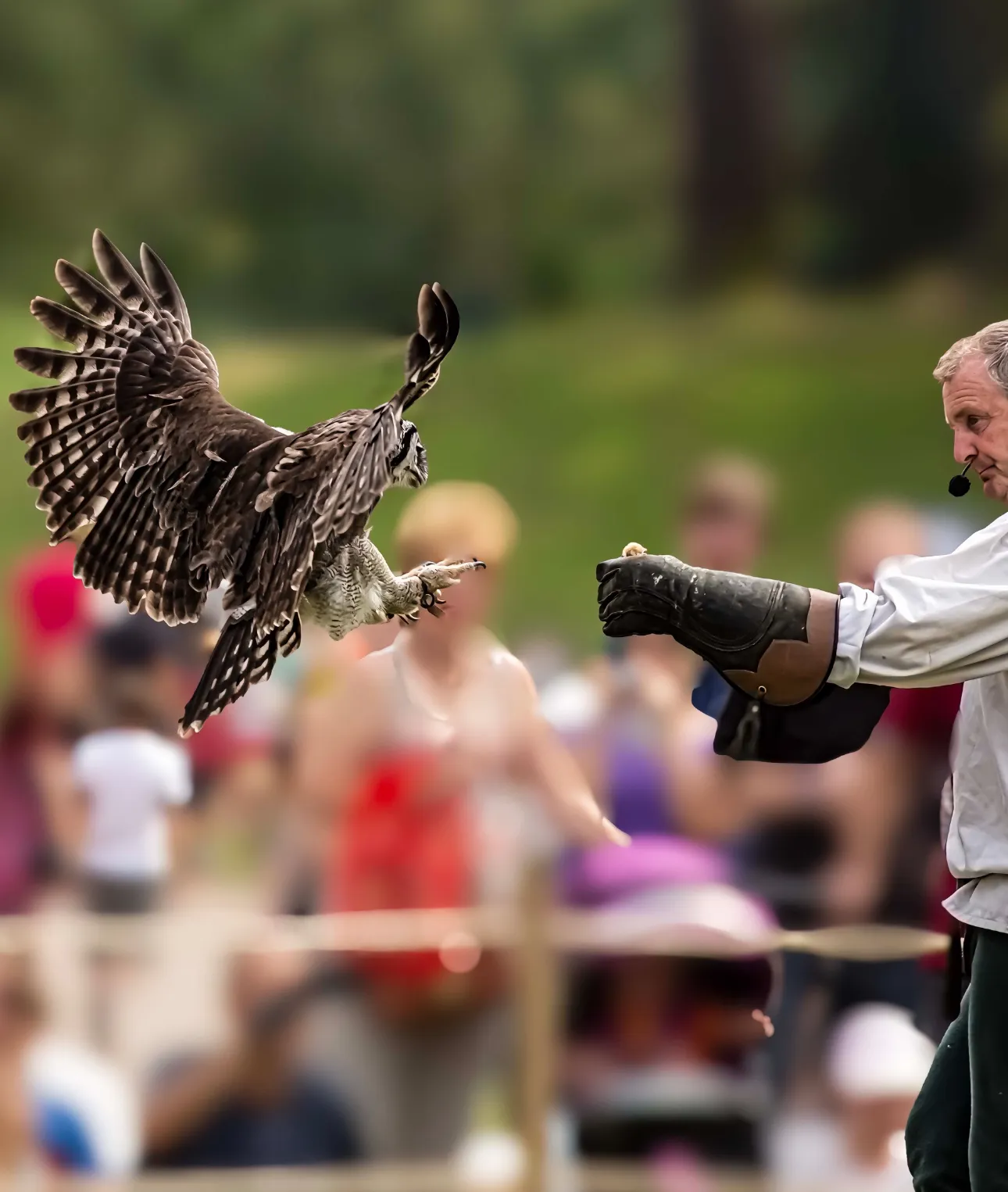
A daily schedule sets the rhythm of the visit. The birds of prey show, including The Falconer's Quest, is the largest of its kind in the UK. The working trebuchet, a medieval siege weapon, is fired on selected days. In summer, Wars of the Roses Live brings outdoor jousting, and the Dragon Slayer show lights the courtyard on summer evenings. Sundown Spectacular, an evening event with street food and live DJs, also runs in the warmer months.
Younger children have the Princess Tower, Zog Playland, adventure quests and a play area. Older visitors can follow the history through the walkthrough exhibits. The castle also runs seasonal events, including Halloween and Christmas programmes.
Planning around the castle's age
A medieval fortress has steps, narrow passages and low doorways, and the castle asks visitors with reduced mobility to read its accessibility leaflet before they come. The entrance and a parking area are wheelchair accessible, and there is a Changing Places toilet.
Food is served at The Conservatory tea house and at stalls around the grounds, and you can also bring a picnic. There are shops with souvenirs, toys and dressing-up clothes. If you want to stay on site, the options include a hotel, woodland lodges at the Knight's Village and glamping.
On the way in or out, walk down Mill Street in Warwick. It has timber-framed houses from the 15th and 16th centuries and leads to the Mill Garden on the bank of the Avon, beneath the castle walls. The view of the castle from Castle Bridge is one that Turner painted.
Preguntas frecuentes
Does a general ticket cover everything?
No. General admission covers the castle, grounds and gardens. The Castle Dungeon and other secondary attractions are extra, and you can add them online or at the ticket booths on the day.
How long do you need at Warwick Castle?
Plan on a full day. There are 64 acres of grounds, the interiors and towers, and a daily programme of shows to fit around.
Should you book tickets in advance?
Yes, booking ahead is recommended. Online tickets can be slightly cheaper than on the day, and discounted online tickets give fast-track entry.
Is Warwick Castle accessible?
The entrance and a parking area are wheelchair accessible, and there is a Changing Places toilet. The medieval buildings have steps, narrow passageways and low doorways, so check the accessibility leaflet beforehand.
Can you bring your own food?
Yes, you can bring a picnic. There is also The Conservatory tea house and a number of food stalls across the grounds.
Is the dungeon suitable for children?
The Castle Dungeon is a 50-minute walkthrough with live actors and special effects. It can be scary for young children, so think about it before adding the ticket.


