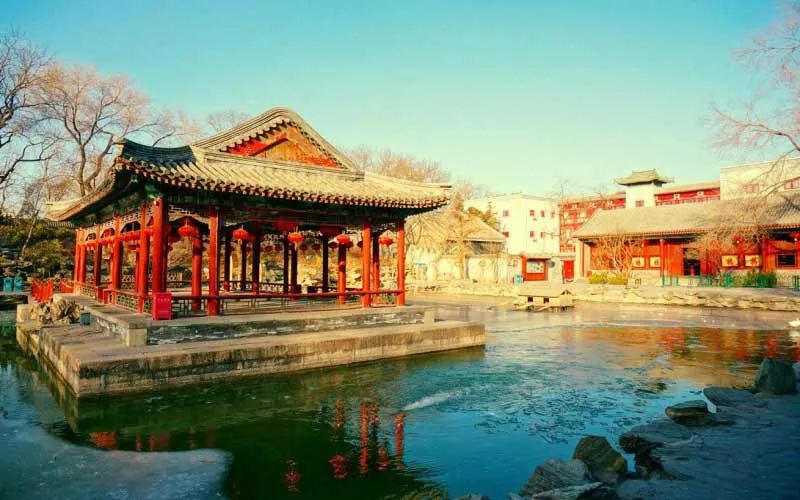
Prince Gong Mansion is a Qing-era residence and museum at 17 Qianhai West Street in Beijing’s Xicheng District, near Shichahai. Its former residents included the official He Shen and, later, Prince Gong, whose name the complex now bears. Explore the halls and traditional courtyards, then follow paths through the garden’s ponds, rockeries and pavilions. Look for the famous fortune character attributed to Emperor Kangxi and the mansion’s carved architectural details. An audio guide can explain each section as you move through the grounds.
From He Shen’s residence to Prince Gong’s mansion
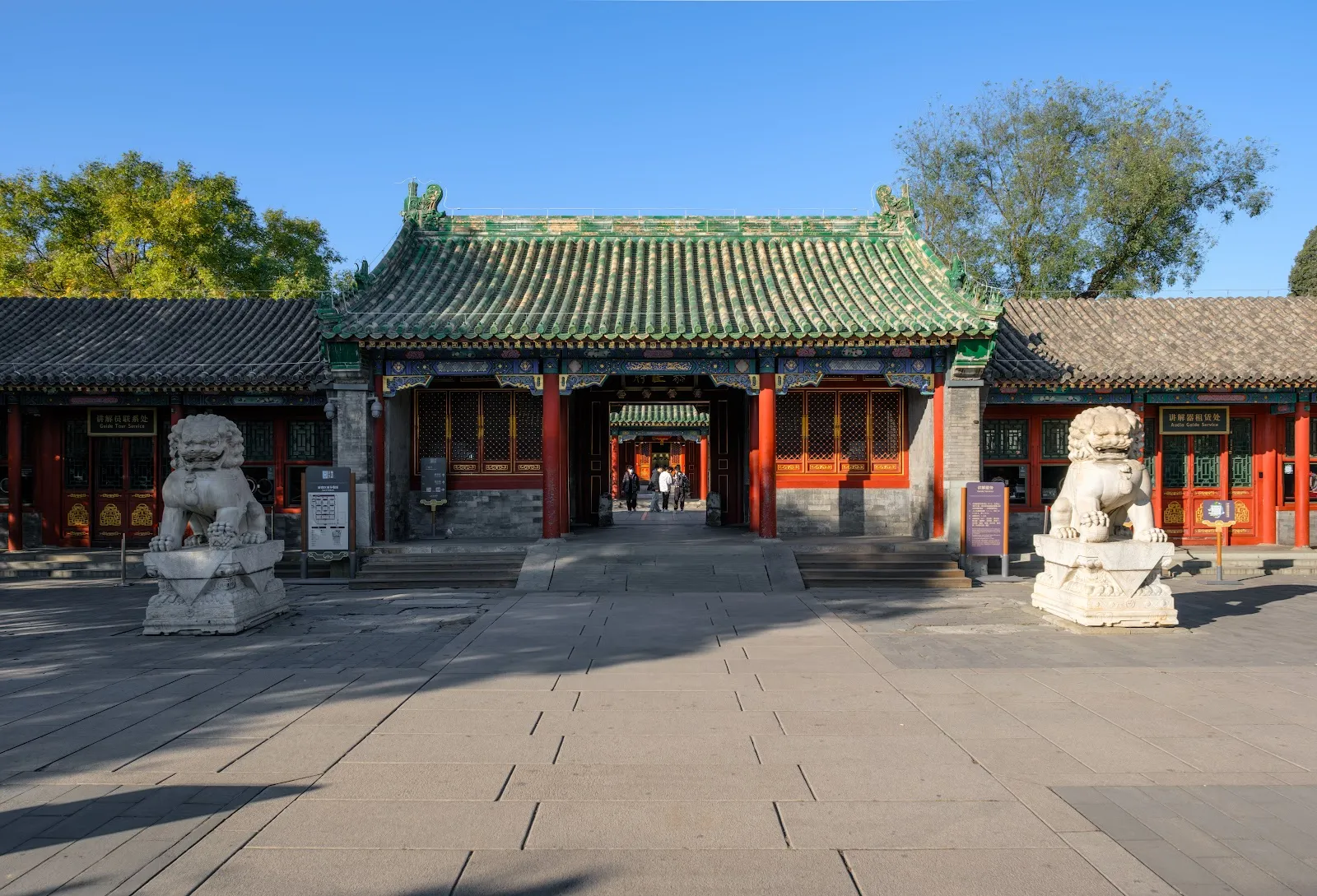
The mansion was first built for He Shen, a powerful official during the Qianlong emperor’s reign. It later passed to Prince Gong, a Qing prince whose personal name was Yixin. He became its owner in 1851, and the residence took the name by which it is known today.
The change in ownership gives the complex its place in the story of the Qing court. He Shen was remembered for corruption; Prince Gong became one of the influential figures of the dynasty’s later years. The residence offers a setting for understanding the lives of the people who occupied it, as well as the shifts in power around them.
Halls, courtyards and garden paths
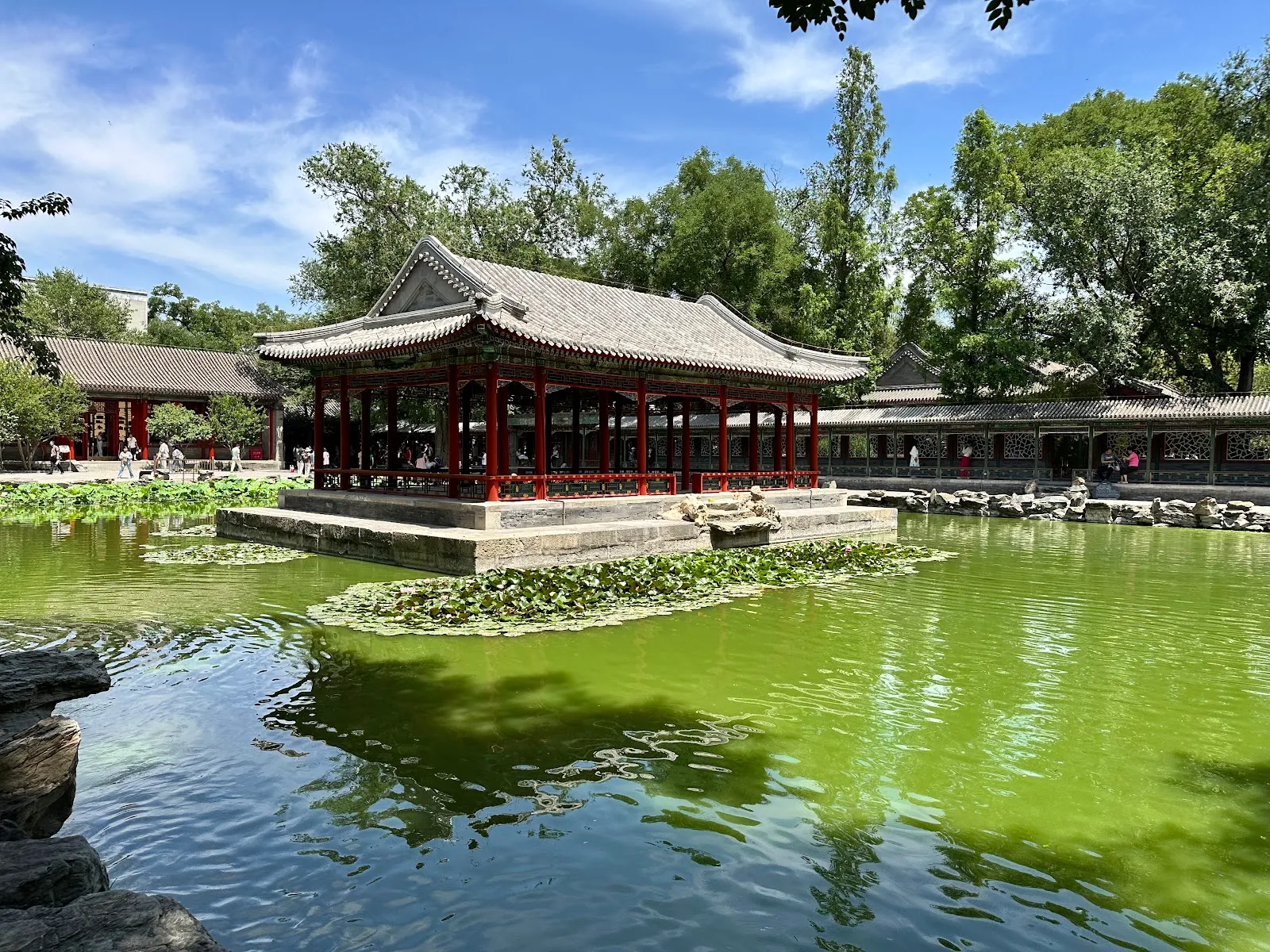
The grounds combine a residential section with a garden. Traditional buildings are arranged around courtyards, with halls and wooden details that reward a slower look. Some buildings are not open for visitors to enter, so much of the architectural detail is viewed from outside.
In the garden, paths pass ponds, artificial hills, caves, studies and pavilions. The changing views between buildings and greenery make a walk through the grounds a substantial part of the visit. From the upper terraces, traditional roofs and courtyards can be seen against Beijing’s newer cityscape.
The complex is close to Shichahai, and the mansion and lakes can be combined in one outing. The setting also links the residence to the surrounding historic area, where Beijing hutongs and other former residences are nearby.
The fortune character and what to look for
One of the mansion’s notable objects is a large fortune character associated with Emperor Kangxi. It is displayed in the garden, where its distinctive calligraphy draws visitors looking for the character 福. The original is protected, and shops sell copies of Kangxi’s writing as souvenirs.
A location-based audio guide can provide explanations for different parts of the grounds as you walk. The mansion also has an iconic theatre and specially built houses that hold treasures and artifacts. Check what is accessible during your visit, since not every building can be entered.
The site’s history is presented as more than a record of courtly wealth. Its association with He Shen has also given the mansion a role in teaching about honesty and integrity. Take time to look at the architecture and garden alongside the displays to see how the residence’s physical spaces and history fit together.
Preguntas frecuentes
Do you need a passport to buy tickets?
Bring your passport if you plan to buy tickets at the entrance.
When is the best time to visit Prince Gong Mansion?
Arrive early and avoid public holidays if you want a quieter visit.
Can you go inside every building?
No. Some buildings are not open for visitors to enter, so you may need to view their exterior details from the grounds.
Is there an audio guide?
A location-based audio guide is available, with explanations for sections as you walk through the mansion.