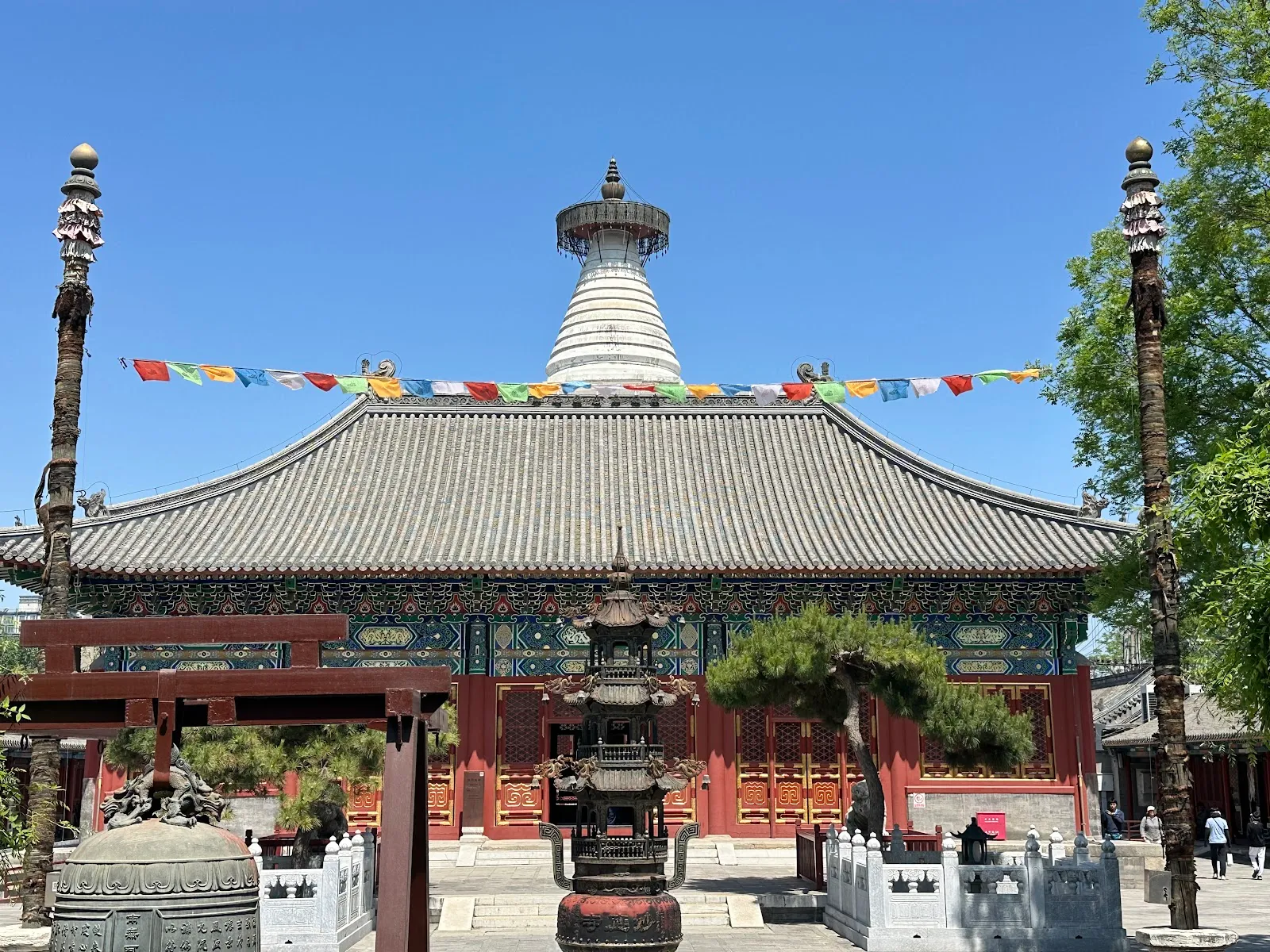
Miaoying Temple, at 171 Funei Avenue in Beijing’s Xicheng District, is a Buddhist temple known for its Yuan Dynasty White Pagoda. Designed by Nepali architect Araniko, the roughly 50-metre stupa combines Nepali design with Chinese building techniques. Inside the temple, several halls contain Buddha statues, detailed ceiling and roof designs, and a museum about the site’s history and construction. The temple is a calm stop near Beijing’s hutong lanes, and an east-side alley gives a clear view of the pagoda.
The White Pagoda and its history
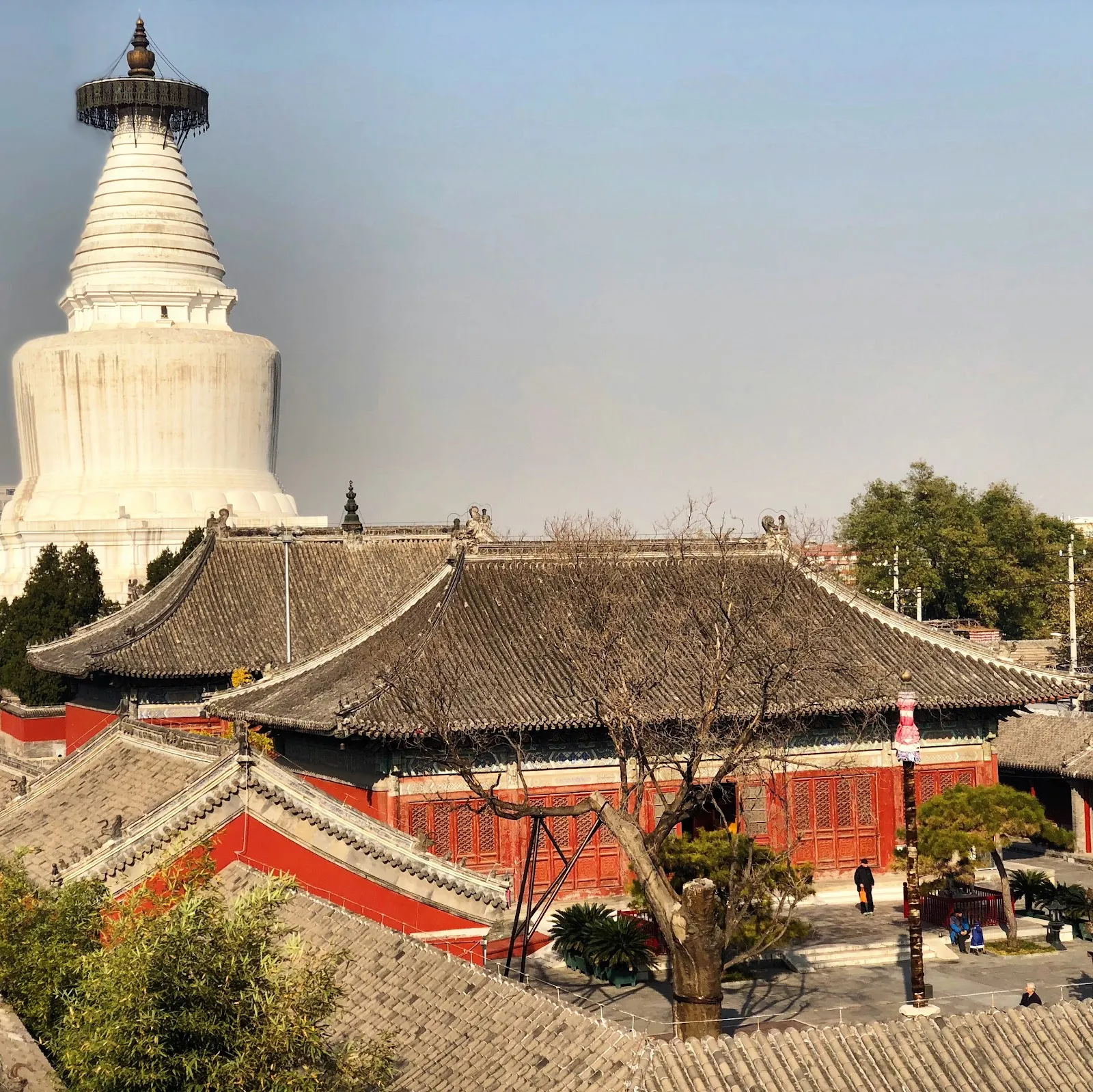
Miaoying Temple is also known as White Pagoda Temple, after the large stupa at its centre. The pagoda dates to the Yuan Dynasty, when Kublai Khan authorised its construction in Beijing’s Xicheng District. Nepali architect Araniko designed it, bringing Nepali stupa forms together with Chinese building techniques.
The stupa is about 50 metres tall. Its whitewashed body rises above the surrounding hutong neighbourhood and ends in a golden spire. The octagonal base has carved details and Buddhist motifs. Sacred Buddhist relics were placed inside during construction, giving the structure a religious purpose as well as a prominent place in the city’s skyline.
The pagoda’s design is associated with cultural exchange between Nepal and China. It was built during the Yuan period, while the temple was rebuilt in the Ming Dynasty and given the name Miaoying Si. The structure is also described as a Tibetan-style dagoba, reflecting the Buddhist traditions connected with its origins.
Inside the temple
The temple grounds include four halls and a courtyard. Several halls contain Buddha statues, including images of Shakyamuni, the Medicinal Buddha and Amitabha. Look up at the decorated ceilings and roofs as you move between the buildings; their designs reflect the architectural traditions of the period.
A museum in one of the halls explains the temple’s past and the pagoda’s construction. It adds context to the building outside, including the work of Araniko and the combination of Nepali and Chinese techniques. The temple is compact, so the halls, courtyard and museum can be visited as part of one stop.
Finding a view beyond the entrance
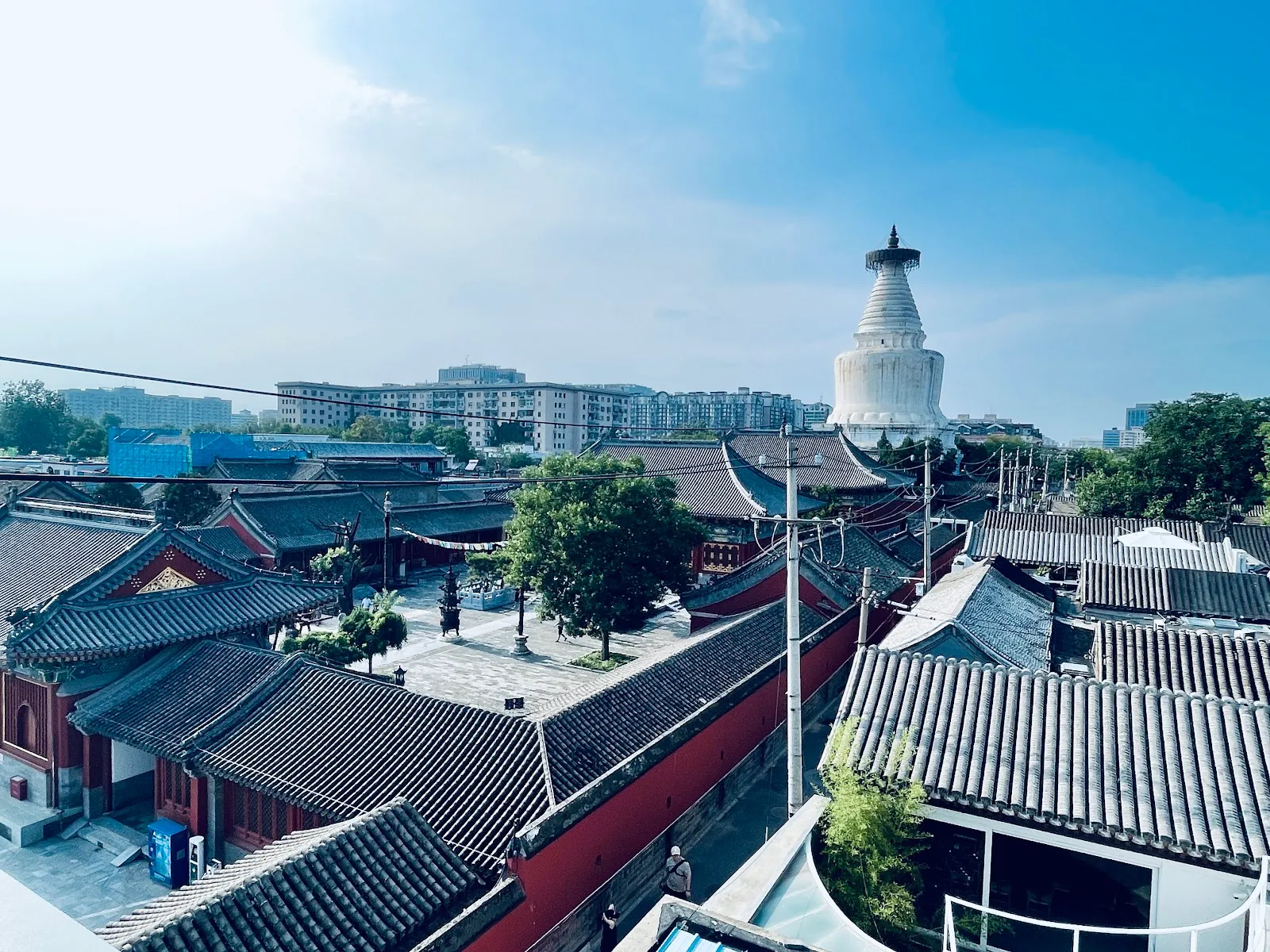
For a view of the White Pagoda from outside the temple, head to Bai Ta Si Dong Jia Dao, the alley on the east side of the entrance. The pagoda stands above the nearby hutong roofs, making this a useful place to pause before or after exploring the grounds.
Miaoying Temple can be combined with a visit to the nearby Temple of Ancient Monarchs. Early mornings and weekdays are suggested for a quieter visit. The temple address is 171 Funei Avenue, Xicheng District.
Preguntas frecuentes
Who designed the White Pagoda at Miaoying Temple?
Nepali architect Araniko designed the pagoda during the Yuan Dynasty, under Kublai Khan.
Where can I see the White Pagoda from outside the temple?
Bai Ta Si Dong Jia Dao, the alley east of the temple entrance, gives a view of the pagoda.
What can you see inside Miaoying Temple?
The grounds have four halls and a courtyard. Several halls contain Buddha statues, and one houses a museum about the temple’s history and construction.