The Gate of Heavenly Purity is the main entrance to the Inner Court of Beijing’s Forbidden City, leading toward the Palace of Heavenly Purity, where the emperor lived. From here, you can continue to the Qianqing, Jiaotai and Kunning palaces and look for the side gates that open onto the courtyards. The gate’s broad setting gives a sense of the scale of the imperial complex. An audio guide is available to rent at the entrance, with announcements changing as you move between areas.
The entrance to the Inner Court
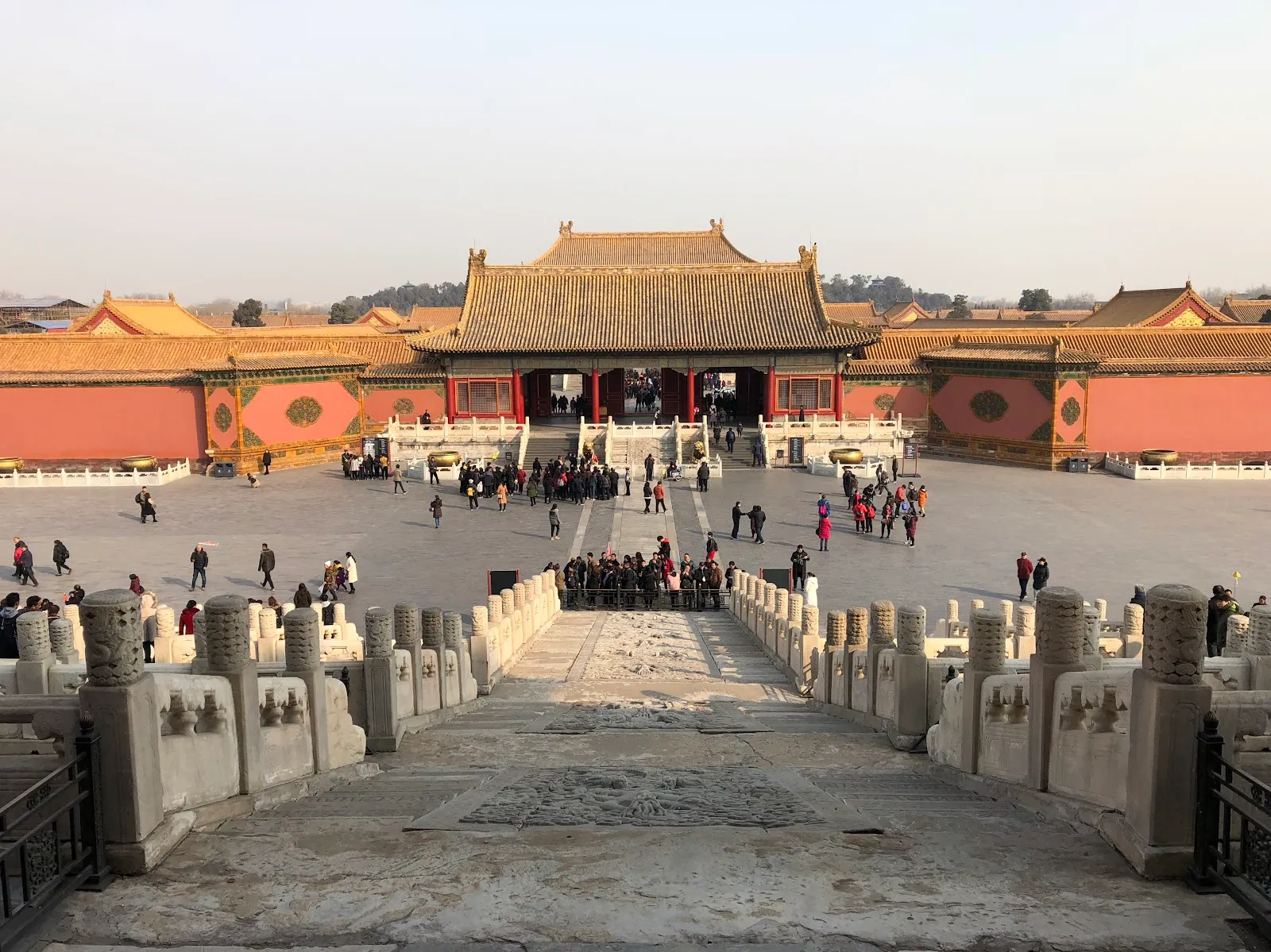
The Gate of Heavenly Purity, also called Qianqingmen, stands behind the Hall of Preserving Harmony in the Forbidden City. It is the main entrance to the Inner Court and leads toward the Palace of Heavenly Purity, the emperor’s residence. Beyond the gate are the Qianqing, Jiaotai and Kunning palaces.
Side gates provide access to the courtyards. Notice how these entrances fit into the wider arrangement as you pass through. The courtyards have no trees, leaving the buildings and open paved areas in clear view.
A place for imperial audiences
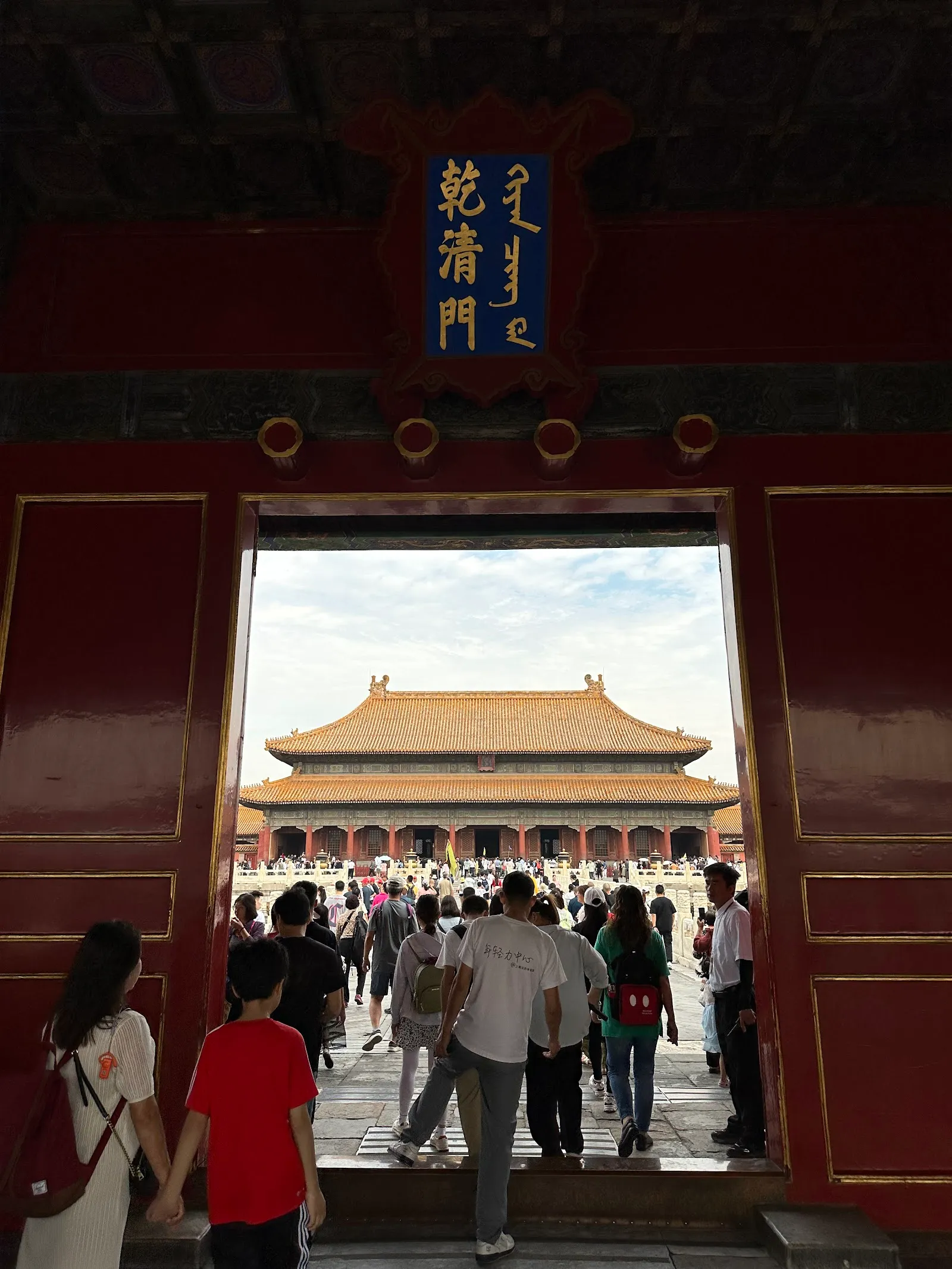
The gate dates to 1420, during the Ming dynasty, and was rebuilt in 1655 under the Qing. During the Qing dynasty, emperors held audiences here in a practice known as “御门听政,” or attending to government business at the gate. The custom was established under the Shunzhi Emperor, who moved these audiences from the Gate of Supreme Harmony.
The emperor sat on a temporary seat inside the gate while officials reported to him from its entrance. After hearing a report, he issued a decision. Officials then withdrew down the eastern steps, and the next person came forward. Audiences usually began at 8 in the morning.
The Kangxi Emperor used this routine particularly often. When he was in the Forbidden City, he went to the gate for audiences almost every day except during the winter months. He continued even as he grew old and officials urged him to rest. Many significant decisions were made during these sessions. Later emperors spent more time attending to government affairs at garden retreats, so audiences at the gate became less frequent. The practice ended under the Xianfeng Emperor.
Ceremonies and the approach today
Government audiences were not the only events held at the Gate of Heavenly Purity. Qing ceremonies there included fasting observances and the receiving and handling of imperial seals.
The gate’s square has also undergone restoration. Work in 2013 and 2014 replaced modern cement paving with traditional large bricks and restored the traditional brick edges around the buildings. During construction, transparent barriers allowed people to see the work in progress.
For a visit today, an audio guide can add spoken explanations as you move around the complex. Its announcements change from one area to another. Pause at the gate to take in the route ahead, then look for the side entrances leading into the courtyards.
Preguntas frecuentes
Where is the Gate of Heavenly Purity?
It is inside Beijing’s Forbidden City, behind the Hall of Preserving Harmony. The gate is the main entrance to the Inner Court.
What is beyond the gate?
The route leads toward the Palace of Heavenly Purity, the emperor’s former residence, and the Qianqing, Jiaotai and Kunning palaces.
Can you rent an audio guide?
Yes. Audio guides are available at the entrance, and their announcements change as you move through different areas.
When is a good time to visit?
Arrive early in the day for a quieter visit. Tickets are recommended in advance.