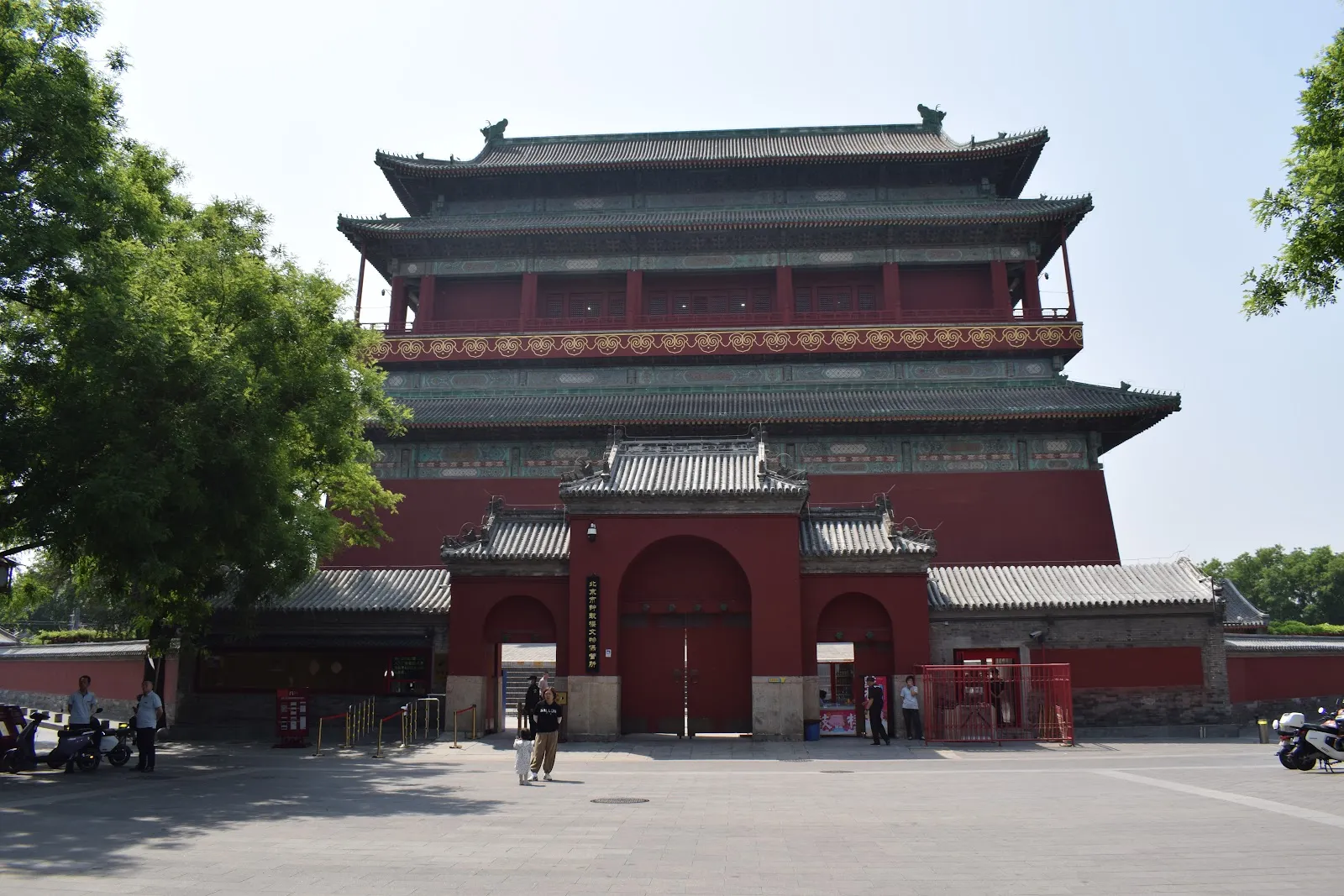
At the northern end of Beijing’s central axis, the Bell and Drum Towers stand among the hutongs of Dongcheng. Built in 1272, they served as the city’s official timekeepers for centuries: drums marked the hours, and a great bronze bell sounded the time. Inside, you can see timekeeping instruments and the original drum, then climb for views across the old neighborhoods and toward Beijing’s modern skyline. The surrounding lanes make it easy to pair the towers with a walk through a traditional quarter.
How the towers kept time
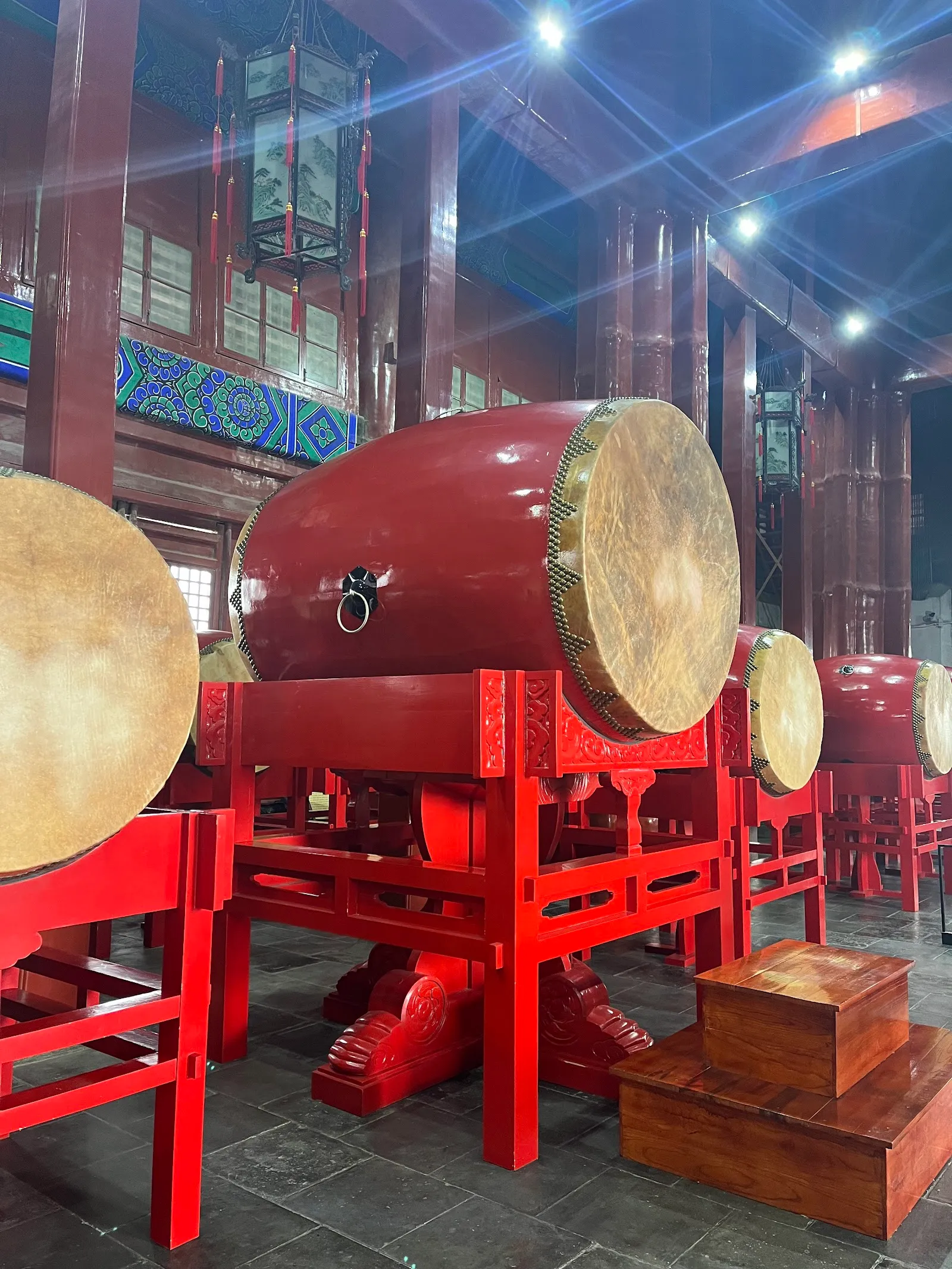
The Drum Tower and Bell Tower were built in 1272, during the Yuan Dynasty, at the northern end of Beijing’s inner city axis. They served as the city’s official timekeepers. The Drum Tower’s 24 drums and the Bell Tower’s bronze bell helped mark time in old Beijing, before the towers were retired from that role in 1924.
The buildings did not remain unchanged. The towers were rebuilt or restored several times, and the Yongle Emperor had the Drum Tower rebuilt in 1420, slightly east of its original site, to align it with the Forbidden City’s axis. Restoration work by the municipal government began in the early 1980s. The Drum Tower opened to the public in 1987, followed by the Bell Tower in 1989. Since 2001, they have sounded a time signal twice a day.
Inside the Drum Tower
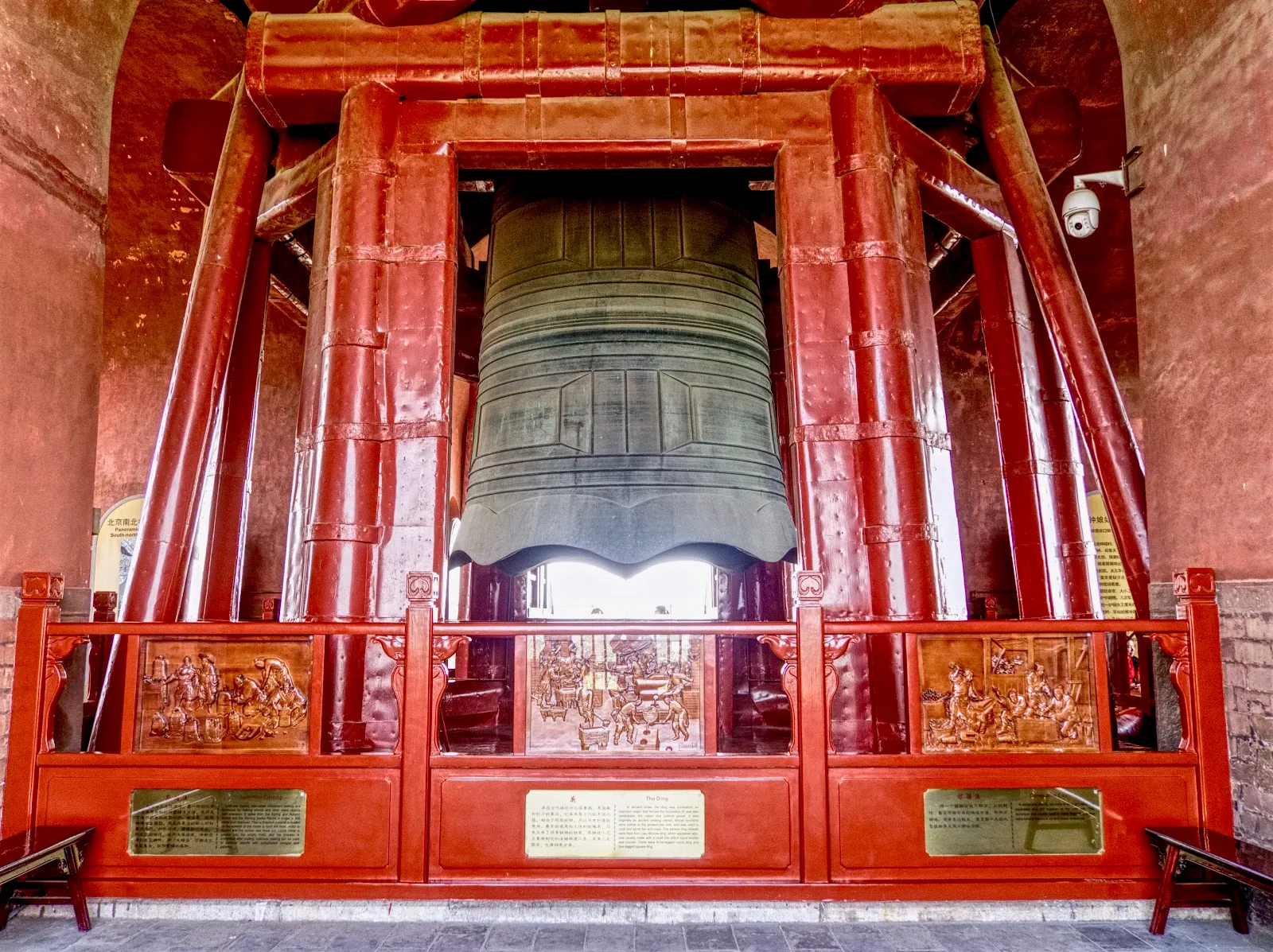
The Drum Tower’s interior gives a closer look at instruments used to mark time, including the original drum. Performances of drum playing are also held there. The towers’ role in timekeeping is part of what makes a visit more than a climb for the view: the displays connect the buildings to the daily rhythms they once organized.
A narrow, steep staircase leads to the upper level. From there, the view takes in the hutong neighborhoods around the towers and reaches toward landmarks such as Jingshan Park, with the modern city visible in the distance.
A walk through the hutongs
The towers sit among traditional lanes in Dongcheng, so you can combine a visit with a walk through the surrounding neighborhood. The area links to alleys including Zhongku Hutong, Lingdang Hutong, Caochang North Alley, Zhonglouwan Hutong, Doufuchi Hutong and Yuge Hutong. These routes pass through a part of Beijing where local daily life continues alongside the historic buildings.
The towers are part of the Beijing Central Axis UNESCO World Heritage site. Their position and history offer a way to understand how the old city was organized, while the lanes around them show the scale and character of the neighborhood at street level.
Preguntas frecuentes
How do you get to the Bell and Drum Towers?
Take subway Line 8 to Shichahai station, which is near the towers.
Can you go inside both towers?
Both towers are open to the public. A joint ticket is an option if you plan to enter both.
Are the stairs steep?
Yes. The staircases are narrow and steep, so take care on the climb.