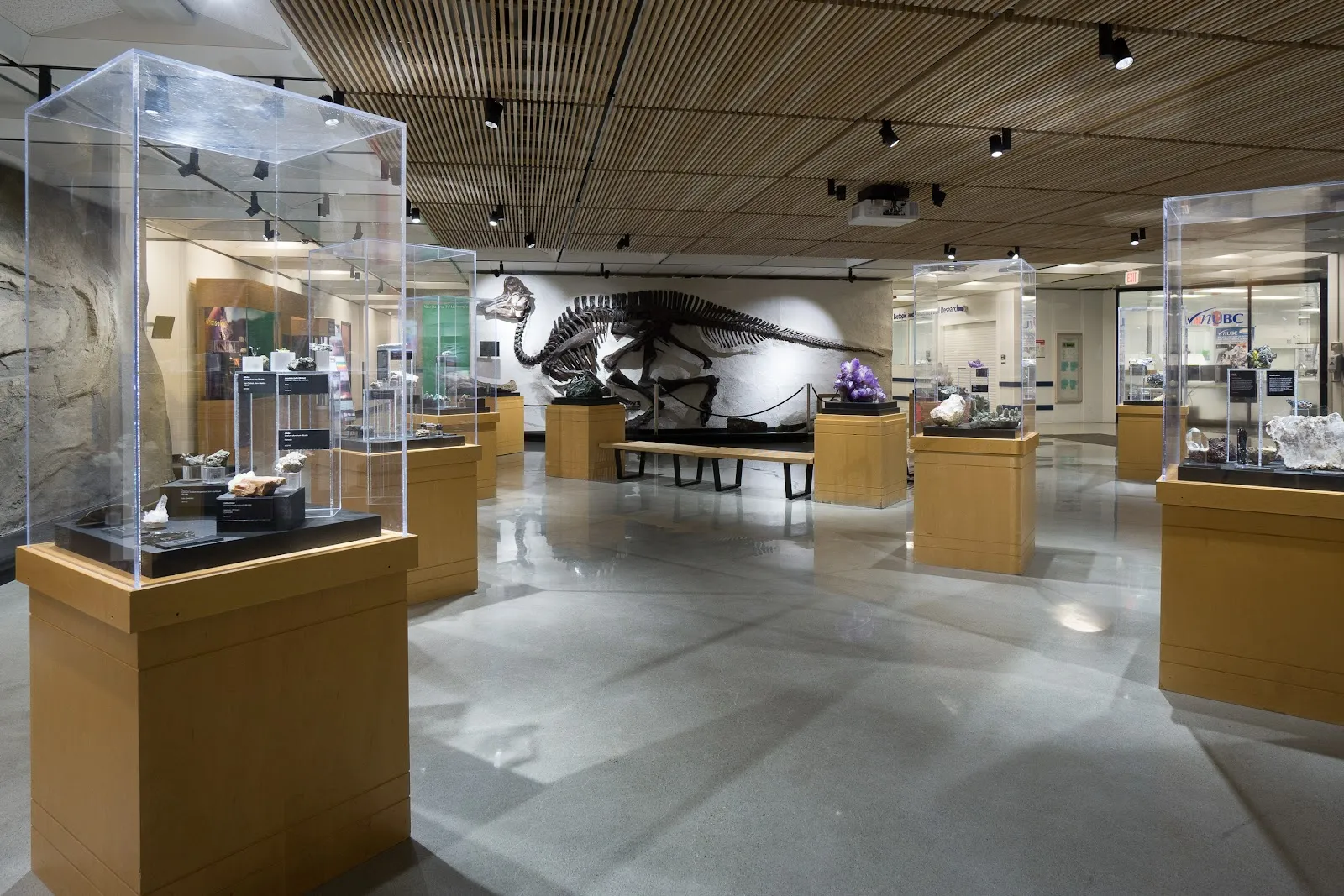
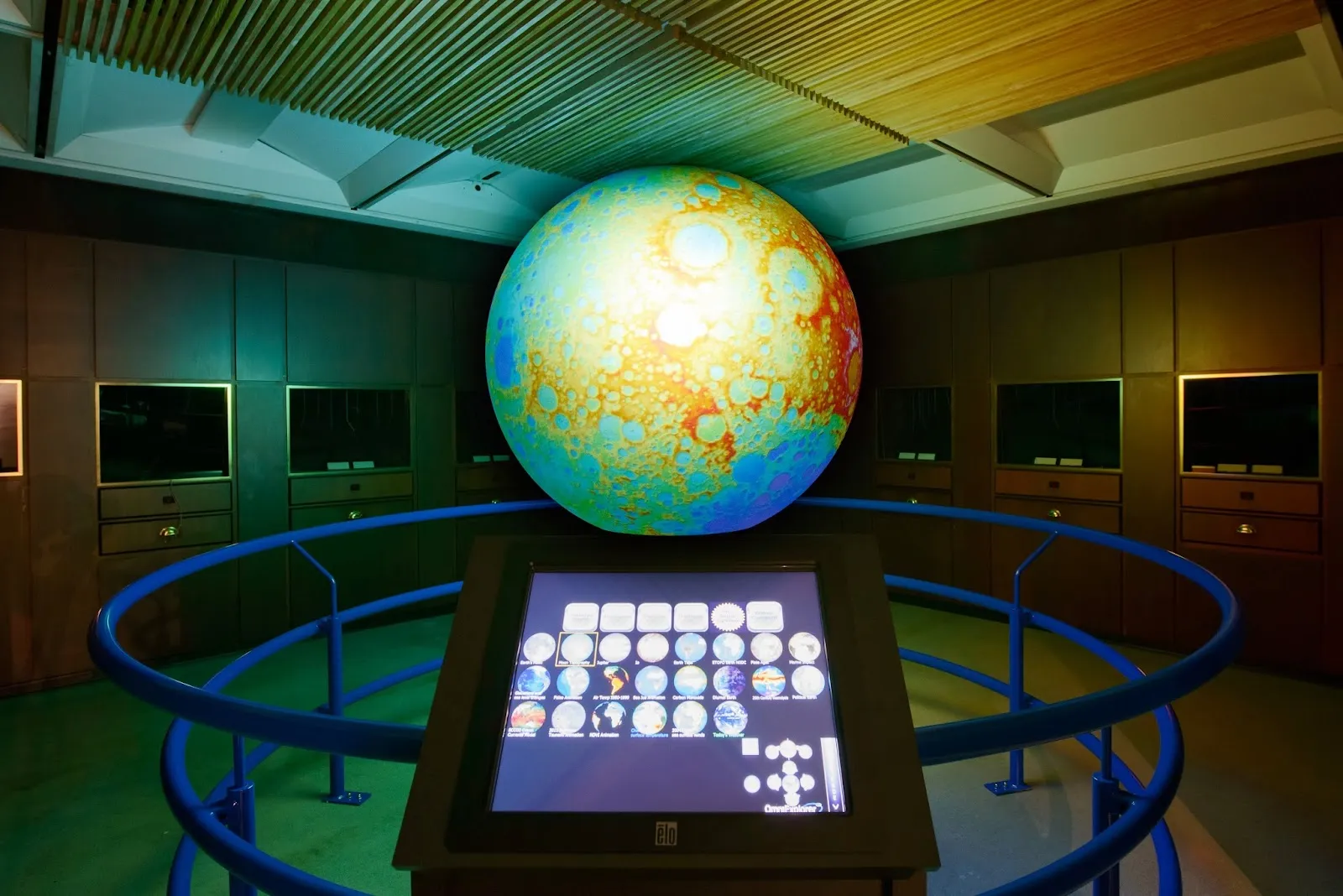
At UBC, the Pacific Museum of Earth explores rocks, minerals, fossils and other parts of Earth science. Its collection includes colourful minerals, gemstones and dinosaur-era skeletons, with explanations that help make the displays accessible to different ages. You can also try hands-on exhibits, including a tornado simulator and a latitude contour booth. The museum is free to enter, and a visit of about one to two hours gives you time to explore the displays and interactive activities.
Minerals and fossils
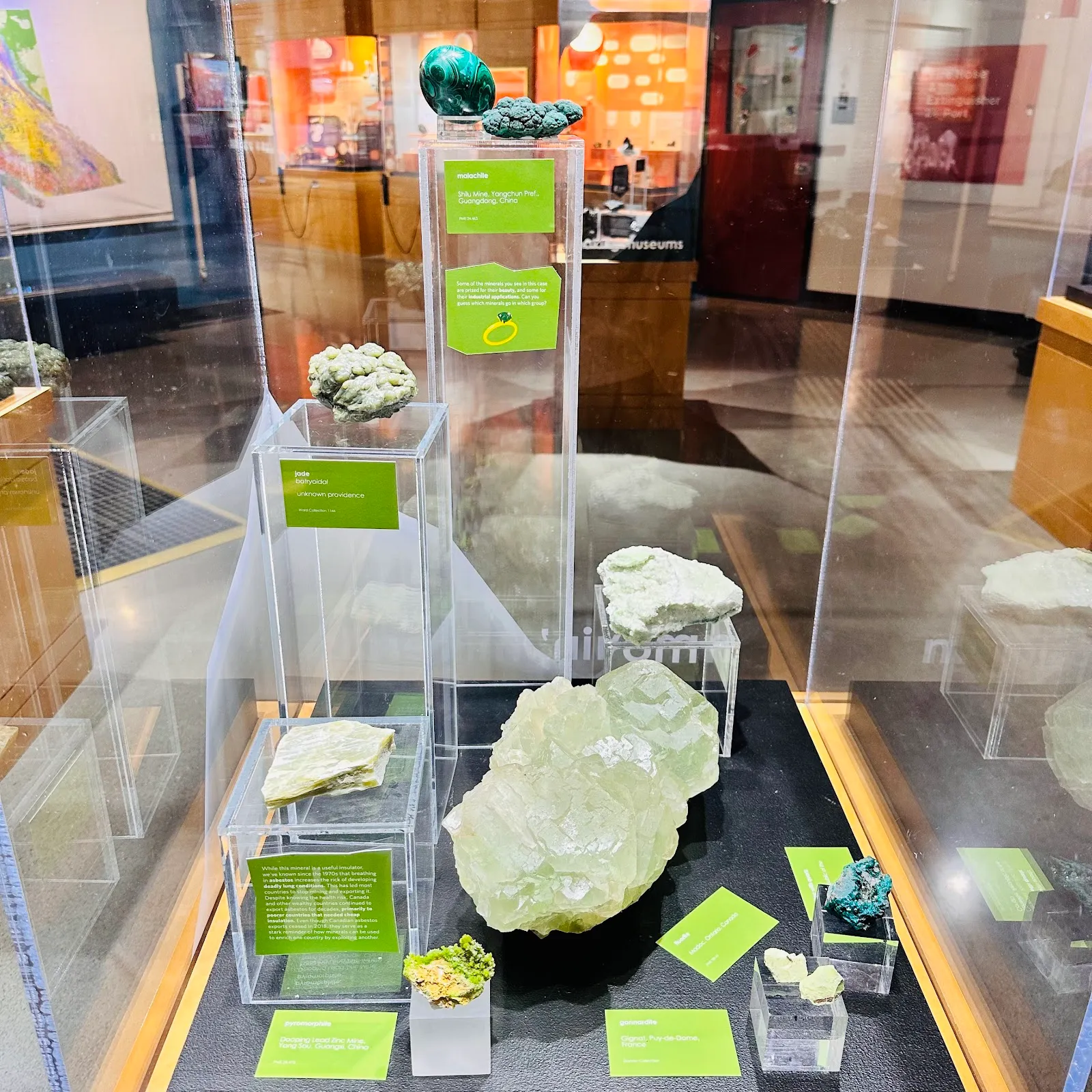
The museum’s collection brings together rocks, minerals, gemstones and fossils. Colourful mineral displays sit alongside fossil specimens, with information panels explaining the Earth science behind them. Look for the botryoidal jade in the minerals section.
Dinosaur-era skeleton displays add a prehistoric dimension to the visit. They are one part of a broader collection about Earth’s history, so there is more to explore than dinosaur fossils alone.
Hands-on exhibits at UBC
Interactive activities let visitors explore Earth science by doing, including a tornado simulator and a latitude contour booth. These exhibits can be a useful way to keep younger visitors engaged while exploring the collection.
The museum also gives a glimpse of work by UBC faculty and students. Allow one to two hours to see the displays and try the activities. Entry is free. The museum is at 6339 Stores Road on the UBC campus; check your route before setting out, as directions may not bring you directly to the entrance.
Preguntas frecuentes
Is the Pacific Museum of Earth free?
Yes, entry is free.
How long should I spend at the museum?
Plan for about one to two hours to explore the exhibits.
What can children do at the Pacific Museum of Earth?
They can try interactive exhibits such as the tornado simulator and latitude contour booth.
What can you see at the museum?
The collection includes minerals, gemstones, fossils and dinosaur-era skeleton displays, along with hands-on Earth science exhibits.