Château Ramezay is a history museum in Old Montréal, across Notre-Dame Street from City Hall. Built in 1705 as Governor Claude de Ramezay’s residence, the house later served as the Continental Army’s local headquarters. Its rooms trace Montréal’s past through objects, furnishings and themed displays, with video kiosks providing explanations in several languages. Try on historical clothing in the basement, then visit the garden behind the house, where vegetables and medicinal plants grow in beds inspired by New France gardens.
A governor’s residence becomes a museum
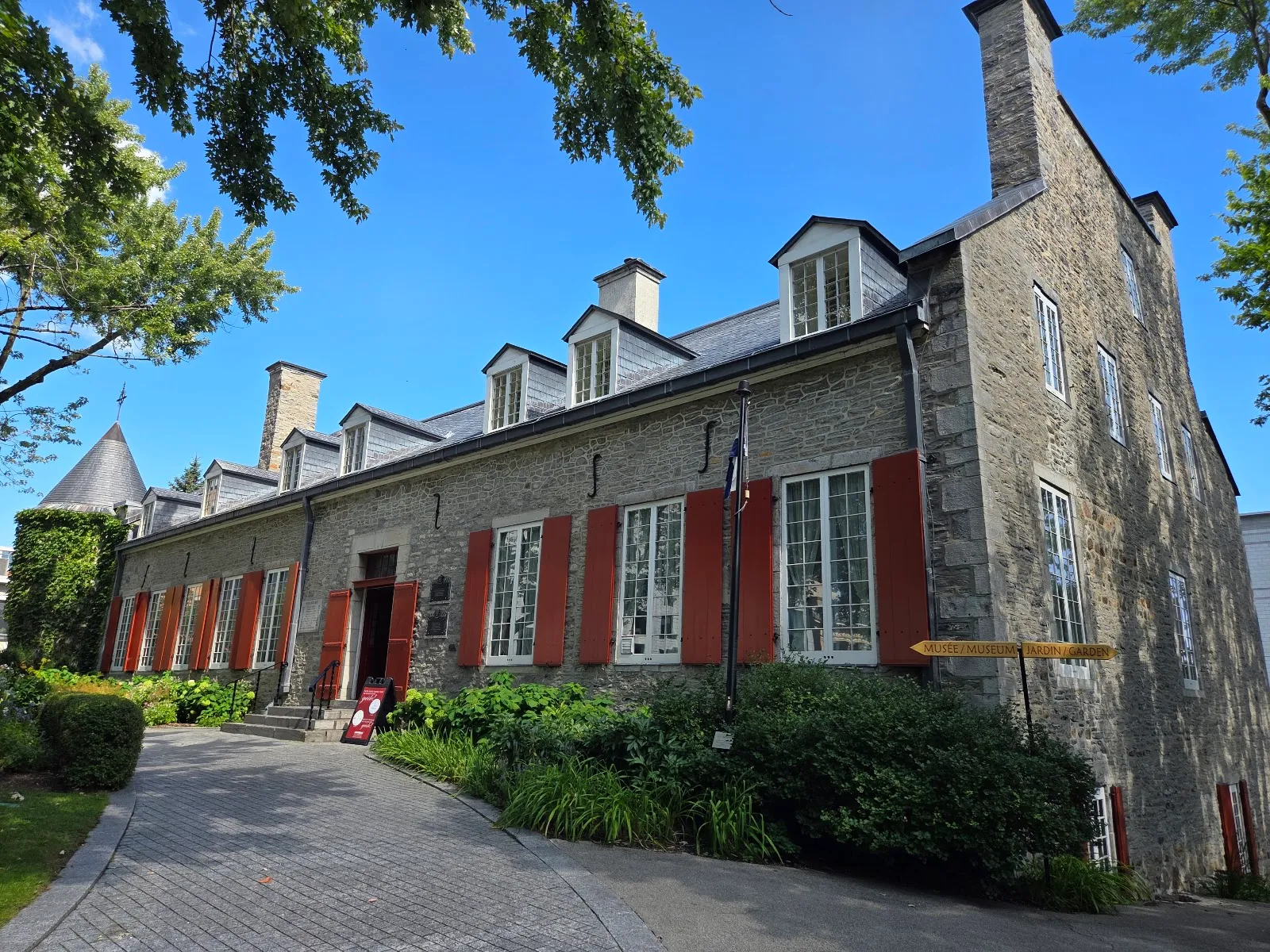
Claude de Ramezay, governor of Montréal from 1704 to 1724, had this house built in 1705 as his residence. The building’s role changed over time: it later housed other governors, passed to fur-trading companies and served as a military headquarters. It was also used as a medical teaching site before becoming a museum.
In 1775 and 1776, the house was the local headquarters of the Continental Army. Benjamin Franklin stayed there in 1776 while seeking support for the American Revolution. Those episodes connect the building’s rooms to events beyond Montréal, but its story also follows the city’s growth and changing civic life.
The château is recognized as a National Historic Site and is described as Québec’s oldest private history museum. Its early-18th-century stone-and-wood construction remains part of the visit: the house itself is a piece of the history the museum interprets.
Objects and activities across the house
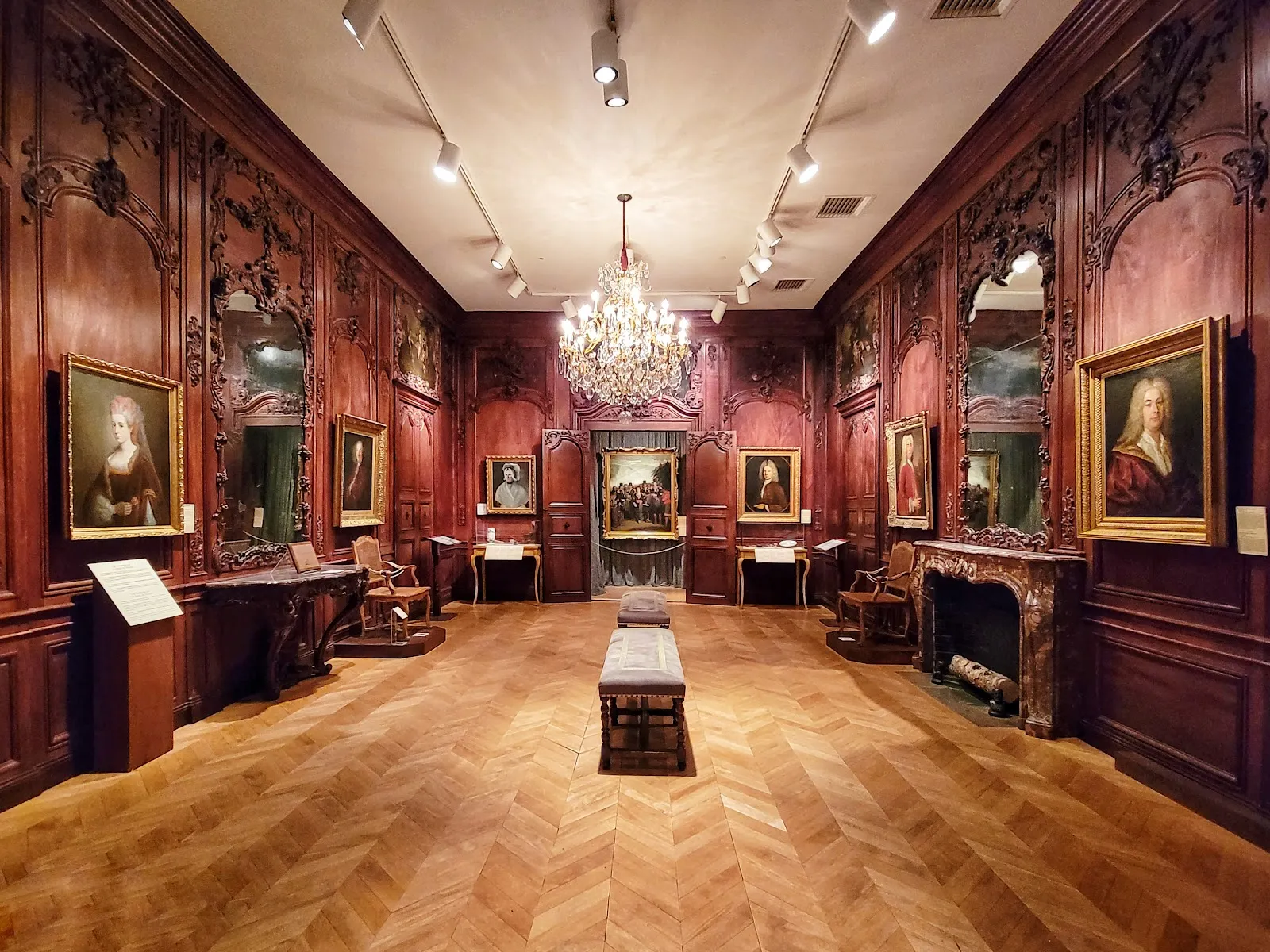
The museum uses themed rooms and historical objects to tell Montréal’s story. Its collections include furniture, paintings, sculptures, books, printed material and currency. Exhibitions cover the city and surrounding region across several centuries, from Indigenous settlement and early colonial life to the early 20th century.
Video kiosks give more detailed explanations in multiple languages. They can help you follow the displays at your own pace. There are 15 rooms with different themes, so leave time to move through the whole house rather than stopping only in the first rooms.
The basement adds a hands-on element: visitors can try on historical clothing. Check this area as you explore the lower floor. The activity offers a way to engage with the period clothing beyond looking at objects behind display cases.
The Governor’s Garden
Behind the château, the Governor’s Garden draws on the formal kitchen gardens associated with New France. Its beds include vegetables, flowers and medicinal herbs, arranged within a walled space. The plants give a sense of the practical uses of a period garden as well as its layout.
The garden was inaugurated in 2000 and is free to visit. In summer, period military reenactors have paraded there in historical uniforms. If the garden is a priority, plan your stop for the warmer months, when its planting is in season.
The garden makes a natural pause after the museum rooms. It is also possible to visit it without going through the museum, so you can include the outdoor space even if you have limited time for the exhibitions.
Preguntas frecuentes
Where is Château Ramezay?
It is at 280 Notre-Dame Street East in Old Montréal, across from Montréal City Hall.
What can you see inside Château Ramezay?
The museum has themed rooms with objects such as furniture, paintings, books and currency. Video kiosks provide explanations in multiple languages, and historical clothing can be tried on in the basement.
Can you visit the Governor’s Garden without entering the museum?
Yes. The garden is free to visit.
When is the best time to see the garden?
Summer is a good time to visit, when the garden’s seasonal planting is in view. Period military reenactors have also paraded there in summer.