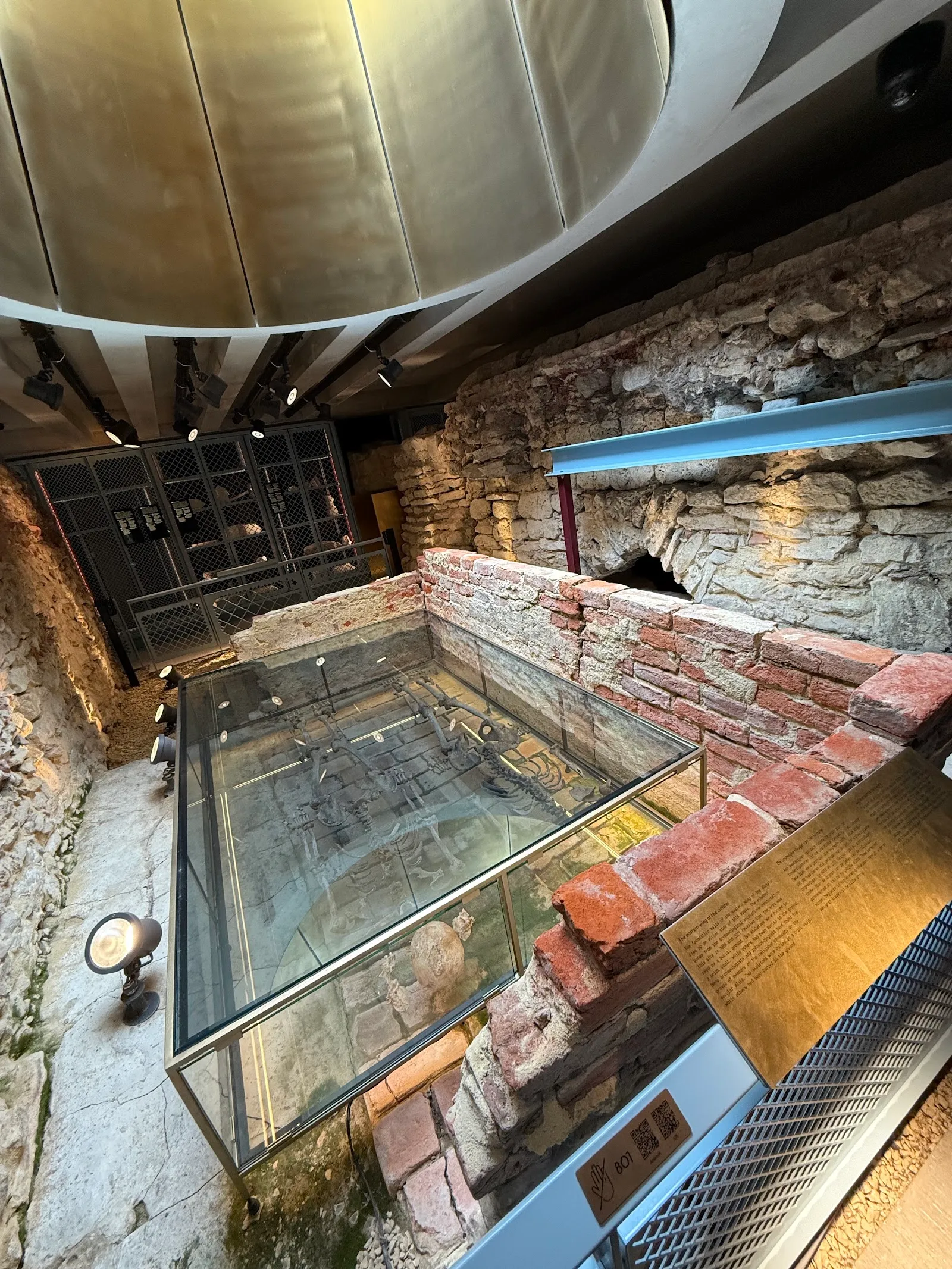
Beneath Brussels’ Bourse building at Bd Anspach 80, Bruxella 1238 preserves the foundations of a Franciscan monastery established in 1238. Follow the remains of the medieval complex and see funeral vaults, including the tomb associated with John I, Duke of Brabant. A first room uses a video and models to trace how this part of Brussels changed from a monastery to a butter market and later the site of the stock exchange. The compact museum is a useful stop for a closer look at the city’s medieval past.
The monastery beneath the Bourse
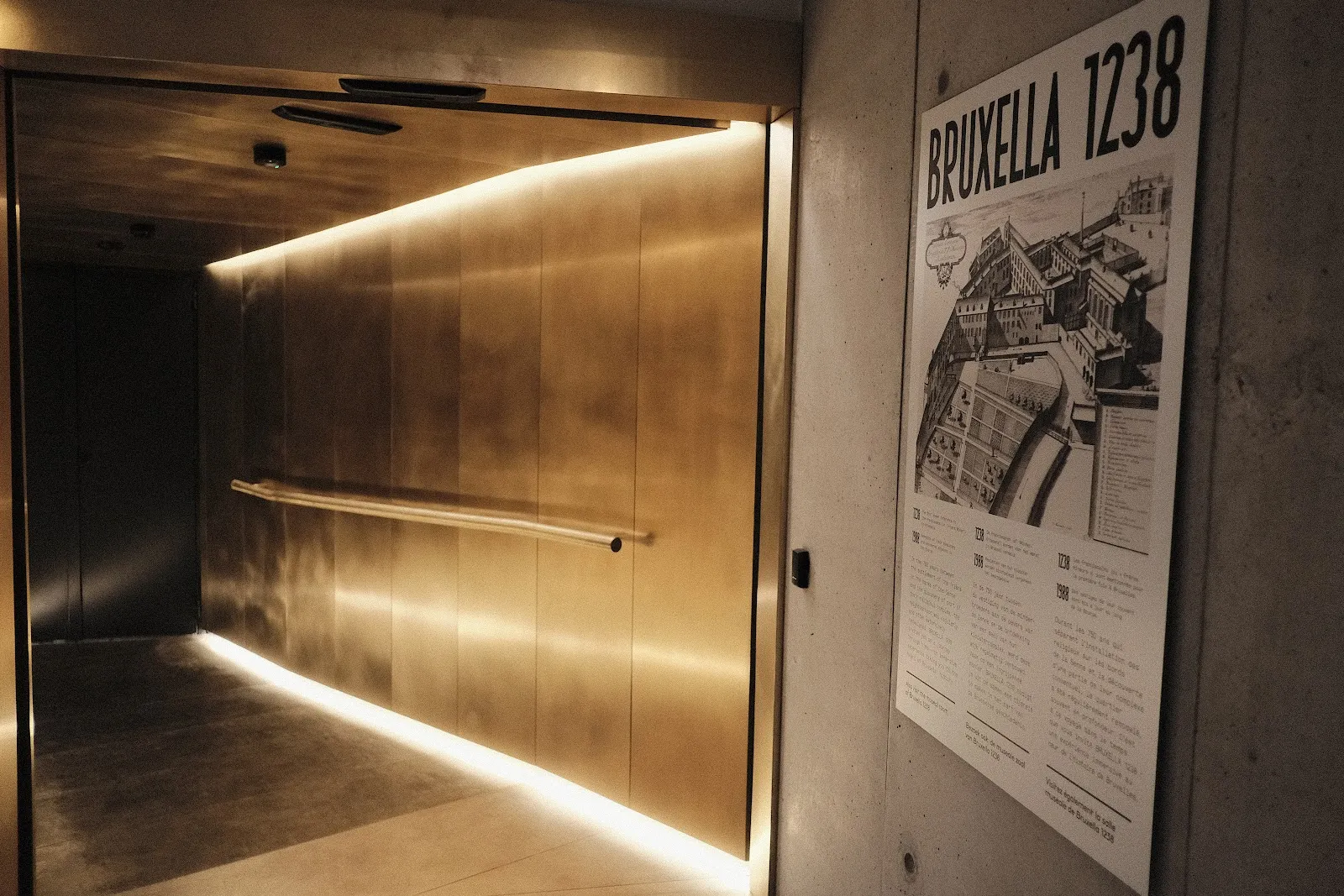
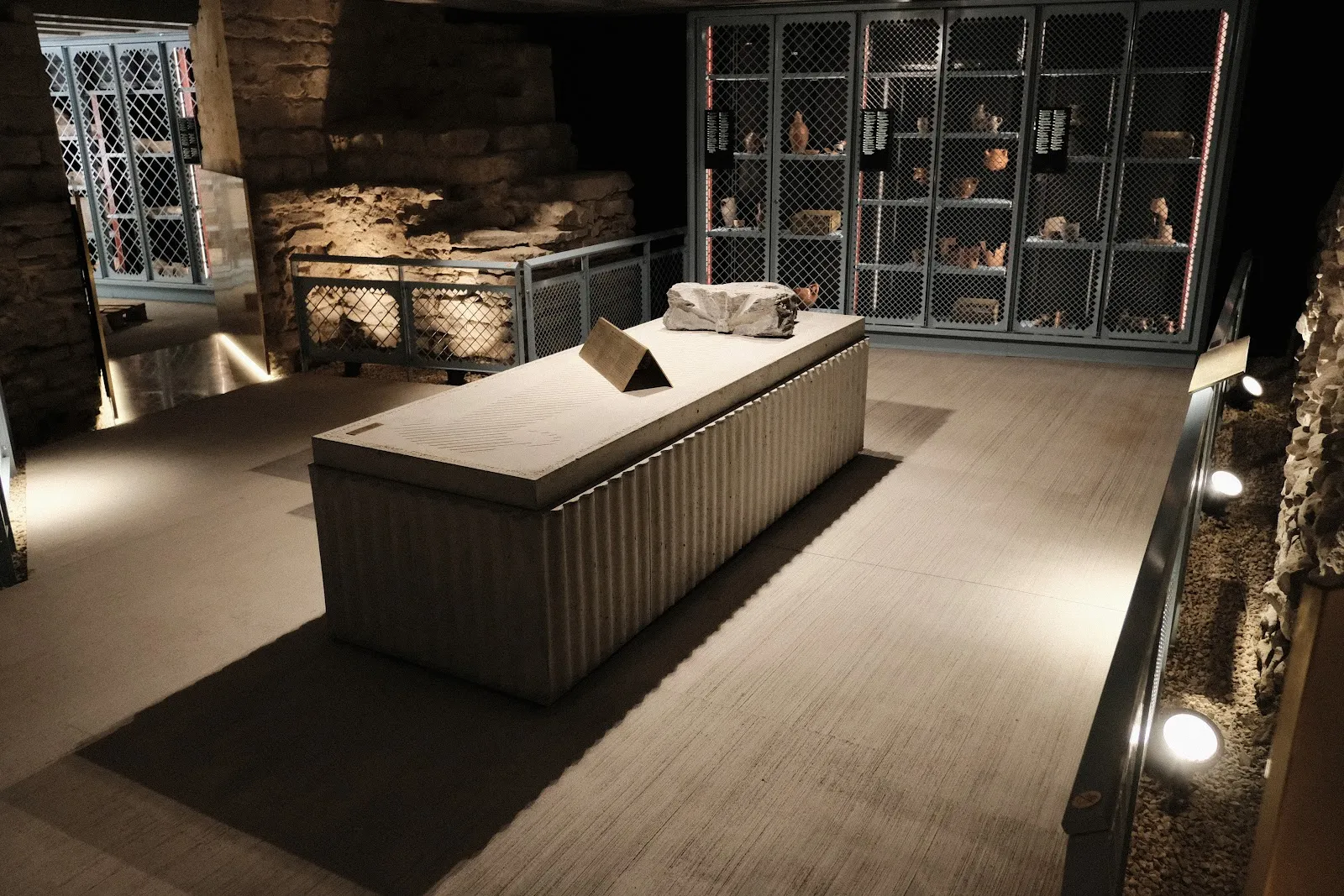
Bruxella 1238 occupies the site of a Franciscan monastery founded in Brussels in 1238. Its surviving foundations and burial vaults reveal an earlier layer of the city beneath the Bourse building. Archaeological remains uncovered here in the late 1980s are now presented in the museum.
One of the tombs is associated with John I, Duke of Brabant. The identification is described as probable, so it is best understood as a connection rather than a certainty. The site’s remains offer a close view of the structures and burials uncovered during archaeological work.
From monastery to market
The visit begins with a room containing a video and models that trace the area’s changing use. The monastery gave way to a butter market after the French Revolution, before the stock exchange building was established here around 1870.
After this introduction, visitors descend to the archaeological remains. The museum’s compact layout brings the foundations, vaults and other finds together in one underground space. Its location beside the Belgian Beer World Experience makes it possible to combine the archaeological visit with that attraction.
Preguntas frecuentes
Where is Bruxella 1238?
It is beneath the Bourse building at Bd Anspach 80 in Brussels.
What can you see at Bruxella 1238?
The museum displays the foundations of a Franciscan monastery founded in 1238, funeral vaults and medieval archaeological finds. One tomb is associated with John I, Duke of Brabant.
How does the visit work?
It begins with a video and models about the area’s history, then continues downstairs among the archaeological remains.