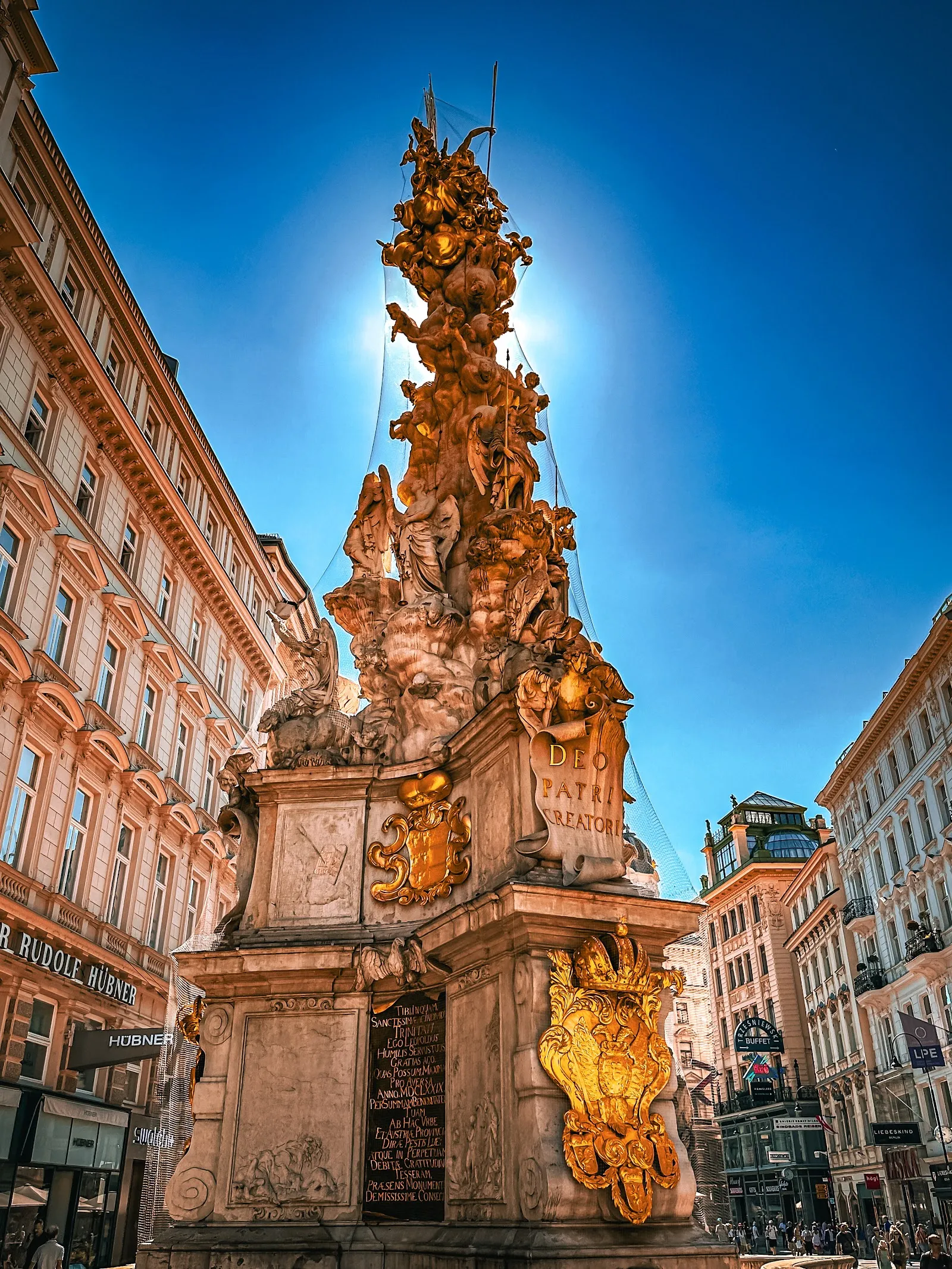
The Column of Pest stands on Graben, a pedestrian street in central Vienna. Emperor Leopold I commissioned it after the plague epidemic of 1679, and the monument was completed in stone in the early 1690s. Its Baroque sculptures arrange figures in a rising sequence: people and the emperor below, angels above, and the Holy Trinity at the summit. The column commemorates the end of the epidemic and expresses the period’s belief in divine protection. Stop to study its details as you walk through the historic center; the sculptures are also striking after dark.
A monument begun during the plague
The column’s story began in 1679, the year a devastating plague epidemic struck Vienna. Emperor Leopold I commissioned a memorial and thanksgiving monument after the crisis. A wooden version came first; the permanent stone column was completed in the early 1690s.
Its purpose was to mark recovery and give public expression to faith, rather than to serve simply as a memorial to those who died. Placed on Graben, a central pedestrian street, it made that message part of everyday life in the city.
Figures arranged between earth and heaven
The monument’s composition rises in stages. Human figures, including Leopold I kneeling at the base, appear below a gathering of angels; the Holy Trinity crowns the column. The arrangement links the earthly and the divine, and reflects how religion, political authority and public memory came together in Vienna after the epidemic.
Look for the layered sculptures and their fine details as you walk around the monument. The column became a model for later Trinity columns in other Habsburg lands, including Graz, Aussee, Vordernberg and Leoben. Its setting on Graben also makes it easy to include during a walk through central Vienna.
Preguntas frecuentes
Where is the Column of Pest in Vienna?
It stands on Graben, a pedestrian street in central Vienna.
What does the Column of Pest commemorate?
It marks the end of the plague epidemic that struck Vienna in 1679.
What do the sculptures on the column represent?
The composition rises from human figures at the base, through angels, to the Holy Trinity at the top.
When was the Column of Pest completed?
A wooden column was built first, followed by the permanent stone monument, completed in the early 1690s.