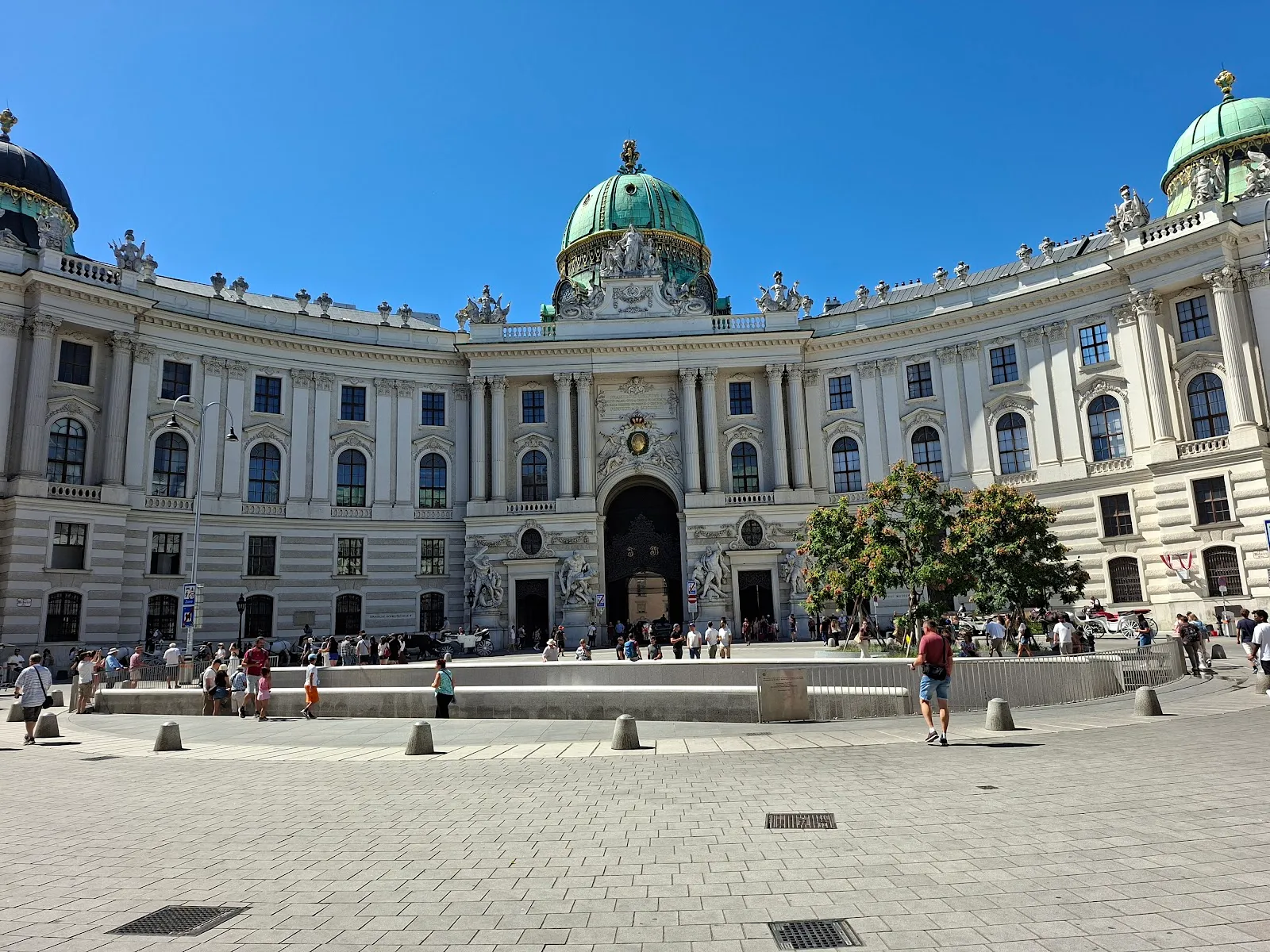
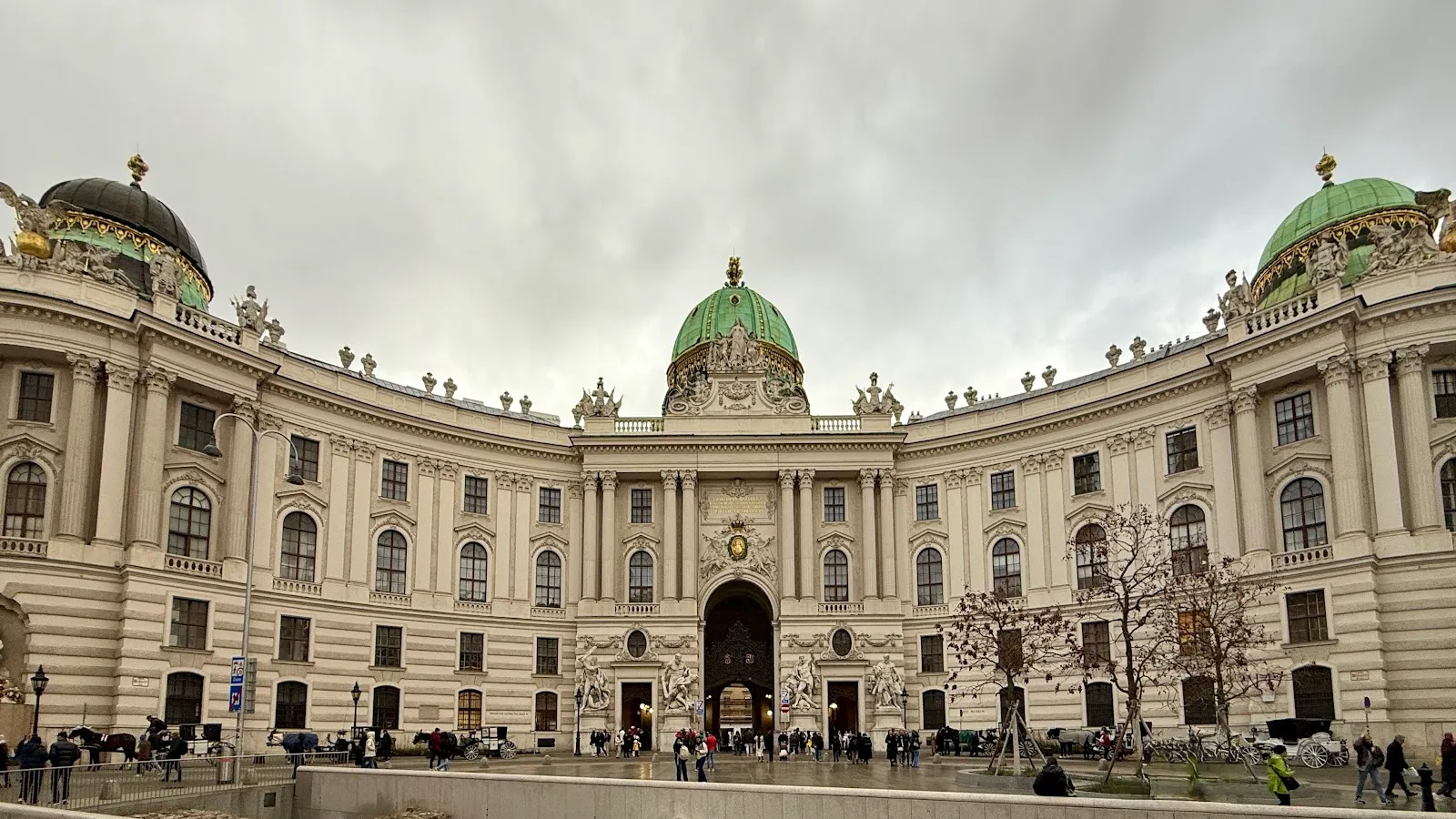
At Michaelerplatz, open-air excavations sit beside the Hofburg’s grand entrance, bringing Roman, medieval and imperial Vienna into one view. The remains include parts of Vindobona, the Roman settlement, with traces of houses, heating systems and wall paintings. Look closely at the different foundations to see how the city grew over earlier buildings and routes. The site is free to visit and lies near St. Michael’s Church, so it fits easily into a walk around the historic centre.
Roman buildings beside an old route
The exposed remains include parts of the canabae, the settlement outside Roman Vindobona. Houses, workshops and trading activity lined the Limesstraße, a route that shaped movement through this part of the city. Some of the buildings were homes, with traces of heating systems and wall paintings still visible among the foundations.
The Roman settlement dates from the 2nd to the 5th century AD. After the late-antique withdrawal, the buildings fell into decay, and the ground appears to have gone unused for a long period. The square therefore preserves more than a collection of walls: its position also points to how people travelled through the area.
From the Roman road to medieval Vienna
The old route did not disappear with the Roman buildings. It continued as the medieval Hochstraße, documented in 1216, and later became part of Herrengasse. At Michaelerplatz, the excavated ground helps make that continuity legible: the city’s paths outlasted the structures built alongside them.
The visible archaeology also includes medieval and Renaissance foundations, historic city-wall remains and structures connected with the Hofburg area. These traces show successive use of the site, though they belong to different periods and should not be read as one single building. The square’s layers sit alongside the Hofburg’s later imperial architecture, giving a compact view of how the centre changed over time.
The excavation within today’s square
Major archaeological work took place between 1989 and 1991. Architect Hans Hollein incorporated the findings into the modern design of Michaelerplatz in 1991 and 1992, leaving the remains visible rather than covering them over. The result places the excavated area directly within the working city square.
The setting brings several periods into view at once. Above the remains is the Hofburg’s Michaelertrakt, the palace complex’s Michaelerplatz entrance. Michaelerkirche and the surrounding historic centre add further layers to the view. As you look across the site, the contrast is not only between Roman masonry and imperial façades; it is also between the changing buildings and the routes that kept directing movement through the area.
Preguntas frecuentes
Is there an entry fee for the Michaelerplatz excavations?
No. The open-air site is free to visit.
What can you see at Michaelerplatz?
The excavations show remains from Roman Vindobona, medieval and Renaissance foundations, and traces of historic city walls. Roman house remains include evidence of heating systems and wall paintings.
When is a good time to visit?
Early morning or late evening is suggested for a quieter visit.
Is the site wheelchair accessible?
A wheelchair-accessible entrance is listed for the site.