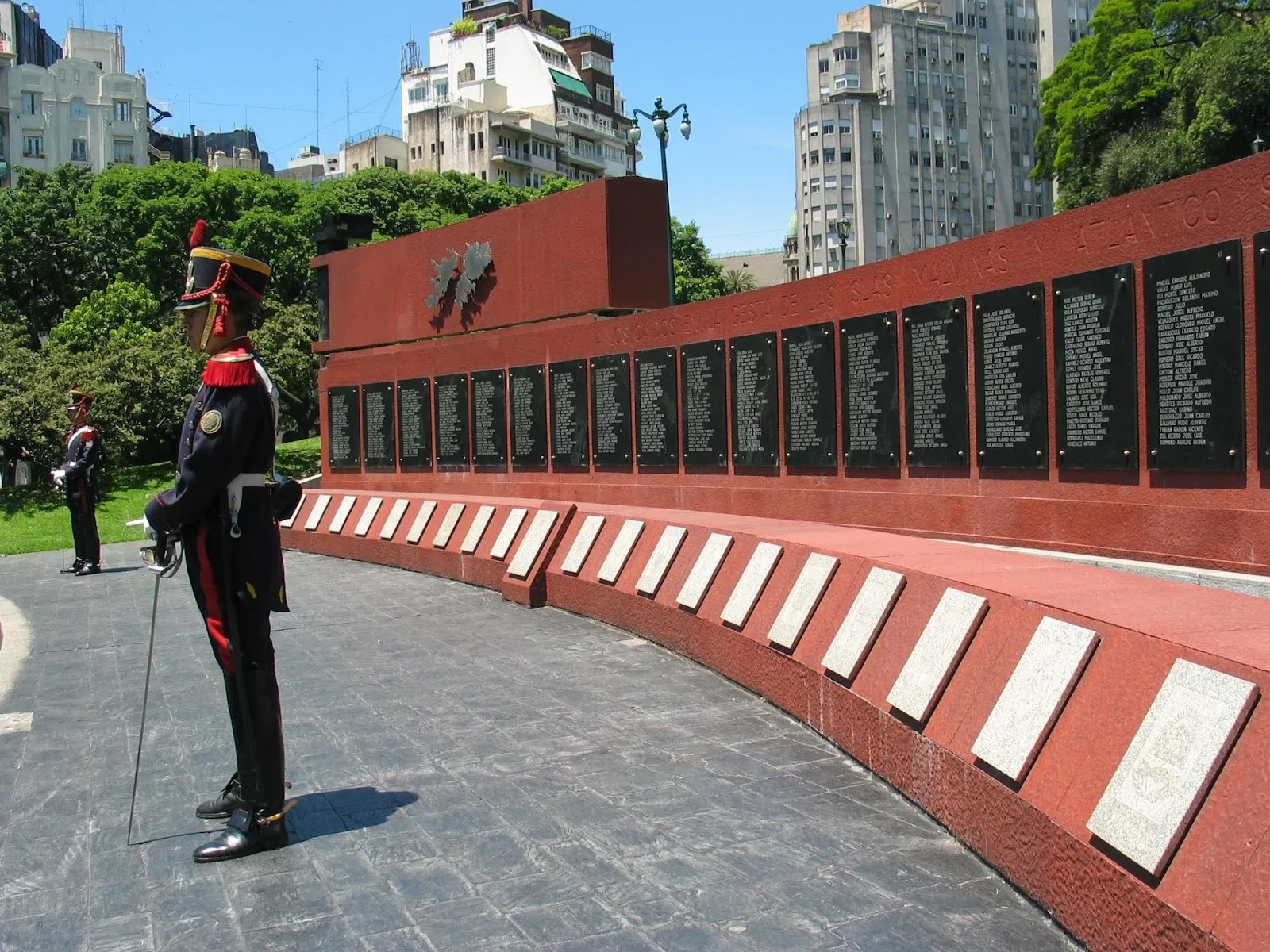
Plaza de Mayo is Buenos Aires’s oldest central square, in the city’s Monserrat district. Its open space is framed by the Casa Rosada, the Metropolitan Cathedral and the Cabildo, with the Pirámide de Mayo at its center. Look for the white headscarf symbols associated with the Mothers and Grandmothers of Plaza de Mayo, and the Stones of Remembrance for people who died during the COVID pandemic. The square is free to visit and works well as a starting point for exploring the city’s political history and nearby landmarks.
A square shaped by political history
Plaza de Mayo has been central to Buenos Aires since the city’s second founding in 1580. Its name recalls the May Revolution of 1810, when opposition to Spanish rule began a movement toward independence. Political gatherings and demonstrations have continued to take place here, making the square part of the city’s public life as well as a place to see historic buildings.
The square was once divided by a covered gallery known as the recova. It was removed in 1883, and the central monument was later moved into the space. The square’s layout and surrounding buildings have changed over time, but it remains a useful place to understand how Buenos Aires’s civic and political center developed.
The Pirámide de Mayo and the memorials
The Pirámide de Mayo stands in the center of the square. The original monument was erected in 1811, on the first anniversary of the May Revolution, and is regarded as Buenos Aires’s first national monument. What is visible today includes an extension added a century later; the original structure remains concealed inside it.
The pyramid also connects the square to the history of the Mothers and Grandmothers of Plaza de Mayo. Beginning in 1977, these women gathered here to demand answers about relatives who disappeared during Argentina’s military dictatorship, which lasted from 1976 to 1983. White headscarf symbols in the square recall their peaceful protests. The Stones of Remembrance honor people who died during the COVID pandemic, when many families could not say goodbye in person.
Landmarks around the square
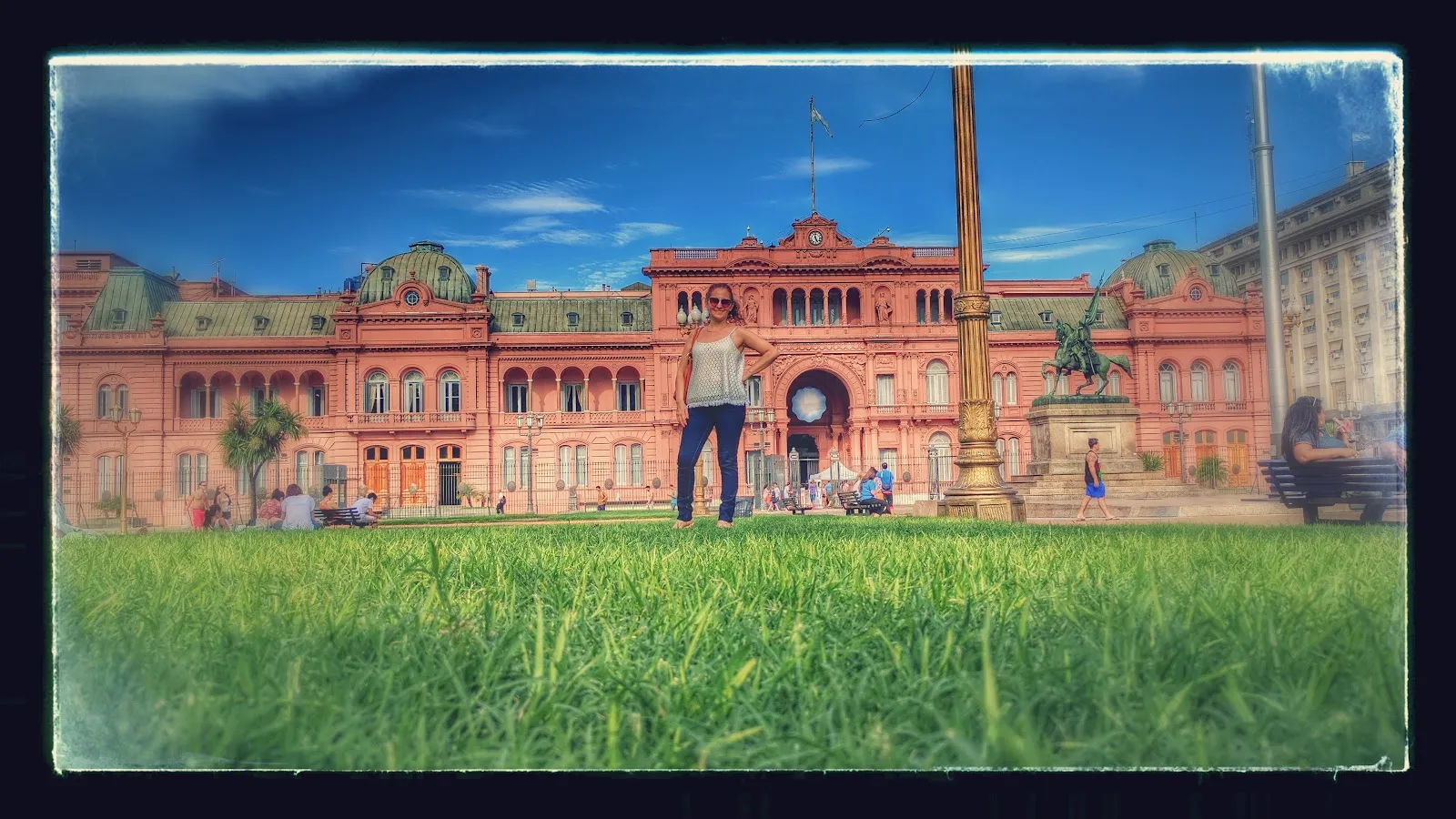
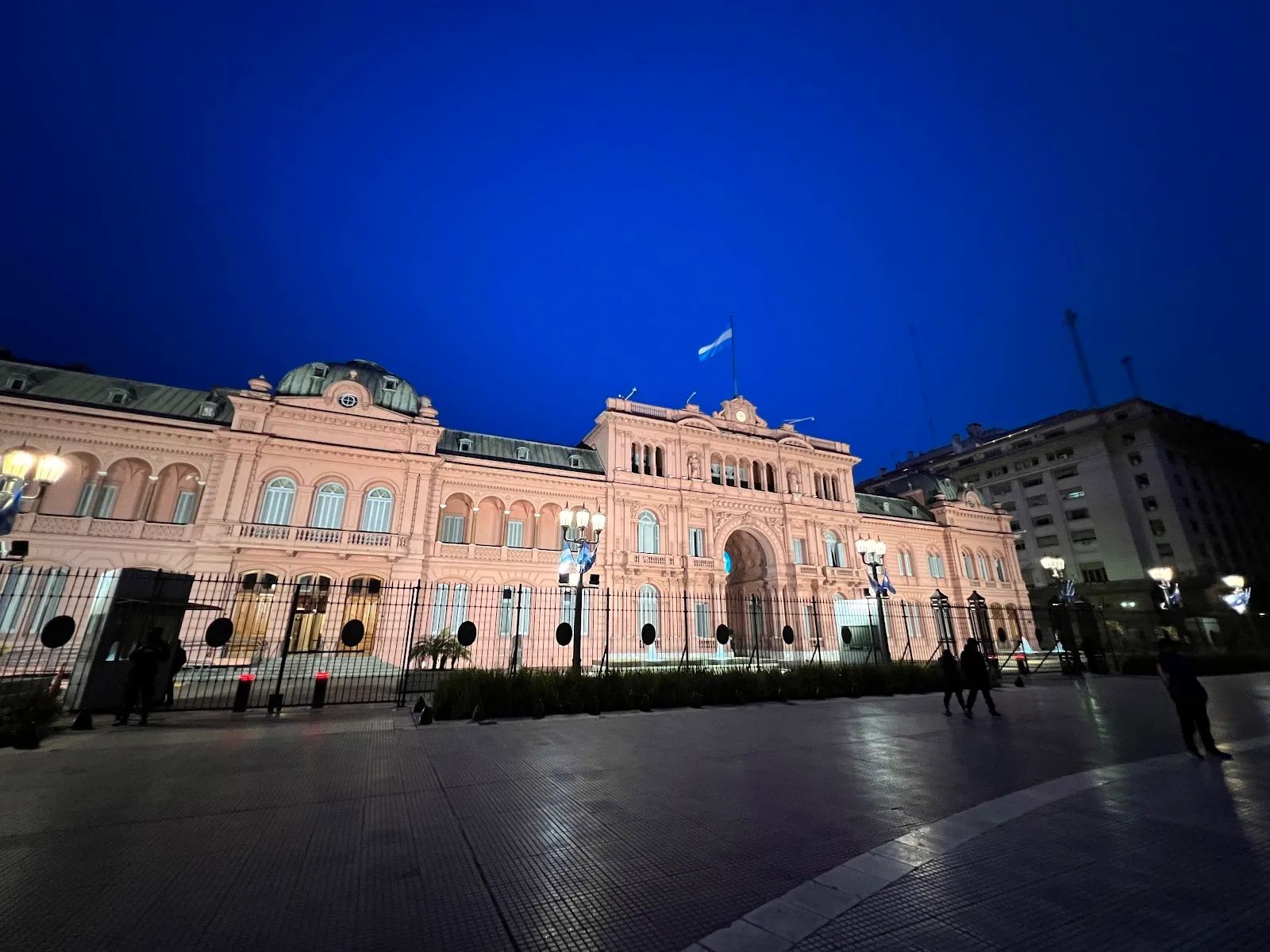
At the eastern end, the Casa Rosada is the seat of Argentina’s executive power. Its name means Pink House, after its distinctive color. The building stands on a site that once held a fort and later a colonial government center. Its balcony is associated with Eva Perón, who addressed crowds there, including during a May Day speech in 1952.
The Metropolitan Cathedral stands on the north side of the square. The current cathedral was completed in 1882 after almost 150 years of work; an earlier cathedral occupied the same site from 1622. Pope Francis held Mass there for more than 15 years before becoming pope. The Cabildo, the former colonial town hall, is another major landmark on the plaza. Together, these buildings offer a compact introduction to the city’s political and religious history.
A place for public gatherings
Plaza de Mayo is still used for public demonstrations and gatherings. The Mothers of Plaza de Mayo have held a weekly march here on Thursday afternoons, continuing a protest that began during the dictatorship. If seeing the march matters to your visit, check locally for its current schedule before making plans.
The open square is also a place to pause between nearby sights. Walk around the perimeter to view the different facades, then cross toward the pyramid and memorials. The area can be busy, so keep your belongings close as you explore. For a different view of the buildings, visit around sunset, when the square and its landmarks begin to light up.
Preguntas frecuentes
Is Plaza de Mayo free to visit?
Yes. Entry to the square is free.
What can you see at Plaza de Mayo?
The square is surrounded by the Casa Rosada, Metropolitan Cathedral and Cabildo. Its center holds the Pirámide de Mayo, and the grounds include memorials connected to the Mothers and Grandmothers of Plaza de Mayo and the COVID pandemic.
Can you see the Mothers of Plaza de Mayo march?
The Mothers have held a weekly march on Thursday afternoons. Check locally for the current schedule, as the precise time is not consistent in the available information.