Palacio Barolo is a 22-storey historic office building on Avenida de Mayo in Buenos Aires’s Monserrat neighbourhood. Italian architect Mario Palanti designed it around the structure of Dante Alighieri’s Divine Comedy: the building’s levels represent Hell, Purgatory and Paradise. A guided visit follows this literary scheme through the architecture and ends high above the city at the lighthouse, with wide views over Buenos Aires. The ascent includes narrow stairs, so allow for some climbing and take care if heights or confined spaces are difficult for you.
A building shaped by Dante
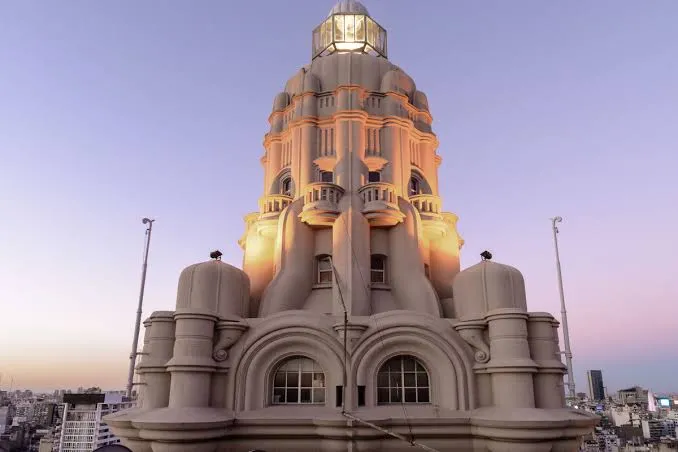
Palacio Barolo was designed by Italian architect Mario Palanti for businessman Luis Barolo and inaugurated in 1923. Its 22 floors and roughly 100-metre height were conceived with Dante Alighieri’s Divine Comedy in mind. The building’s three-part arrangement refers to the poem’s journey through Hell, Purgatory and Paradise.
The symbolism starts at the lower levels and continues upwards. The basement and ground floor represent Hell; the middle section, extending through floors 1 to 14, represents Purgatory; and the upper floors evoke Paradise. The lighthouse crowns the ascent. The building’s height is also linked to the poem’s 100 cantos, while its 22 floors are associated with its stanzas.
Palanti combined Neo-Gothic and Neo-Romanesque elements with other influences, including Indian design details. The result is an eclectic building whose references are easier to follow from inside than from the street. A guided tour connects the architectural features with the literary ideas behind them.
Following the route upstairs
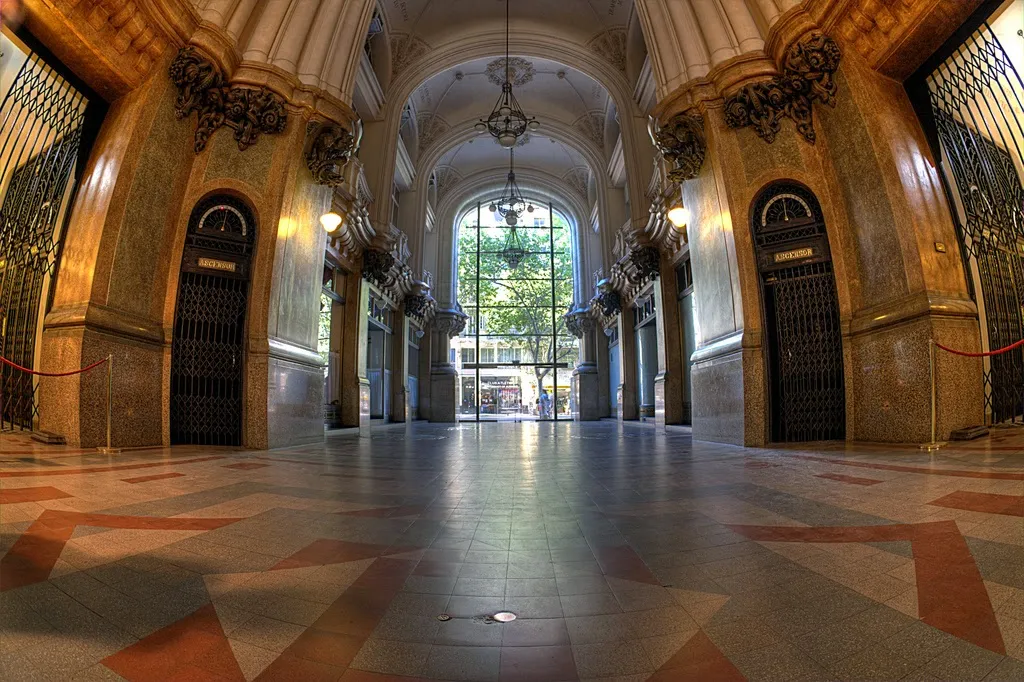
A tour takes you through parts of the building that still house offices and studios. The elevator travels as far as the 14th floor; visitors then continue on foot for about six floors. The stairs are narrow, so wear shoes you can manage comfortably and take your time on the climb.
The upper levels lead towards the lighthouse, the highest point on the visit. Its glass-enclosed spaces and the climb itself can be challenging for people uneasy with heights or confined areas. If either is a concern, consider this before booking. The tour is bilingual in English and Spanish, giving visitors a way to hear more about the building’s design and history as they move through it.
Views from the lighthouse
From the top, the city spreads out in several directions. The elevated outlook takes in rooftops and domes along Avenida de Mayo, as well as the Congress building and the Obelisk. The view helps put Buenos Aires’s broad urban scale into perspective.
Daylight and the changing light near sunset give the skyline different character. Afternoon and evening tours are options for seeing the city from above, and a sunset visit is a good choice if you want to watch the light shift over the rooftops. Tickets are recommended in advance.
Preguntas frecuentes
How long does a Palacio Barolo visit take?
Allow about an hour for the guided tour.
Can you visit Palacio Barolo without a tour?
A guided tour is the way to explore the building and reach the lighthouse. The office building’s ground-floor lobby is also described as open to visitors.
How much climbing is involved?
The elevator goes to the 14th floor, followed by about six floors on foot. The stairs are narrow.
Are Palacio Barolo tours available in English?
Yes. Tours are available in English and Spanish.
What can you see from the top of Palacio Barolo?
The lighthouse offers wide views across Buenos Aires, including the Congress building, the Obelisk and the domes along Avenida de Mayo.