Hanoi’s Ceramic Mosaic Mural Road is a long public artwork along the Red River dyke, made from ceramic tiles in scenes of Vietnamese history, culture and everyday life. The project was created for Hanoi’s 1,000th-birthday celebrations, with work by local and international artists. Each section has its own patterns and details, so even a short look can reveal plenty to photograph. For a more comfortable visit, start near Au Co Street, where traffic is lighter. The road is busy in places, so it is safer to admire the mural from a vehicle than to walk beside heavy traffic.
A public artwork for Hanoi’s 1,000th birthday
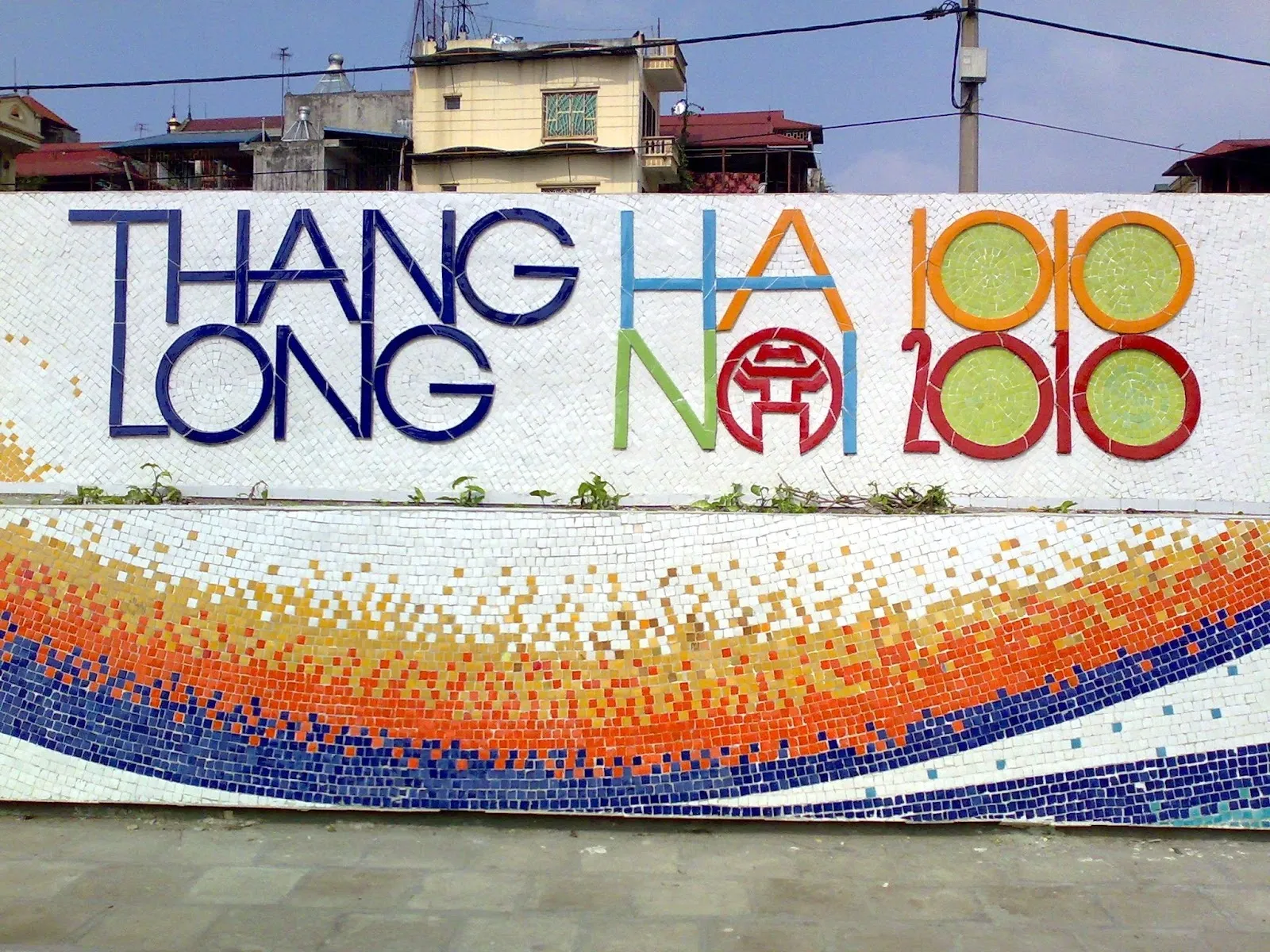
The Ceramic Mosaic Mural Road was created for the celebrations marking Hanoi’s 1,000th birthday in 2010. Work began in 2007 and involved local and international artists. The tiles were made at Bat Trang, a nearby ceramics centre.
The mural runs along the Red River dyke. Its length is commonly given as nearly four kilometres, though descriptions of the full route differ. The artwork is recognised as the world’s longest ceramic mosaic mural.
Scenes in ceramic tiles
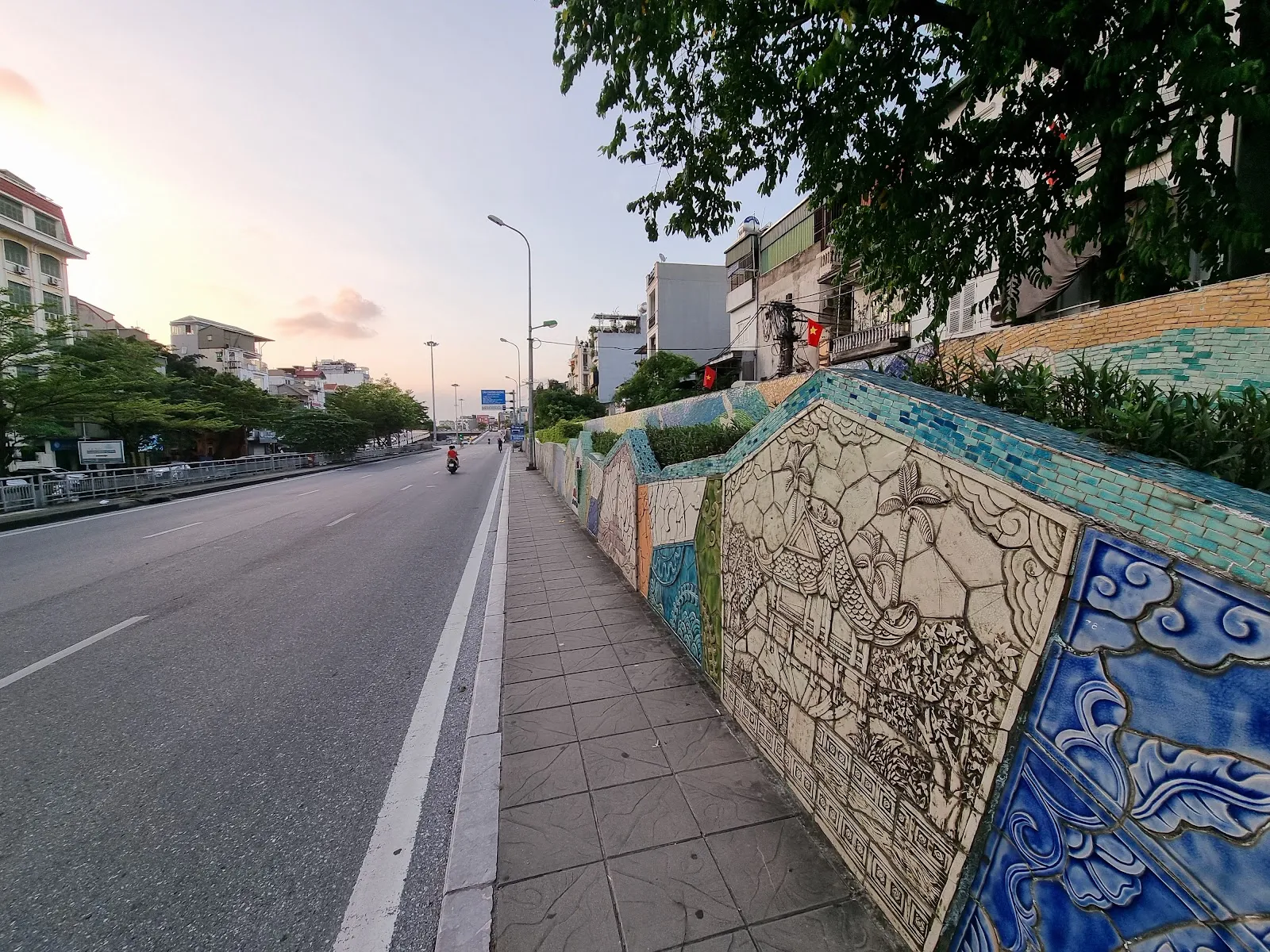
The wall brings together images from different periods of Vietnam’s history, alongside scenes of culture and everyday life. The designs change as you follow the mural, with sections created by different groups and artists. Look for shifts in style and subject rather than expecting one continuous scene.
Some areas show chipped or dusty tiles, but the detail remains visible in many sections. The changing patterns and images make the mural a worthwhile stop for close-up photographs as well as a broader look at Hanoi’s public art.
Choosing a stretch to see
The mural extends across several roads beside the dyke, so the experience depends on where you begin. The stretch near Au Co Street has lighter traffic and is more comfortable for viewing. Farther south, the pedestrian path runs close to heavy traffic, which can make it difficult to pause and look closely.
If you are coming from the Old Quarter, the pedestrian overhead bridge at O Quan Chuong Road leads to the section focused on Hanoi’s history. The mural is beside a busy road, and crossing can be challenging. Choose your route with traffic in mind, and avoid walking along the most congested stretches.
Perguntas frequentes
Where can I see the Ceramic Mosaic Mural Road?
It runs along the Red River dyke across several roads. The address associated with the attraction is 11 P. Hàng Vôi, and the mural stretches beyond that point.
How do I reach the history section from the Old Quarter?
Use the pedestrian overhead bridge at O Quan Chuong Road, which leads to the mural’s history section.
Is it safe to walk beside the mural?
Traffic is lighter near Au Co Street, but some southern sections have heavy traffic beside the pedestrian path. Take care at crossings and consider viewing those stretches from a vehicle.
What does the mural depict?
Its ceramic scenes show different periods of Vietnamese history, as well as aspects of culture and everyday life.