On the south side of Washington’s Tidal Basin, the Thomas Jefferson Memorial honors the third U.S. president and principal author of the Declaration of Independence. John Russell Pope designed its domed, columned form with Rome’s Pantheon as a model. Inside the open rotunda, a 19-foot bronze statue of Jefferson stands beneath the dome, with passages from his writings engraved on the walls. Pause to read the inscriptions, then look across the water toward the Washington Monument. The cherry trees around the basin add spring color to the setting.
A memorial modeled on the Pantheon
The Thomas Jefferson Memorial stands in West Potomac Park beside the Tidal Basin. Its white-marble exterior, circular plan and domed roof draw on the Pantheon in Rome, a building Jefferson admired. Architect John Russell Pope carried that classical influence into the memorial’s columned rotunda, creating a structure that can be seen from across the water as well as from its steps.
The memorial was completed in 1943. It honors Jefferson as a Founding Father, the principal author of the Declaration of Independence and the third president of the United States. The building’s position on the basin’s southern shore sets it apart from monuments closer together on the National Mall, so a visit often involves a walk along the water.
The statue and inscriptions
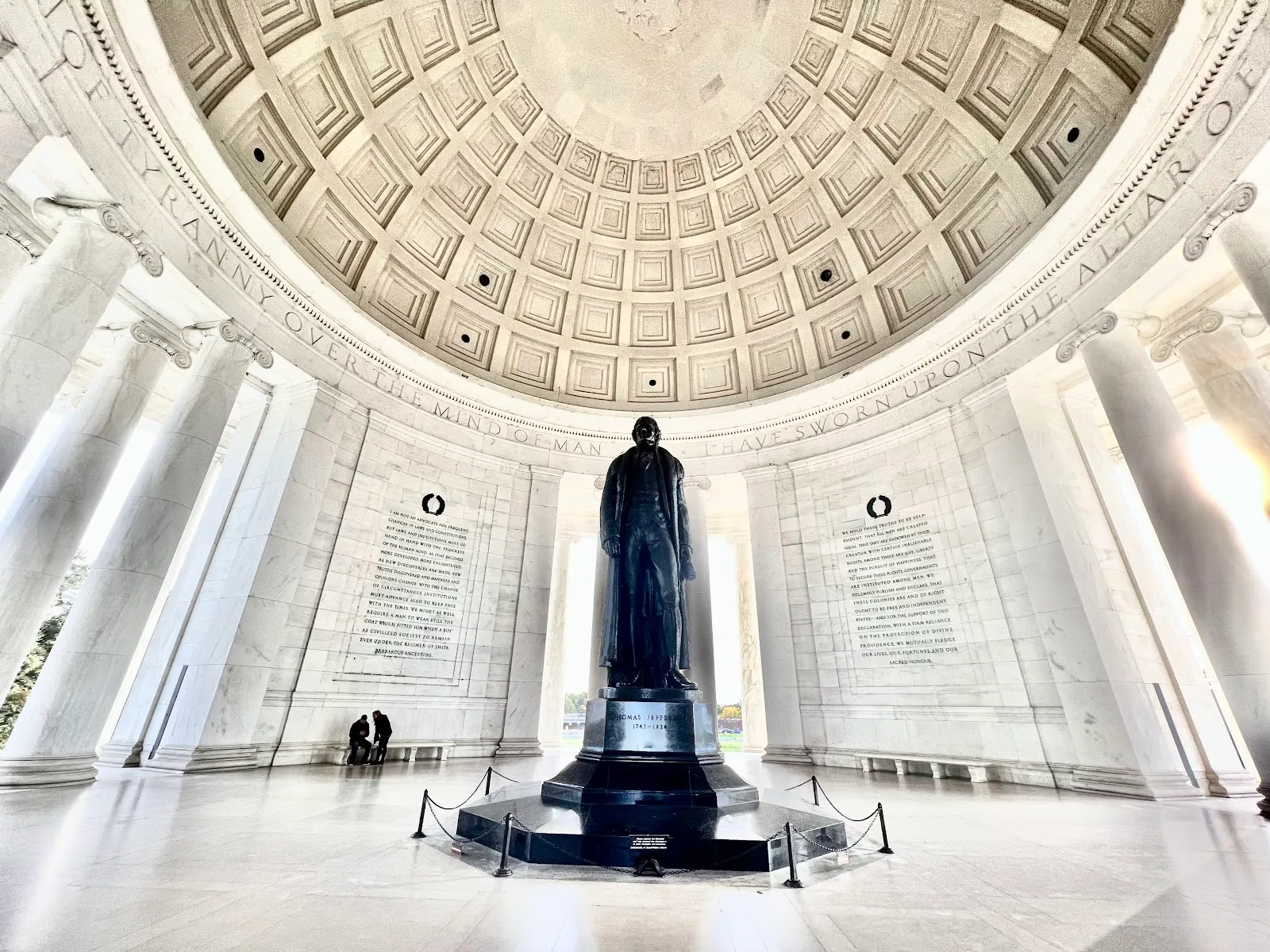
At the center of the open rotunda is a 19-foot bronze statue of Jefferson. He is shown holding the Declaration of Independence, and the figure faces toward the White House. From inside, look up at the domed ceiling and around the walls, where excerpts from Jefferson’s writings are engraved.
The passages address liberty, government and education, among other ideas. Reading them gives the interior more context than the statue alone: the memorial presents Jefferson through his words as well as his likeness. Take time with the inscriptions, which include text from the Declaration of Independence and selections from his other writings.
Jefferson’s legacy is complex. He advocated for principles of liberty and gradual emancipation, yet also enslaved people. The memorial’s inscriptions give visitors a place to consider the ideals associated with him alongside that history.
Views across the Tidal Basin
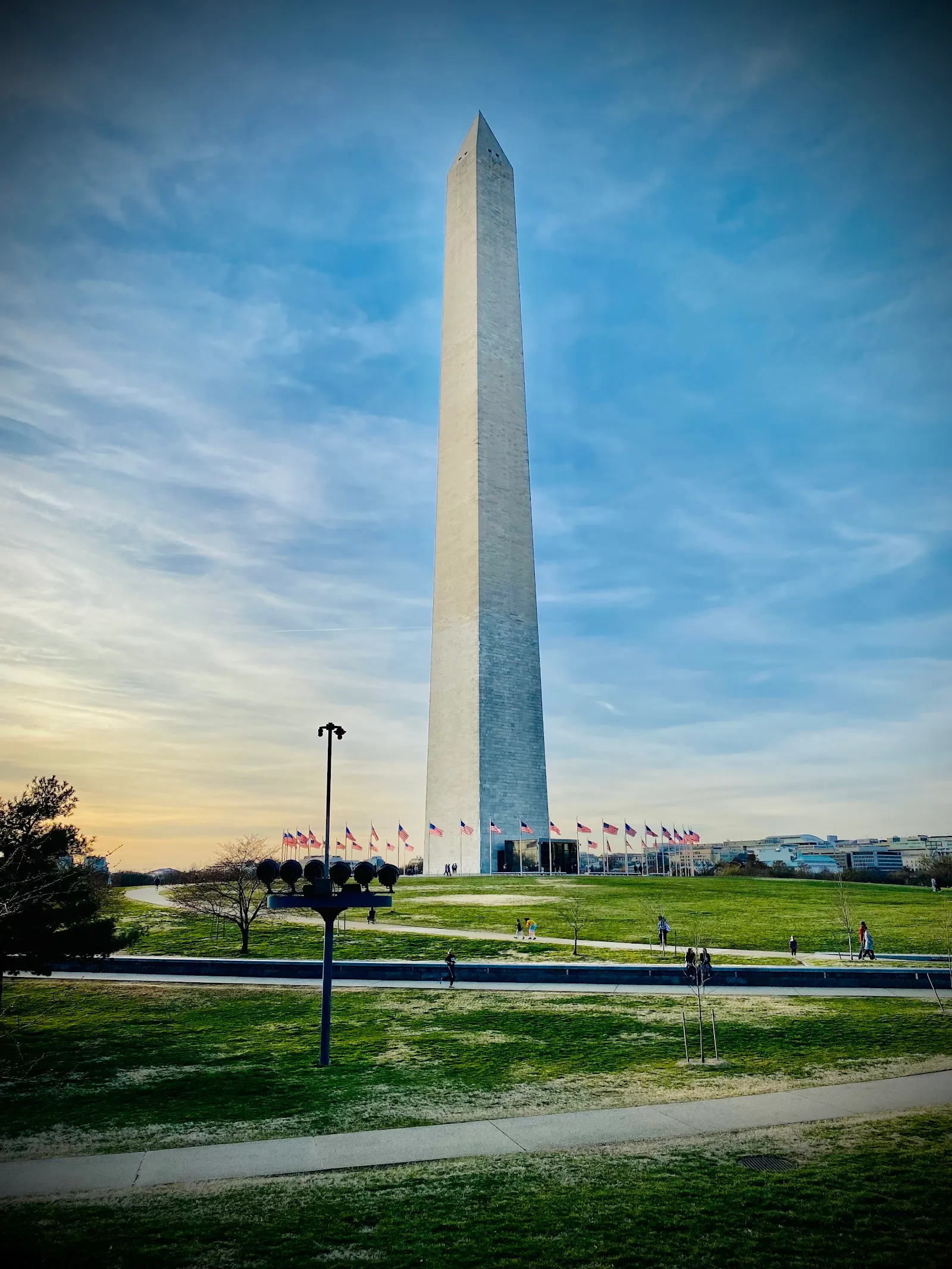
The steps and open sides of the rotunda look out over the Tidal Basin. The Washington Monument stands across the water, and the surrounding cherry trees bring a seasonal change to the scene. Spring blossom is a particularly scenic time around the basin, though the memorial remains open throughout the year.
For a different perspective, continue along the basin’s path and view the structure from the water’s edge. The building’s circular outline and columns are easier to appreciate from a little distance. Early morning is a good time to see the memorial before larger groups arrive. After dark, the monument is illuminated, and nighttime sightseeing tours include it among Washington’s memorials.
Perguntas frequentes
Is the Thomas Jefferson Memorial free to visit?
Yes. Admission is free.
Is the Thomas Jefferson Memorial open at night?
Yes. It is open 24 hours a day, and the memorial is illuminated after dark.
What is inside the Thomas Jefferson Memorial?
The open rotunda contains a 19-foot bronze statue of Jefferson and engraved passages from his writings, including text from the Declaration of Independence.