
The Jimmy Carter Presidential Library and Museum in Atlanta follows Carter’s life from his Georgia upbringing and naval career through his presidency and humanitarian work afterward. Inside, you can see a full-size Oval Office replica, the Nobel Peace Prize and personal and official documents, alongside exhibits on the Camp David Accords and human rights. Videos and interactive displays add context to the objects. The museum sits among landscaped grounds and gardens, so you can pair time in the galleries with a walk outside.
From Plains to the White House
The museum traces Jimmy Carter’s life from his childhood in Plains, Georgia, through the experiences that shaped his public career. Early exhibits cover his family and farming background, education, religious upbringing, naval service, and marriage to Rosalynn Carter. Together, these displays place his political career in the context of his life before the presidency.
Photographs, documents and personal objects help tell that story. The exhibits also address Carter’s relationships with people around him and the racial history of the places where he lived. This section gives visitors a chance to understand the person behind the office before moving on to his years in national politics.
Inside the presidency
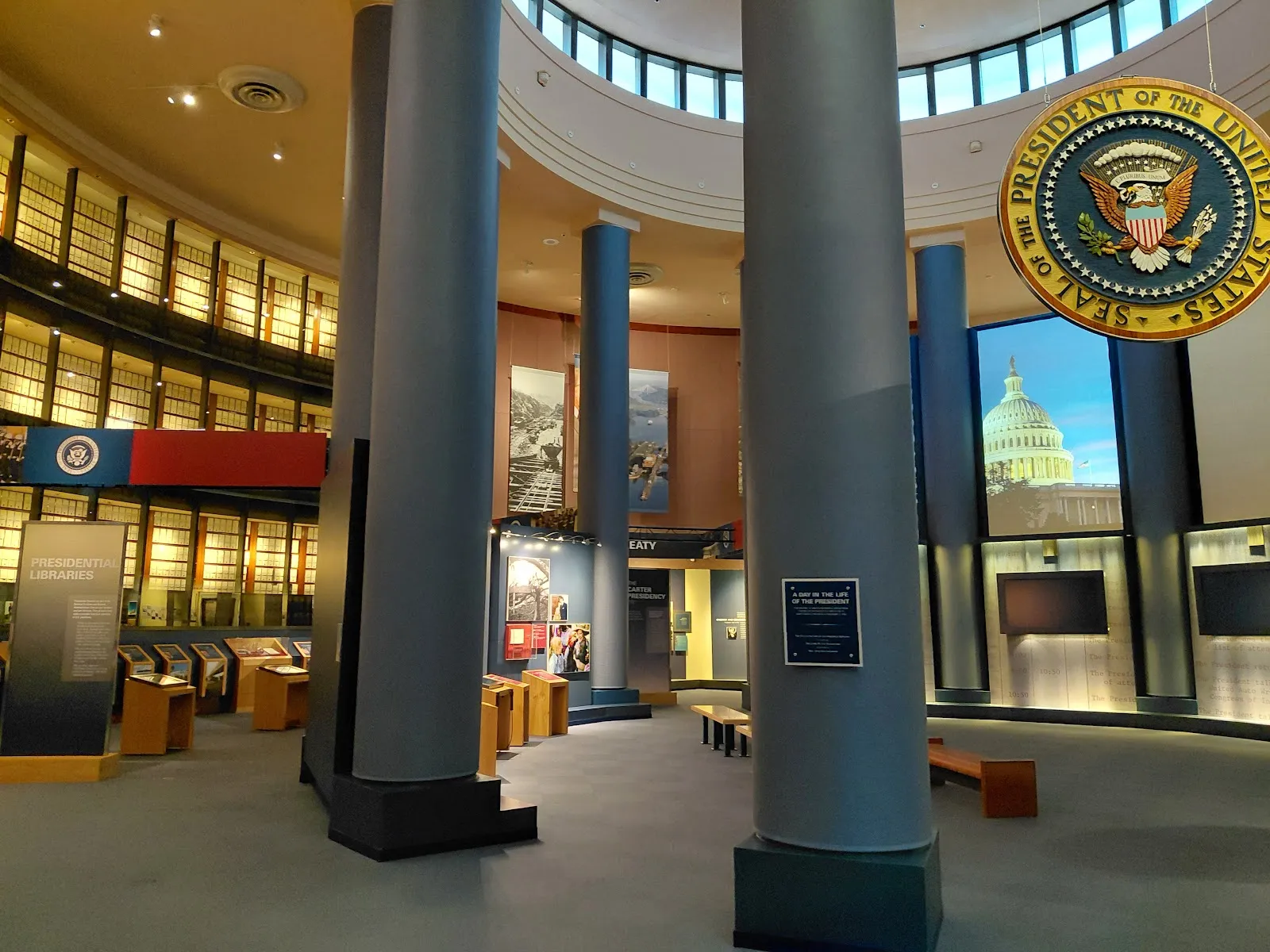
Displays on Carter’s presidency examine the issues and decisions of his administration, which ran from 1977 to 1981. The Camp David Accords and human rights initiatives are among the subjects covered. Documents, photographs, film and audio materials add detail to the story, while interactive exhibits help explain key moments.
The full-size Oval Office replica gives a sense of the setting in which a president works. Another exhibit recreates the Camp David cabin associated with the meetings. The museum also includes gifts from world leaders and Carter’s Nobel Peace Prize, connecting the objects on view to diplomacy and his time in office.
Work after the presidency
The story continues beyond Carter’s time in the White House. Exhibits cover his humanitarian work and the Carter Center’s efforts on issues including human rights, disease and democracy. An interactive map table lets visitors follow the Carters’ work monitoring elections around the world.
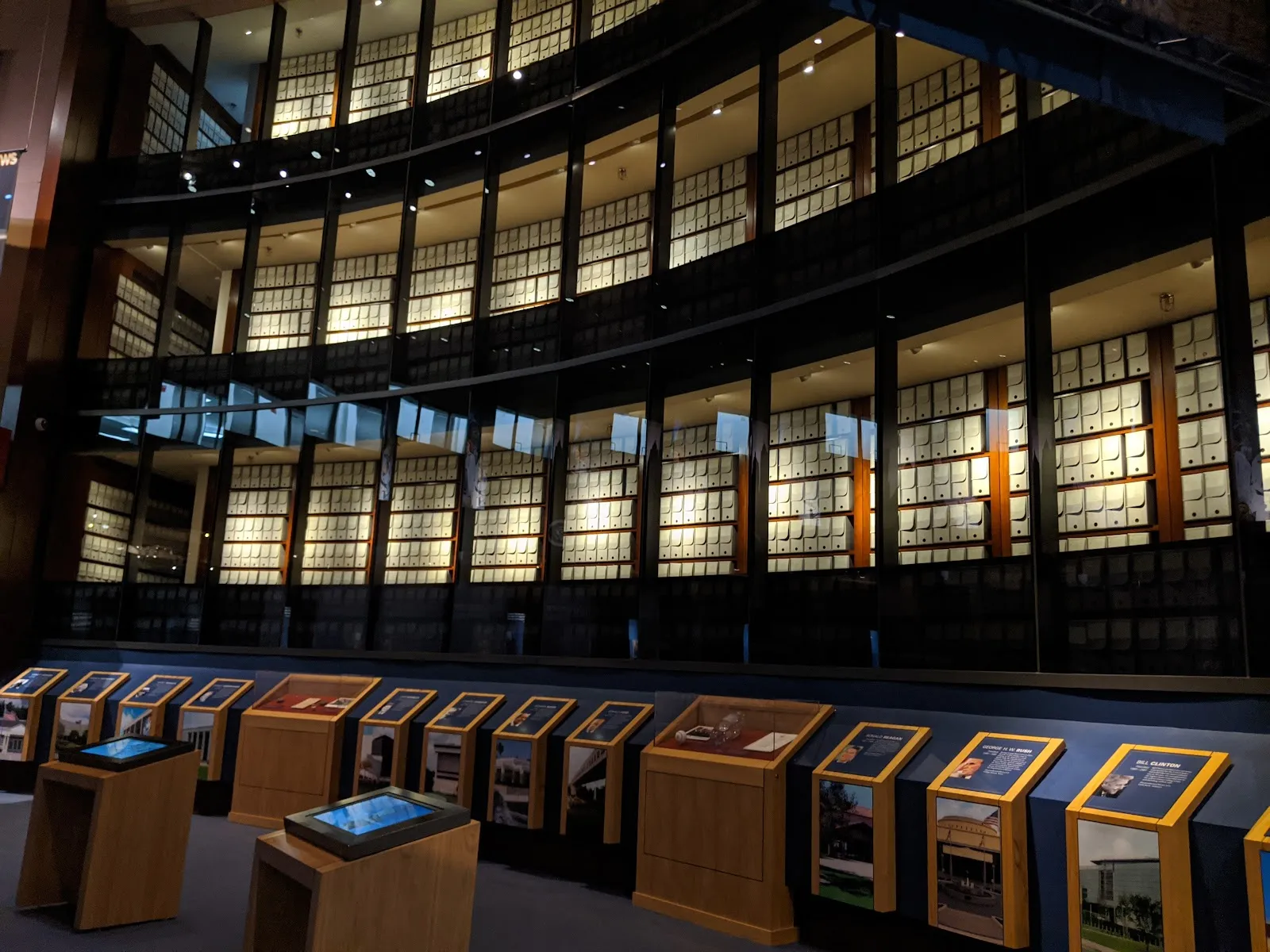
The presidential library holds records from the Carter administration as well as material relating to Carter’s later work and the Carter family. The museum uses documents, recordings, photographs and objects to connect public events with personal history. After the galleries, the landscaped grounds and gardens provide space to walk around the complex.
Perguntas frequentes
How long should I plan for the museum?
Allow about three hours to explore the museum thoroughly.
Is parking available?
Free parking is available at the museum.
Can I skip the introductory video?
Yes. The video is optional, and you can go directly to the exhibits.


