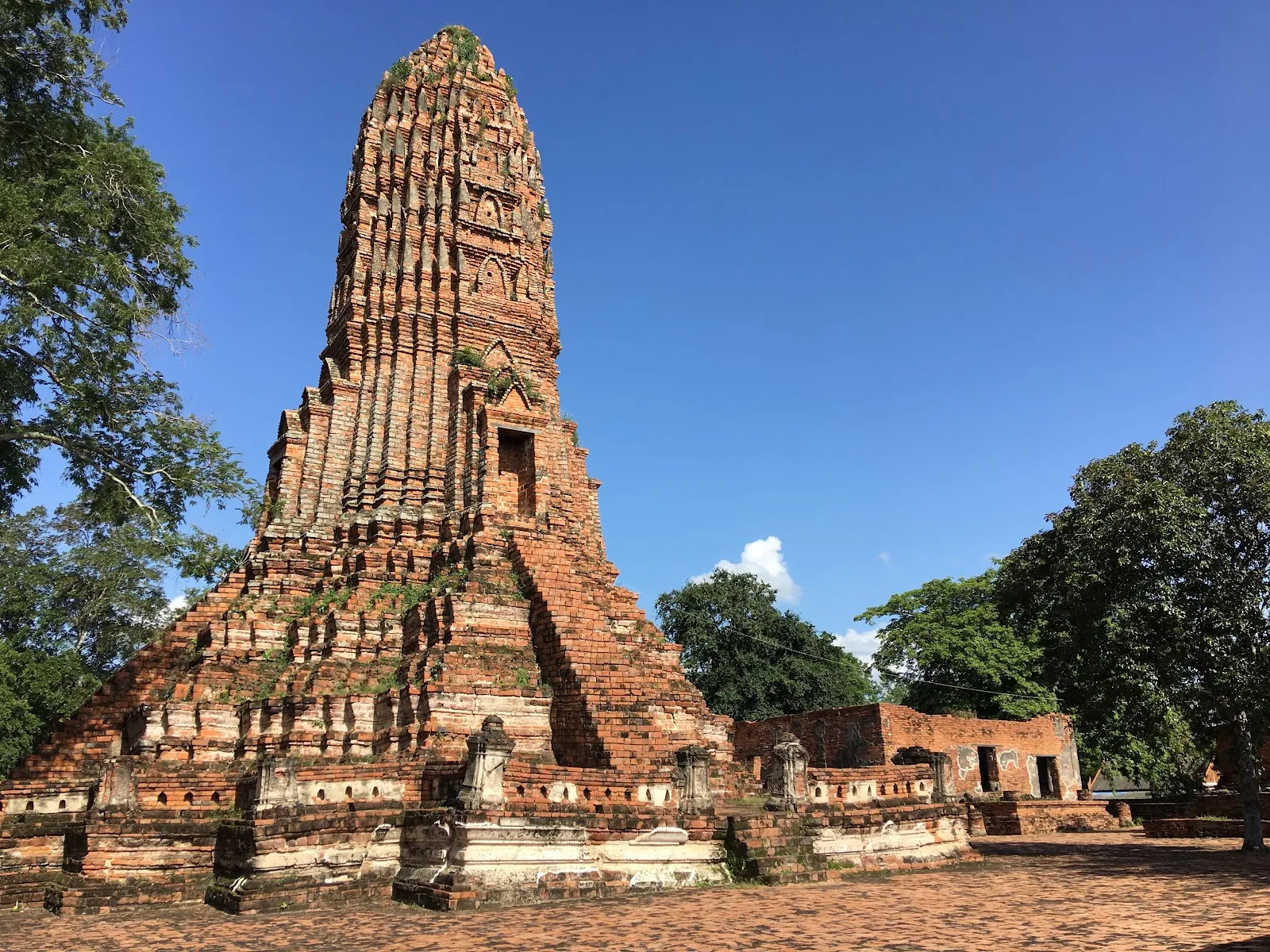
Wat Phra Si Sanphet is a former royal temple on Ayutthaya island, inside the UNESCO-listed historical park about 80 kilometres north of Bangkok. Its three bell-shaped chedis stand in a row on a raised platform and hold the ashes of Ayutthaya kings. The ruins are open and easy to walk, and the chedis look best in low evening light. Standing among them, you can see how the old palace temple was laid out and why it became a model for the Emerald Buddha temple in Bangkok.
From palace temple to royal temple
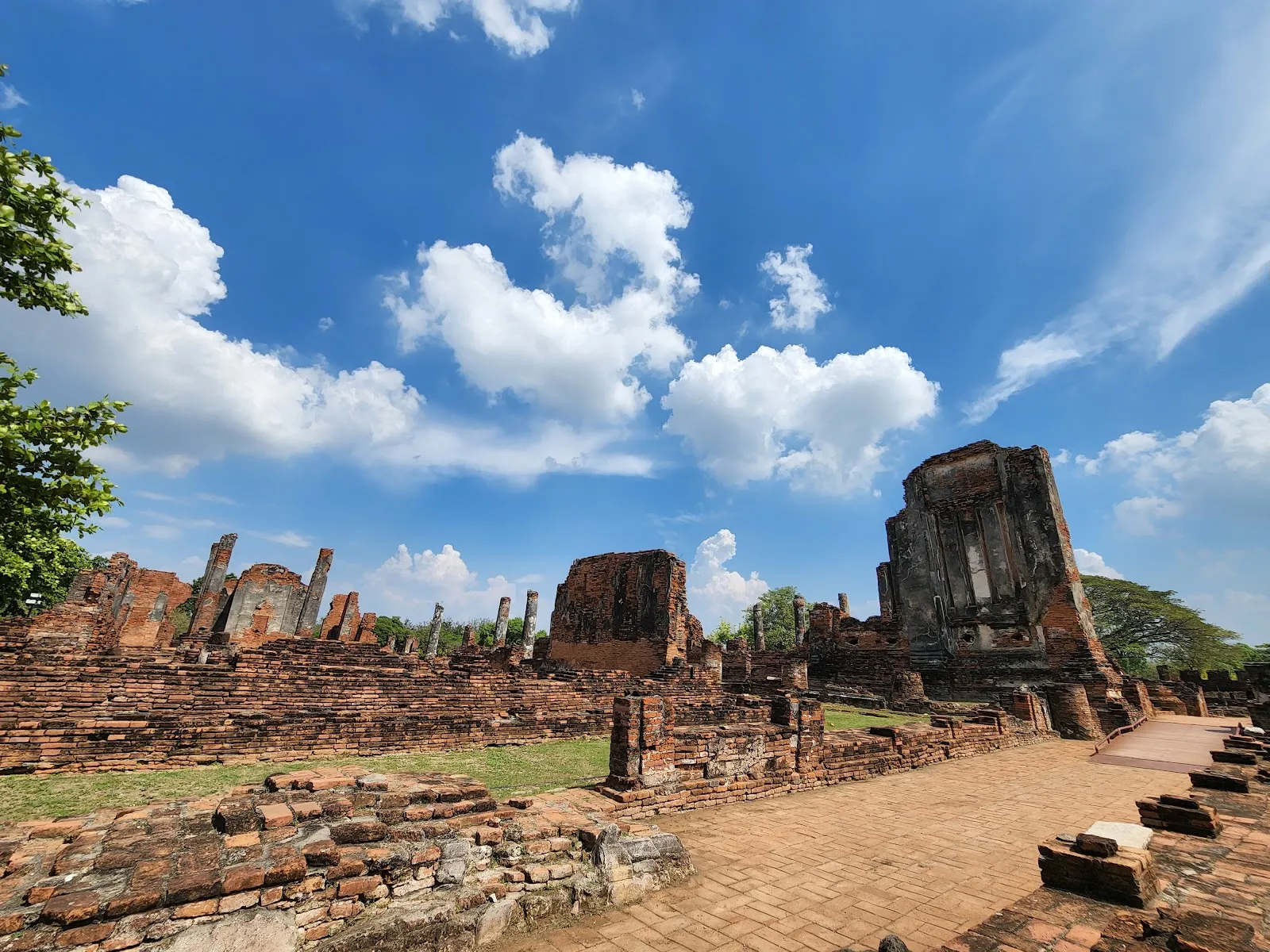
The temple stood within the grounds of the old royal palace, and it was used for royal ceremonies. Only members of the royal family could enter certain parts of the site.
Ayutthaya was the capital from 1350 to 1767, a trading port connected to the Chao Phraya River. When Burmese forces attacked the city in 1767, fire swept through the temple. Invaders set fire to the great Buddha statue to melt its gold, and the temple was left in ruins.
The temple was later admired across the region. Its layout served as a model for the Emerald Buddha temple in Bangkok.
The three chedis
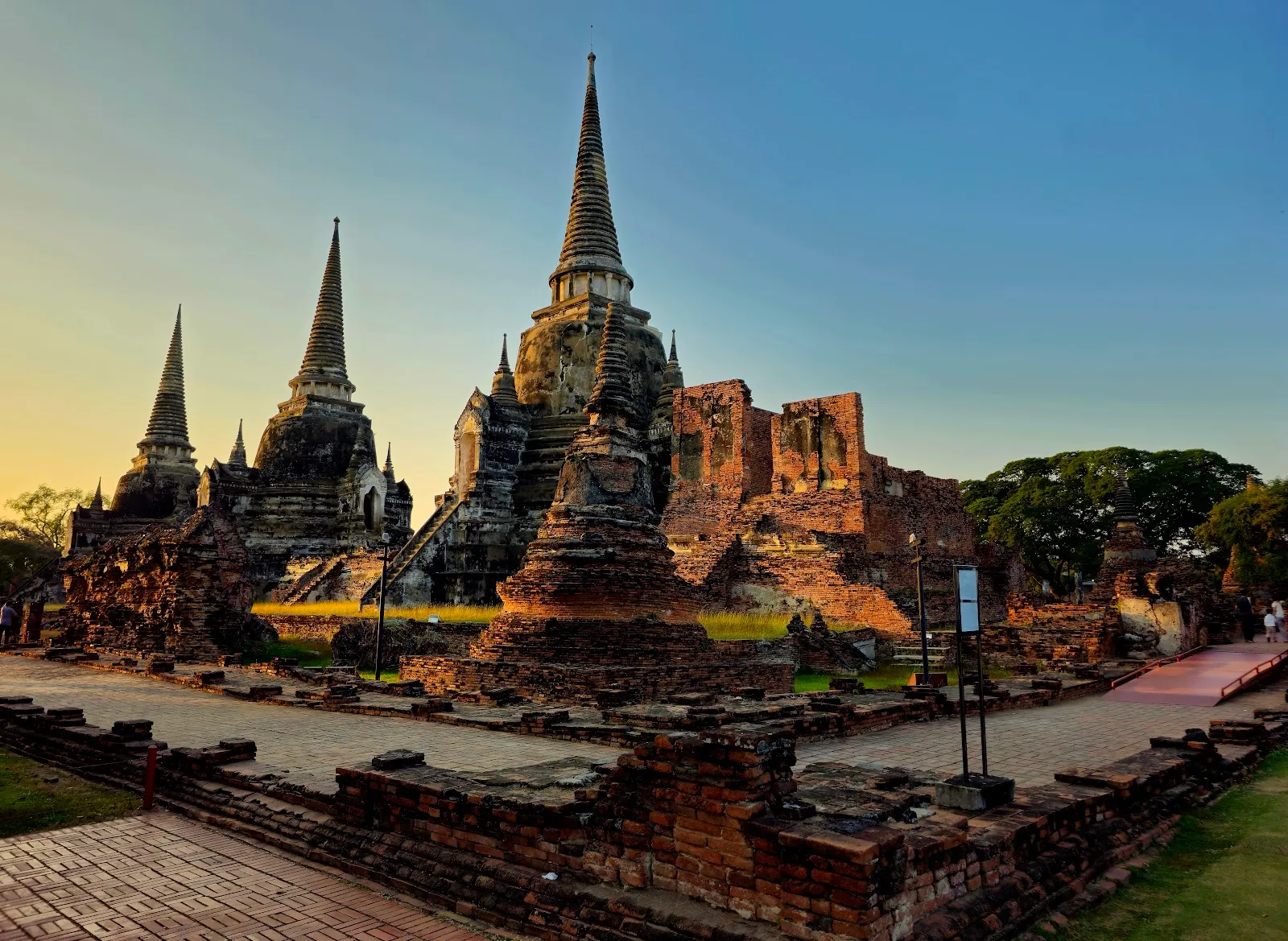
The three chedis rise in a row from a raised platform in the centre of the temple. They have the bell-shaped form typical of Ayutthaya, and each one was built to hold the ashes of a king.
The chedis are the reason most visitors come, and they look different through the day. Morning light is clear and even, while late afternoon warms the brick and gives the best contrast for photographs.
The Buddha hall and the ruins
The viharn, the hall that once housed a standing Buddha about 16 metres tall, is now mostly gone, but its outline remains. The ruins of an ordination hall are also still standing.
Walking the grounds, you can see how the buildings were arranged around the platform. Some stairs let you climb for a higher view over the site and the surrounding ruins.
Nearby temples
The active temple Wihan Phra Mongkhon Bophit stands next to the site. It holds a large seated bronze Buddha, gilded, and it is a place of worship, so visitors should keep their voices low and dress with care.
Wat Mahathat, with the Buddha head set in banyan roots, is a short trip away. Wat Ratchaburana and Wat Chaiwatthanaram are also part of the historical park and can be visited on the same day.
Getting there and visiting
Ayutthaya is about 80 kilometres north of Bangkok. Visitors can take a taxi, arrange a private car, or join an organized trip. Bicycles are another option for moving between the ruins at your own pace.
The site suits children and visitors using wheelchairs, with an accessible entrance and accessible parking. Plan at least an hour here, then add other temples if you have time.
Perguntas frequentes
How much is the entry fee?
Entry costs 50 baht. A package ticket for 220 baht covers six sites in the historical park, including Wat Phra Si Sanphet, and is cheaper than visiting four or more sites separately.
How long do you need at Wat Phra Si Sanphet?
Plan one to two hours. Visitors should spend at least an hour at the site, and nearby temples can fill the rest of a day.
When is the best time to visit?
Arrive early to avoid crowds. Sunset is the best time for light on the three chedis.
Are there monks living at the temple?
No. The temple has no resident monks, and monks were invited only for special religious occasions.
How do you get there from Bangkok?
Ayutthaya is about 80 kilometres north of Bangkok. You can take a taxi, arrange a private transfer, or join an organized trip.