Elogio del Horizonte is a large concrete sculpture by the Basque artist Eduardo Chillida, completed in 1990 on Santa Catalina Hill in Gijón's Cimadevilla district. Its curved, horseshoe-like form is set to frame the horizon over the Cantabrian Sea. Stand at the centre of the structure and the sound of the waves and wind carries strongly. The hill also holds Roman wall remains and old military bunkers, and the views over the city and the coast are the main draw, especially at sunset.
Chillida's concrete work
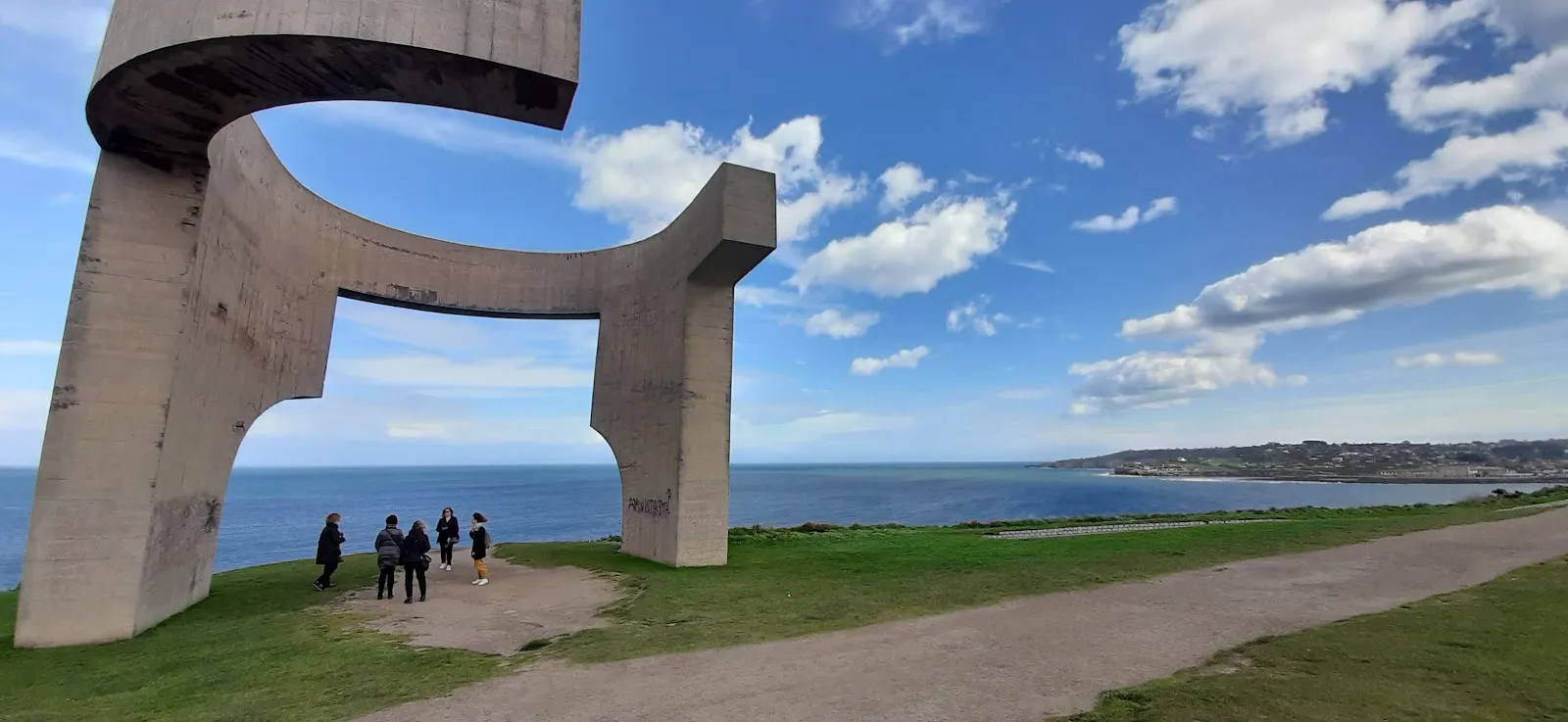
Eduardo Chillida, a Basque sculptor, made the work in 1990. It is built from concrete blocks and shaped with geometric forms and curves. Its purpose is to honour the horizon, and it is meant to express the coexistence of humanity and nature, the vastness of space and the freedom of thought.
The sculpture weighs around 500 tons. Its title is usually translated as 'In Praise of the Horizon' or 'Eulogy to the Horizon'. Locals have a nickname for it, 'King Kong's Water Closet', which refers to its shape.
From the sculpture, the view runs out over the sea, so the work is designed to be seen with the Atlantic in front of it.
Santa Catalina Hill before the sculpture
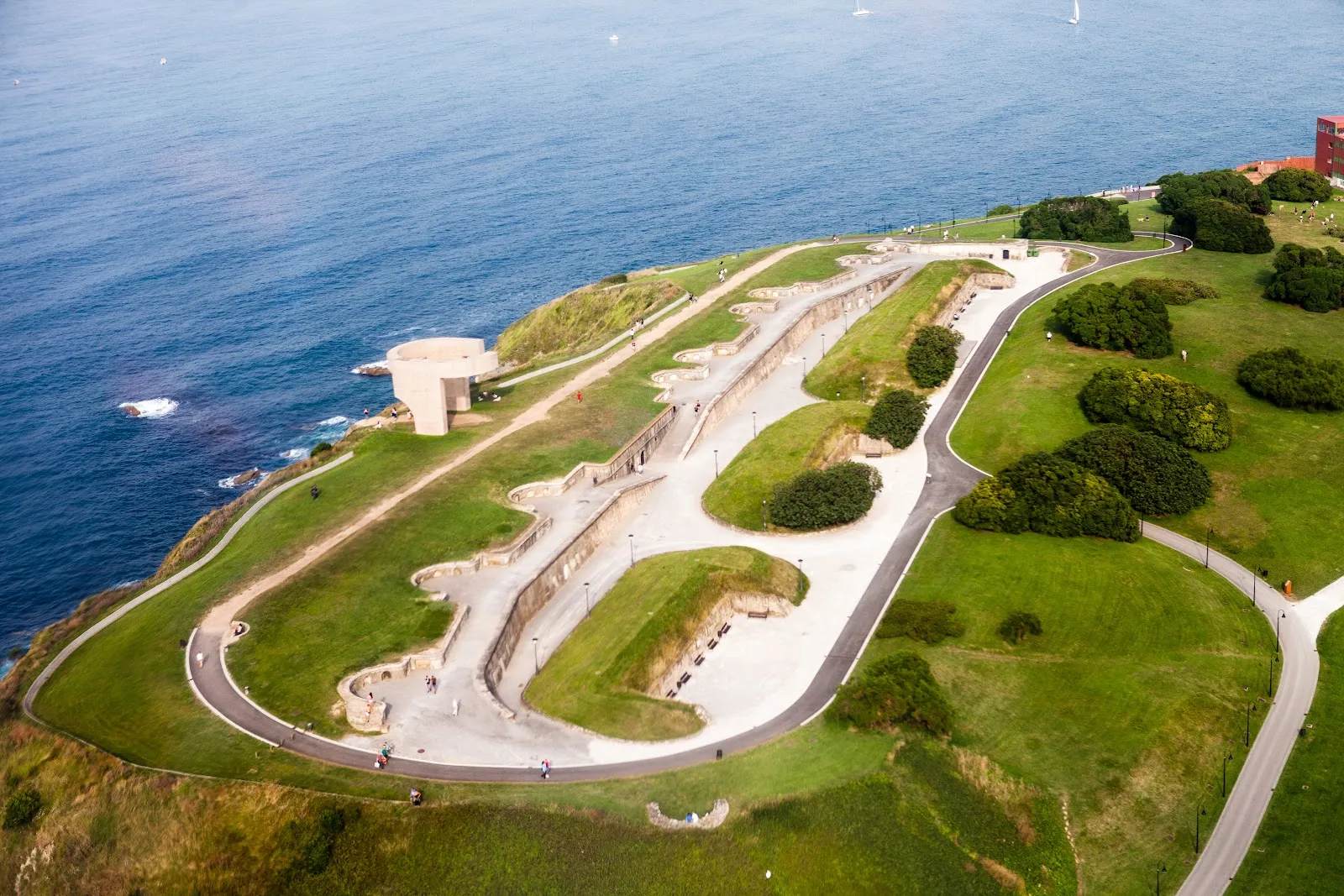
Santa Catalina Hill is the highest area of the city, above the Cimadevilla neighbourhood. Remains of a Roman wall stand on the hill, along with old military bunkers and the Batería de Santa Catalina. The site was a military ground until the nineties.
The park is grassy and ends in a sheer drop to the water. From the top, the view takes in Gijón, the coastline and the Costa Verde, which makes the hill a good place to see how the city meets the sea.
Visiting the sculpture
The sculpture is open 24 hours a day, every day of the week, so you can come at dawn or after dark if you want a quieter visit. The path up from the city is short, and the paths and ramps make the climb easier for most visitors.
On the walk up you will see the views of the city and the old fort even before you reach the sculpture, so the climb is worth doing whether or not you are interested in art. Runners and walkers use the hill often.
A skate park is just down the alley from the park, which makes it a convenient stop for a longer afternoon.
Nearby in Cimadevilla
Cimadevilla has two museums worth a visit. The birthplace of Jovellanos is dedicated to the eighteenth-century statesman and writer, and its top floor houses the Retablo del Mar, which shows a scene from daily life in the neighbourhood.
For another high viewpoint, the Campa Torres is the highest point of the city and has views over the Roman settlement site and the coast.
Perguntas frequentes
Is Elogio del Horizonte open all day?
Yes. It is open 24 hours a day, seven days a week.
Is Elogio del Horizonte wheelchair accessible?
The entrance and the parking lot are wheelchair accessible, and paths and ramps lead up the hill.
Can you hear the sea at the sculpture?
Yes. Standing at the centre of the structure amplifies the sound of the waves and wind.
When is the best time to visit?
Go earlier in the day or around lunchtime on a sunny day. The late afternoon wind can blow dust across the sculpture, while sunset from the top is a highlight.