Suwon Hwaseong Fortress is a stone wall built in the 1790s around the old centre of Suwon, about 30 kilometres south of Seoul. It is a UNESCO World Heritage Site, and the wall walk is free. The route runs about 5.7 kilometres past four gates, watchtowers and views over the city. Cafes, boutique shops and restaurants line the streets inside the walls, and the Hwaseong Haenggung palace stands nearby.
Why King Jeongjo built the fortress
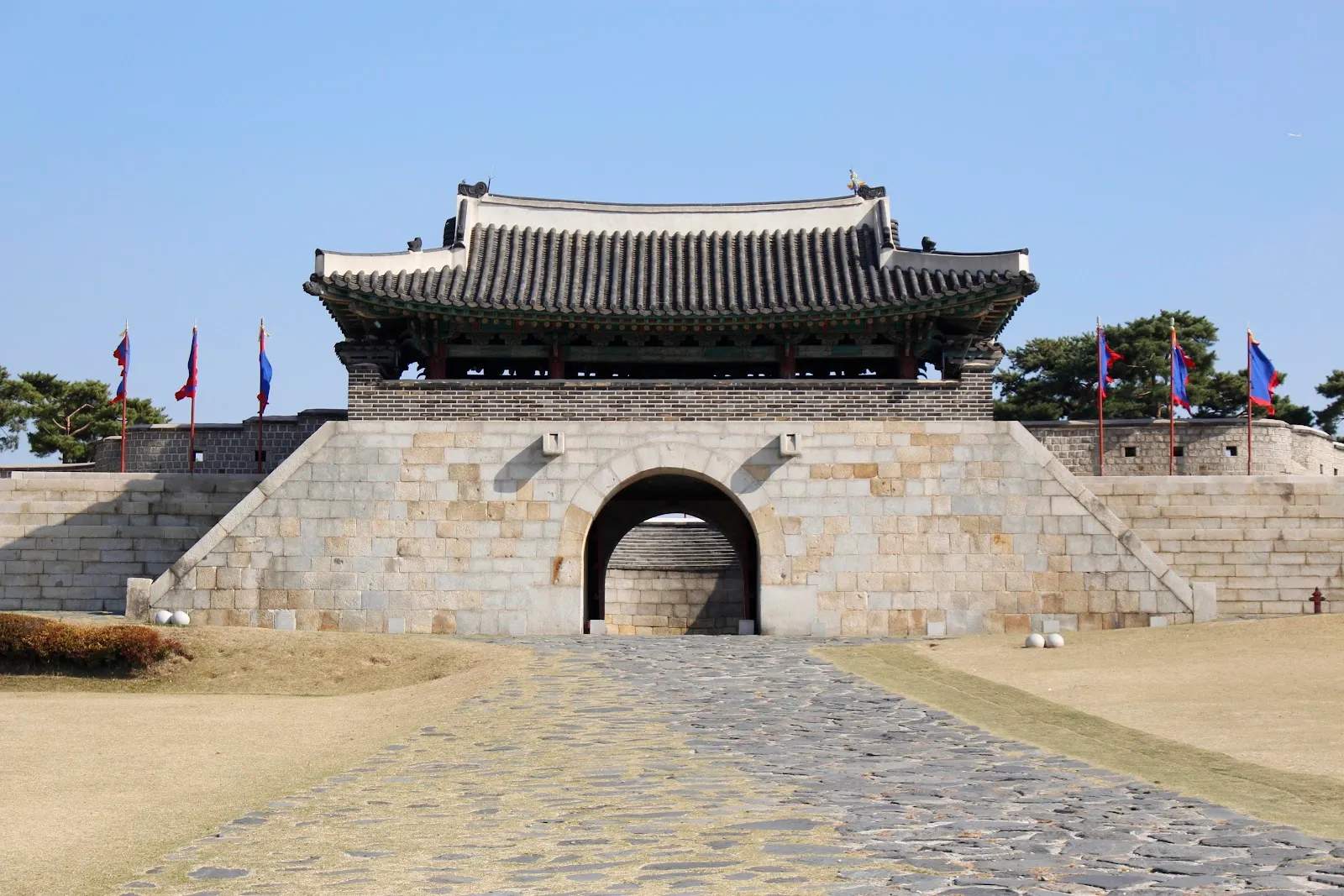
Crown Prince Sado died in 1762 after his father ordered him shut in a rice chest, where he starved. In 1789 Sado's son, King Jeongjo, moved his father's remains to what is now Suwon. Over the following years he had the tomb surrounded by more than five kilometres of walls, between four and six metres high.
The fortress was a monumental display of filial devotion. King Jeongjo also intended Suwon to become a new capital for Korea, but he died before the move could take place, and the royal court stayed in Seoul.
Construction ran from 1794 and was completed in 1796. The design is credited to Jeong Yak-yong, a scholar of practical learning. The builders used new tools and materials, including heavy machinery and pulley systems, and combined Eastern and Western methods of fortification. The wall was heavily damaged during the Korean War and was restored using well-preserved blueprints. The fortress was listed as a UNESCO World Heritage Site in 1997.
Walking the wall
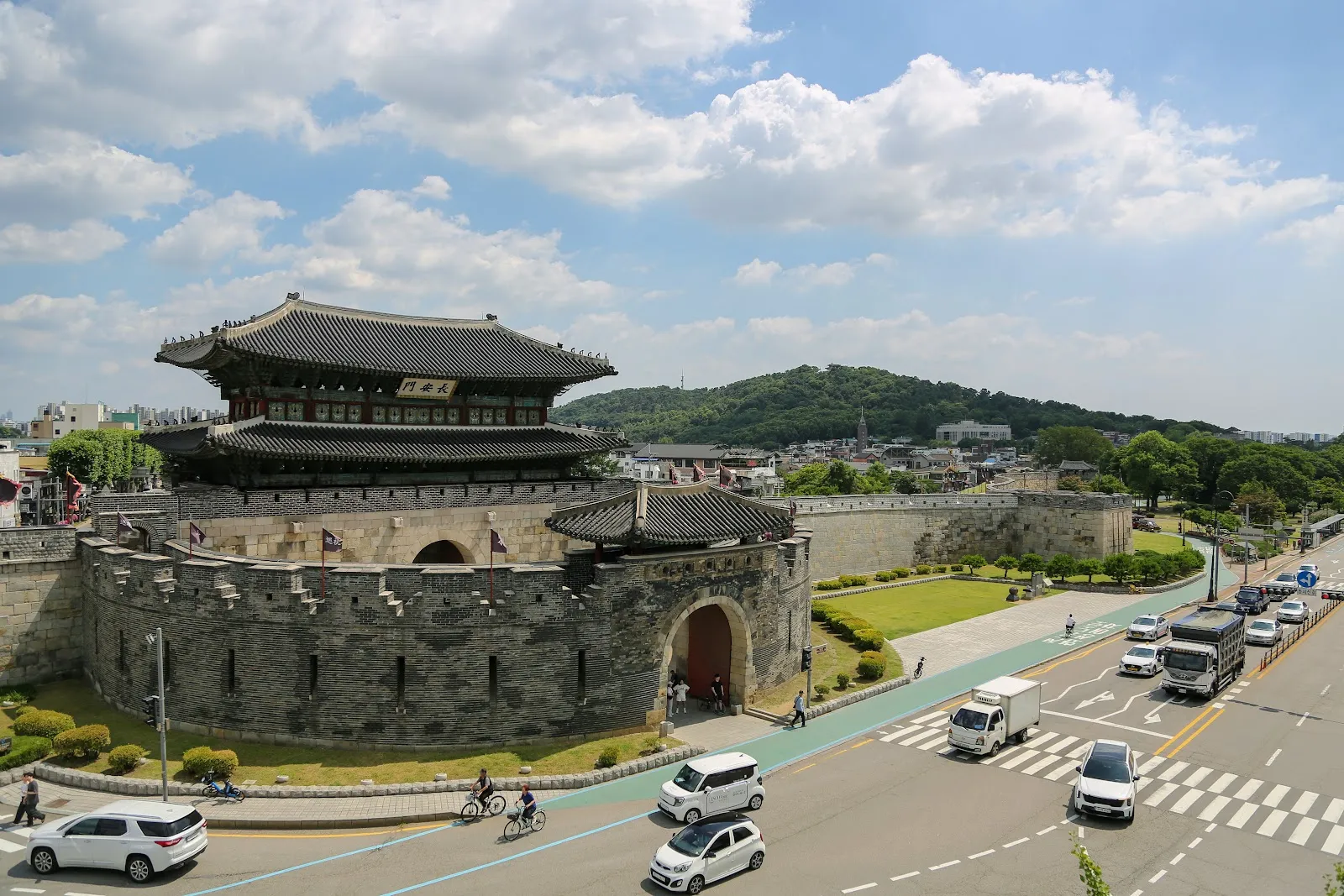
The full loop is about 5.7 kilometres. Plan 90 minutes at a steady pace, and allow more time if you stop often. You can also walk only part of the loop and leave by one of the gates.
Along the way you pass watchtowers and artillery towers, as well as secret gates and secret waterways built into the defences. The highest points are Seojangdae and Seonodae, which you reach by climbing steps.
A stamp trail links the wall to the city centre. Pick up a stamp book at a tourist information centre on the fortress, then collect stamps at spots around Suwon's centre, where a map is printed in the booklet. Collecting seven or more stamps earns a souvenir.
The four gates
The fortress has four main gates. Janganmun, on the north side, is the main entrance and the gate most people reach first from Seoul. Paldalmun lies to the south, Changnyongmun to the east and Hwaseomun to the west.
Hwaseomun is a good place to start if you want to climb onto the walls early. Janganmun and the Banghwasuryujeong Pavilion are along the way, so you can include both in one walk.
Hwaseong Haenggung palace and museum
Hwaseong Haenggung was a temporary palace used by the king in times of war. The palace has a small admission fee, so check the current price before you go. Tickets can be bought in advance, which the site recommends.
The Suwon Hwaseong Museum has a permanent exhibition hall with artifacts, models, life-sized dioramas and interactive displays. The displays explain how the fortress was built, its role in the reign of King Jeongjo, and the techniques and materials used in its construction.
Getting there and getting around
Suwon lies about 30 kilometres south of Seoul. The ITX train from Seoul Station is one practical option, and the subway, trains and buses also connect the city. From Suwon Station, buses 11, 13, 36 and 39 can be taken from the stop outside the tourist information office. Get off at the fifth stop, at Paldalmun Gate.
A short bus ride from Starfield Suwon also reaches the fortress. Weekend and holiday parking is limited, so public transport is the easier choice.
The entrance, restrooms and parking lot are wheelchair accessible. The Papago app can help with language while you explore.
Nearby stops
Haenggung-dong has many cafes close to the palace. Haengnidan-gil is the place for boutique shops, neighbourhood cafes and photo booths, and it is a good place to buy souvenirs and sweet treats.
Suwon Chicken Street is a short walk from the fortress, and Starfield Suwon has a multi-storey library. Archery is offered in a green open field on the opposite side of the wall loop.
Perguntas frequentes
Is there an entry fee?
Walking the fortress wall is free. The Hwaseong Haenggung palace charges a small admission fee, and tickets can be bought in advance, which the site recommends.
How long do you need?
A full loop of the wall takes about 90 minutes at a steady pace. Plan a half day if you also want to visit the palace and the museum.
How do I get there from Seoul?
Suwon is about 30 kilometres south of Seoul. The ITX train from Seoul Station is one practical option. From Suwon Station, buses 11, 13, 36 and 39 go to Paldalmun Gate.
Where should I start the walk?
Paldalmun Gate offers a smoother route along the wall. Hwaseomun Gate is also a good start if you want to climb onto the walls early.