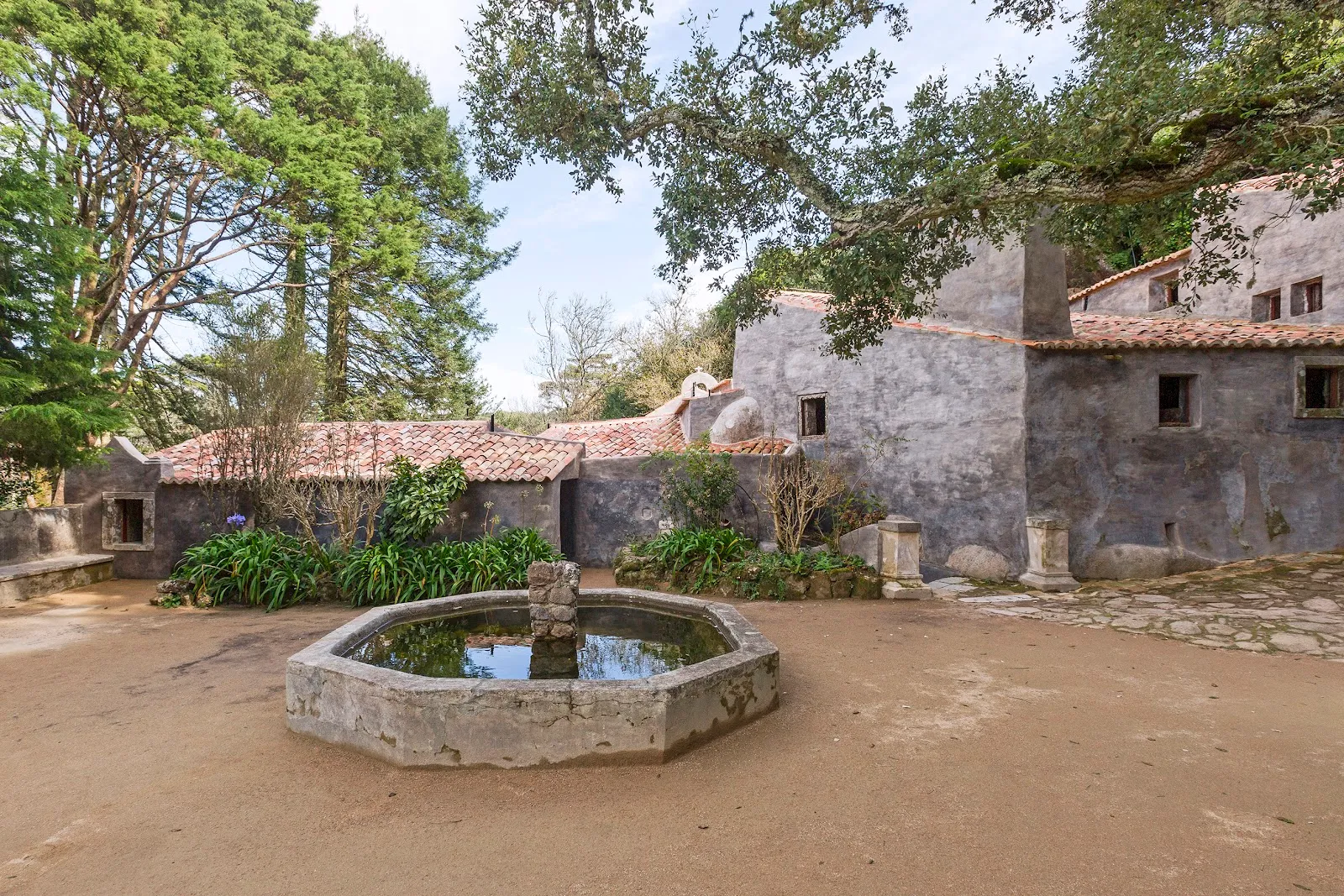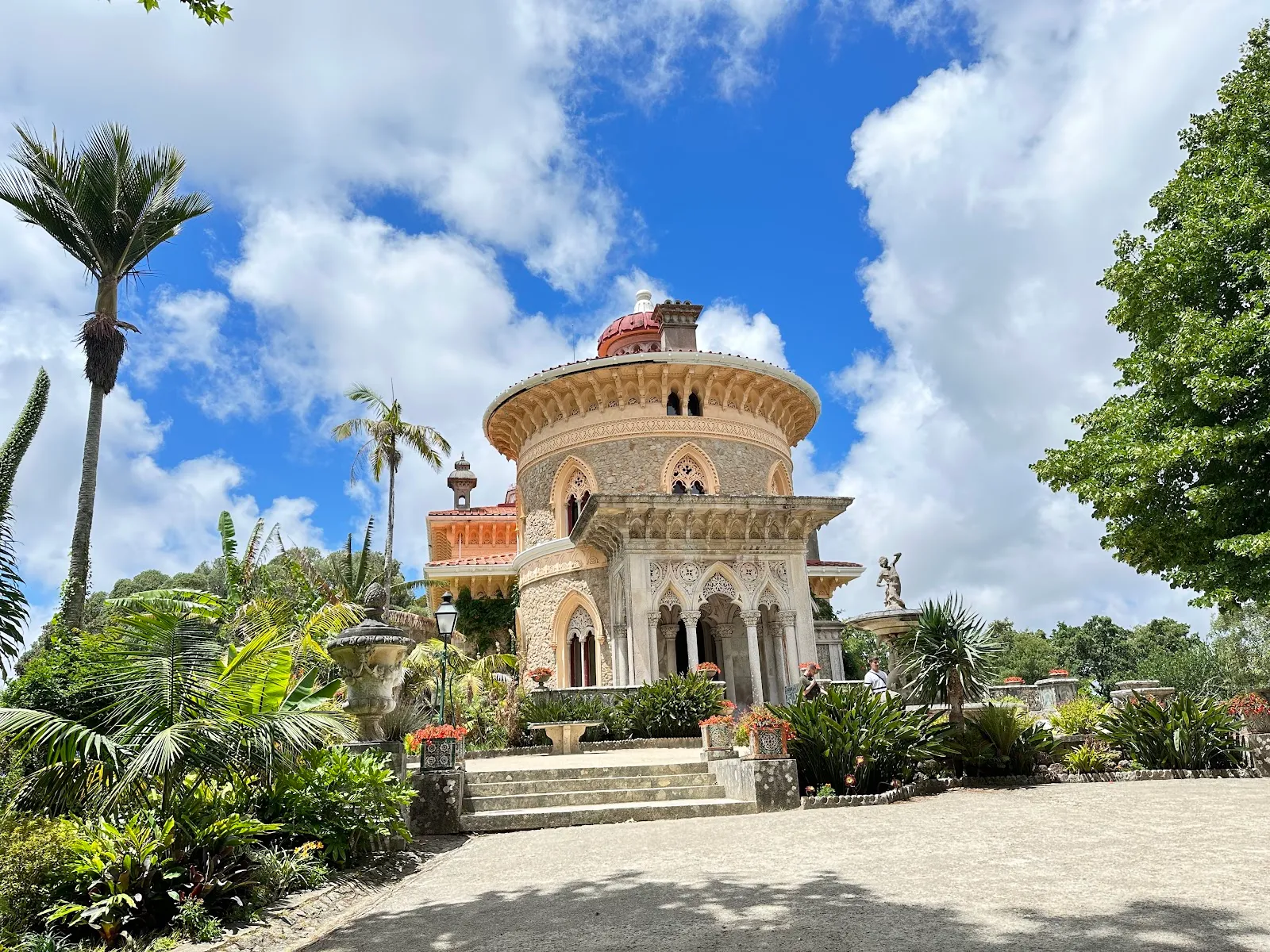
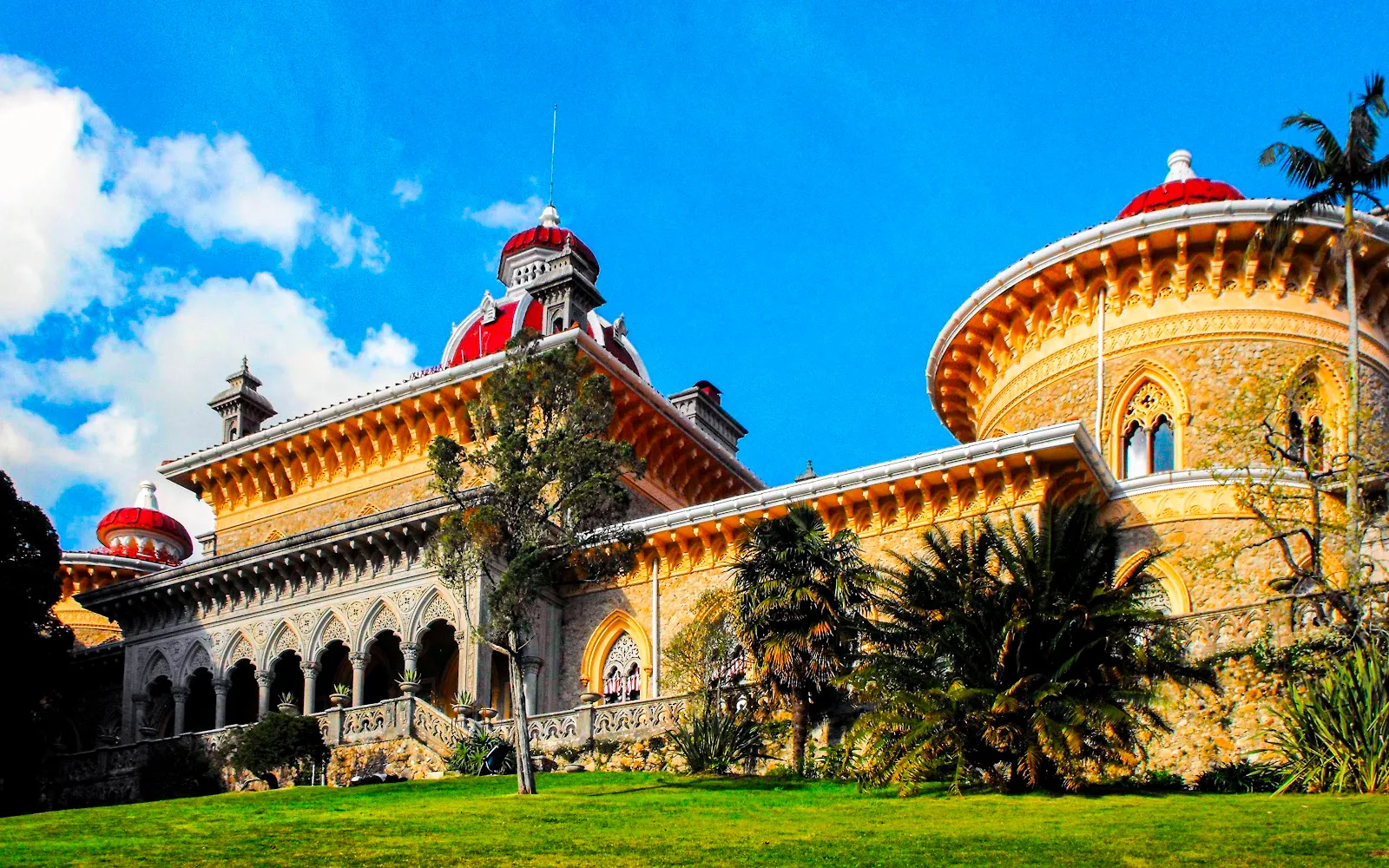
Set in the hills outside Sintra’s historic centre, the Park and Palace of Monserrate pairs an ornate 19th-century mansion with extensive botanical gardens. The palace brings together Gothic, Moorish and Indian influences, visible in its arches, domes and detailed interiors. Outside, paths pass plants from regions including Mexico, Japan, Australia and India, as well as waterfalls, a lake and garden ruins. It is a quieter option than Sintra’s better-known palaces, but the grounds are large and hilly. Allow time to explore the park before heading inside.
An estate shaped over centuries
The site’s story begins before the palace now associated with Monserrate. In 1540, Friar Gaspar Preto established a hermitage dedicated to Our Lady of Monserrate. The estate later passed to the Mello e Castro family. Much of the property was damaged in the 1755 Lisbon earthquake.
English writer William Beckford later lived at Monserrate and worked on the grounds. The gardens also caught the attention of Lord Byron, who referred to their beauty in his poem Childe Harold’s Pilgrimage. In the 19th century, Sir Francis Cook developed the estate as a summer residence. The palace and park that emerged reflect the period’s interest in combining architectural and garden traditions from different places.
A palace of mixed influences
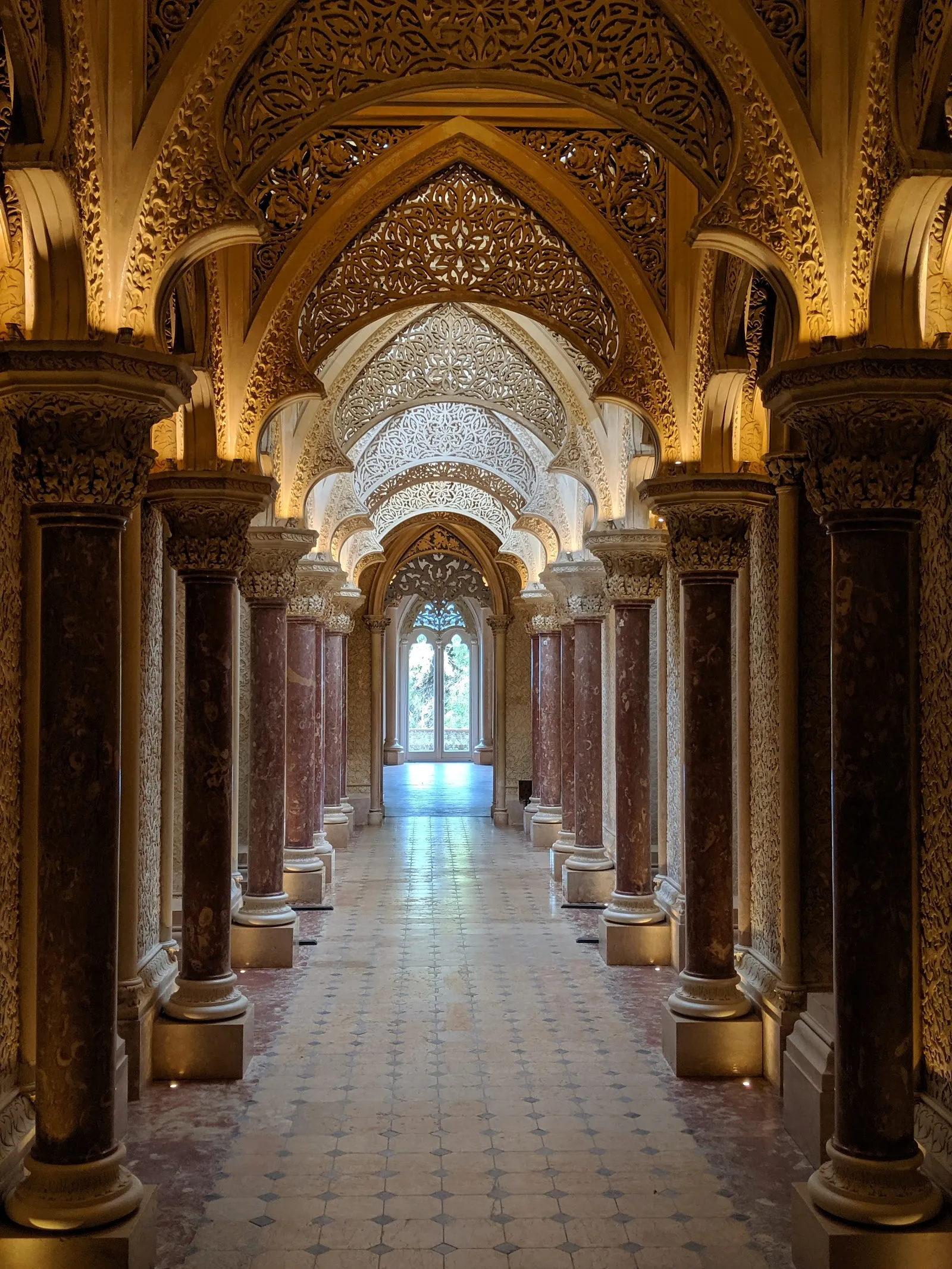
The mansion’s design combines Gothic forms with Moorish and Indian elements. Look for arches, columns and elaborate decorative work, including detailed patterns on interior walls and ceilings. The Central Gallery links the palace’s towers; a marble fountain and Moorish ornament are among its features. Other rooms include a music room, dining room and library.
The interiors have an abundance of carved and decorative detail, while the building’s exterior carries plant-inspired motifs into the surrounding landscape. The result is an example of 19th-century eclectic design, not a palace built for royalty. Its relatively small scale makes the intricate work particularly noticeable as you move between the rooms.
Gardens built around the mountain climate
The park is a substantial part of a visit, with paths winding through planted areas, native vegetation and varied terrain. Its designers made use of the Sintra mountains’ microclimate to grow plants from different parts of the world. Among the regions represented are Mexico, Japan, Australia, India and the Mediterranean.
Look out for water features, including waterfalls and a lake, as well as garden structures and ruins among the greenery. Some corners are easy to pass if you hurry, so leave room for a slow walk. The slopes mean that exploring more of the grounds involves walking uphill and downhill; comfortable footwear will help you make the most of the paths.
Perguntas frequentes
How long should I spend at Monserrate?
Allow around 1.5 to 2 hours to explore the palace and gardens. The grounds are extensive, so a longer visit gives you more time to walk the paths.
What architectural styles can I see at the palace?
The palace combines Gothic, Moorish and Indian influences. Look for its arches, columns, decorative interiors and Central Gallery.
What can I see in the park?
The gardens include plants from regions such as Mexico, Japan, Australia and India, along with waterfalls, a lake and old ruins.