The Capela dos Ossos, or Chapel of Bones, sits beside the Church of São Francisco in Évora, a short walk from Praça do Giraldo. Franciscan monks built it around 1600, and its walls and pillars are decorated with the bones and skulls of about 5,000 people moved from the city's crowded cemeteries. The monks arranged the remains with care to remind visitors that everyone dies. The ticket also covers a museum of sacred art and a collection of nativity scenes from many countries, and a rooftop terrace overlooks Évora's roofs and historic centre.
Why the monks built it
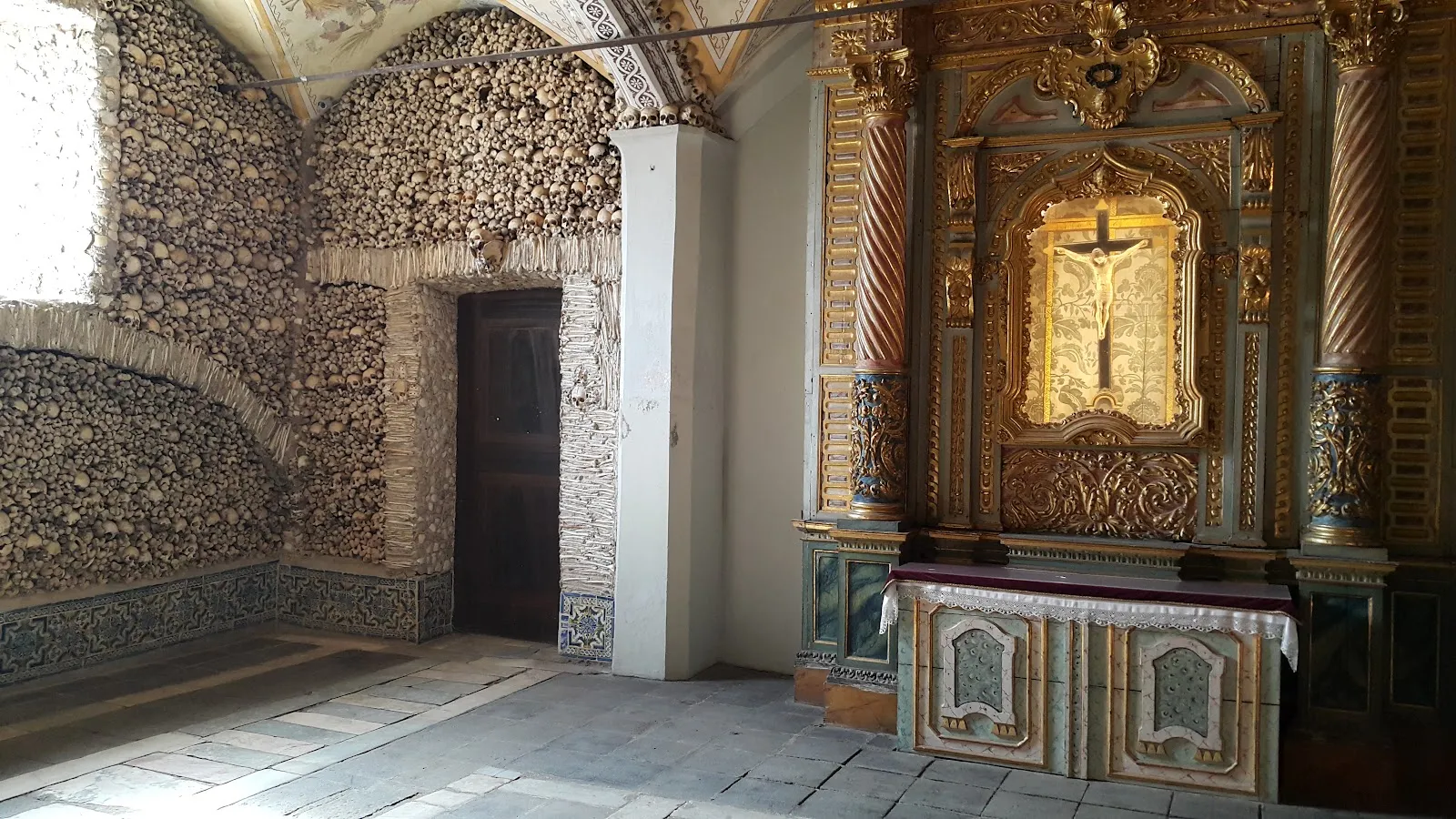
Franciscan monks built the chapel around 1600 beside the Church of São Francisco. At the time, the cemeteries of Évora were overcrowded, and the remains of roughly 5,000 people were dug up and brought into the chapel.
The monks did not hide the bones. They arranged skulls and skeletons across the walls and pillars as a memento mori, a reminder that life is short and death comes to everyone. A plaque in the middle of the chapel explains that the aim was to make people think about their own mortality, not simply to shock them.
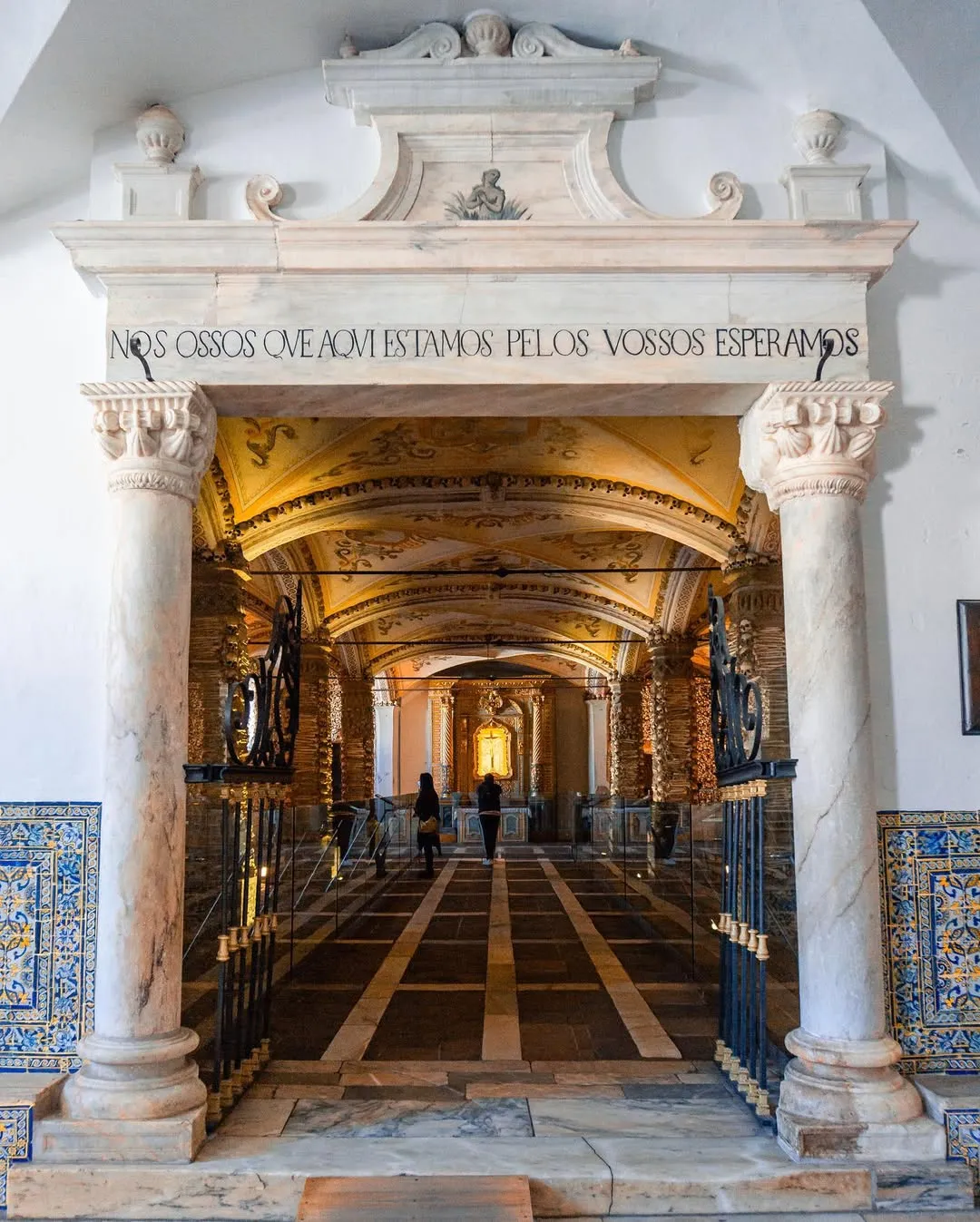
The inscription at the entrance, in Portuguese, tells visitors that the bones inside are waiting for the living. One account says the three monks behind the project wanted their society to value the right things, in a city that was wealthy in the early 1600s.
Inside the chapel and the museum
The chapel is small, and the bones cover nearly every surface, so the room feels dense and carefully ordered. Most visitors move slowly around the walls, reading the arrangement of skulls and bones.
The ticket also admits you to a museum of sacred art on the upper floors. The nativity scene collection is one of its highlights. It brings together scenes from many countries, and seeing how different cultures tell the same story in their own way is a useful counterpoint to the chapel. On one visit, the nativity exhibition was on the second floor.
The rooftop terrace is the last stop. From it you can see Évora's roofs and the old town around the cathedral, a quiet view after the chapel.
Visiting: access, tickets and timing
Adult tickets have been 7 euros and youth tickets 5 euros. Check the official website for current prices before you go. The website is in Portuguese.
The entrance, restroom and parking lot are listed as wheelchair accessible. A lift serves the first floor from the ground floor, and restrooms are on the ground and first floors. Parking at the site is paid.
As the chapel can be busy at certain times, an early start makes the walk through calmer. The church itself can be entered without a ticket when no service is being held, but the chapel and museum need one.
Perguntas frequentes
How much is the entry fee?
Adult tickets have been 7 euros and youth tickets 5 euros. Check the official website for current prices before you go.
Do I need to book in advance?
Advance tickets are recommended. Go early in the day if you want a calmer visit, as the chapel can get busy.
Can I enter the church without a ticket?
Yes, the church can be entered without a ticket when no service is taking place. The chapel and the museum require a ticket, and the chapel has its own entrance beside the church.
Is it suitable for children?
Parents should judge this by their children's sensitivity. Older children who are interested in history and the macabre are often engaged by it.