Fort Santiago is a 16th-century stone fortress on the bank of the Pasig River, inside Intramuros, the walled old city of Manila. Spanish builders raised it for defense, and the national hero José Rizal was held here before his execution in 1896. Inside the walls you will find thick stone ramparts, old cannons, underground cells, gardens and the Rizal Shrine. Give it a morning and walk the walls slowly.
From Spanish citadel to national monument
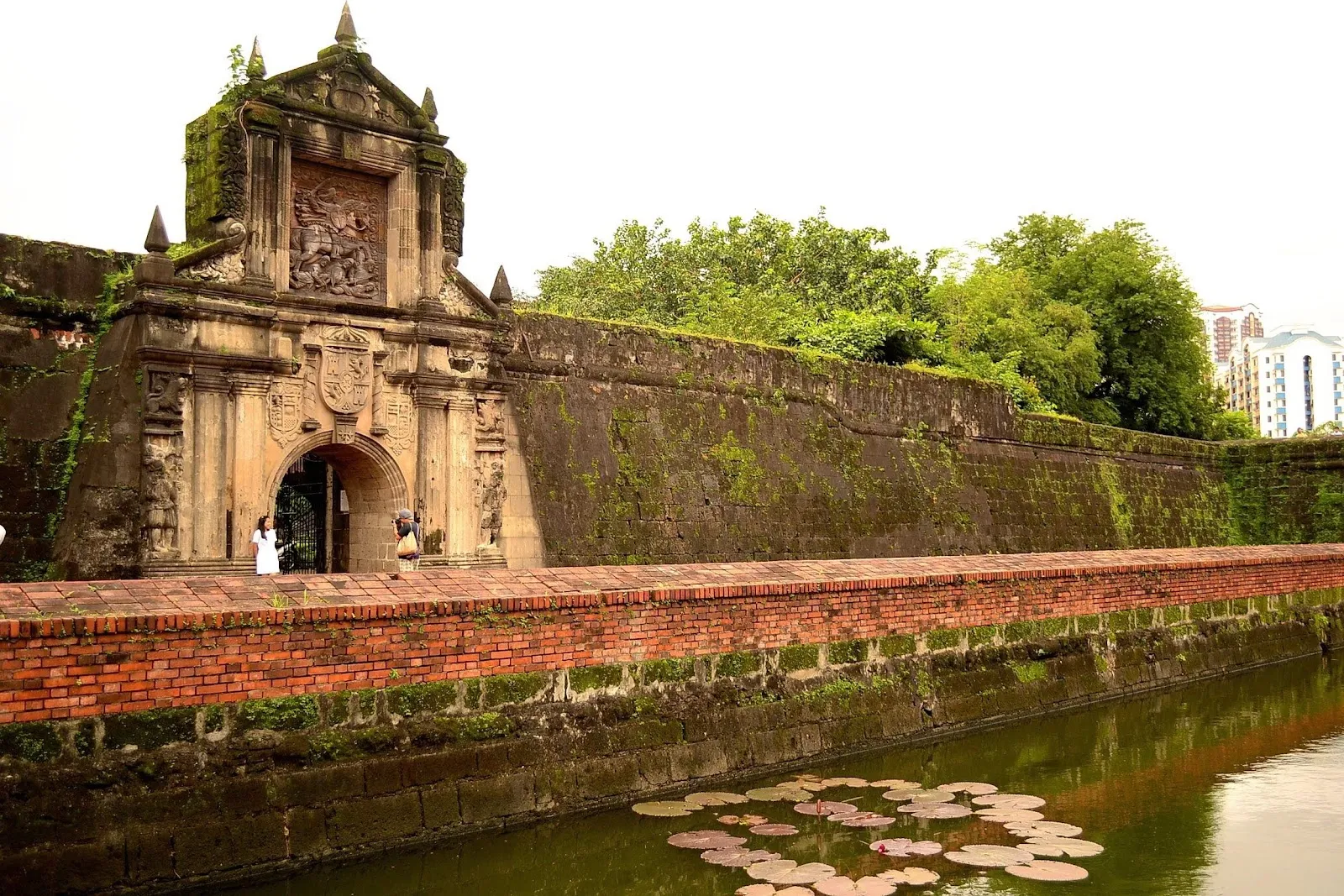
Spanish conquistadors began the stone fortress in the late 16th century, on the site of a palace once used by the last pre-Hispanic king. Over the centuries it fell into disrepair. The impressive entrance gate on the south side has since been restored, and the compound now works mainly as a museum and a public park at the edge of Intramuros.
During the Second World War the compound took heavy damage, and much of it was later restored. The fort was declared a national monument in 1951.
Inside the grounds
The main gate is the most recognizable part of the site. Its relief shows Santiago Matamoros, the patron saint of Spain, above the Spanish coat of arms. Beyond the gate, manicured gardens, plazas and fountains lead to a lily pond.
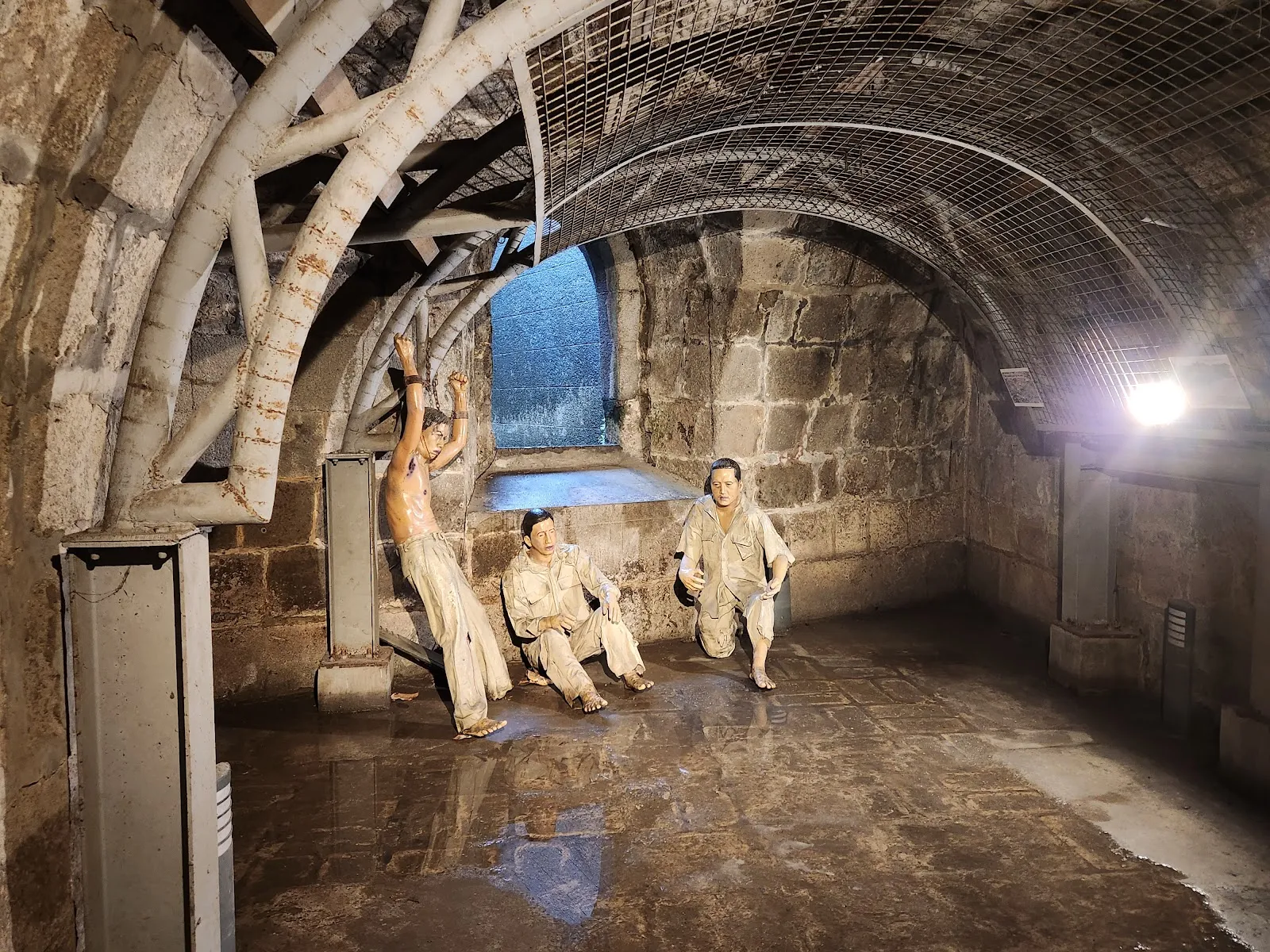
The dungeons were once used as storage vaults and powder magazines for the Baluarte de Santa Barbara, a stone structure built in 1592. Today they are open to visitors, and the underground cells are among the most sobering parts of the visit.
The Rizal Shrine
The Rizal Shrine occupies the building where José Rizal was held while he awaited execution in 1896. Its displays include memorabilia and relics connected to his life and work. A re-creation of his cell and of his courtroom trial helps explain what happened in the building.
Markers trace his final steps from the cell to the execution site. Visitors can also see the cell linked to the final poem he wrote. The museum covers Spanish colonial rule and the Second World War as well.
How a visit works
The Visitor Center has free maps and staff who help with tickets and directions. Guided tours and educational cinemas are offered inside the fort, and photos are allowed in most areas.
A riverside area at the top of the fort, reached after the museum, gives views of the Pasig River. A park near the entrance hosts folk dance shows and is a good spot for a picnic. A kalesa, the horse-drawn carriage, is one traditional way to see the walled city.
Perguntas frequentes
Is there an entry fee?
Admission has been PHP 75 per person in recent reports. Check the official website for the current price before you go.
How long do you need at Fort Santiago?
Plan about 1.5 hours to walk the grounds, visit the exhibits and explore the underground cells.
Do I need to buy tickets in advance?
Advance tickets are recommended. Buying them before you arrive helps you enter more smoothly.
Is Fort Santiago wheelchair accessible?
The entrance and the parking lot are wheelchair accessible.
Is there parking at Fort Santiago?
There is a free parking lot, a paid parking lot and paid street parking nearby.