
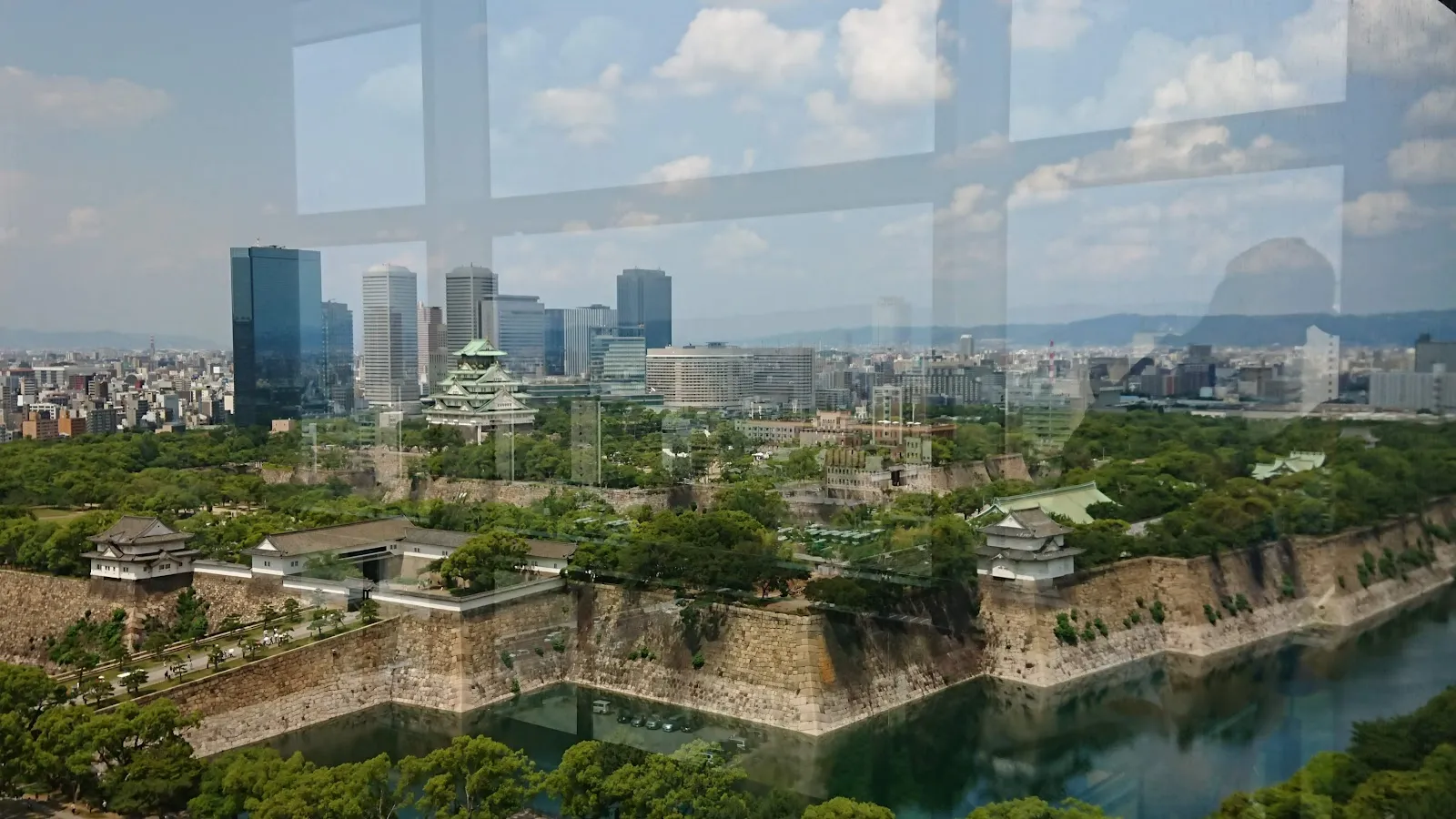
The Osaka Museum of History, near Osaka Castle Park, traces the city’s development from ancient times to the modern era through life-size reconstructions, original objects and detailed town models. Start on the upper floors, where exhibits include the ancient Naniwa Palace, then move down through Osaka’s later periods. Look for the preserved palace foundations in the basement, and pause by the large windows for views of the castle and moat. Most detailed explanations are in Japanese, so an audio translation guide can help you follow the displays.
A city’s history, told from the top down
The museum’s permanent exhibition is arranged vertically. Begin on the 10th floor, where displays cover ancient Osaka and the Naniwa Palace, then descend through the later periods. The exhibition ends on the 7th floor. This layout gives the visit a clear chronology, while the building’s upper levels provide views across to Osaka Castle and its grounds.
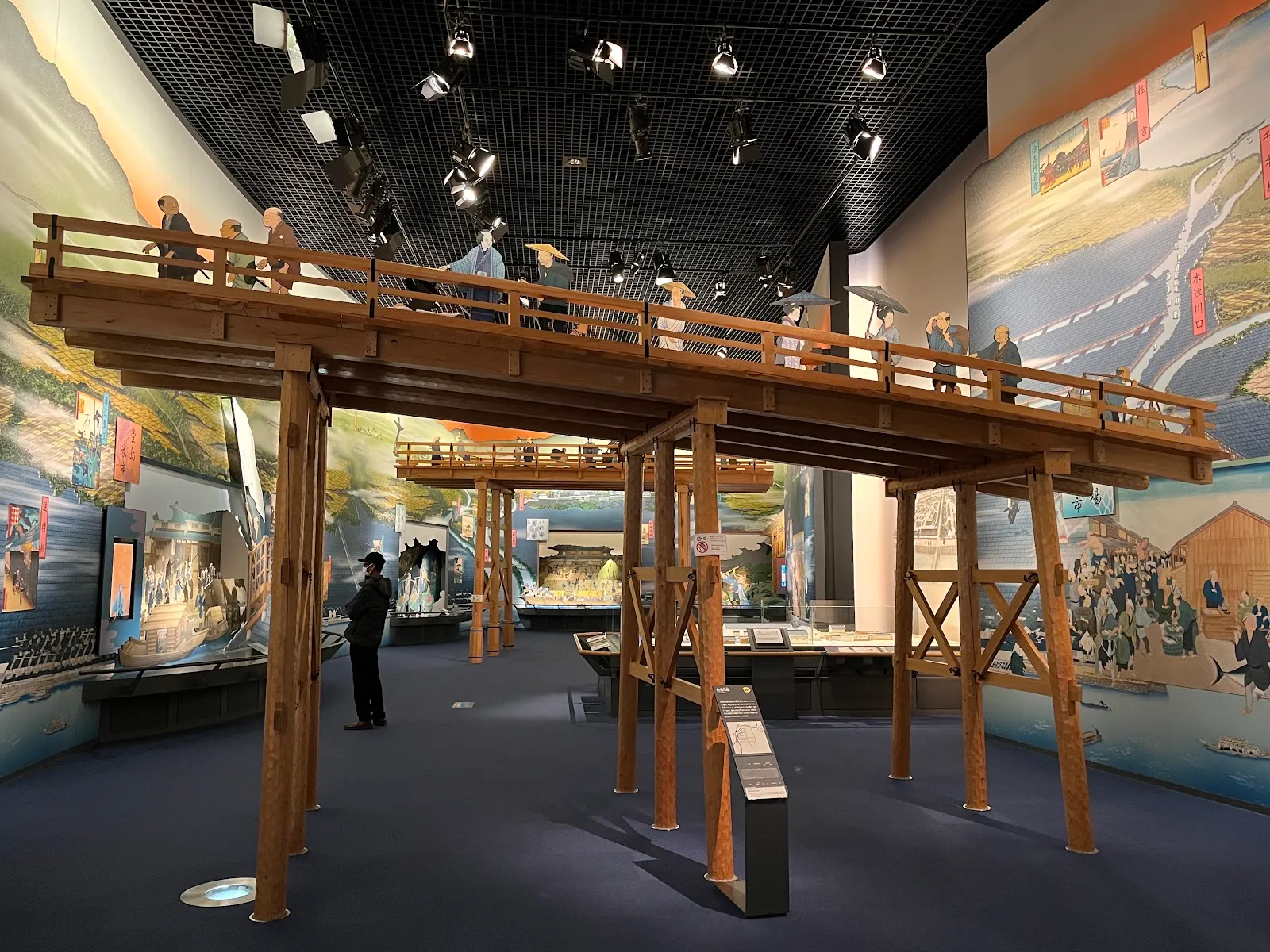
The displays focus on how people lived in the city, alongside the objects and events that shaped its development. Models, maps, multimedia and full-scale reconstructions bring different periods into view. Some scenes recreate streets and buildings at life size, while smaller townscapes invite a closer look at details of urban life.
From Naniwa Palace to later Osaka
The ancient galleries include a reconstruction of the palace’s Daigokuden and objects unearthed in the former palace area, including earthenware from the sixth and seventh centuries. In the basement, you can see preserved remains of the Naniwa Palace foundations. Together, these exhibits connect the city’s ancient history to the site beneath the modern museum.
As you move down, the displays turn to medieval and early modern Osaka. Detailed models recreate buildings and streets from those periods. The later galleries include scenes of early 20th-century life and the city’s Age of Greater Osaka, with reconstructed streets and households that show the changing shape of urban life.
Look closely, and take time between floors
The models reward a slower visit. In one large village scene, a video guide takes you around the miniature streets, where small figures and tucked-away details give you plenty to search for. Interactive activities also bring history into the visit: exhibits include archaeology-based puzzles, and other displays let visitors handle objects or try activities linked to earlier periods.
Most detailed text and many videos are in Japanese, and English explanations can be brief. An audio translation guide can make the story easier to follow. If you prefer to explore visually, the large reconstructions and models still give you a way to trace the city’s changes from one period to the next.
Perguntas frequentes
How long should I spend at the Osaka Museum of History?
Allow 2 to 3 hours to explore the museum thoroughly.
Is the museum information available in English?
Most detailed explanations are in Japanese, and English information is limited. An audio translation guide is available.
Can you see Osaka Castle from the museum?
Yes. The upper floors have views of Osaka Castle and its grounds.
What is the exhibition route?
The permanent exhibition starts on the 10th floor and moves down through time, ending on the 7th floor.


