
Hōryū-ji is a Buddhist temple complex in the Ikaruga area of Nara, a short train ride from Nara Station. Prince Shōtoku founded it in 607. Its Kondō, five-story pagoda and Middle Gate (Chūmon) are among the oldest wooden buildings in the world. The grounds are spacious and calm, and the Gallery of Temple Treasures holds Buddhist statues, paintings and scriptures, including the Kudara Kannon. Set aside a morning to walk the grounds slowly and see the buildings up close.
Founding and history
Prince Shōtoku founded the temple in 607. He is known as a major patron of Buddhism in Japan, and the temple is linked to the early spread of the faith there.
The complex dates from the Asuka period, which ran from 552 to 645. It is known as the oldest completely preserved temple complex in Japan. Fire damaged the complex in the past, and it was rebuilt afterward.
The layout of the grounds
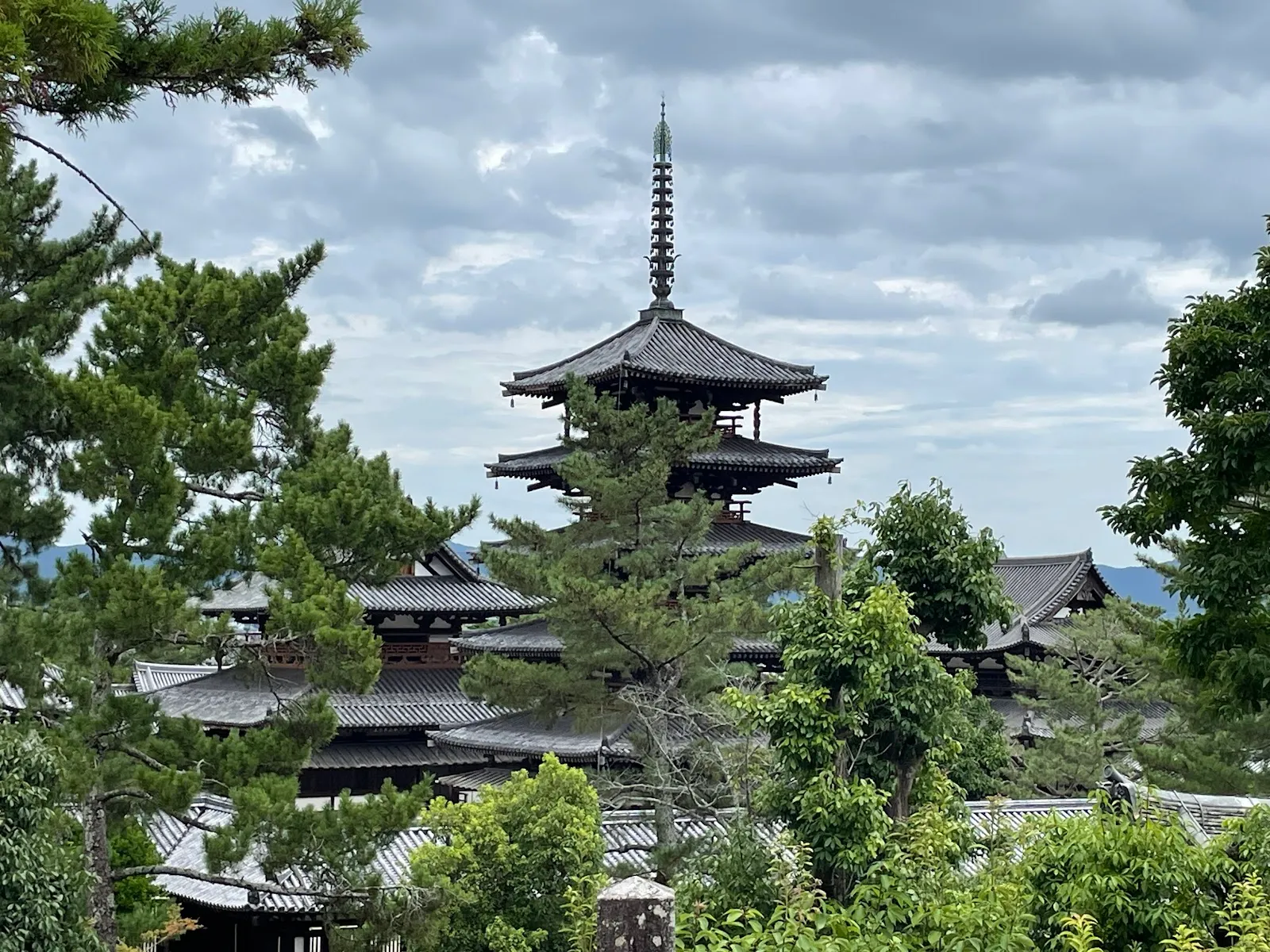
The complex is divided into two main areas, the Saiin Garan in the west and the Tōin Garan in the east. Both are part of one visit, and the paths between them are short.
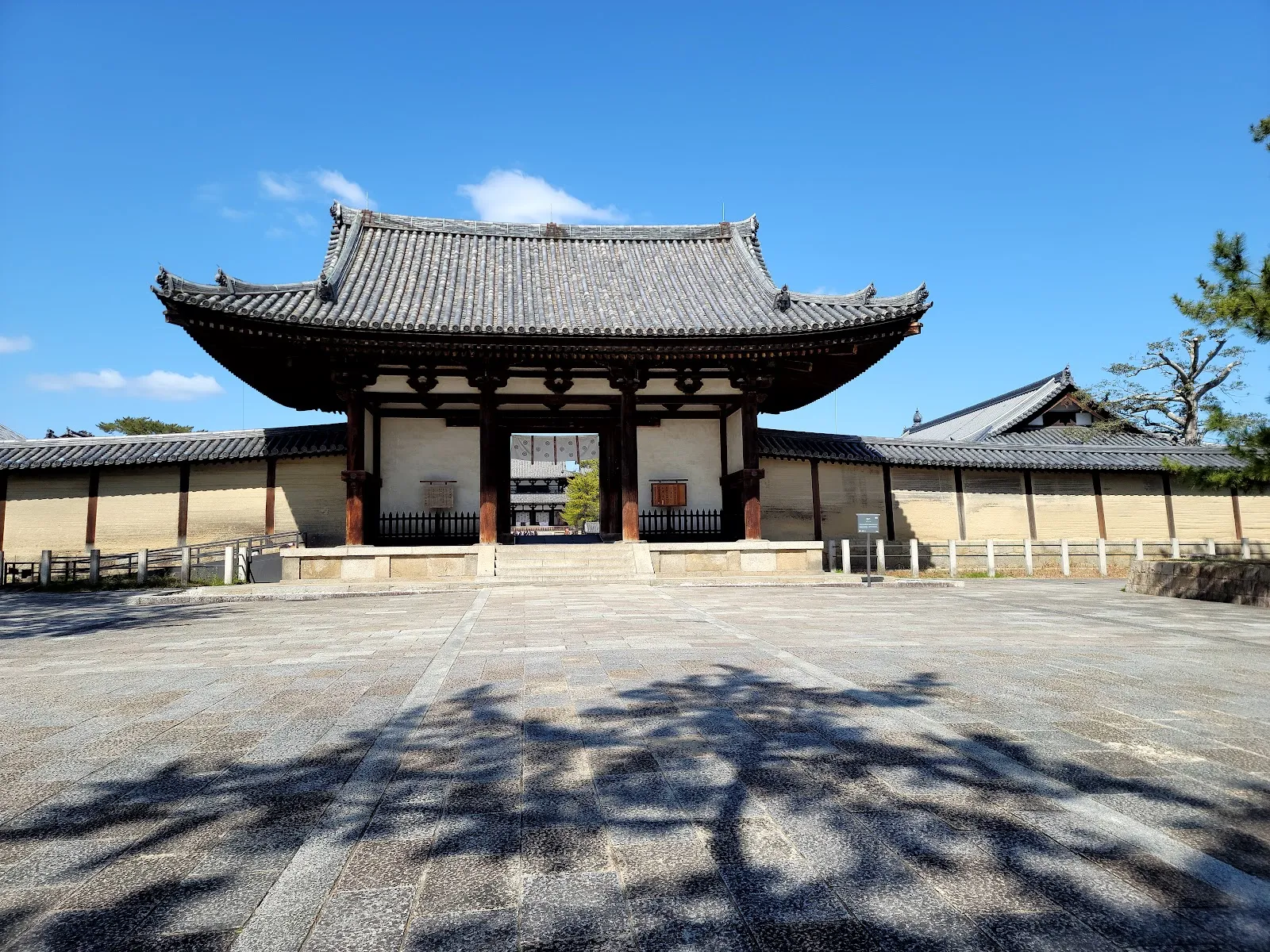
Two parts are especially worth your time: the Great South Gate (Nandaimon) and the path leading to the Middle Gate (Chūmon). The Middle Gate is built of weathered timber, and the Kondō and five-story pagoda stand within the same grounds.
The octagonal Yumedono, or Hall of Dreams, is also part of the complex. Its eight-sided plan makes it easy to recognise among the other buildings.
Inside the treasure gallery
The Gallery of Temple Treasures holds Buddhist statues, paintings and scriptures. Many of these objects are designated national treasures, and the exhibits include finely detailed statues.
The Kudara Kannon is one of the best-known statues in the collection. Allow time for the gallery, because it is a major part of what the temple offers beyond the architecture.
Getting there
Trains from Nara Station take about 30 minutes to reach the temple, and buses also serve the area. The temple sits near Mount Shigi, so the ride passes through quiet countryside rather than dense city streets.
The Kintetsu pass is not part of JR, so the JR Pass does not cover it. A 1- or 2-day Kintetsu pass is valid on Kintetsu lines and Nara Kotsu buses between Nara Park, Tōshōdai-ji and Hōryū-ji.
Visiting on the day
The entrance and the restroom are wheelchair accessible. Getting tickets in advance is recommended.
Your ticket is stamped as you enter each area, so keep it with you until you leave the site. The entrance fee is paid in cash.
Perguntas frequentes
Is there an entrance fee?
Yes, there is an entrance fee, and it is cash-only. Check the temple website for current fees before you go.
How long do you need at Hōryū-ji?
A visit of just under two hours covers the grounds and the treasure gallery without rushing.
How do you get to Hōryū-ji from Nara?
Trains from Nara Station take about 30 minutes, and buses also serve the area. A 1- or 2-day Kintetsu pass covers the route between Nara Park, Tōshōdai-ji and Hōryū-ji, but the JR Pass does not.
Is Hōryū-ji wheelchair accessible?
The entrance and the restroom are wheelchair accessible.
Is it crowded?
It is quieter than the major temples in central Nara. Early morning is the calmest time to visit.


