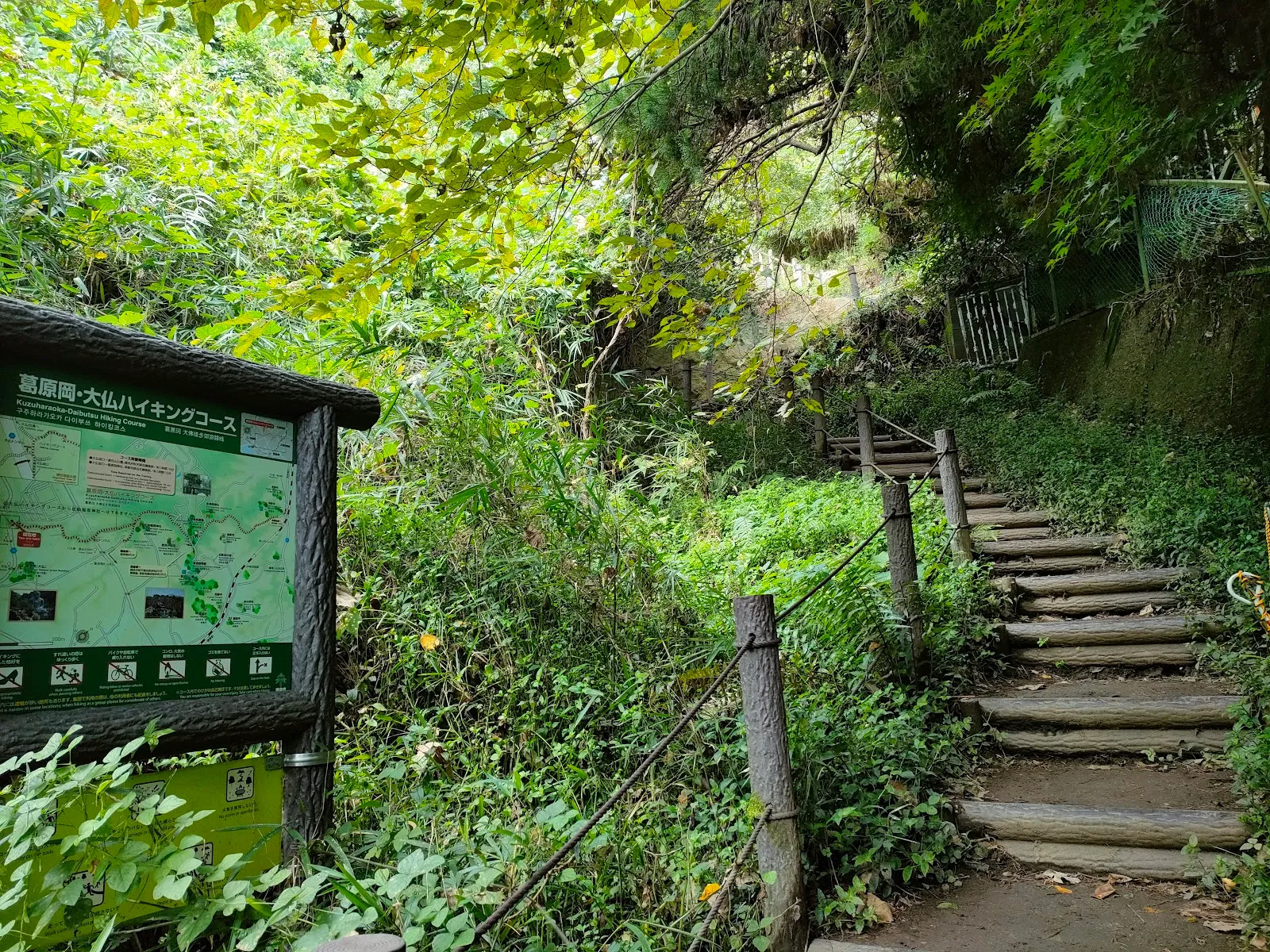
Hase-dera is a Buddhist temple on a hillside in Kamakura, known for its large wooden statue of eleven-faced Kannon, seasonal flowers and views across the city to Sagami Bay. In the Kannon-do Hall, the gilded statue rises about 9 metres; elsewhere, paths wind past gardens, ponds and small shrines. Look for the Benzaiten cave, with religious carvings, and the many small Jizo statues around the grounds. Hydrangeas draw crowds in early summer, but the changing flowers and elevated coastal outlook make the temple worth visiting in other seasons too.
The Kannon statue and its hall
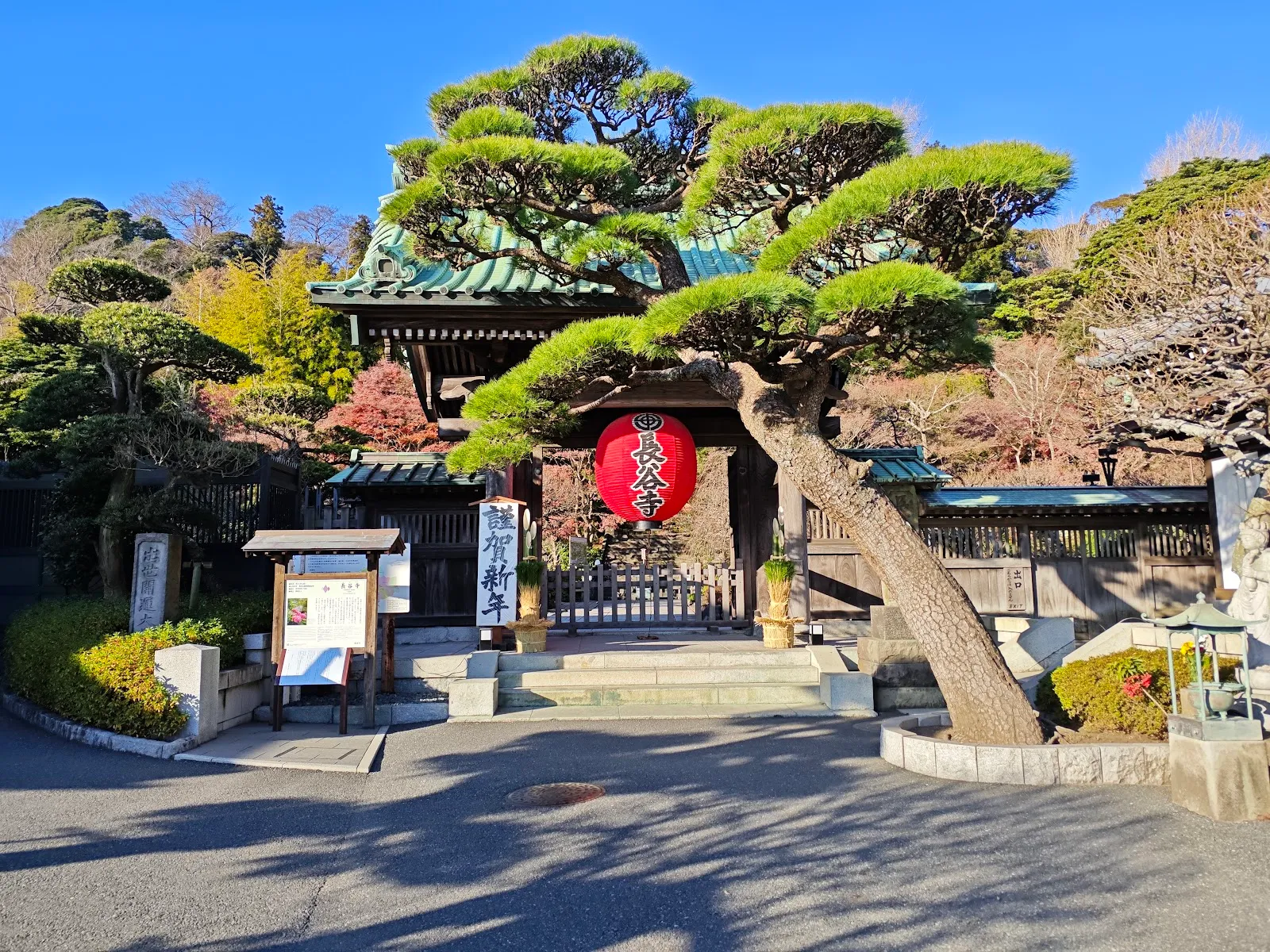
Hase-dera’s principal image is an eleven-faced Kannon, a Buddhist bodhisattva associated with mercy. The gilded wooden statue is about 9.18 metres tall and stands inside the Kannon-do Hall on the upper grounds. Its scale and detailed form make the hall a central stop on a visit.
The temple’s origins are traditionally dated to 736. One account tells of a large camphor tree carved into two images of Kannon: one was sent to Nara, while the other was set adrift and later came ashore near Kamakura. Hase-dera was built to enshrine that image. The temple is also associated with Jodo Buddhism, though accounts of its early history and sect differ.
The Kannon Museum displays temple treasures and offers more context on the site. Photography is not permitted inside the Kannon hall, so take time to look at the statue while you are there.
Gardens, flowers and the hillside
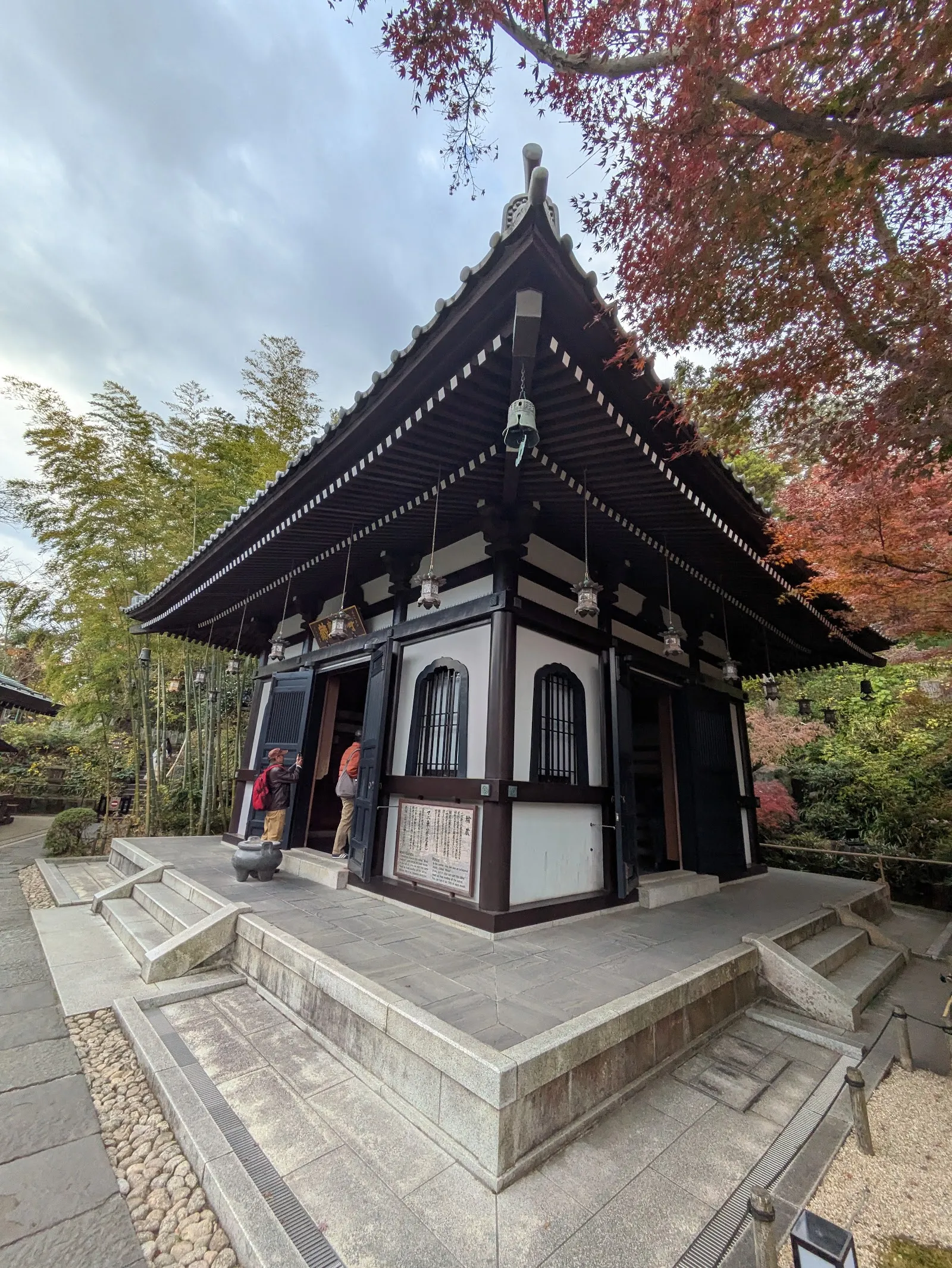
The grounds climb the slope in several levels, with paths through gardens, ponds and small shrines. From the upper terrace, you can look over Kamakura and Sagami Bay, including the coastline around Yuigahama. The hillside setting means there are steps and inclines as you move between areas.
Hase-dera is often called the Flower Temple. Its hydrangea path is planted with around 2,500 hydrangeas, representing about 40 varieties. They bloom in the rainy season, usually drawing the largest crowds in June and July. At peak times, queues can grow long, so a morning visit gives you a better chance of exploring before the busiest part of the day.
Flowers change with the seasons. Cherry blossoms appear in spring, hydrangeas follow in early summer, and autumn brings red and yellow foliage. The grounds also include other flowering plants, such as narcissus and spider lilies, so there is more to see than the hydrangea display.
The Benzaiten cave and Jizo figures
Benten-kutsu is a small cave shrine within the temple grounds, with stone figures and carvings connected to Benzaiten, a deity associated with the arts. Its narrow passages and carved images offer a change of pace from the open gardens and halls.
Small Jizo figures are scattered around the grounds, including beside the stone steps leading toward the main hall. Jizo is revered as a protector of children. Some figures are dressed in red bibs and have offerings placed nearby as acts of prayer. Treat these memorials with care and avoid disturbing the figures or offerings.
Perguntas frequentes
When do the hydrangeas bloom at Hase-dera?
The hydrangeas bloom during the rainy season, in June and July. This is also the busiest time to visit.
How long should you spend at Hase-dera?
Allow about an hour to explore the temple grounds, halls, cave and viewpoints.
What can you see inside Hase-dera?
The temple has the eleven-faced Kannon in the Kannon-do Hall, a cave shrine dedicated to Benzaiten, gardens and small Jizo figures.
How do you get to Hase-dera from Hase Station?
The temple is about a five-minute walk from Hase Station on the Enoden line.