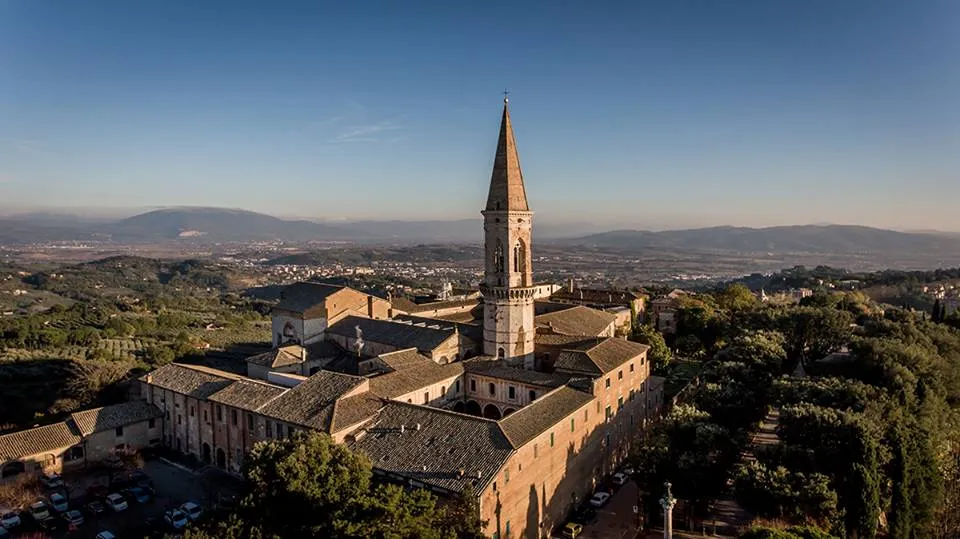
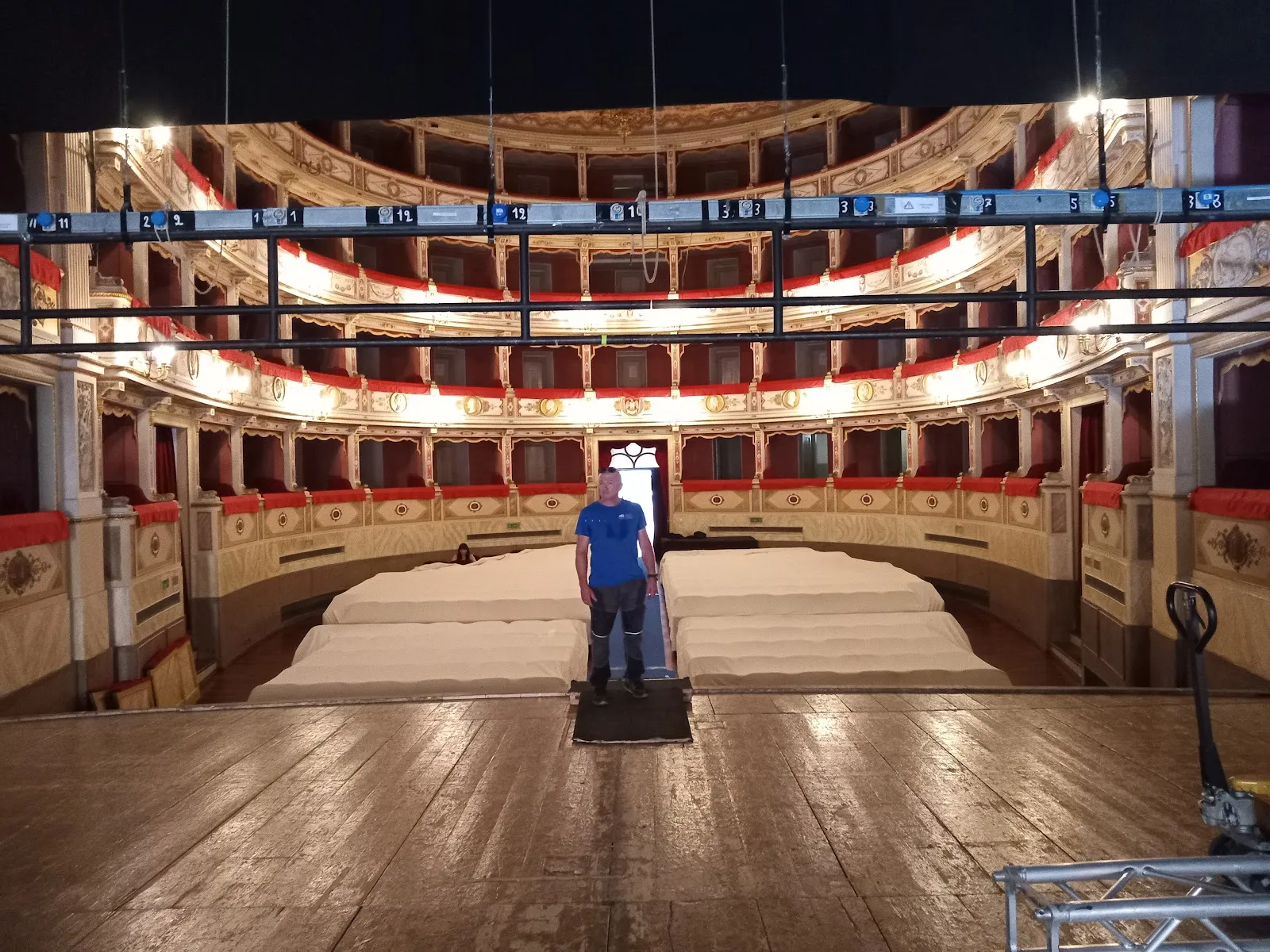
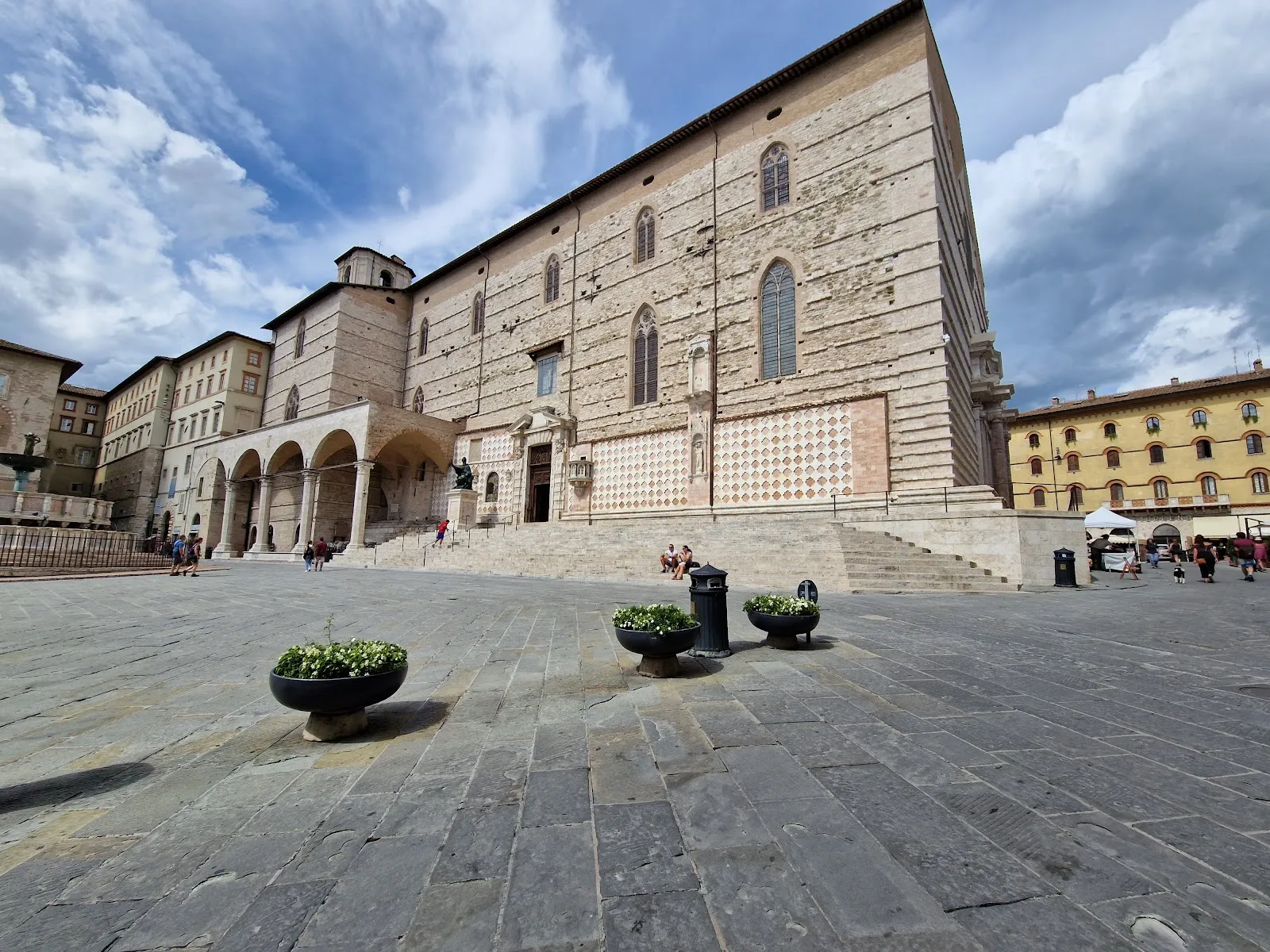
Rocca Paolina is a 16th-century papal fortress in Perugia's historic centre. It was built over the quarter it replaced, so the old streets and houses now lie beneath the modern city. Walk the vaulted passages, arches and ramps to see layers of medieval Perugia, then ride the escalators up to the piazza. The site also holds exhibitions and the monumental sculpture Il Grande Nero by Alberto Burri.
How the fortress was built
Pope Paul III ordered the fortress in 1540, and it was finished between 1540 and 1543 to a design by Antonio da Sangallo the Younger. The project followed a dispute over new salt taxes that Perugia refused to pay, an episode known as the Salt War.
To make room, the papal forces cleared the Baglioni quarter on the Landone hill, south of the historic centre. Many houses, churches, monasteries and towers were removed. The new fortress was meant to show papal control over the city. It was seldom used for military purposes.
Papal power and the end of the fortress
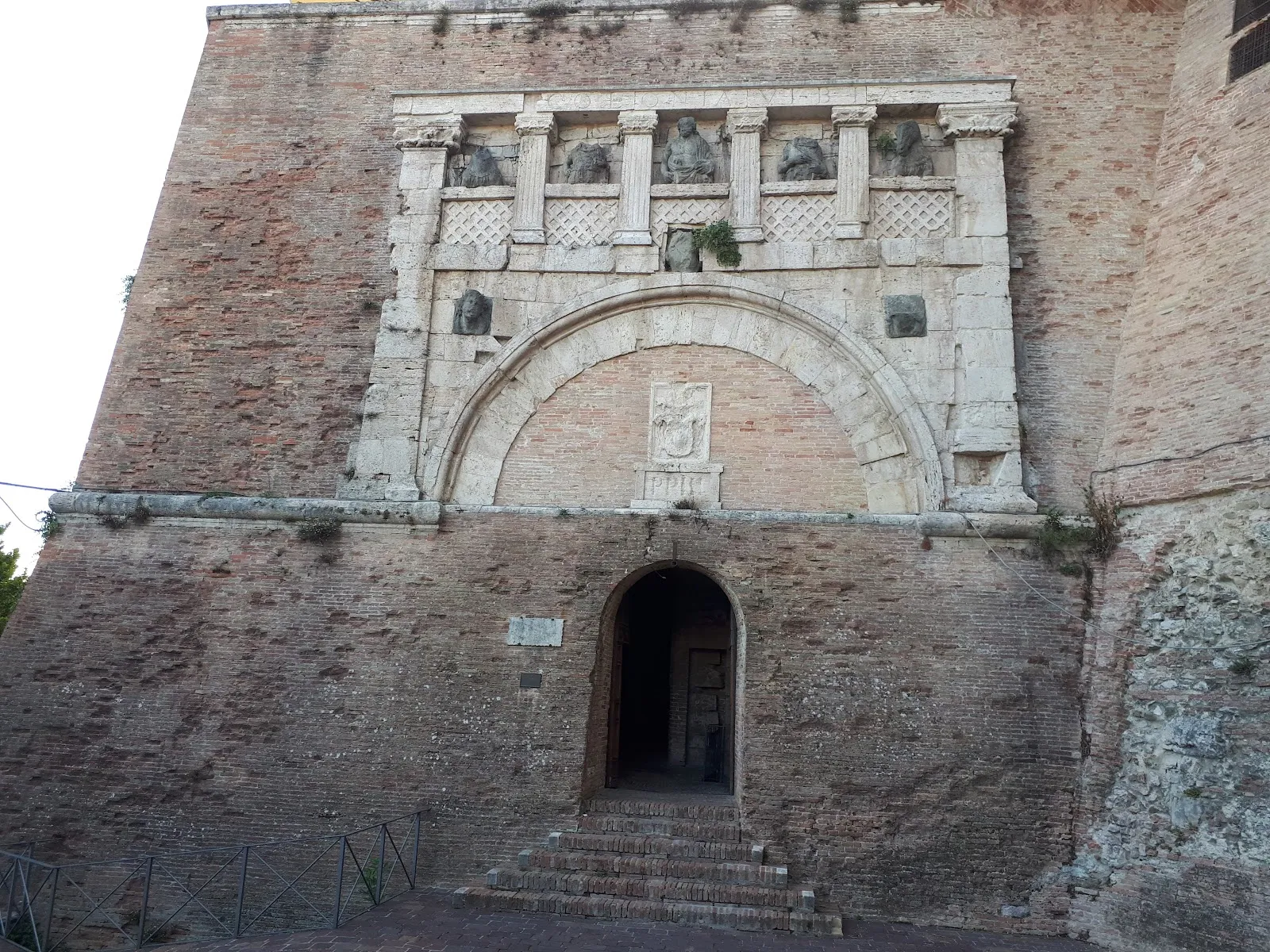
Rocca Paolina was the symbol of papal power over Perugia until 1860, when the city was united with the Kingdom of Italy. The fortress was then largely taken down, and Piazza Italia was laid out above what remained.
The underground part was opened to the public in 1965 as an underground city. Above ground, a section of the walls and the bastion that holds Porta Marzia, an ancient Etruscan gate, are still visible.
Inside the underground city
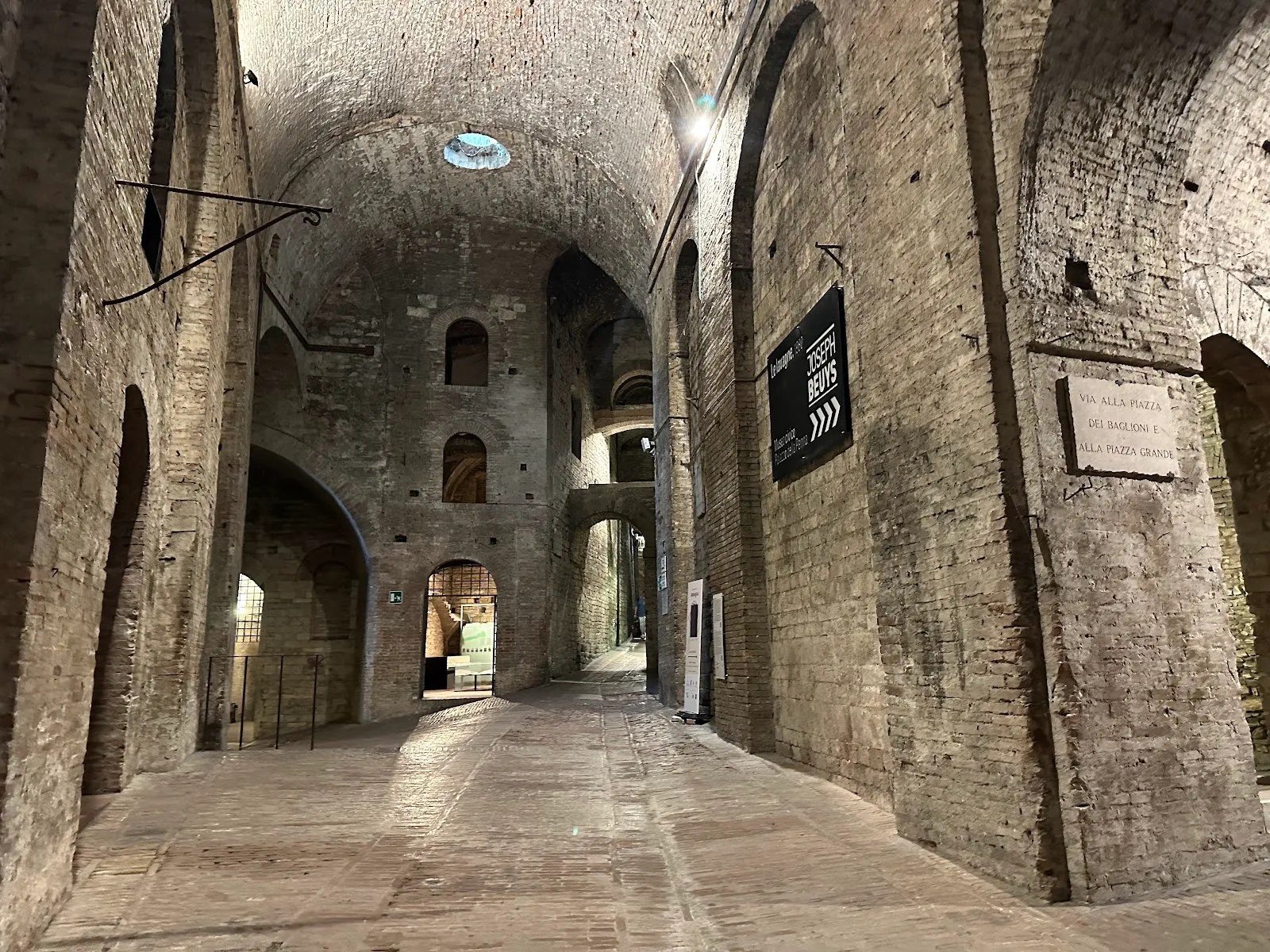
Visitors move through passages, arches and ramps under high vaulted ceilings. Some rooms are fortified with stone, and others are carved out of the rock itself. There are openings to the sky in places.
A documentary display in the rooms beside Porta Marzia explains the history of the fortress. A mural of medieval life in Perugia is shown in the inner caverns. The site also has a souvenir shop and the Perugia Art Gallery.
Alberto Burri's Il Grande Nero
Il Grande Nero is a monumental sculpture by Alberto Burri, one of the contemporary works shown in the fortress. It is the artwork most often named when people describe what to see inside.
The site is also used for cultural initiatives and events. A Christmas market called Natale alla Rocca is held inside, with handmade crafts from Umbrian artists, silk scarves, ornaments and a small selection of food.
Getting in and around
Escalators run from the Piazza Partigiani car park, at the base of the hill, up to Piazza Italia. They were installed in the 1980s. Other entrances are at Piazza Italia, Porta Marzia and along the streets.
When you leave, the Giardini Carducci viewpoint is a short walk away. From there you can see the countryside and villages around the city.
Perguntas frequentes
Is there an entry fee?
The public areas are free to enter. Some sections may need a ticket, and getting tickets in advance is recommended. Guided tours are also available.
How do I get into Rocca Paolina?
Take the escalators from Piazza Italia or Piazza Partigiani, or enter at Porta Marzia. The Piazza Partigiani car park is at the bottom of the escalators.
What is the best time to visit?
Weekdays or early in the day are the quieter times to visit.
Is Rocca Paolina good for children?
Yes, the site is listed as good for kids. Its passages and arches make it a different kind of stop from the usual sights.
What is the main artwork inside?
The main artwork is Alberto Burri's monumental sculpture Il Grande Nero.