
The Macellum was Pompeii’s main food market, on the northeast side of the Forum. Fish, meat, fruit and vegetables were sold in shops around its central courtyard, making this a practical stop for understanding the city’s everyday trade. Look for the twelve columns or bases in the central area, the large fresco on the west wall and the surviving marble details. The rooms at the back also reveal how the building served more than one purpose, from selling fish to holding banquets.
A market beside the Forum
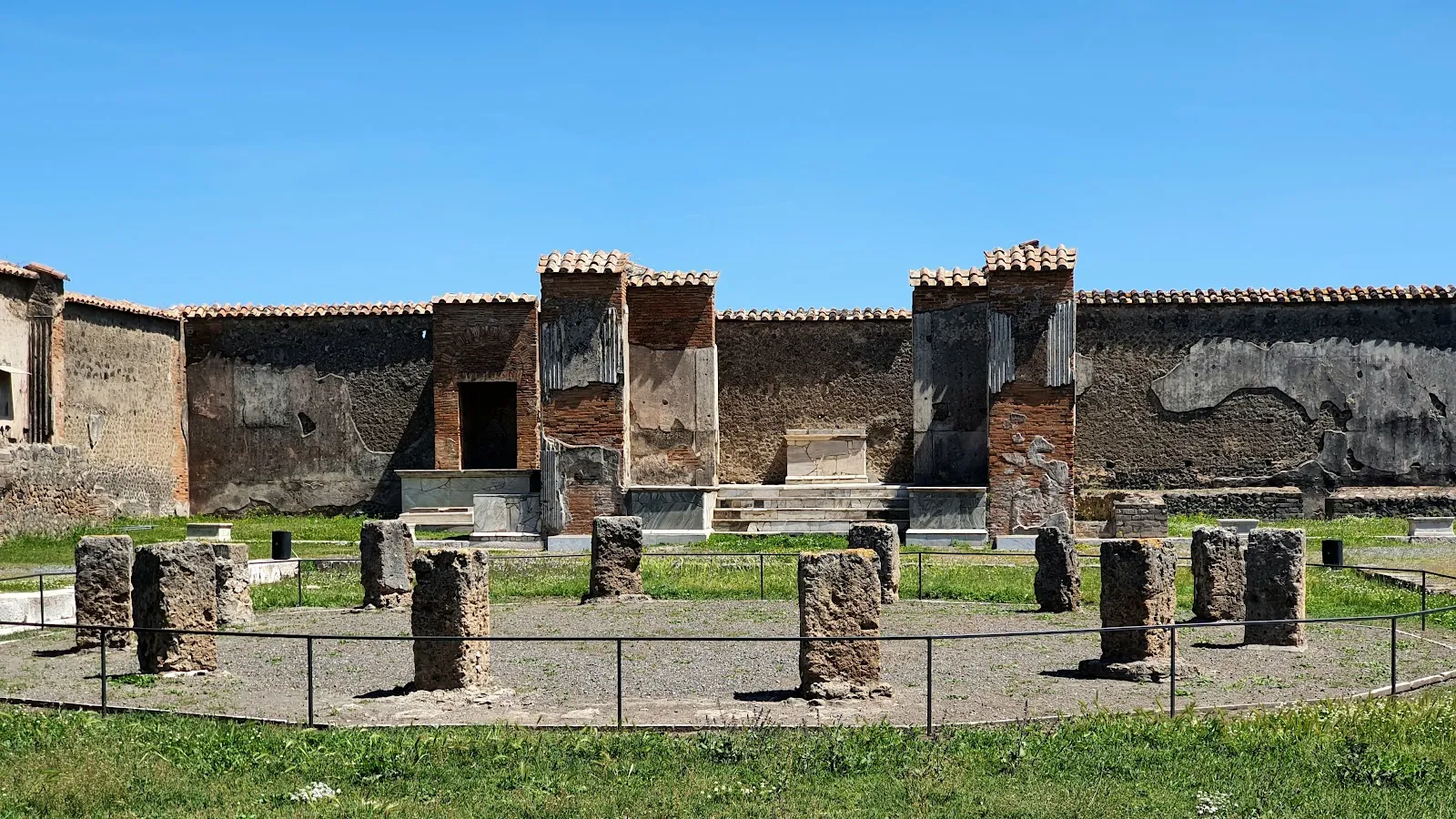
The Macellum stood on the northeast side of Pompeii’s Forum, close to the city’s civic centre. It was the main provision market, with food shops lining its entrances and selling fish, meat, fruit and vegetables. Its location put everyday shopping within reach of the Forum’s public buildings and busy streets.
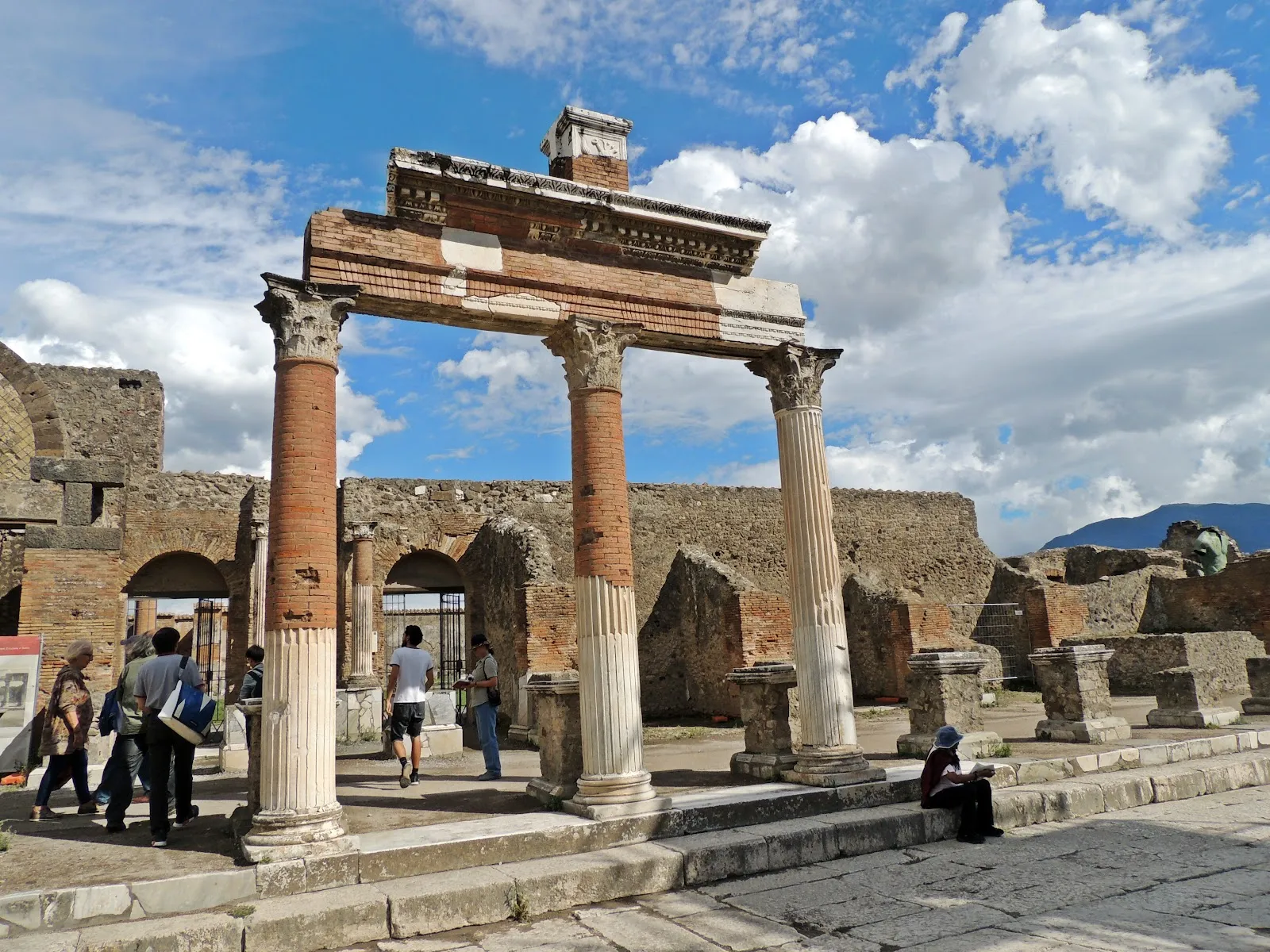
The market took shape over several building phases. It dates to the second century BC, and its entrances faced both the Forum and Via degli Augustali. Shops opened along these approaches. The building was damaged in the earthquake of AD 62, when large parts of Pompeii were also affected. The city was still in the process of rebuilding when the eruption of AD 79 ended life there.
The courtyard and its rooms
The market’s central space was originally bordered by a portico. Twelve columns or column bases mark its central arrangement today. Shops surrounded the open area, where customers could move between stalls and the market’s different sections.
At the rear, the rooms had distinct uses. The central chamber was a small shrine connected with the imperial household. It had four niches in its side walls and a raised feature on the far wall; two statues found there have not been identified. The room to the left was used for sacrificial banquets. On the right, a long stone counter and drainage system identify the space as the fish market.
These traces help make sense of the building as more than a row of food stalls. Trade, ritual and communal meals all had a place within the market complex.
What to look for on site
From the central area, look towards the west wall for a large fresco. The remaining decoration and marble details give a sense of the care put into a building used for daily commerce. Take time to notice how the entrances, shops, courtyard and rear rooms fit together; their arrangement shows how customers and sellers used the space.
The Macellum is one of several important buildings around the Forum. A short walk through its remains can add a useful everyday counterpoint to the temples and civic structures nearby. If you want more detail about the rooms and their functions, a guide can help explain the layout as you move through the site.
Perguntas frequentes
What was the Macellum in Pompeii?
It was Pompeii’s main food market, where sellers traded fish, meat, fruit and vegetables. It stood beside the Forum.
What should I look for at the Macellum?
Look for the central arrangement of twelve columns or bases, the large fresco on the west wall and the rear rooms, including the former fish market.
When is a good time to visit the Macellum?
Early morning or late afternoon is suggested for avoiding crowds.


