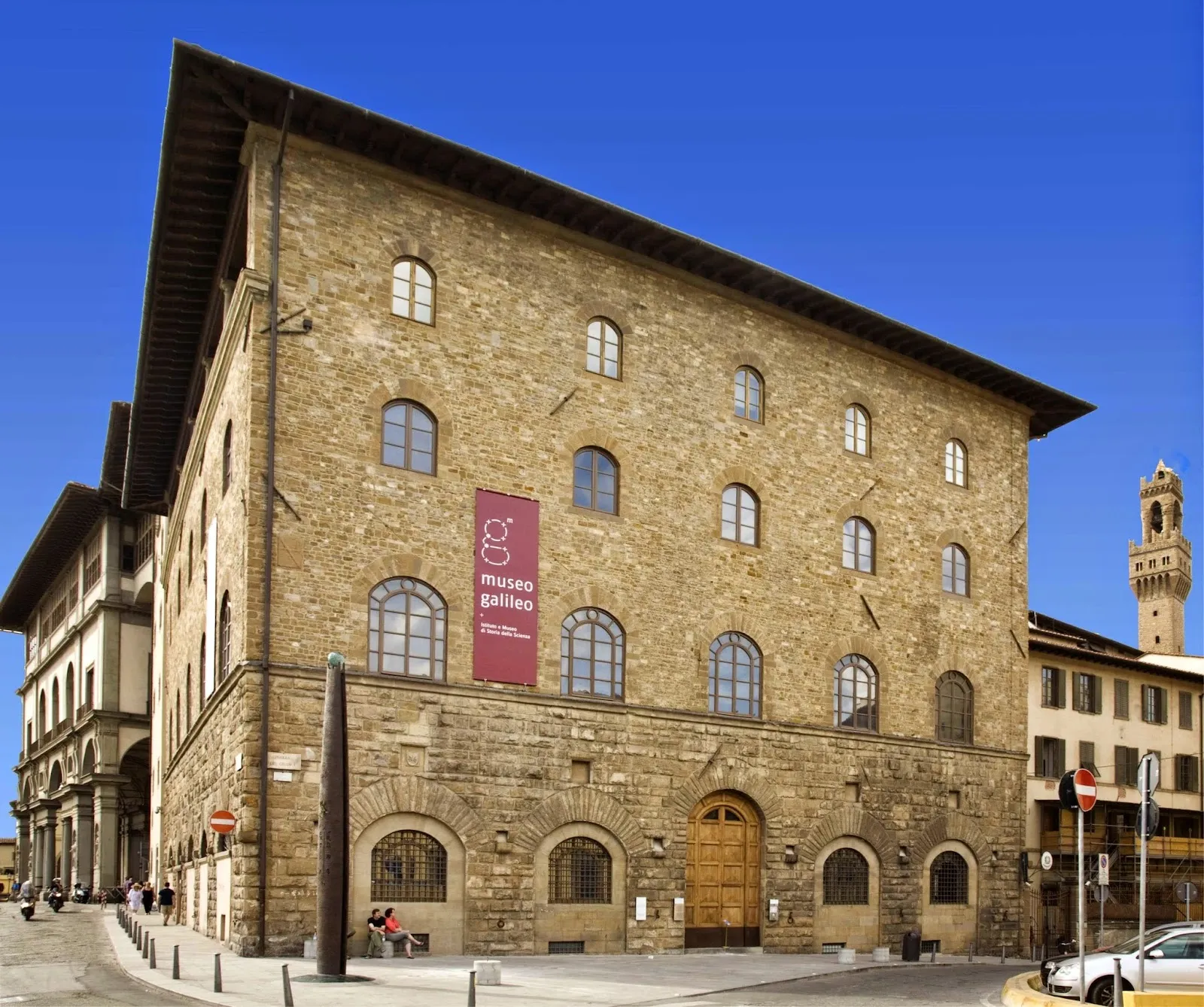
Museo Galileo is a science museum in Palazzo Castellani, beside the Arno and close to the Uffizi in Florence. Its collections trace astronomy, mathematics, physics and other fields through historic instruments gathered by the Medici and Lorraine families. Look for Galileo’s telescopes, celestial and terrestrial globes, clocks, barometers and surgical tools. Interactive displays and a virtual reality experience add context to the objects. It is a useful change of pace from Florence’s art museums, especially for visitors interested in how people studied the natural world.
A science collection beside the Arno
Museo Galileo is housed in Palazzo Castellani on Piazza dei Giudici, beside the Arno and a short distance from the Uffizi. Its collection gives Florence’s scientific history a place alongside the city’s art museums. The objects span subjects such as astronomy, mathematics, physics, navigation and medicine, showing the practical tools people used to observe, measure and map the world.
Many instruments came from collections assembled by the Medici and the Lorraine family. Together, they cover different periods in the history of science, from early mathematical and astronomical equipment to later developments in physics and electricity. The museum is not limited to Galileo’s biography: his work sits within a broader collection of instruments and ideas.
Galileo’s telescopes and scientific instruments
Among the objects to look for are Galileo’s telescopes, including an early instrument associated with his observations of the sky. His work helped establish new ways of studying the heavens, and the telescopes provide a tangible link to that period of scientific inquiry.
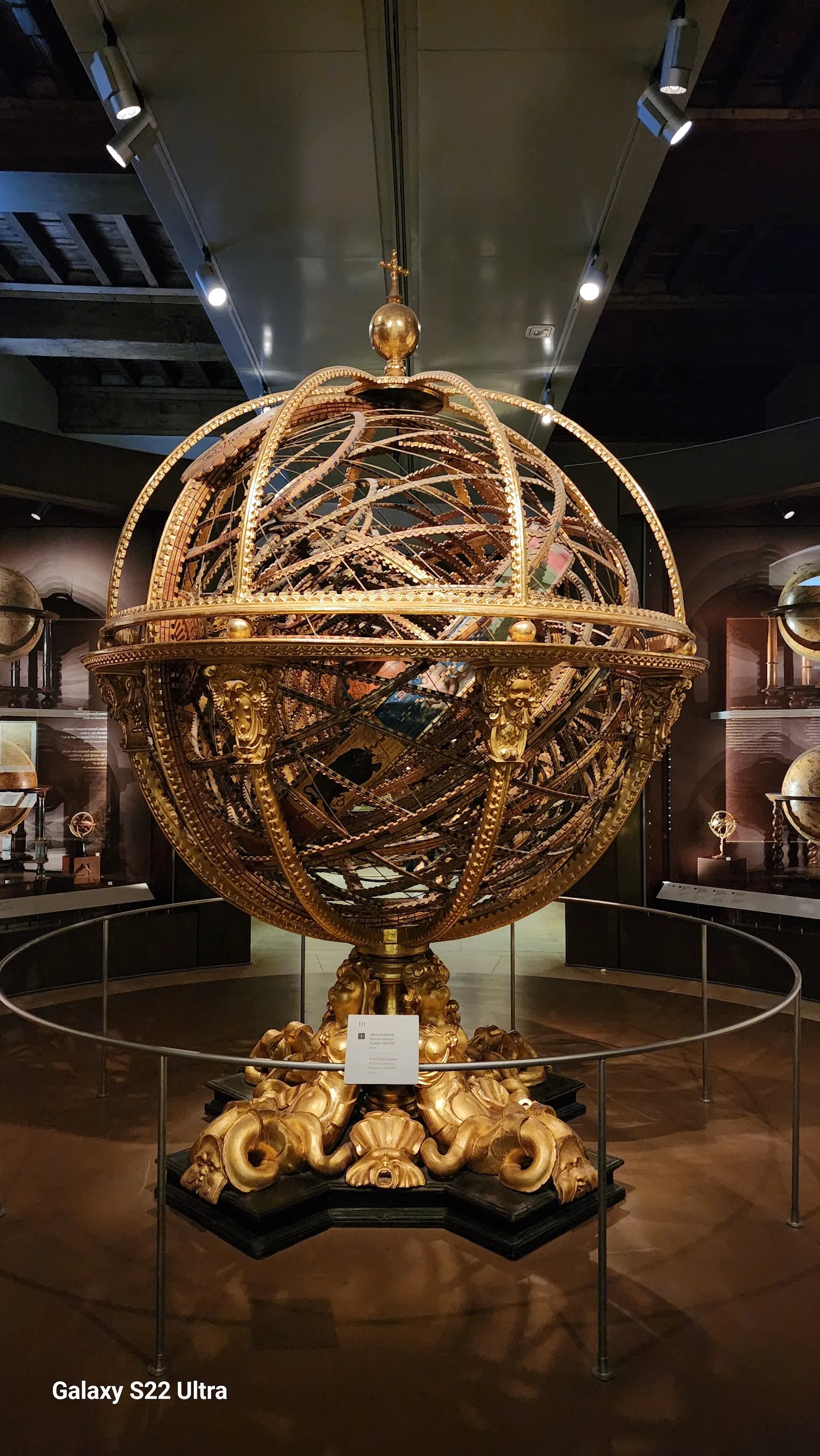
The surrounding displays include celestial and terrestrial globes, clocks, barometers, microscopes, surgical tools and electrical machines. Some are finely made objects in their own right; others show how people approached specific tasks, from measuring time to navigation. Galileo-related items also include preserved fingers, an unusual part of the collection that may interest visitors who want to see the personal traces left by scientific history.
Planning time for the visit
The museum’s displays are arranged across several floors, with rooms devoted to different parts of the collection. Interactive exhibits provide a change from viewing instruments in cases, though the number of interactive stations is limited. Videos and a virtual reality experience tell Galileo’s story; leave time for these after exploring the objects if you want to use them.
Families can find scientific tools and models that give younger visitors something to look at, while older children with an interest in science or astronomy may connect more readily with the instruments and their purposes. Free lockers let you leave bags behind, since bags are not permitted inside. A visit of at least an hour gives you time to explore the collections, and a longer stop leaves room for the audiovisual material.
Perguntas frequentes
Where is Museo Galileo in Florence?
It is at Piazza dei Giudici, beside the Arno and close to the Uffizi, in Palazzo Castellani.
How long do you need at Museo Galileo?
Plan for at least an hour to explore the collections. Add time if you want to use the virtual reality experience and watch the Galileo videos.
Can you buy tickets at the museum?
Yes. Tickets can be bought on site when there is no queue; advance booking is also recommended.
Are bags allowed inside Museo Galileo?
Bags are not allowed inside. Free lockers are available for visitors.
What should you see at Museo Galileo?
Look for Galileo’s telescopes, globes, clocks, barometers and instruments from the Medici and Lorraine collections. The museum also has interactive displays and a virtual reality experience.