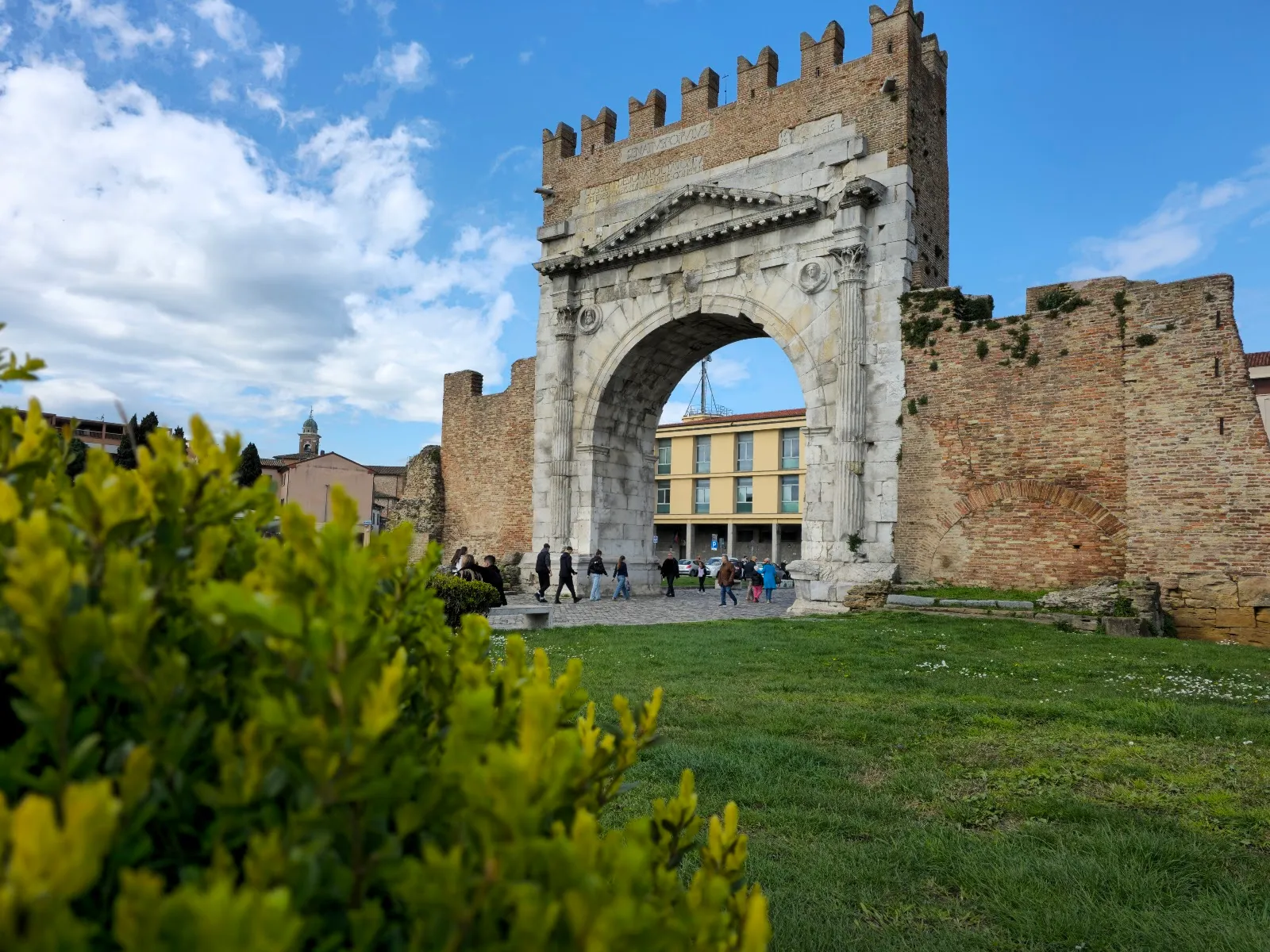
The Arco di Augusto is the oldest surviving Roman triumphal arch in Italy. It stands at the southern entrance to Rimini's historic centre, on Corso d'Augusto. Built in 27 BC to honor Emperor Augustus, it marks where the Via Flaminia from Rome meets the Via Emilia. The arch is wide and has never had doors, and its carved figures of Apollo, Jupiter, Neptune and Minerva remain visible. Stop to look up at the reliefs, then walk on into the old town.
Built in 27 BC
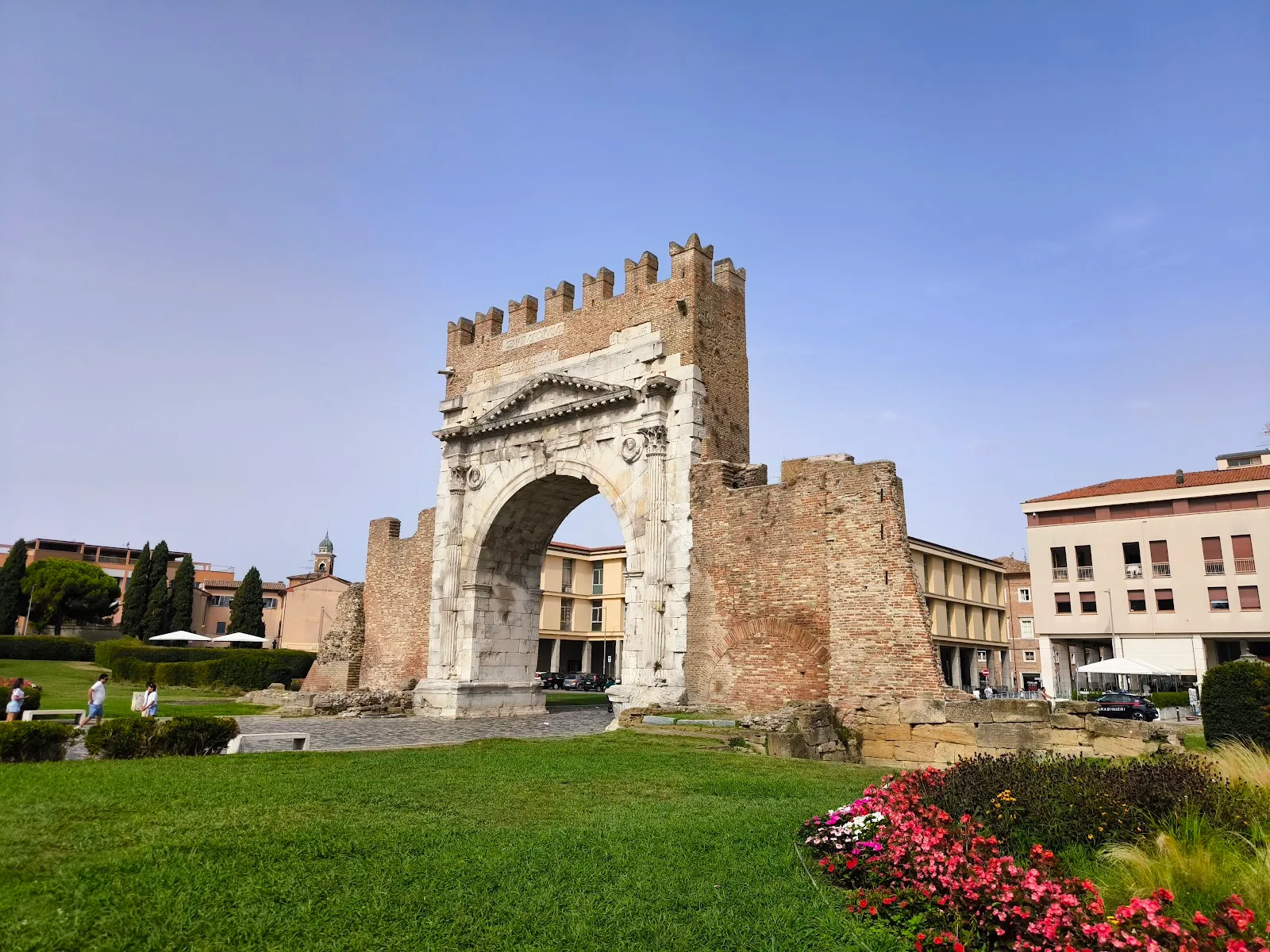
The arch was dedicated to Emperor Augustus in 27 BC. It stood at the end of the Via Flaminia, the consular road that linked Rome with ancient Ariminum, the Roman name for Rimini. Here the road met the Via Emilia, which runs on across northern Italy.
The arch served as a gateway in the city's fortress walls. Battlements were added in the 10th century, and the arch was renovated in the same period. It came through World War II and remains in good condition for its age.
What the arch looks like
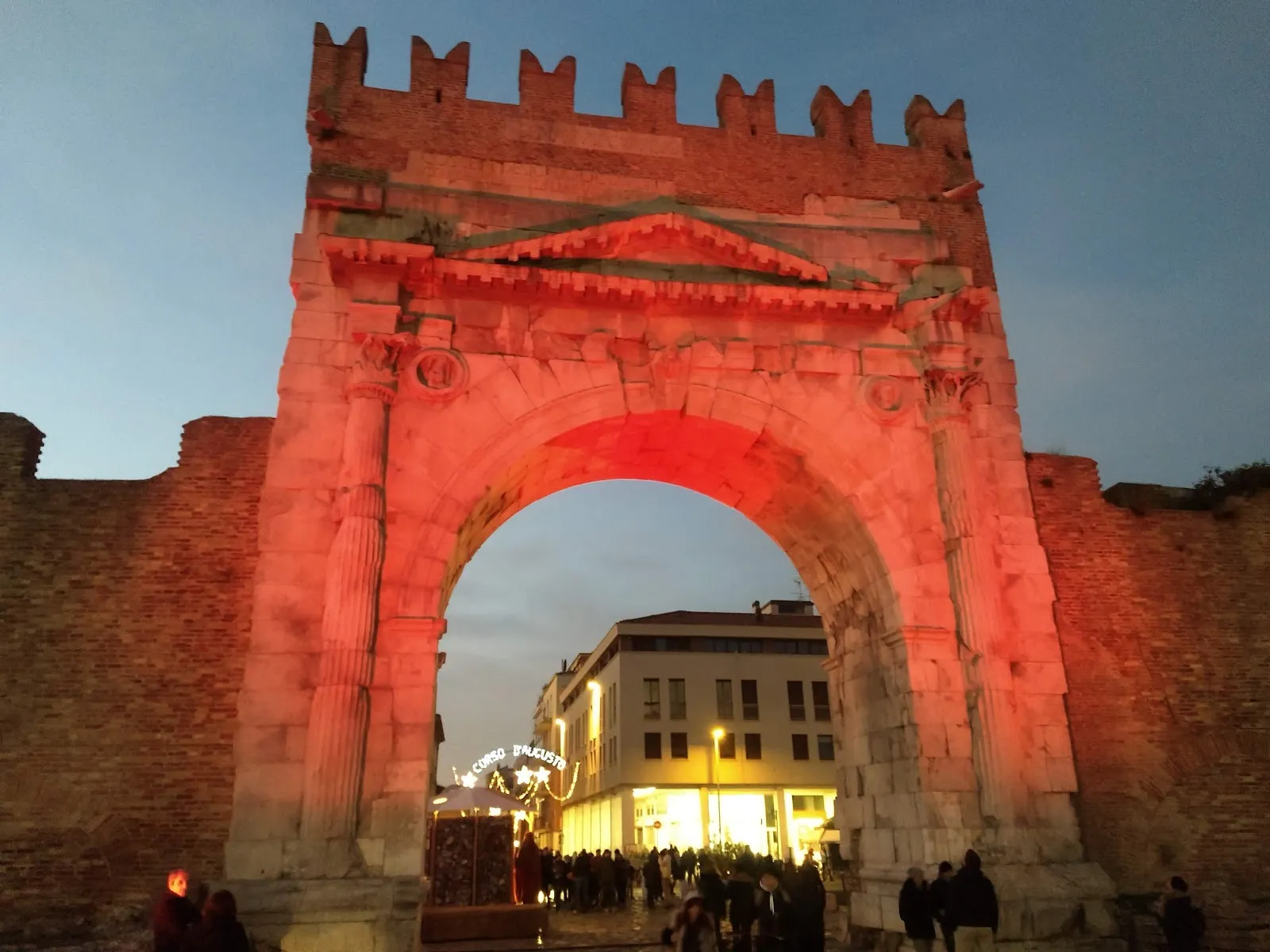
The arch is built of Istrian stone and is exceptionally wide. Its original decoration partly survives, including four carved figures of Roman deities. Apollo and Jupiter are on the outer face, while Neptune and Minerva are on the side facing the city.
Part of the original city wall is still attached to the arch. The monument marks the southern entrance to the old town, and at the far end of the same historic centre stands the Ponte di Tiberio, another Roman monument.
Why the arch has no doors
The arch was built without doors. Roman writers and modern historians often read this as a deliberate message from Augustus: the empire was so secure and peaceful that its gates did not need to be closed. The arch therefore carries a political meaning as well as an architectural one, linked to the idea of Pax Romana, the Roman Peace.
When you stand under it, you can see why the design was chosen. Its width and open span make the message easy to read.
Walking on from the arch
Corso d'Augusto leads from the arch toward the centre, and the nearby alleys are good for an unhurried walk. Piazza Tre Martiri is a lively square with cafés and shops, and the Tempio Malatestiano, a Renaissance cathedral, is a short walk away.
A garden lies across the street from the arch. A local market is held there twice a week, where clothing is sold at low prices. Nearby, the Piazza Cavour and the Museo della Città are good options for a short stop.
Perguntas frequentes
Is the Arco di Augusto wheelchair accessible?
Yes. The entrance is wheelchair accessible, and so is the parking lot.
Can you visit the arch at night?
The arch is open at all hours. Visitors walk around it at night to photograph it.
Is the arch suitable for children?
Yes, it is listed as good for kids. The green area around the arch is a pleasant place for a break.
What can you see on the arch?
Four carved figures of Roman deities remain: Apollo and Jupiter on the outer face, and Neptune and Minerva on the side facing the city.


