
Taman Sari, also called the Water Castle, is the former royal garden and bathing retreat of the Sultan of Yogyakarta, set in the Patehan area beside the Kraton. Sultan Hamengkubuwono I began it in 1758, and its pools, pavilions, corridors and tunnels mix Javanese and European styles. Part of the complex is ruined, but enough has been restored to show how the sultan's household once used it. You can walk between the bathing pools, follow the stone passageways and visit the circular underground mosque, Sumur Gumuling. The village streets around the site are part of the visit.
A royal garden begun in 1758
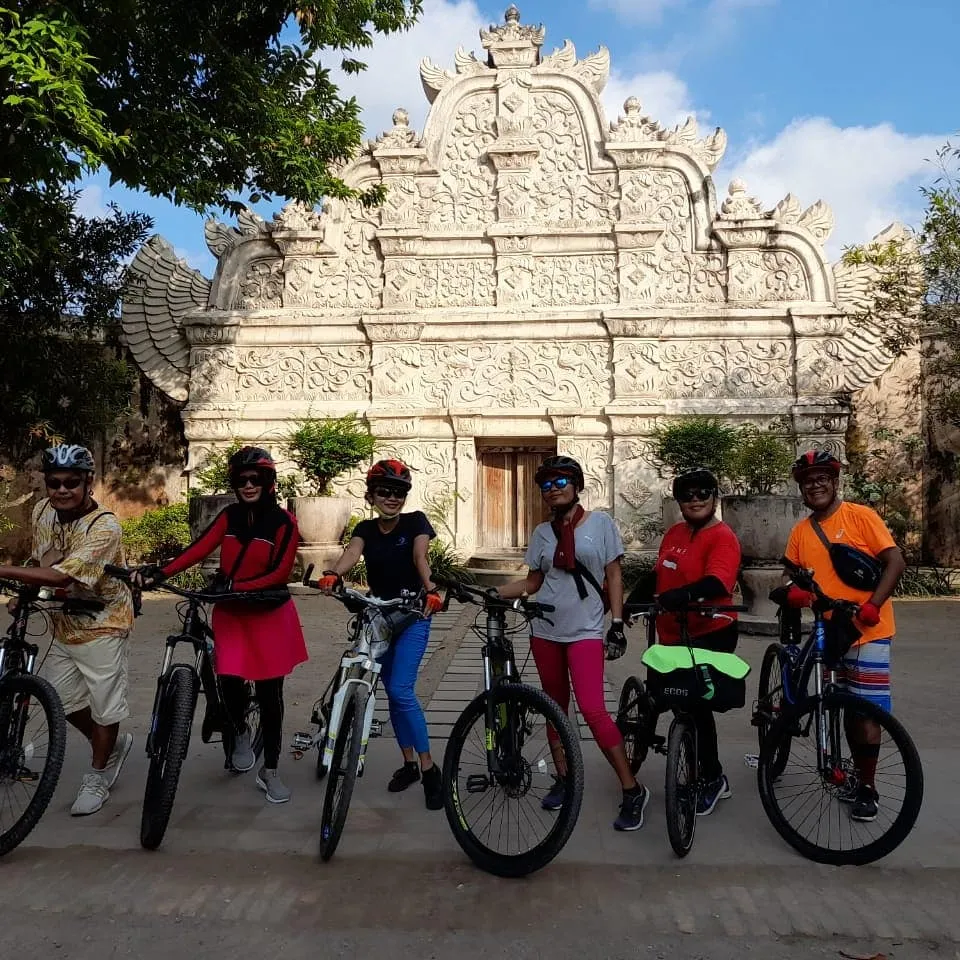
Taman Sari was built as a garden and retreat for the Sultan of Yogyakarta and his family. Sultan Hamengkubuwono I started the work in 1758, and the main complex was largely in place by about 1765. Building stopped abruptly after his death.
The complex was laid out as a large artificial lake with an island, a bathing complex, and a group of pavilions and small pools. Dutch representatives at the sultan's court wrote with admiration of the lake, the Water Castle mansion, the underground passageways, the meditation retreats and the sunken pools. The design blends Javanese and European influences, with Portuguese style often named. Taman Sari is also known as the Water Castle, or Waterkasteel in Dutch, and it forms part of the wider Kraton complex.
What is left to see
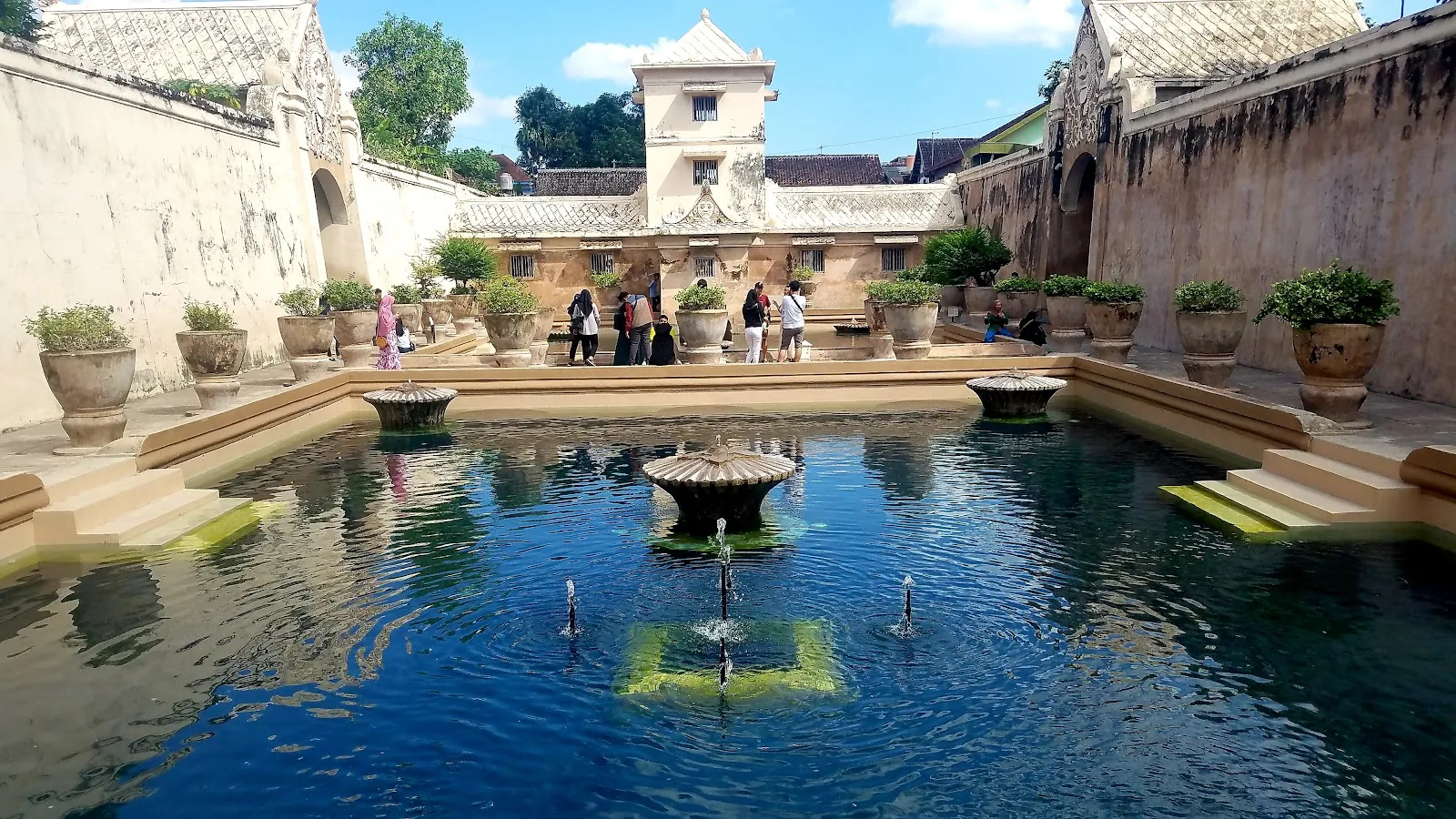
Taman Sari is partly in ruins. It was damaged during the Java War of Diponegoro and again by an earthquake in 1865. Enough has been restored to show how it worked.
You can see where the different bathing pools sat, and the original entrance to the Water Castle. Elsewhere in the complex are rooms, a suspension bridge, a water canal and an underground water tunnel. One pool was set aside for the royal children, princesses and women of the court.
The passageways have prompted several stories. Some say the tunnels once ran as far as the Indian Ocean. Others say the underground routes served as shelter during wars against colonial forces. Whatever their exact use, the narrow corridors and stone walls make good photo spots.
Sumur Gumuling, the underground mosque
Sumur Gumuling was built around the mid-eighteenth century as part of the Taman Sari complex, though it is separate from the bathing area. It is a circular structure with several flights of stairs that meet in the centre, and many openings look down onto them. Narrow alleys and winding steps lead to it.
The shape had a practical purpose. From the mihrab, the imam's voice carried clearly through the whole space. Many visitors find it the most affecting part of the site. Take your time here and keep it quiet.
Reaching the site and getting the most from it
From the Kraton, the entrance is about a 15-minute walk, or a short becak ride. Guides wait in front of the gate and offer their services. The fee is negotiated, so settle it first.
A guide is useful because the site has no English signs. The village that surrounds Taman Sari is lived in, and its lanes lead between the main sights. Talking with people there is part of the experience. The site is suitable for children, though the stairs and uneven stone call for care.
Perguntas frequentes
What is Taman Sari?
Taman Sari, or the Water Castle, is the former royal garden and bathing complex of the Sultan of Yogyakarta. Work began in 1758 under Sultan Hamengkubuwono I. Part of it is now in ruins.
How much is the entrance fee?
The fee is low, around 15,000 IDR. Buying tickets in advance is recommended.
How far is Taman Sari from the Kraton?
It is about a 15-minute walk from the Kraton, or a short becak ride.
Do I need a guide?
There are no English descriptions on site, so a guide helps with the history. Guides wait at the entrance and the price is negotiated. You can also read up before you go.
What is Sumur Gumuling?
It is the underground mosque within the Taman Sari complex. It is a circular building with staircases that meet at the centre, designed so the imam's voice reached the whole space.


