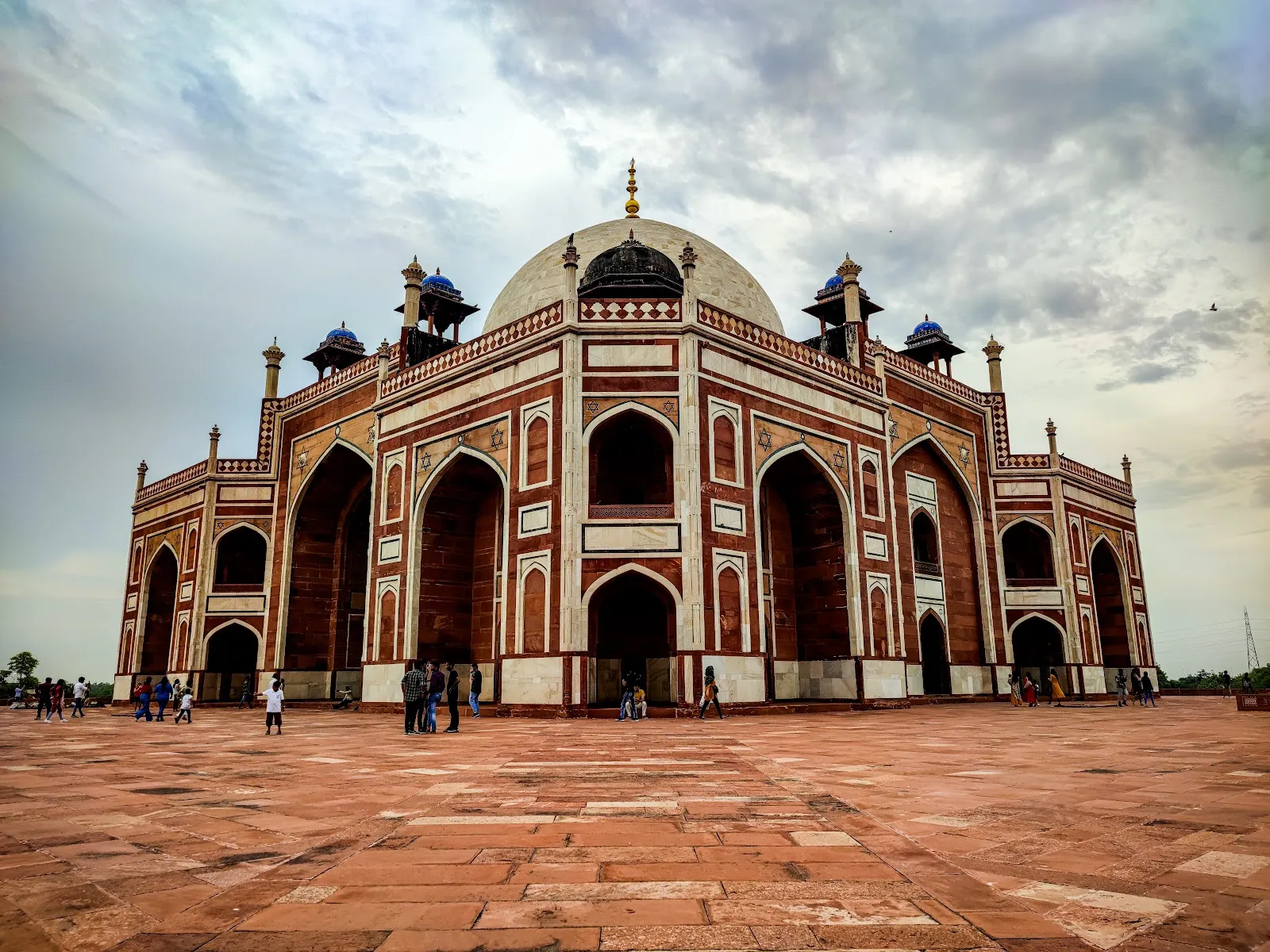
Humayun’s Tomb is a 16th-century Mughal mausoleum in Nizamuddin East, Delhi, commissioned by Empress Bega Begum for her husband, Emperor Humayun. Red sandstone, white marble details and a symmetrical garden layout make the complex a rewarding stop for architecture and photography. The design helped set the pattern for later Mughal tombs, including the Taj Mahal. Walk through the four-part garden, look closely at the arches and marble inlay, and visit the small museum near the entrance for background on the site.
A tomb commissioned by Bega Begum
After Emperor Humayun died in 1556, his widow and chief consort, Empress Bega Begum, commissioned a mausoleum in his memory. Persian architect Mirak Mirza Ghiyas designed the complex, with his son Sayyid Muhammad also named in accounts of the project. Work began in the 1560s and the tomb was completed around 1570.
The mausoleum was the first garden tomb of its kind on the Indian subcontinent. Its design brought Persian influences together with Mughal architecture, establishing a form that later Mughal buildings developed further. The Taj Mahal, built decades afterward, is often linked to this architectural precedent.
The mausoleum and its garden
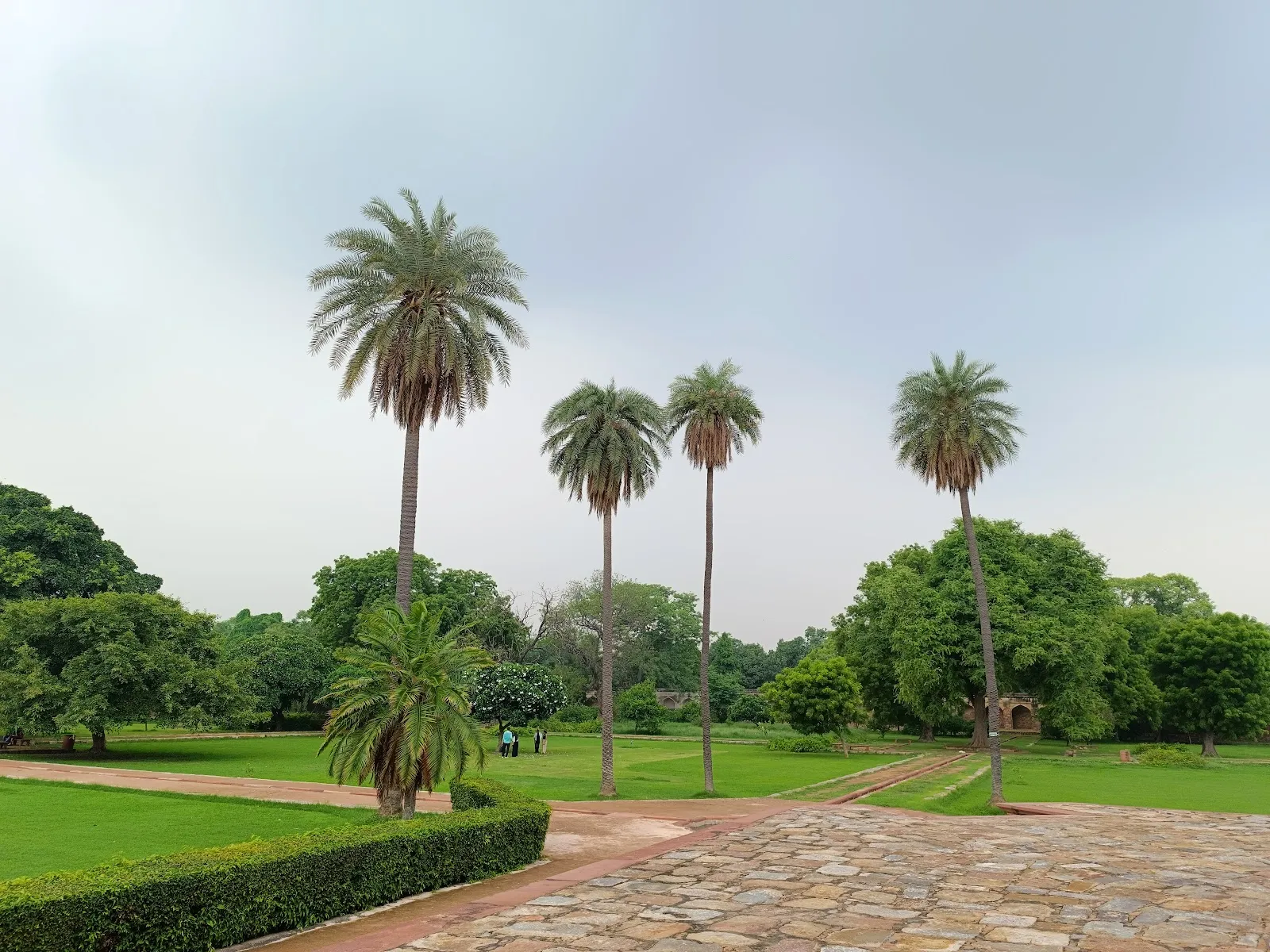
The main tomb stands within a large, formal garden divided into four sections by paths and water channels. Red sandstone forms much of the exterior, with white marble used for details including the dome and inlaid decoration. Arches, symmetry and the building’s elevated position give the structure its distinctive profile.
The complex contains more than Humayun’s tomb. Other Mughal family members are buried here, and additional tombs stand within the grounds. Take time to follow the garden paths and look at the details around the arches and marble surfaces, rather than heading straight to the main building and leaving.
The museum and quieter paths
A small museum near the entrance presents information about the tomb and its history. It offers useful context before you explore the grounds, particularly if you want to understand the monument as more than a photographic backdrop.
The central structure draws attention, but paths towards the sides and back of the complex can feel more secluded. Mid-morning is a suggested time for a calmer visit. For photographs, the site is also noted for the light around sunrise and sunset.
Perguntas frequentes
Where is Humayun’s Tomb?
It is on Mathura Road in Nizamuddin East, Delhi, near Hazrat Nizamuddin Aulia Dargah.
Who commissioned Humayun’s Tomb?
Empress Bega Begum, Humayun’s first wife and chief consort, commissioned the tomb after his death.
How long should you spend at Humayun’s Tomb?
Allow about 1 to 2 hours to see the mausoleum, garden and museum.
Is there a museum at Humayun’s Tomb?
Yes. A small museum near the entrance has information about the tomb and its history.