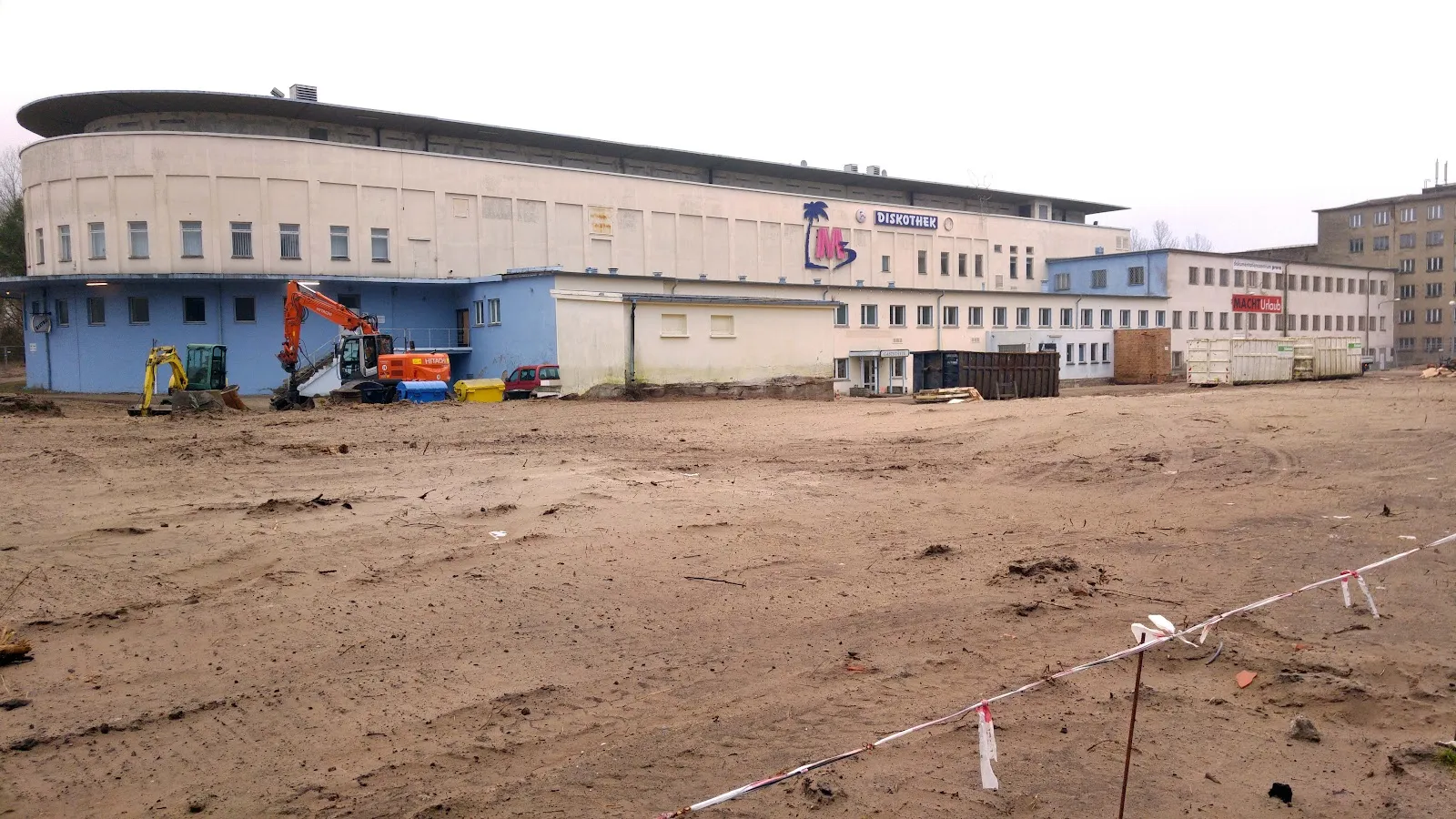
The Dokumentationszentrum Prora is a museum in Binz-Prora on Rügen, housed in part of the long Prora complex on the Baltic coast. It documents how the building was planned and used under the Nazi regime, and what the seaside resort was meant to offer ordinary Germans. Exhibits combine photographs, texts and a few videos, and a film near the end gives the story a clear shape. The building is worth the stop for its scale and for the way it sets the past beside the modern apartment buildings that now stand nearby.
The Prora complex
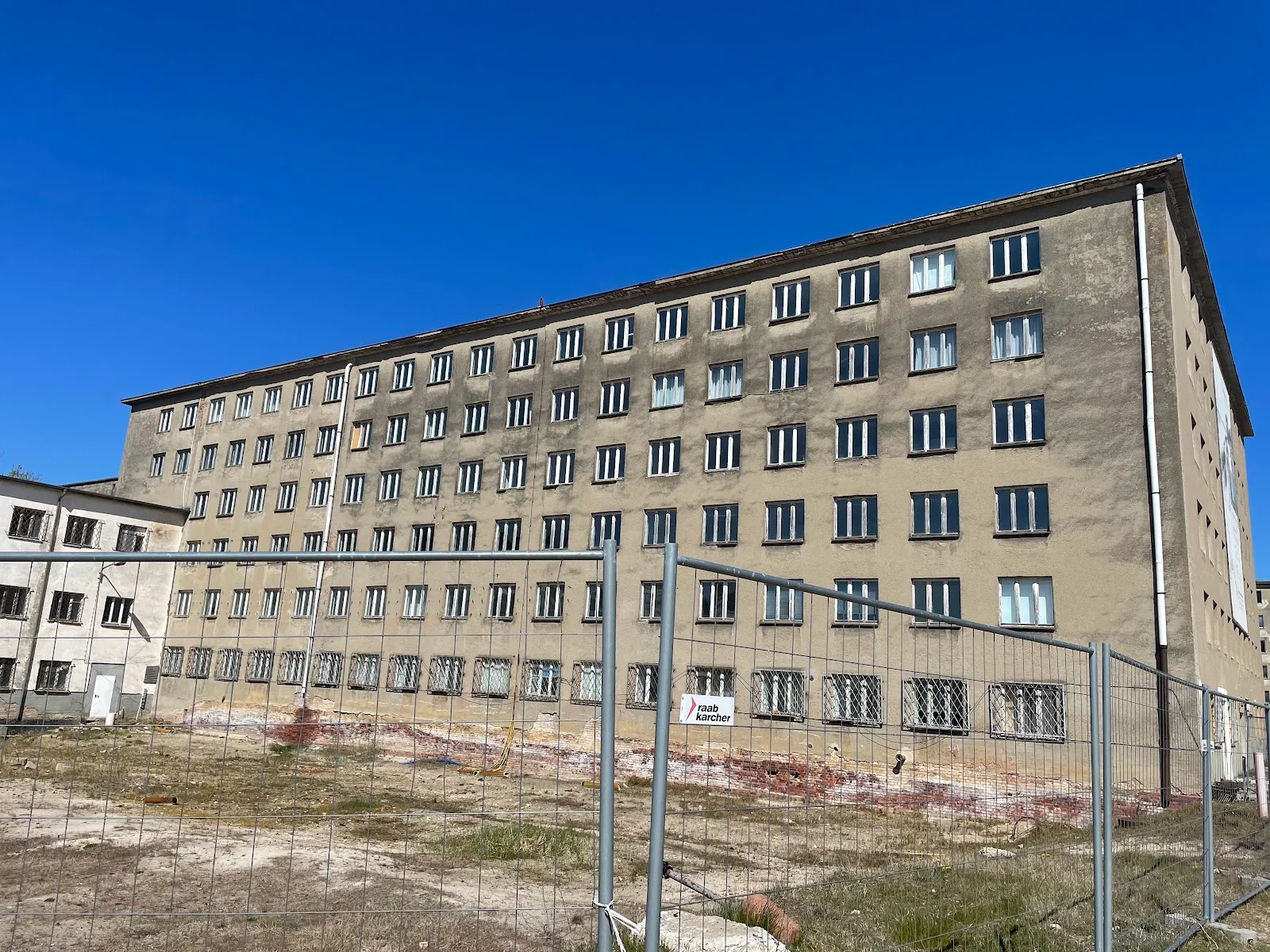
Prora lies on the east coast of Rügen, near Binz. The complex was built as a seaside resort for the Strength Through Joy organisation, the leisure programme of the Nazi regime. Its size is so great that it is known locally as the Colossus of Rügen.
The site is the second-largest closed architectural legacy of the Nazi period in Germany. It is also an example of how modernist architecture was used under National Socialism. The museum treats the building as evidence of that period, not as a relic to admire on its own.
What the exhibition covers
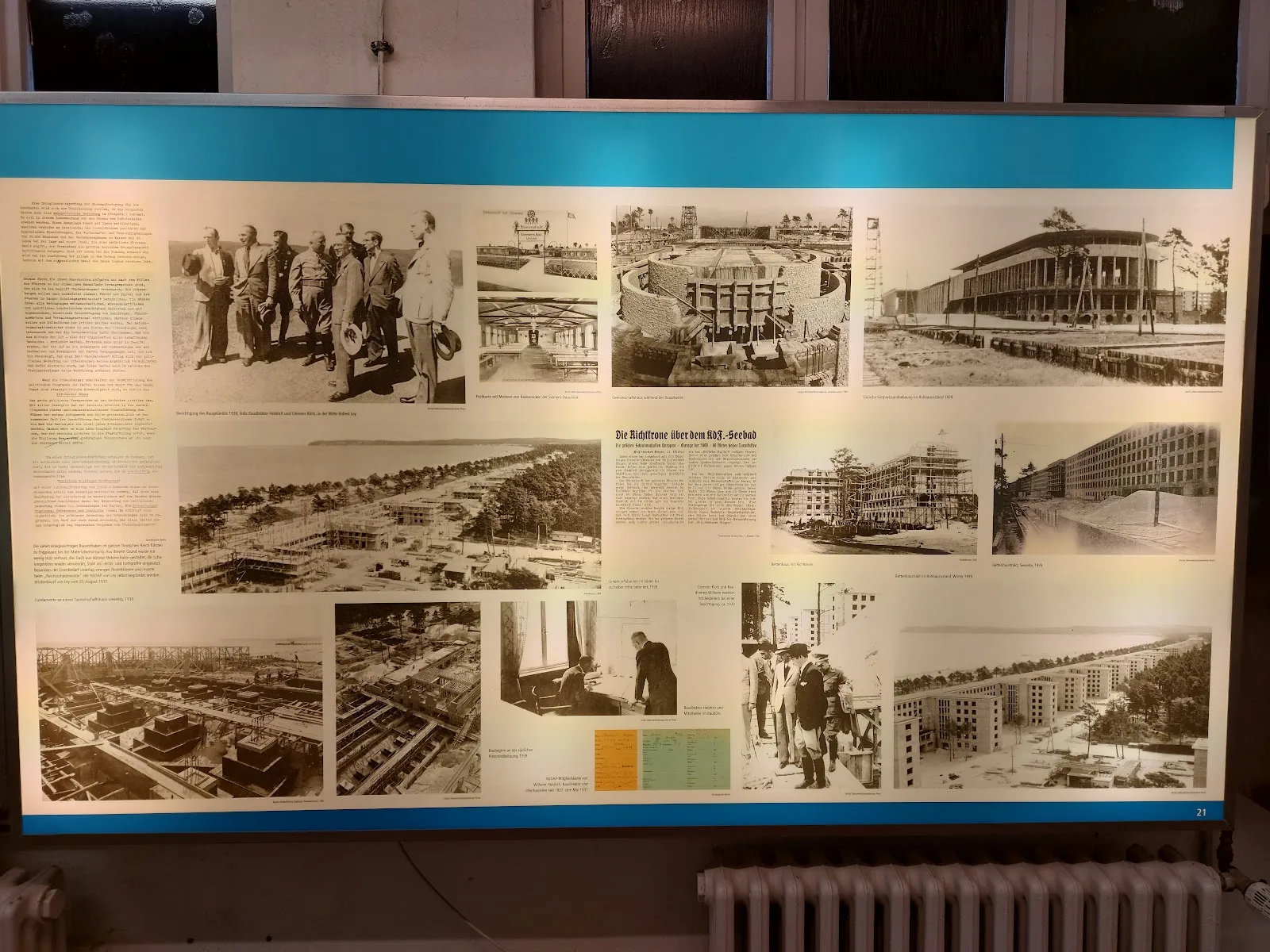
The exhibition uses photographs, panels of text and some video. It explains how the building was constructed and what happened to it in the years that followed. It also places the project in the political and economic situation of Germany at the time.
The displays cover the leisure scheme that the resort was meant to serve, and Prora's role during the Second World War. The museum occupies only part of the building, so the exhibition is compact. Expect to read a good deal of German text.
The film and reading areas
The film area is the easiest way into the subject. The film shown at the end has English subtitles. Some exhibition texts can be read in English through QR codes, which offer English and Swedish translations.
The cafe is simple. The museum also has a library, and visitors can sit there and read.
Facilities and access
The museum has a restaurant, restrooms, a nursing room and changing tables. The entrance and the restroom are wheelchair accessible, and so is the parking lot. A family discount is listed, and the museum is listed as good for children. Parking is paid.
The area around the complex is being redeveloped, and new apartment buildings now stand beside the historic structure. The old building shows its age in places, so the setting feels more modern than it did in earlier decades.
Perguntas frequentes
Is there an entry fee?
Yes, the museum charges admission. Booking tickets in advance is recommended, and a family discount is listed.
Is the museum available in English?
English translations are available at the ticket office. Most panels are in German, and some texts can be read in English through QR codes. The film at the end has English subtitles.
How long do you need to visit?
A visit typically takes about 2 hours. The exhibition has a lot of material, so you can spend longer if you read most of it.
Is the museum wheelchair accessible?
The entrance and the restroom are wheelchair accessible, and the parking lot is too.